

Her mom kicked her out at 14 for being pregnant… But the shelter caseworker found the proof that made her parents face a judge. Full story in the comments.
Emily’s phone blinked 12%.
Her duffel bag sat on the porch like it didn’t belong to her.
Behind the closed front door, the house was dead quiet—like her family had already erased her.
She tried the knob anyway.
Locked.
Emily knocked once. “Mom?”
Nothing.
She knocked harder. “Mom, please.”
The porch light clicked off. Timer. Like a decision made by a machine.
Emily’s throat burned. “Okay,” she whispered, and the word came out shaking. “Okay.”
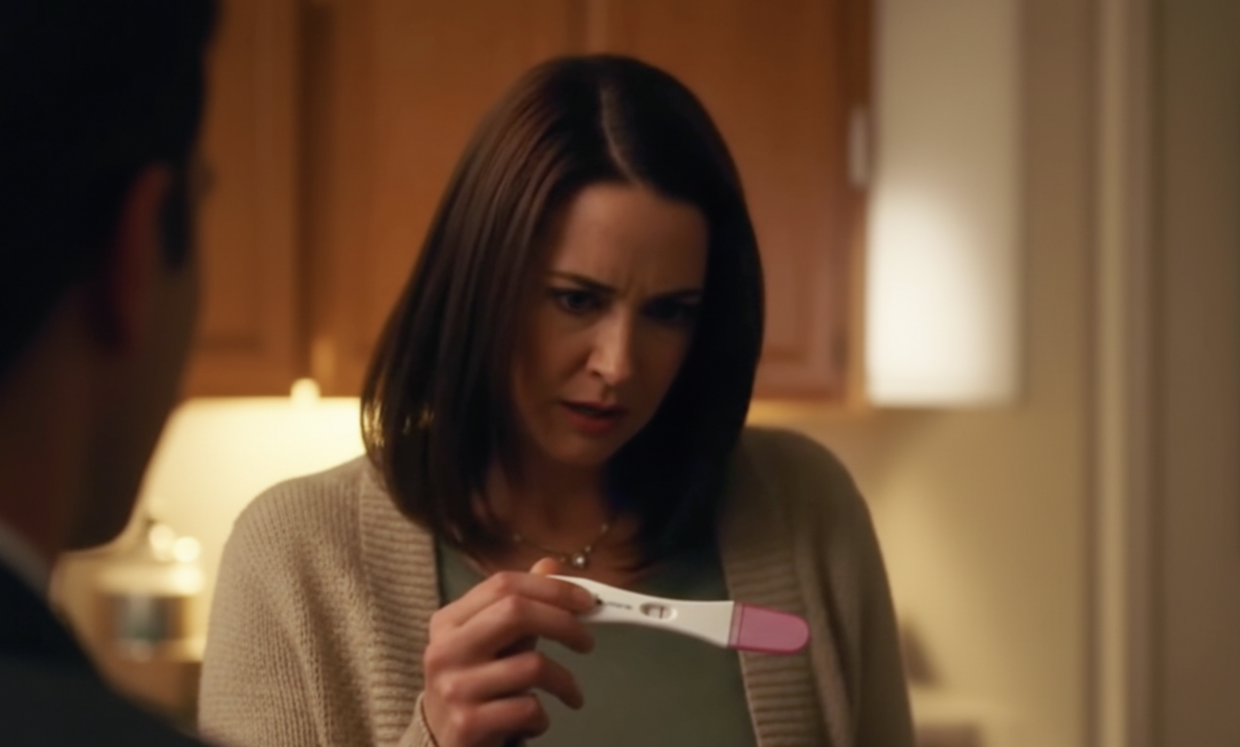
Two hours earlier, her mom had stood in the kitchen holding the pregnancy test with two fingers like it was dirty.
Karen’s face was pale, stiff. “You lied to me.”
Emily’s mouth went dry. “I didn’t—”
“How long?” Karen’s voice stayed flat, like she was reading the weather.
Emily stared at the tile. “Eight weeks.”
Bill—her stepdad—leaned in the doorway, arms crossed. “Fourteen years old.”
Emily looked up fast. “I didn’t choose—”
Karen lifted her chin. “You’re not keeping it.”
Emily blinked. “What?”
Bill sighed, dramatic and loud. “She needs consequences, Karen.”
“I’m not a—” Emily started, but the word caught. She didn’t even know what to call herself.
Karen stepped closer. “If you think you’re staying here while you drag this family’s name through the mud—”
“I’m still your daughter,” Emily said, and her voice cracked on daughter.
Karen’s eyes didn’t move. “Not tonight.”
Bill nodded once like it was settled. “Pack a bag.”
Emily’s hands had shaken while she stuffed two jeans, three shirts, her math binder, and the bottle of prenatal vitamins into the duffel.
She’d hidden the vitamins in her sock drawer like they were contraband.
Now they rattled in the bag like a countdown.
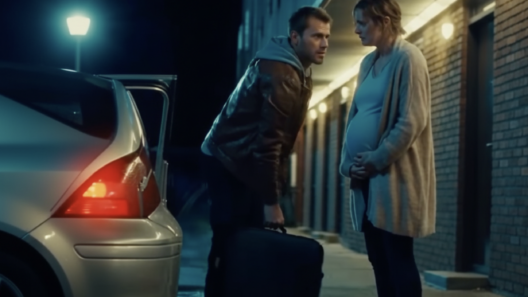
On the porch, November wind cut through her hoodie.
Emily tried Jasmine.
Text: “Can I come over? Please. It’s bad.”
No reply.
Call. Ring. Voicemail.
Emily tried again, staring at the little battery icon like she could will it to hold on.
She scrolled to Carter’s name—Carter ❤—and froze.
Her thumb hovered.
Then she locked her phone and shoved it in her pocket like it could burn her.
“Don’t be stupid,” she told herself. “He’s fourteen, too.”
She said it again, louder, like that made it okay. “He’s fourteen.”
Her stomach rolled.
She turned off the porch steps and walked.
No plan. Just movement.
The neighborhood looked normal in a way that felt cruel—warm windows, TVs glowing, somebody’s dog barking at nothing.
Emily passed the park where she and Carter used to meet after school.
She stared at the swings, empty and creaking.
“God,” she muttered. “Of course.”
She passed the library where she’d first typed “pregnancy symptoms” into a computer with sticky keys.
She’d thought Google would make her feel smarter.
It didn’t.
Her feet started to hurt a mile in.
By the time she hit the main road, her sneakers were soaked from slushy patches of old snow.
Her phone hit 6%.
She finally opened it and searched “teen shelter near me” with shaking hands.
A poster at school flashed in her memory: SAFE HAVEN FOR YOUTH. NO QUESTIONS ASKED.
Five miles.
Emily exhaled and started walking faster.
Halfway there, her nausea surged and she bent over, hands on her knees, trying not to throw up on the sidewalk.
A car slowed beside her.
The passenger window slid down.
A middle-aged woman leaned out, hair in a messy bun. “Sweetie, are you okay?”
Emily jerked back. “I’m fine.”
The woman’s eyes flicked to the duffel. “It’s late. Where are your parents?”
Emily’s chest tightened. “Home.”
The woman frowned like she didn’t believe her. “Do you need help?”
Emily took another step back. “No.”
The car rolled forward slowly, then drove off.
Emily waited until the taillights disappeared before she started walking again.
Her phone hit 2%.
The shelter was a low building with a single door and a buzzing light above it.
Locked.
A buzzer sat on the wall.
Emily pressed it and held her breath.
A speaker crackled. “Yeah?”
“I—” Emily swallowed. “My name is Emily. I have nowhere to go.”
Silence.
Then: “Hold on.”
The door clicked.
A woman with short gray hair opened it a crack and looked her up and down.
“Name,” she said, not unkindly. Just direct.
“Emily.”
“How old?”
“Fourteen.”
The woman’s eyes sharpened, but she didn’t slam the door like Emily expected.
She opened it wider. “Come in before you freeze.”
Warm air hit Emily’s face so hard her eyes stung.
Inside, the place wasn’t cozy. It was clean and quiet and smelled like laundry soap.
The woman handed her a blanket without asking more questions. “I’m Donna. Sit.”
Emily sat on a plastic chair, blanket over her shoulders like armor.
Donna slid a granola bar across the counter. “Eat.”
Emily’s hands trembled as she unwrapped it. “Thank you.”
Donna watched her take a bite. “You hurt?”
Emily shook her head.
Donna’s gaze dropped to Emily’s stomach, then back up to her eyes like she was doing math.
“You pregnant?” Donna asked calmly.
Emily’s throat tightened. Lying felt pointless here.
“Yes,” she whispered.
Donna nodded once. “Okay.”
Just okay.
Emily held the granola bar in her fist, blinking fast. “You’re not… mad?”
Donna’s mouth twitched. “Honey, I run a teen shelter. I don’t have time to be mad.”
Emily laughed once—tiny and broken—and then she cried, silent tears sliding down her cheeks while she kept chewing because her body needed it.
Donna pretended not to notice and set a cup of water beside her.
That night, Emily slept in a bunk room with two other girls.
A girl with braids glanced up from her phone. “New?”
Emily nodded.
“I’m Maya,” the girl said. “Don’t take Sky’s blanket. She’ll bite.”
A quiet girl on the other bunk didn’t look up, but she pulled her blanket tighter like Maya was right.
Emily tried to smile. “I won’t.”
Maya’s eyes flicked to Emily’s duffel. “You got kicked out?”
Emily hesitated.
Maya shrugged like she didn’t need the answer. “Yeah. Same.”
Sky finally spoke, voice low. “Lights out is at ten.”
Emily checked the clock. It was already after midnight.
Donna’s voice echoed from the hallway. “We do it different tonight.”
In the dark, Emily stared at the ceiling.
She waited for the panic.
It came anyway—hot, fast, squeezing her ribs.
“What am I gonna do?” she whispered into the blanket.
Maya rolled over, not fully awake. “Breathe. You’re inside.”
Emily pressed a hand to her stomach like she could protect the baby with her palm.
“Inside,” she repeated.
The next morning, Donna led Emily to a small office.
A woman in a cardigan stood up and offered her hand. “I’m Angela. I’m your caseworker.”
Emily shook it with clammy fingers.
Angela’s eyes were soft but sharp, like she missed nothing. “Tell me what happened.”
Emily stared at the carpet.
Angela waited.
Finally Emily said, “They found the test.”
Angela nodded. “And then?”
“They told me to pack,” Emily said. “They didn’t yell. That was the weird part. They just… decided.”
Donna leaned in the doorway, arms folded. “That’s still abandonment.”
Emily flinched at the word.
Angela pulled a notebook closer. “Did they hit you?”
“No.”
“Threaten you?”
Emily hesitated. “My mom said… I’m not keeping it.”
Angela’s pen paused. “Did she say how she’d make you?”
Emily swallowed. “She said if I stayed, I’d ‘ruin the family.’”
Angela exhaled slowly. “Okay. We’re going to focus on safety first.”
Emily’s nails dug into her palm. “Are you gonna call them?”
Angela shook her head. “Not unless you’re in immediate danger. But we will document everything.”
Emily stared. “Why?”
Angela’s voice went firm. “Because you’re fourteen. And adults have legal responsibilities, even when they’re embarrassed.”
Emily’s cheeks burned. “I’m not trying to get anyone in trouble.”
Donna snorted from the doorway. “No, honey. They got themselves in trouble.”
The next weeks moved in a blur of appointments and new rules.
Angela took her to a clinic where a nurse confirmed the pregnancy and gave her vitamins that didn’t feel like stolen goods anymore.
A therapist named Dr. Harris met her once a week.
At first Emily sat with her arms crossed and said, “I’m fine.”
Dr. Harris didn’t argue. She just said, “Tell me what you’re scared of.”
Emily stared at the tissues on the table like they were accusing her.
“I’m scared,” she admitted quietly, “that I’m gonna be like my mom.”
Dr. Harris nodded. “That fear is a sign you won’t be.”
Emily wanted to believe her.
Angela enrolled her in an alternative high school program nearby.
On Emily’s first day, a teacher glanced at her belly—still barely there—and said, “We don’t do shame here. We do work.”
Emily nodded like she could handle that.
At lunch, another pregnant girl slid into the seat across from her. “First week?”
Emily picked at a sandwich. “Yeah.”
The girl smiled. “You’ll be okay. People here mind their own business.”
Emily whispered, “I don’t even know how to tell the dad.”
The girl lifted an eyebrow. “Does he deserve to know?”
Emily’s chest tightened. “I don’t know.”
December came with gray skies and Christmas music in stores that made Emily feel like an alien.
One night, her phone buzzed.
Carter: “I heard you left. Is it true?”
Emily stared at the message until her eyes blurred.
Maya, on the bunk below, called up, “Who is it?”
“Nobody,” Emily lied.
She typed: “Yeah.”
Then she deleted it.
Maya climbed onto Emily’s bunk without asking and sat at her feet. “If he wanted to find you, he would.”
Emily snapped, “He’s fourteen.”
Maya didn’t flinch. “So are you. And you found a whole shelter.”
Emily stared at her blanket, jaw tight.
Maya softened. “Do you want him involved?”
Emily’s voice turned small. “I don’t want to do this alone.”
Maya nodded slowly. “Then don’t.”
The next day, Angela said, “We can contact the father’s family if you want.”
Emily’s stomach flipped. “What if they hate me?”
Angela’s tone stayed steady. “What if they help you?”
Emily looked down at her hands. “His mom likes me.”
“Then we’ll do it carefully,” Angela said. “And if it goes bad, we stop.”
Emily swallowed hard. “Okay.”
Angela made the call with Emily sitting beside her, gripping the chair so tight her knuckles turned white.
A woman answered. “Hello?”
Angela put it on speaker. “Hi, this is Angela Barnes with county youth services. I’m calling about your son, Carter.”
Silence. “Is he okay?”
“He’s safe,” Angela said. “But we need to discuss something serious. Is now a private time?”
A shaky exhale. “Yes. What’s going on?”
Emily leaned toward the phone, voice trembling. “Mrs. Reynolds… it’s Emily.”
A beat.
“Emily?” Mrs. Reynolds sounded stunned. “Honey, where have you been? Your mom said you were—”
“I’m at a teen shelter,” Emily said quickly, and tears rose again. “I’m pregnant. It’s Carter’s.”
The line went quiet so long Emily thought the call had dropped.
Then Mrs. Reynolds said, very softly, “Oh my God.”
Emily squeezed her eyes shut. “I’m sorry.”
“Don’t apologize,” Mrs. Reynolds said, voice firming. “Is my son aware?”
“No,” Emily admitted. “I… I didn’t know how.”
A sharp inhale. “Put Angela back on.”
Angela leaned in. “I’m here.”
Mrs. Reynolds’ voice turned controlled, angry in a focused way. “Did her parents throw her out?”
Angela said, “Based on Emily’s report and shelter intake, yes.”
“What’s the address?” Mrs. Reynolds demanded.
Angela held up a hand. “I can’t disclose location. But we can schedule a supervised meeting with Carter and you, if Emily consents.”
Emily whispered, “I consent.”
Mrs. Reynolds’ voice cracked. “Okay. Okay. We’ll be there. And Emily? Listen to me.”
Emily held the phone closer.
Mrs. Reynolds said, “You are not doing this alone.”
When the call ended, Emily sat there breathing like she’d just run.
Angela nodded. “That was a good first step.”
Donna poked her head in. “Told you. Some adults actually act like adults.”
Three days later, Carter came to the county office with his mom.
He looked smaller than Emily remembered, like the world had shrunk him.
His eyes locked on her belly, then shot to her face. “Em… is it true?”
Emily’s voice came out flat. “Yeah.”
Carter’s face flushed. “Why didn’t you tell me?”
Emily stared at him. “Why didn’t you notice?”
He blinked. “What?”
“You heard rumors I left,” Emily said. “You texted me once. One time.”
Carter opened his mouth and closed it.
Mrs. Reynolds snapped, “Carter.”
He swallowed. “I… I was scared.”
Emily laughed without humor. “Me too.”
Angela sat between them like a human seatbelt. “We’re not here to punish anyone. We’re here to make a plan.”
Carter blurted, “My mom can help. We can—”
Mrs. Reynolds cut in. “We will help, but you don’t get to talk like you’re a hero. You didn’t show up.”
Carter’s eyes filled. “I didn’t know where she was.”
Emily’s voice softened a fraction. “I didn’t know where I was either.”
Angela asked Emily, “Do you want Carter involved?”
Emily stared at him.
Carter whispered, “I want to be.”
Emily said, “Then prove it.”
He nodded fast. “I will. I swear.”
Angela leaned forward. “If Carter is the father, he has responsibilities. Support can be voluntary, or ordered.”
Carter flinched. “Ordered?”
Mrs. Reynolds said, “If you’re old enough to make a baby, you’re old enough to face reality.”
Carter nodded, humiliated. “Okay.”
The meeting ended with a schedule: parenting classes for both teens, supervised visits, and a paternity test after birth.
As they stood to leave, Carter stepped toward Emily.
He stopped when she stiffened.
“I’m sorry,” he said quietly. “For real.”
Emily held his gaze. “I’m not your secret anymore.”
He nodded like the words landed hard. “You won’t be.”
After that, things started changing fast.
Every two weeks, Mrs. Reynolds brought Emily maternity clothes and grocery gift cards, handed through Angela so it stayed proper.
Carter showed up to every class, even when boys from his school smirked in the hallway.
One day, a kid muttered, “Dude, you’re dead.”
Carter looked at him and said, “Say it again.”
The kid shut up.
Emily watched from a distance, stunned.
Maya nudged her. “Look at that. A spine.”
Emily didn’t smile, but something in her chest loosened.
In March, Emily’s belly rounded.
Sky—quiet Sky—sat beside her on the couch at the shelter and stared at Emily’s stomach like it was a campfire.
Emily caught her looking. “What?”
Sky shrugged. “Just… it’s real.”
Emily let out a shaky breath. “Yeah. It is.”
Sky hesitated, then placed her hand on Emily’s belly gently, like asking permission without words.
Emily nodded.
Sky’s face softened into the smallest smile. “Hope,” Sky whispered.
Emily blinked. “What?”
Sky pulled her hand back, embarrassed. “You look like you need hope.”
Emily swallowed hard. “I do.”
April brought a letter.
Not to Emily.
To the shelter.
Donna carried it into Angela’s office and slapped it on the desk. “You gotta be kidding me.”
Angela opened it, eyes scanning.
Emily sat across from her, heart thudding. “What?”
Angela looked up. “Your mother filed a report claiming you’re a runaway.”
Emily’s face went cold. “What?”
Donna’s jaw clenched. “After locking her out? Cute.”
Emily’s hands started shaking. “Are they gonna make me go back?”
Angela’s voice was calm but edged. “No. But we have to respond legally.”
Emily’s mouth went dry. “She’s doing this to get me in trouble.”
Donna leaned forward. “Or to control you.”
Angela nodded once. “Either way, we’re not letting her rewrite the story.”
Emily’s voice rose, panic sharp. “I didn’t run away. She kicked me out.”
Angela slid the letter toward Emily. “Then we prove it.”
Emily stared at the paper like it was poison.
“What proof?” Emily whispered. “It was just… words.”
Donna’s eyes narrowed. “Not just words. There’s always a trail.”
Angela asked, “Do you have any texts from your mom that night?”
Emily swallowed. “She doesn’t text. She… she just does things.”
Donna snapped her fingers. “Bill. Stepdad. He text anyone? Family group chat? Grandma?”
Emily’s eyes widened. “My aunt.”
Angela leaned in. “Call her.”
Emily’s hands trembled as she dialed.
Her aunt, Lisa, answered on the second ring. “Hello?”
“Aunt Lisa,” Emily said, voice shaky. “It’s me.”
A pause. “Emily?”
Emily heard the surprise—and something like guilt.
“I need to ask you something,” Emily said. “Did Mom tell you I ran away?”
Lisa exhaled. “She said you ‘took off.’”
Emily’s throat tightened. “Did she say why?”
Lisa hesitated. “She said you were… making bad choices.”
Emily’s voice turned hard. “Did she tell you she locked me out?”
Silence.
Then Lisa whispered, “She locked you out?”
Emily’s eyes burned. “Yes.”
Lisa’s breath caught. “Emily, I— I have texts from Bill. He was… bragging.”
Donna mouthed, “Bingo.”
Emily’s voice shook. “What kind of texts?”
Lisa sounded sick. “He texted my husband, like it was some joke. He said, ‘Don’t worry, we took care of it. She’s not our problem anymore.’”
Angela held out her hand gently. “Ask her to screenshot and send them to me.”
Emily nodded fast. “Aunt Lisa, can you send them to Angela? Please.”
Lisa said, “Yes. Right now.”
Five minutes later, Angela’s phone chimed.
Angela read the screenshots, then looked up—eyes sharp, satisfied.
Donna leaned over. “Oh, that’s beautiful.”
Emily’s stomach flipped. “What does it mean?”
Angela said, “It means your mother’s ‘runaway’ claim is false. We can push back.”
Emily whispered, “They’re gonna hate me.”
Donna snapped, “They already chose that. Now they get consequences.”
Angela added, “And Emily? This isn’t revenge. It’s protection.”
A week later, Karen showed up at the county office furious, wearing her nice coat like armor.
Bill stood behind her, smug.
Emily sat beside Angela, hands folded so tight they hurt.
Karen’s eyes swept over Emily’s belly, disgust flickering. “There you are.”
Emily’s throat tightened.
Angela spoke first. “Mrs. Whitaker, you filed a runaway report.”
Karen’s chin lifted. “My daughter is missing from my home.”
Emily said, voice low, “You locked me out.”
Bill scoffed. “Nobody locked you out.”
Donna, sitting in the back as shelter advocate, muttered, “Here we go.”
Angela slid the screenshots across the table. “Then explain these messages.”
Bill’s smile faltered.
Karen snatched the paper and read.
Her face shifted—confusion, then anger—then she whipped toward Bill. “You texted Lisa?”
Bill’s jaw clenched. “It was private.”
Angela said, “In the text you wrote, quote, ‘She’s not our problem anymore.’ That is abandonment.”
Karen’s voice rose. “This is being twisted.”
Emily finally looked her mother in the eye. “You turned off the porch light.”
Karen froze like the detail pierced her.
Emily continued, voice shaking but steady. “Like I was a stain you didn’t want to see.”
Bill leaned forward. “She got herself pregnant. Actions have consequences.”
Angela’s tone went steel. “So do yours. Because Emily is a minor, we’re filing for a court review of her placement and for child support obligations.”
Karen snapped, “Child support? For a kid who—”
Angela cut her off. “For the child you abandoned.”
Karen’s face went blotchy. “You can’t do this.”
Donna finally spoke, voice flat. “Watch us.”
The court date came fast.
Emily sat in a borrowed blouse, palms sweating, while Angela whispered, “You just tell the truth.”
Carter and Mrs. Reynolds sat behind Emily.
Carter leaned forward, whispering, “I’m here.”
Emily didn’t look back. “Good.”
On the other side, Karen sat rigid, lipstick perfect, eyes cold.
Bill’s knee bounced like he wasn’t as confident in public.
The judge was a white-haired woman with tired eyes that didn’t miss anything.
She looked at Karen. “You filed a runaway report.”
Karen nodded quickly. “Yes, Your Honor. My daughter disappeared.”
The judge glanced down. “Yet you did not contact local hospitals. You did not contact her friends’ parents. You did not attempt mediation.”
Karen’s mouth tightened. “She refused to listen.”
The judge turned to Angela. “You have documentation?”
Angela stood. “Yes, Your Honor. Shelter intake records, witness testimony, and text messages from Mr. Whitaker stating, quote, ‘She’s not our problem anymore.’”
Bill stiffened.
Karen whipped toward him again, a hiss through her teeth. “You idiot.”
Bill snapped back under his breath, “Shut up.”
The judge looked directly at Bill. “Mr. Whitaker, did you send these messages?”
Bill’s lawyer stood. “Your Honor—”
The judge held up a hand. “I asked Mr. Whitaker.”
Bill’s face reddened. “Yeah. I sent them.”
The judge nodded once, like that was the nail in the coffin. “Thank you.”
Karen’s mouth opened. “But—”
The judge raised her eyebrows. “You’re about to tell me a fourteen-year-old deserved to be put out in November?”
Karen’s voice shook with rage. “She shamed us.”
The judge stared at her, unimpressed. “Your child is not a public relations crisis.”
Emily’s eyes filled, and she blinked hard, trying to stay composed.
The judge continued, “This court is ordering continued placement under county supervision. Additionally, Mrs. Whitaker and Mr. Whitaker will pay child support to cover Emily’s care costs.”
Karen jerked. “What?”
Bill’s eyes widened. “That’s ridiculous.”
The judge’s voice stayed even. “What’s ridiculous is an adult believing consequences only apply to children.”
Karen’s face crumpled, not into sadness—into fury and fear.
The judge added, “You will also attend mandated family counseling if Emily chooses to participate. You do not get to force contact.”
Emily’s breath caught.
The judge looked at Emily now, gentler. “Emily, you have the right to be safe. Do you understand?”
Emily’s voice shook. “Yes, ma’am.”
The judge nodded. “Good. And you will continue school with appropriate support.”
Karen’s lawyer tried once more. “Your Honor, the family’s reputation—”
The judge cut him off. “I don’t care.”
A silence fell that felt like air finally entering a sealed room.
Outside the courtroom, Karen stormed past Emily like she was invisible.
Bill followed, face tight, but not smug anymore.
Carter’s mom touched Emily’s shoulder softly. “You did good.”
Emily’s legs felt weak. “I didn’t do anything.”
Angela said, “You told the truth. That’s doing something.”
Donna crossed her arms, satisfied. “And now they get the bill for their little moral tantrum.”
In May, Emily stood in front of her alternative school class for her final project.
Her hands shook at first, but she gripped her note cards and kept going.
“This is Ohio,” she said, voice steady. “These are the numbers. And these are the gaps. The gap isn’t morality. It’s support.”
A kid in the back raised his hand. “So what do we do?”
Emily swallowed. Then she said, “We stop pretending shame fixes anything.”
After class, the teacher pulled her aside. “You ever think about social work?”
Emily blinked. “Me?”
“You,” the teacher said. “You’re already doing it.”
July came with sticky heat and a sky so bright it made Emily squint.
Her contractions started at the shelter.
Donna grabbed her keys. “Okay, mama. Let’s go.”
Emily panicked. “I can’t do this.”
Donna barked, “You’re already doing it.”
At the hospital, Angela showed up with a folder of paperwork like she could fight the world with forms.
Maya came with her hair pulled back, eyes wide. “I’m gonna throw up, but I’m here.”
Sky stood by the door, quiet, holding a tiny knitted cap someone at the shelter had made.
Carter arrived with his mom, face pale, hands shaking.
He stopped at the doorway like he didn’t deserve to step in.
Emily looked at him and said through a contraction, “Don’t just stand there.”
Carter moved fast. “What—what do you need?”
Emily grabbed his wrist. “Say you’re not leaving.”
His eyes filled. “I’m not leaving.”
Mrs. Reynolds stood behind him and said, “He’s not. And neither am I.”
Hours later, when Emily finally heard her baby cry, the sound cracked something open in her chest.
The nurse placed a tiny, warm body against Emily’s skin.
Emily sobbed, messy and loud this time.
Donna wiped her own eyes. “That’s a strong set of lungs.”
Angela smiled softly. “Hi there.”
Carter stared like he couldn’t breathe. “She’s… real.”
Emily looked down at her daughter and whispered, “Hope.”
Carter echoed, voice breaking. “Hope.”
The nurse asked, “Father’s name for the birth certificate?”
Carter straightened, terrified but determined. “Carter Reynolds.”
Emily looked at him. “You sure?”
He nodded, voice firm. “Yes.”
Mrs. Reynolds squeezed her son’s shoulder like she was holding him upright.
Two weeks later, the paternity test confirmed what everyone already knew.
The county set a formal plan.
Carter paid support from his part-time job, and his mom matched it, refusing to let Emily drown.
“You’re not charity,” Mrs. Reynolds told Emily one afternoon, handing over a pack of diapers. “You’re family to my granddaughter.”
Emily swallowed hard. “Thank you.”
Mrs. Reynolds corrected gently, “No. You don’t thank me for doing the bare minimum. You accept it.”
When Karen tried to show up at the shelter unannounced, she was stopped at the door.
Donna stood there like a bouncer. “Visitation is by court-approved schedule only.”
Karen’s eyes flashed. “I’m her mother.”
Donna didn’t move. “Then you should’ve acted like one.”
Karen hissed, “She turned everyone against me.”
Donna leaned closer, voice low. “No, Karen. You did.”
Karen left in a fury, heels clicking like gunshots.
Later that day, Emily sat on the shelter couch with Hope asleep on her chest.
Her phone buzzed with an unknown number.
She stared.
Angela, passing by, said, “Don’t answer if you don’t want to.”
Emily took a breath and answered anyway. “Hello?”
Karen’s voice came through tight and sharp. “So you got what you wanted.”
Emily’s heart thudded, but she kept her voice quiet so she wouldn’t wake Hope. “I wanted a place to sleep.”
Karen spat, “You humiliated us.”
Emily looked at her daughter’s tiny fist curled under her chin.
Then she said, clearly, “You humiliated yourselves when you locked a pregnant kid outside.”
Karen went silent.
Emily continued, voice steady now. “The judge didn’t punish you because I got pregnant. The judge punished you because you abandoned me.”
Karen’s breath sounded angry, trapped. “You’re ungrateful.”
Emily felt a strange calm settle into her bones.
“I’m done begging,” she said. “And you’re not allowed near my baby unless the court says so.”
Karen snapped, “You can’t keep her from me.”
Emily answered, “You kept me from you first.”
She hung up.
Her hands were shaking—but her chest felt lighter than it had in months.
Donna came in with a folded paper. “Mail for you.”
Emily opened it.
It was a notice: Karen and Bill had missed their first mandated counseling session.
A second notice followed: noncompliance would trigger additional penalties.
Donna raised her eyebrows. “Guess they’re still allergic to accountability.”
Emily let out a breath that sounded almost like a laugh.
Angela sat beside her. “How do you feel?”
Emily looked down at Hope, warm and heavy and real.
“I feel,” Emily said slowly, “like they can’t touch me anymore.”
Angela nodded. “That’s the point.”
A month later, Emily stood outside the alternative school with Hope in a carrier and a certificate in her hand—summer credit completed, ahead of schedule.
Her teacher waved from the doorway. “See you in the fall, Emily.”
Emily nodded. “I’ll be there.”
Carter walked up carrying a bag of groceries, sweat on his forehead from biking over.
He glanced at the certificate. “You did it.”
Emily said, “I’m doing it.”
He shifted, nervous. “My mom said… if you want, you can come for Sunday dinner. No pressure.”
Emily looked at Hope, then at Carter.
“No pressure” sounded like a miracle.
Emily said, “Okay.”
Carter exhaled, relieved. “Okay.”
That night, Emily rocked Hope in the shelter’s quiet nursery, lights dim.
Maya leaned in the doorway. “You ever miss your old house?”
Emily didn’t answer right away.
Then she said, “I miss who I thought my mom was.”
Maya nodded slowly. “Yeah.”
Emily kissed Hope’s forehead.
Outside, rain tapped the window.
Inside, Hope sighed in her sleep, safe.
And miles away, Karen and Bill were dealing with court-ordered payments, missed-session penalties, and a truth they couldn’t spin: they’d tried to throw their problem into the cold, and the law threw it right back at them.
Emily whispered to her daughter, voice steady and full, “They don’t get to decide our ending.”
Hope stirred, then settled.
Emily smiled—fully, finally—because the consequence was real, the safety was real, and for the first time since that porch light went out, so was the peace.