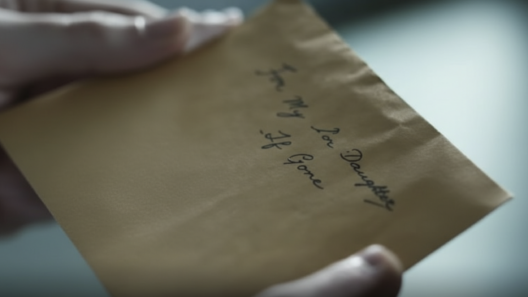





Frank Dalton placed the envelope on the desk with slow, careful hands.
“This is the foreclosure notice,” the banker said, not looking up. “Thirty days.”
Frank nodded. “I figured.”
The banker finally glanced up. Early thirties. Sharp suit. Tired eyes. “I’m sorry, sir. Rules are rules.”
Frank smiled faintly. “My wife used to say that too. She was a school principal. Loved rules.”
The banker gave a polite half-smile and slid the paperwork forward. “Sign here.”
Frank reached into his wallet instead.
A small, worn photograph slipped out onto the desk.
A young woman stood in front of a yellow school bus, arm around a skinny boy with missing front teeth. Both were laughing like the world was still kind.
The banker froze.
His fingers slowly picked up the photo. “Where did you get this?”
“That’s my wife, Ellen,” Frank said. “She taught third grade for thirty years. That boy was one of her favorites. Said he came to school hungry most days. She packed him lunches.”
The banker swallowed hard. “That’s me.”
Frank blinked. “You’re kidding.”
“No,” the banker whispered. “My mom worked two jobs. Ms. Dalton used to sneak food into my backpack so I wouldn’t be embarrassed.”
His voice cracked. “She told me I was going to be somebody.”
Silence filled the office.
The banker pushed the foreclosure papers aside. “Sir… this loan was flagged wrong. There’s a hardship program you qualify for. I can restructure it. Cut the payments in half.”
Frank stared. “You’re serious?”
The banker nodded, eyes shiny. “I owe her my life.”
Frank’s hands trembled as he gripped the desk. “She would’ve liked the man you became.”
The banker smiled through tears. “She already did.”
Frank walked out of the bank still owning his home, the one where Ellen planted roses every spring.
That night, he placed the photo back in his wallet and whispered, “You saved us again, sweetheart.”
Justice didn’t come with sirens.
Sometimes it came with memory and gratitude.