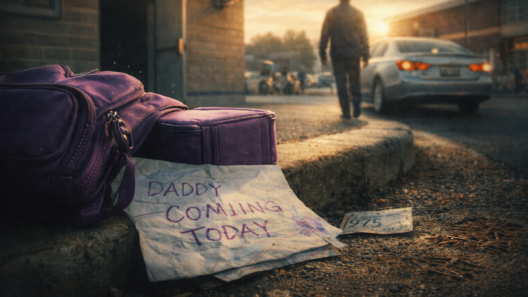





The church bell rang at 3:47 AM for the third night this week… But Pastor David always locked the tower after evening service.
The bell tower key hung in Pastor David’s office, same as always. Sarah noticed it Tuesday morning when she dropped off Lily’s forgotten lunch box.
Pastor David: Good morning, Sarah. Running late today?
Sarah: Just the usual chaos. Lily left this on the kitchen counter again.
The lunch box sat on his desk while he shuffled through papers. Sarah glanced at the key ring hanging from its usual hook.
Pastor David: She’s been distracted lately. Maybe the move to our new children’s program is affecting her adjustment.
Sarah: New program?
Pastor David: We’ve relocated the youth activities to provide more space. The basement offers better acoustics for their singing practice.
The basement door stayed locked during regular church hours. Sarah had noticed it the past few Sundays when Lily asked to use the restroom.
Sarah: I thought the children met in the Sunday school classroom.
Pastor David: We’re expanding our outreach. More individualized attention for each child’s spiritual development.
Sarah picked up the lunch box. A church bulletin fell from the side pocket. The header read “St. Mark’s Episcopal” with an address forty miles away.
Sarah: This isn’t from our church.
Pastor David: Children pick up papers everywhere. Probably from a field trip.
Sarah: Lily mentioned visiting other churches?
Pastor David: Part of our educational curriculum. Exposing them to different worship styles builds understanding.
The bulletin was dated last Tuesday. Sarah remembered Lily saying she had choir practice that evening.
Sarah: What time do these visits happen?
Pastor David: Various schedules. We coordinate with parents through our automated system.
Sarah: I never received any notifications.
Pastor David: Technology issues. We’re working with our service provider to resolve the communication gaps.
Sarah folded the bulletin and placed it in her purse. The paper felt crisp, recently printed.
Sarah: I’d like to speak with whoever organizes these trips.
Pastor David: Mrs. Baker handles our youth coordination. She’s usually here Wednesday afternoons.
Sarah: I’ll stop by tomorrow.
Pastor David: Actually, she’s taking some personal time. Family obligations.
The office phone rang. Pastor David glanced at the caller ID and let it go to voicemail.
Sarah: Busy morning?
Pastor David: Always something requiring attention. The responsibilities of parish leadership never pause.
Sarah: Well, I should let you get back to your work.
Pastor David: Give Lily my regards. Tell her we’re looking forward to Thursday evening’s special session.
Sarah: Thursday evening?
Pastor David: Advanced preparation for Sunday’s presentation. Select children only.
Sarah: She didn’t mention anything about Thursday.
Pastor David: Perhaps it slipped her mind. Children often forget scheduling details.
Sarah left the office with more questions than answers. The bulletin in her purse felt heavier with each step.
The church parking lot was empty except for Pastor David’s sedan and an unfamiliar van with tinted windows. The van’s license plate was partially obscured by mud.
Sarah sat in her car and called Lily’s school.
Campbell: Lincoln Elementary, this is Mrs. Campbell.
Sarah: This is Sarah Martinez. I need to verify my daughter Lily’s attendance yesterday.
Campbell: Let me check our records. Lily was present for all classes yesterday.
Sarah: What about early dismissal for any church activities?
Campbell: No early dismissals recorded for Lily this month.
Sarah: Are you certain?
Campbell: Absolutely. We require written permission for any off-campus activities.
Sarah ended the call and stared at the church building. The basement windows were covered with heavy curtains she hadn’t noticed before.
Her phone buzzed with a text from an unknown number: “Lily’s Thursday session moved to 7 PM. Basement entrance only.”
Sarah had never given the church her cell phone number.
She drove to Mrs. Baker’s house instead of going home. The driveway was empty, but the mailbox overflowed with uncollected letters.
Sarah knocked on the front door. No answer. She walked around to the back yard and peered through the kitchen window.
Dishes sat unwashed in the sink. A calendar on the refrigerator showed the past two weeks crossed out in red ink.

The neighbor’s dog barked from the adjacent yard. An elderly man emerged from behind a garden shed.
Brown: You looking for Helen?
Sarah: Mrs. Baker, yes. Do you know when she’ll be back?
Brown: Haven’t seen her since last Tuesday. Her car’s been gone all week.
Sarah: Did she mention going anywhere?
Brown: Helen never travels. Been my neighbor for fifteen years. Something spooked her good.
Sarah: What do you mean?
Brown: Tuesday night she came over asking if I had a phone she could use. Said hers wasn’t working right.
Sarah: What kind of problem?
Brown: Kept getting calls from the church. Said Pastor David was calling at all hours, but when she answered, nobody spoke.
Sarah: Did she call the police?
Brown: Talked about it. Next morning she was gone. Left her cat with me and everything.
Sarah: Where’s the cat now?
Brown: Animal control picked it up yesterday. Helen would never abandon that cat willingly.
Sarah felt her stomach tighten. The bulletin in her purse seemed to burn against her leg.
Sarah: Did you see anyone else around her house?
Brown: Tuesday evening, that church van was parked across the street. Sat there for hours.
Sarah: What kind of van?
Brown: White, tinted windows. Same one that’s been cruising the neighborhood lately.
Sarah: How often?
Brown: Past few weeks. Always around the time kids walk home from school.
Sarah thanked Brown and returned to her car. The church van from this morning matched his description perfectly.
She drove to the police station instead of going home.
Hughes: What can I help you with today?
Sarah: I need to report some concerning behavior at our church.
Hughes: What type of concerns?
Sarah: The pastor is organizing activities with children that parents aren’t informed about.
Hughes: Have you spoken with church leadership about this?
Sarah: He is the church leadership. And one of the volunteer coordinators has disappeared.
Hughes: Disappeared?
Sarah: Mrs. Baker. Her neighbor says she left suddenly after receiving strange phone calls from the church.
Hughes: When did you last see Mrs. Baker?
Sarah: Sunday service. But her neighbor hasn’t seen her since Tuesday.
Hughes: That’s only five days. Adults are free to travel without notifying neighbors.
Sarah: She abandoned her cat. Her neighbor says she would never do that.
Hughes: Did she leave a note or contact family members?
Sarah: I don’t know. But there’s more.
Sarah explained about the bulletin from the distant church, the basement activities, and the unmarked van.
Hughes: These activities you mentioned – has your daughter been harmed in any way?
Sarah: Not that she’s told me. But she’s been acting different lately.
Hughes: Different how?
Sarah: Quieter. More secretive. She used to tell me everything about her day.
Hughes: Children often become more private as they grow older.
Sarah: She’s eight years old.
Hughes: What specific crimes do you believe have been committed?
Sarah: I don’t know yet. That’s why I’m here.
Hughes: Without evidence of actual wrongdoing, we can’t investigate based on suspicions alone.
Sarah: What about Mrs. Baker?
Hughes: We can do a welfare check if you provide her address.
Sarah: Her neighbor already checked. She’s not there.
Hughes: We’ll send an officer to verify. But adults have the right to leave town without permission.
Sarah left the police station feeling dismissed but not defeated. The welfare check would at least create an official record.
She picked up Lily from school early, claiming a doctor’s appointment.
Sarah: How was school today?
Lily: Fine.
Sarah: Anything interesting happen?
Lily: Not really.
Sarah: Tell me about choir practice yesterday.
Lily: We sang songs.
Sarah: What kind of songs?
Lily: Church songs.
Sarah: In the basement?
Lily: Yeah.
Sarah: Do you like practicing down there?
Lily: It’s okay. Pastor David says it’s special.
Sarah: Special how?
Lily: Just for certain kids. He picks who gets to come.
Sarah: How does he pick?
Lily: I don’t know. He just tells us.
Sarah: Are there other adults there besides Pastor David?
Lily: Sometimes Mrs. Baker. But she hasn’t come lately.
Sarah: Do you know why?
Lily: Pastor David said she got sick.
Sarah: What about other parents? Do they come watch practice?
Lily: Pastor David says parents would distract us from learning.
Sarah: Learning what?
Lily: Special songs. And other things.
Sarah: What other things?
Lily: I’m not supposed to talk about it.
Sarah: Who told you that?
Lily: Pastor David. He says it’s between us and God.
Sarah: Lily, you can tell me anything. I’m your mother.
Lily: Promise you won’t get mad?
Sarah: I promise.
Lily: Sometimes we go to other churches. In the van.
Sarah: How often?
Lily: Every week. Pastor David says we’re messengers.
Sarah: What kind of messages?
Lily: We give people things. Letters and pictures.
Sarah: What’s in the letters?
Lily: I can’t read them. They’re in cursive.
Sarah: Who do you give them to?
Lily: Different people. Pastor David tells us their names.
Sarah: Are these people expecting the letters?
Lily: I don’t think so. Sometimes they seem surprised.
Sarah: Surprised how?
Lily: They get upset. Some of them cry.
Sarah felt ice in her veins. The pattern was becoming clearer.
Sarah: Lily, I don’t want you to go to anymore special practices.
Lily: But Pastor David said I’m one of his favorites.
Sarah: What makes you a favorite?
Lily: He says I’m trustworthy. And I have an innocent face.
Sarah: Did he tell you not to tell me about being his favorite?
Lily: He said parents wouldn’t understand the special work we’re doing.
Sarah: What kind of special work?
Lily: Helping people remember things they forgot.
Sarah: What things?
Lily: Pastor David says some people try to forget their sins. We help them remember.
Sarah: By delivering letters?
Lily: And taking pictures sometimes.
Sarah: Pictures of what?
Lily: The people when they read the letters. Pastor David says their faces show the truth.
Sarah: Does he keep these pictures?
Lily: In a special box in the basement.
Sarah: Have you seen inside this box?
Lily: Once. It has lots of pictures and papers.
Sarah: What kind of papers?
Lily: Letters like the ones we deliver. And newspaper clippings.
Sarah: About what?
Lily: I couldn’t read most of them. But some had people’s names and addresses.
Sarah: The same people you deliver letters to?
Lily: I think so. Pastor David has lists with everyone’s information.
Sarah pulled into their driveway but didn’t turn off the car.
Sarah: Lily, I need you to listen carefully. You’re not in trouble, but we’re not going back to that church.
Lily: Why not?
Sarah: Pastor David isn’t doing the right kind of work with children.
Lily: But he says God chose us for important missions.
Sarah: God doesn’t ask children to keep secrets from their parents.
Lily: Pastor David said you might not understand.
Sarah: He was right. I don’t understand why a pastor would use children to frighten people.
Lily: Are the people scared of us?
Sarah: I think they’re scared of what Pastor David is trying to do.
Sarah: We’re going to stay somewhere else tonight. Pack a bag with clothes for tomorrow.
Lily: Are we in trouble?
Sarah: No, sweetheart. But we need to be safe while I figure out how to help the other children.
Sarah: Can you remember the names of the other kids in your special group?
Lily: Tommy, Jessica, and Michael. Sometimes Emma comes too.
Sarah: Do you know their last names?
Lily: Tommy Williams. Jessica’s last name sounds like ‘Carter’ but different.
Sarah: Carter?
Lily: No, longer than that.
Sarah: Carpenter?
Lily: That’s it. And Michael’s last name is Adams.
Sarah: What about Emma?
Lily: I don’t know. She only came twice.
Sarah helped Lily pack while calling her sister from the bedroom.
Sarah: Kim, I need to ask a huge favor.
Kim: What’s wrong? You sound terrible.
Sarah: Can Lily and I stay with you tonight? Something’s happening at our church.
Kim: Of course. What kind of something?
Sarah: I think Pastor David is using the children for some kind of blackmail scheme.
Kim: Blackmail?
Sarah: He’s sending them to deliver threatening letters to people. Lily described it as helping people remember their sins.
Kim: That’s insane. Have you called the police?
Sarah: They said they need evidence of actual crimes.
Kim: What about the other parents?
Sarah: I’m going to contact them tonight. If their children are involved, they need to know.
Kim: Come over now. We’ll figure this out together.
Sarah: Thank you. We’ll be there in an hour.
Sarah found phone numbers for the Williams and Carpenter families in the church directory. The Adams family wasn’t listed.
She called Mrs. Williams first.
Mrs. Williams: Hello?
Sarah: This is Sarah Martinez from church. I need to ask you about Tommy’s activities with Pastor David.
Mrs. Williams: What about them?
Sarah: Has Tommy mentioned delivering letters to strangers?
Mrs. Williams: How did you know about that?
Sarah: My daughter told me. I think we need to compare notes.
Mrs. Williams: Tommy said it was supposed to be secret.
Sarah: That’s exactly the problem. Can we meet tonight?
Mrs. Williams: I’ve been worried about this for weeks. Tommy’s been having nightmares.
Sarah: About the letter deliveries?
Mrs. Williams: He won’t talk about the details. Just says some people got really angry.
Sarah: Where can we meet?
Mrs. Williams: The coffee shop on Main Street. Seven o’clock?
Sarah: I’ll call the Carpenter family too. We should all be there.
Mrs. Williams: Sarah, I’m scared. What if we’re wrong about this?
Sarah: What if we’re right and do nothing?
The Carpenter family agreed to meet as well. Sarah couldn’t find contact information for Michael Adams anywhere.
At the coffee shop, the three mothers compared their children’s stories. The pattern was unmistakable.
Mrs. Carpenter: Jessica described the same van, same basement meetings, same secrecy rules.
Mrs. Williams: Tommy said Pastor David has files on lots of families in town.
Sarah: Files containing what?
Mrs. Williams: Personal information. Things people wouldn’t want others to know.
Mrs. Carpenter: Jessica mentioned seeing photographs of people in compromising situations.
Sarah: What kind of situations?
Mrs. Carpenter: She couldn’t explain clearly. Just said the people in the pictures looked embarrassed.
Sarah: We need to go to the police together. Three families reporting the same pattern carries more weight.
Mrs. Williams: What if Pastor David finds out we talked?
Sarah: What if he doesn’t and more children get involved?
Mrs. Carpenter: There’s something else. Jessica said Mrs. Baker tried to stop one of the letter deliveries.
Sarah: When?
Mrs. Carpenter: Last Tuesday. The day before she disappeared.
Sarah: What happened?
Mrs. Carpenter: According to Jessica, Mrs. Baker argued with Pastor David in the van. She said what they were doing was wrong.
Mrs. Williams: That’s the last time Tommy saw her.
Sarah: We’re calling the police right now.
The mothers returned to the police station together. Officer Hughes listened with more attention this time.
Hughes: Three children reporting identical activities changes the scope of our concern.
Mrs. Williams: What can you do?
Hughes: We’ll need to interview the children separately. And we’ll expedite the welfare check on Mrs. Baker.
Mrs. Carpenter: What about Pastor David?
Hughes: We’ll need evidence before we can take action against him directly.
Sarah: What kind of evidence?
Hughes: The letters your children delivered, photographs, any documentation of the alleged blackmail scheme.
Sarah: Those are all in the church basement according to the children.
Hughes: We’d need a warrant to search church property.
Mrs. Williams: How do we get a warrant?
Hughes: More detailed statements from the children. If they can identify specific crimes or victims, we can build a case.
Sarah: Will you interview them tonight?
Hughes: Tomorrow morning. We have specialists trained for child interviews.
Mrs. Carpenter: What do we do until then?
Hughes: Keep the children away from the church and Pastor David. Document everything they tell you.
Sarah: What if he realizes we’re investigating?
Hughes: We’ll increase patrols in your neighborhoods tonight.
The mothers left the station with plans to stay together until morning. Sarah felt relief mixed with dread.
At Kim’s house, Lily played with her cousins while the adults talked in the kitchen.
Kim: You did the right thing.
Sarah: I hope so. What if this ruins our whole community?
Kim: What if doing nothing ruins more children?
Sarah: The other mothers are scared too. This could destroy families.
Kim: Keeping quiet would definitely destroy families.
Sarah’s phone rang. Unknown number.
Sarah: Hello?
Pastor David: Sarah, we need to discuss Lily’s continued participation in our program.
Sarah: She won’t be participating anymore.
Pastor David: I think there’s been a misunderstanding about our activities.
Sarah: No misunderstanding. I know what you’ve been doing.
Pastor David: What exactly do you think you know?
Sarah: Using children to deliver blackmail letters. Photographing people’s reactions. Keeping files on community members.
Pastor David: Those are serious accusations without foundation.
Sarah: Three families are making the same accusations.
Pastor David: Three families who clearly don’t understand the spiritual work we’re accomplishing.
Sarah: Spiritual work doesn’t require secrecy from parents.
Pastor David: Some spiritual work requires discretion. Not everyone is ready for advanced ministry.
Sarah: Advanced ministry involving eight-year-olds?
Pastor David: Children have pure hearts. They see truth adults often miss.
Sarah: What truth were they supposed to see in those photographs?
Pastor David: I’m not sure what photographs you’re referring to.
Sarah: The ones you keep in the basement box.
Pastor David: Sarah, I think you should reconsider these allegations before they cause permanent damage.
Sarah: To who?
Pastor David: To your family’s reputation in this community.
Sarah: Are you threatening me?
Pastor David: I’m offering guidance. Sometimes families who make unfounded accusations find themselves isolated.
Sarah: We’re not the only family talking to the police.
Pastor David: The police?
Sarah: They’re interviewing the children tomorrow.
The line went quiet for several seconds.
Pastor David: Sarah, you’re making a mistake that will hurt innocent people.
Sarah: The only innocent people are the children you’ve been manipulating.
Pastor David: Those children were learning valuable lessons about justice and accountability.
Sarah: Justice doesn’t use children as weapons.
Pastor David: Some people in this community have forgotten their obligations. The children helped remind them.
Sarah: What obligations?
Pastor David: Financial obligations. Moral obligations. Promises they made and tried to break.
Sarah: So you admit it was blackmail.
Pastor David: I admit to nothing except serving God’s justice.
Sarah: God’s justice doesn’t terrorize families.
Pastor David: Sometimes fear is the beginning of wisdom.
Sarah: Not for children. Never for children.
Pastor David: Sarah, last chance. Withdraw your complaints and return Lily to our program.
Sarah: Never.
Pastor David: You’ll regret this decision.
Sarah: The only thing I regret is not stopping you sooner.
Sarah hung up and immediately called Officer Hughes.
Hughes: Martinez case, Hughes speaking.
Sarah: Pastor David just called me. He made threats and essentially admitted to the blackmail scheme.
Hughes: What did he say exactly?
Sarah: That the children were teaching people about their financial and moral obligations. He said some people had forgotten promises they made.
Hughes: Did you record the conversation?
Sarah: No, but my sister heard most of it.
Hughes: We’ll document this as part of the case. Are you somewhere safe?
Sarah: Yes, with family.
Hughes: Stay there tonight. We’ll have units watching the church and Pastor David’s residence.
Sarah: What about the other families?
Hughes: We’ve contacted them. Everyone’s taking precautions.
Sarah: When will you search the basement?
Hughes: We’re working on the warrant now. Your phone call helps establish probable cause.
The next morning, police interviewed all three children with their mothers present. The stories aligned perfectly.
Detective Mitchell led the investigation.
Mitchell: Lily, can you tell me about the special box Pastor David kept in the basement?
Lily: It was metal and had a lock. He kept it on the shelf behind the piano.
Mitchell: What did you see inside?
Lily: Pictures of people reading letters. They looked scared or sad.
Mitchell: How many pictures?
Lily: Lots. Maybe fifty or more.
Mitchell: What else was in the box?
Lily: Papers with names and addresses. And copies of the letters we delivered.
Mitchell: Could you read any of the letters?
Lily: Some words. They talked about money and secrets.
Mitchell: What kind of secrets?
Lily: I don’t know. But Pastor David said everyone has things they don’t want other people to know.
Mitchell: Did he tell you why he kept the pictures?
Lily: He said they were proof that his messages were delivered.
Mitchell: Proof for who?
Lily: People who paid him to send the messages.
Sarah’s heart sank. The scope was larger than she’d imagined.
Mitchell: Lily, did Pastor David ever mention who paid him?
Lily: Sometimes he talked on the phone about clients. He said they needed help collecting what they were owed.
Mitchell: What kind of help?
Lily: Making people remember their debts.
The warrant was approved by noon. Police searched the church basement while Pastor David was detained for questioning.
Officer Hughes called Sarah with the results.
Hughes: We found everything the children described. The metal box contained over two hundred photographs and corresponding letters.
Sarah: Two hundred?
Hughes: This operation was much larger than we initially suspected. The letters targeted dozens of families across three counties.
Sarah: What was in the letters?
Hughes: Threats to expose personal information unless debts were paid. Some contained compromising photographs as leverage.
Sarah: Where did he get the photographs?
Hughes: We’re still investigating. But it appears he had a network of accomplices providing information and images.
Sarah: What about Mrs. Baker?
Hughes: We found her car abandoned at a rest stop fifty miles away. Her credit cards show activity in another state.
Sarah: Is she safe?
Hughes: We’re working with other jurisdictions to locate her. But the evidence suggests she fled rather than was harmed.
Sarah: Because she tried to stop him?
Hughes: Her phone records show she called our department twice last week but hung up before speaking to anyone.
Sarah: She was scared.
Hughes: She had good reason to be. We found detailed files on every family in your congregation.
Sarah: What kind of details?
Hughes: Financial records, personal relationships, medical information. He’d been collecting data for years.
Sarah: How?
Hughes: Multiple sources. Some legitimate through his pastoral duties, others obtained through deception or theft.
Sarah: What happens now?
Hughes: Pastor David is being charged with multiple felonies including extortion, child endangerment, and identity theft.
Sarah: Will the children have to testify?
Hughes: Possibly. But we have enough physical evidence to build a strong case without relying heavily on their testimony.
Sarah: What about the people who were blackmailed?
Hughes: We’re contacting all the victims. Many are relieved to finally report what happened to them.
Sarah: How many victims?
Hughes: At least sixty families. The scheme generated hundreds of thousands of dollars over three years.
Sarah felt sick thinking about the scope of the damage.
Sarah: What about the church?
Hughes: The diocese is conducting its own investigation. They had no knowledge of Pastor David’s activities.
Sarah: Will the church survive this?
Hughes: That depends on the community’s ability to heal and rebuild trust.
Two weeks later, Sarah received a call from Mrs. Baker.
Baker: Sarah, it’s Helen Baker. I heard about what happened.
Sarah: Mrs. Baker! Are you okay?
Baker: I’m safe. Staying with my sister in Oregon until the trial.
Sarah: Why did you leave?
Baker: Pastor David threatened me when I refused to help with the children anymore.
Sarah: What kind of threat?
Baker: He had photographs of my late husband in compromising situations. Said he’d share them with the congregation if I interfered.
Sarah: I’m so sorry.
Baker: Don’t be sorry. Be proud. You saved those children from something terrible.
Sarah: I wish I’d acted sooner.
Baker: You acted when you could. That’s what matters.
Sarah: When will you come home?
Baker: After the trial. I need to testify about what I witnessed.
Sarah: The children ask about you.
Baker: Tell them I’m proud of their courage. They’re the real heroes in this story.
The trial lasted three weeks. Pastor David was convicted on seventeen felony counts and sentenced to fifteen years in prison.
The church eventually reopened under new leadership, but many families, including Sarah’s, found new places to worship.
Lily recovered well with counseling, though she remained cautious around authority figures for months.
The other children showed similar resilience, supported by their families and professional help.
Mrs. Baker returned to town after the sentencing and became an advocate for child protection in religious organizations.
The community learned to recognize warning signs and established new protocols for youth programs.
Sarah often reflected on how close they’d come to missing the truth entirely. One bulletin in a lunch box had unraveled three years of systematic abuse.
The basement of the old church was sealed permanently. The building eventually became a community center focused on transparency and family involvement.
Justice had been served, but the scars remained visible reminders of trust betrayed and innocence exploited.
The children grew stronger, the community grew wiser, and the truth, once revealed, could never be hidden again.