


Matthew whispers “Lily” into the basement darkness at 2 AM… But Lily died two years ago.
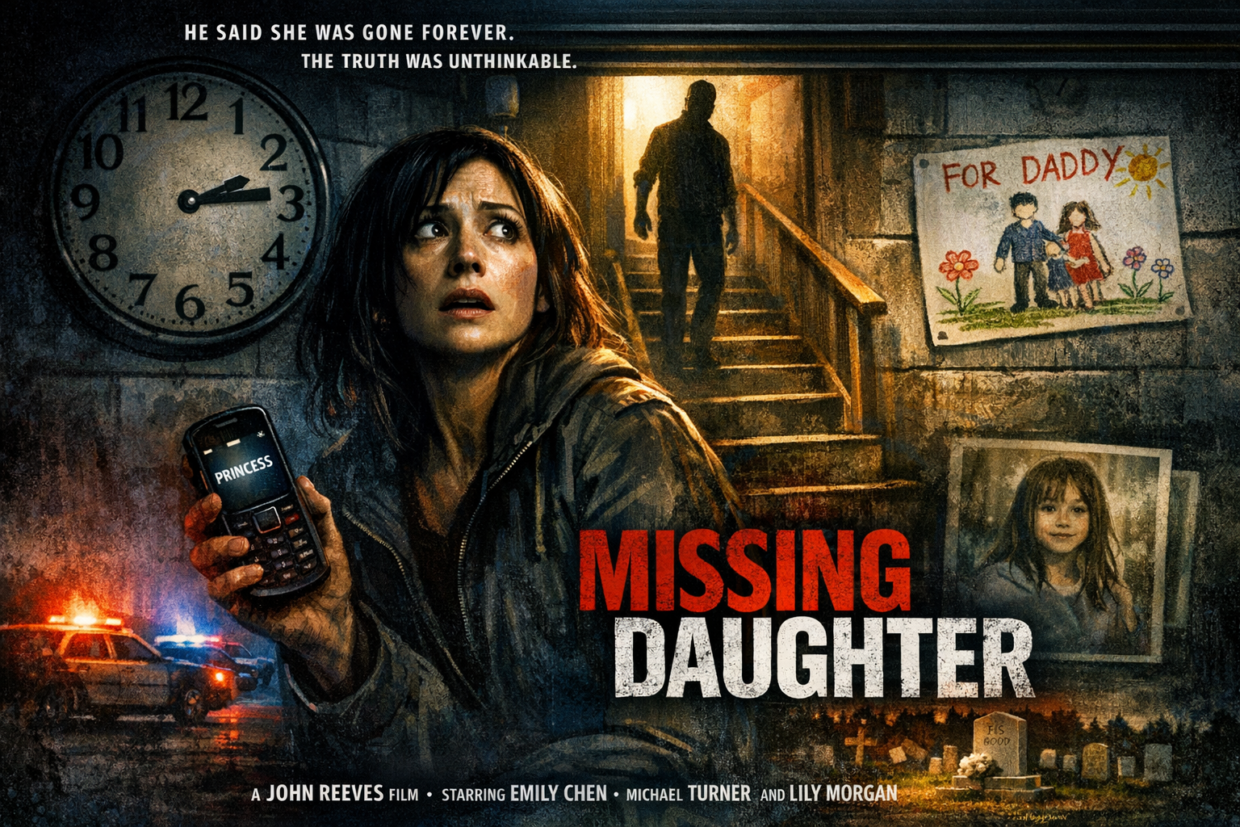
Linda Chen wakes to the sound of Matthew’s voice drifting up from the basement. The clock shows 2:17 AM.
She lies still, listening to the familiar rhythm of his whispered words. For two years, these midnight conversations have pulled him downstairs like a ritual.
Matthew: Princess, Daddy’s here. I know you’re listening.
The floorboards creak above her head as Linda shifts position. Matthew never talks about these sessions during daylight hours.
Matthew: Tell me about your day, sweetheart. Did you make any new friends?
Linda’s chest tightens. Lily died in the car accident twenty-six months ago. The grief counselor said private conversations with the deceased were normal for the first year.
But this feels different. Matthew’s voice carries the cadence of someone expecting responses.
The basement door clicks shut. Matthew’s footsteps cross the kitchen floor above Linda’s head.
Linda: How was your talk with Lily?
Matthew: Just needed to check in with her. You know how it is.
His answer comes too quickly, like he’s practiced it. Matthew slides into bed without meeting her eyes.
The next morning, Linda finds Matthew’s coffee mug still warm on the kitchen counter. A small voice recorder sits beside it.
She presses play. Matthew’s voice fills the kitchen with yesterday’s conversation.
Matthew: Princess, I brought you something special today. Your favorite cookies from the bakery on Fifth Street.
A pause. Then Matthew again, but softer.
Matthew: I know, I know. You want the ones with the rainbow sprinkles. Next time, okay?
Linda’s hands shake as she stops the recording. Matthew is responding to silence as if someone answered him.
The basement door stands slightly open. Linda descends the wooden steps for the first time in months.
A child’s drawing hangs on the far wall. Crayon flowers in bright purple and yellow, signed “For Daddy” in careful block letters.
Linda’s breath catches. She burned all of Lily’s artwork after the funeral. Matthew insisted it was too painful to keep.
The drawing paper looks fresh. The crayon marks show no fading from two years of storage.
Linda: Matthew, where did this drawing come from?
Matthew appears at the top of the stairs, his face flushed.
Matthew: I… I saved one. I couldn’t burn them all.
Matthew: Sometimes I need to remember what her handwriting looked like.
But the signature on this drawing uses letters Lily was still learning when she died. Her L’s never curved this smoothly.
Linda waits until Matthew leaves for work. She searches the basement methodically, checking behind boxes and under shelves.
A prepaid phone sits wedged between the water heater and the wall. The screen shows forty-seven recent calls to a contact labeled “Princess.”
Linda’s vision blurs. Matthew told her he threw away everything that reminded him of Lily. No photos, no toys, no personal items.
She scrolls through the call log. Every conversation lasted fifteen to twenty minutes. The timestamps match Matthew’s midnight basement visits perfectly.
Linda dials the number. After three rings, a small voice answers.
Voice: Daddy? You’re calling early today.
Linda drops the phone. The voice sounds exactly like Lily’s, but older. More confident with pronunciation.
Voice: Daddy? Are you there? I drew you another picture in art class.
Linda ends the call with trembling fingers. She sits on the basement floor, staring at the phone’s black screen.
The voice belonged to a child who expected Matthew’s call. A child who draws pictures and attends art class.
A child who calls Matthew “Daddy” and knows his schedule.
Linda drives to the cemetery where Lily’s headstone marks their daughter’s grave. She hasn’t visited since the six-month anniversary.
The groundskeeper, Miller, waves from across the lawn.
Miller: Mrs. Chen, good to see you. How are you holding up?
Linda: I need to ask you something about Lily’s burial.
Miller: Of course. What can I help you with?
Linda: Was there ever any issue with the grave site? Any reason to… disturb it?
Miller’s expression shifts. He glances toward the office building.
Miller: Mrs. Chen, I probably shouldn’t be telling you this, but there was never any burial here.
Miller: Your husband paid for the headstone and the plot, but no casket was ever interred.
Linda’s legs give out. She sits heavily on the stone bench beside Lily’s marker.
Linda: What do you mean no burial?
Miller: The funeral home never delivered remains. I assumed it was a memorial service situation.
Miller: Some families prefer to scatter ashes privately. We just maintain the marker for visiting purposes.
Linda drives home in a daze. She searches Matthew’s office while he’s at work, looking for any document that might explain Miller’s words.
The insurance payout paperwork sits in Matthew’s desk drawer. Five hundred thousand dollars, processed within twenty-four hours of filing the claim.
Most child death claims require weeks of investigation. Linda remembers Matthew saying the insurance company was “surprisingly efficient” with their grief.
She finds Matthew’s work schedule from the day of Lily’s accident. He clocked out at 3:15 PM, thirty minutes before the accident report was filed.
But Matthew signed the accident report as the responsible party at 3:45 PM. The timestamp shows he signed before the police arrived at the scene.
Linda calls the police station and asks to speak with the officer who handled Lily’s case.
Officer Roberts: Mrs. Chen, I remember your case. Tragic situation with your daughter.
Linda: I need to understand the timeline. When exactly did my husband contact you?
Officer Roberts: He called it in himself. Said he’d lost control of the vehicle on Highway 12.
Officer Roberts: But when we arrived, there was no child at the scene. Your husband said she’d been thrown from the car.
Linda: Thrown from the car?
Officer Roberts: We searched the area for three hours. Never found any evidence of a second passenger.
Officer Roberts: Your husband seemed… confused about the details. Trauma response, we figured.
Linda hangs up and immediately calls the hospital where Lily was supposedly pronounced dead.
The records department has no admission for Lily Chen on the date of the accident. No emergency room visit, no death certificate processed through their facility.
Linda: Are you certain? Lily Chen, age nine, car accident victim?
Records: I’ve checked three times, Mrs. Chen. No record of any patient by that name on that date.
Records: You might try the county morgue. Sometimes accident victims are transported directly there.
The county morgue has no record either. No child matching Lily’s description was processed during the entire month of the accident.
Linda sits in her car outside the morgue, trying to piece together the impossible timeline. Matthew reported an accident with no victim, signed papers before police arrived, and collected insurance money for a death that never happened.
But Lily is dead. Linda attended the funeral. She watched Matthew cry over the closed casket.
She drives to the funeral home where they held Lily’s service.
Funeral Director Patel: Mrs. Chen, what brings you back here?
Linda: I need to understand what happened with Lily’s body after the service.
Patel: Mrs. Chen, there was no body. Your husband arranged a memorial service only.
Patel: He said you’d decided on cremation and private scattering. We provided the casket for the ceremony, but it remained empty.
Linda’s world tilts sideways. She grips the funeral director’s desk to steady herself.
Linda: Empty casket?
Patel: Your husband was very specific about the arrangements. He handled all the paperwork himself.
Patel: Said you were too distraught to be involved in the details. We see that sometimes with grieving families.
Linda drives home and confronts the prepaid phone again. She scrolls through the text messages Matthew exchanged with “Princess.”
The messages span two years. Recent texts mention school assignments, new friends, and a foster family named the Johnsons.
One message stops Linda cold: “Daddy, when can I come home? The Johnsons are nice, but I miss you and Mommy.”
Another: “I understand why I had to go away, but I’m older now. I won’t tell anyone about the money problems.”
Linda’s hands shake as she reads two years of messages from her supposedly dead daughter.
Lily is alive. Matthew hid her somewhere and staged her death to claim the insurance money.
Linda calls the number again. This time, she’s prepared for Lily’s voice.
Lily: Daddy? You never call during the day.
Linda: Lily, this is Mommy.
Silence. Then a sharp intake of breath.
Lily: Mommy? Daddy said you were sick. He said that’s why I couldn’t come home yet.
Linda: Baby, where are you? What’s the address where you’re staying?
Lily: I’m with the Johnsons in Millfield. Daddy visits every month, but he said you needed more time to get better.
Lily: Are you better now, Mommy? Can I come home?
Linda writes down the address through her tears. Millfield is two hundred miles away, in the county where Matthew grew up.
Linda: Lily, I’m coming to get you right now. Don’t tell anyone I called, okay?
Lily: Should I pack my things?
Linda: Yes, baby. Pack everything. Mommy’s coming.
Linda drives to Millfield without stopping. The Johnson house sits on a quiet residential street lined with maple trees.
Mrs. Johnson answers the door, a woman in her sixties with kind eyes and flour-dusted hands.
Mrs. Johnson: You must be Linda. Lily talks about you constantly.
Linda: Where is she?
Mrs. Johnson: At school. She’ll be home in an hour.
Mrs. Johnson: Matthew said you were getting treatment for depression. How are you feeling?
Linda: Matthew lied to you. He lied to everyone.
Linda explains the insurance fraud, the fake death, the two years of deception. Mrs. Johnson’s face grows pale.
Mrs. Johnson: That poor child. She’s been so worried about you.
Mrs. Johnson: Matthew told us you’d had a breakdown after losing your job. He said temporary placement was best while you recovered.
Mrs. Johnson: We never questioned it because Lily seemed so well-adjusted. She talks about both of you with such love.
When Lily arrives home from school, she runs into Linda’s arms without hesitation.
Lily: Mommy! Daddy said you were too sick to see me, but you look fine.
Linda: I was never sick, baby. Daddy made a mistake, but we’re going to fix it.
Lily: Can I come home now? I missed you so much.
Linda: We’re going home right now.
They drive back to town in Linda’s car, Lily chattering about school and friends and the drawings she made for both parents.
Lily: Why did Daddy say you were sick? And why couldn’t I call you?
Linda: Daddy was confused about some things. We’ll talk about it when we get home.
But when they arrive, Matthew’s car sits in the driveway. He stands on the front porch, his face gray with panic.
Matthew: Linda, let me explain.
Linda: Explain what? That you faked our daughter’s death for insurance money?
Matthew: We were drowning in debt. The medical bills from your father’s cancer, the mortgage payments…
Matthew: I panicked. I thought if I could just buy us some time…
Lily looks between her parents, confusion replacing joy on her small face.
Lily: Daddy, why is Mommy angry? Why did you tell the Johnsons she was sick?
Matthew: Princess, go inside. Mommy and Daddy need to talk.
Linda: No more lies, Matthew. Lily deserves to know the truth.
Linda: Your father staged an accident and told everyone you died. He collected half a million dollars from the insurance company.
Lily’s eyes widen. She steps closer to Linda, away from Matthew.
Lily: Daddy, is that true? Everyone thinks I’m dead?
Matthew: I was going to bring you home once things settled down. I was going to figure out how to explain it.
Matthew: But then the money helped so much, and you seemed happy with the Johnsons…
Linda: Two years, Matthew. You let me grieve our living daughter for two years.
Police sirens wail in the distance. Linda called them from the Johnson house, reporting the insurance fraud and kidnapping.
Officer Roberts arrives with backup. The same officer who handled Lily’s fake accident report.
Officer Roberts: Matthew Chen, you’re under arrest for insurance fraud and child endangerment.
Officer Roberts: You have the right to remain silent…
Matthew doesn’t resist as they place him in handcuffs. He looks at Lily with desperate eyes.
Matthew: Princess, I love you. Everything I did was to protect our family.
Lily: You made Mommy think I was dead. That’s not protecting anyone.
The police car drives away with Matthew in the back seat. Linda and Lily stand in their front yard, holding hands.
Linda: Are you okay, baby?
Lily: I’m confused. But I’m happy to be home with you.
Linda: We’ll figure everything out together.
They walk into the house that Linda thought would always feel empty. For the first time in two years, it feels like home.
The insurance company will recover their money. Matthew will face trial for fraud and kidnapping. But Lily is alive, and that’s all that matters now.
Linda removes Lily’s headstone marker from the mantle and places it in the trash. Some graves should never have been dug.
Two Weeks Later
The grief counselor’s office smells like lavender and old books.
Linda sits across from Dr. Reeves, her hands wrapped around a paper cup of lukewarm tea. Lily is in the waiting room, flipping through magazines and drawing in her sketchbook, close enough to feel safe, far enough to allow honesty.
Linda: I keep asking myself how I missed it. Two years of signs sitting right in front of me.
Dr. Reeves: Grief does that. It narrows your focus to the pain itself. Everything else becomes background noise.
Linda: He took weekend trips every month. Said it was work conferences. I never once asked for details.
Dr. Reeves: You trusted your husband. That’s not a failure on your part.
Linda: He bought cookies from that bakery on Fifth Street every time. I thought he was stress eating.
She almost laughs. Almost.
The insurance company sent investigators on day three. Two men in gray suits who sat in Linda’s kitchen and asked the same questions in different orders for six hours.
They were polite but thorough. They recovered four hundred and eighty thousand dollars from a joint account Linda didn’t know existed, opened under a slight variation of Matthew’s name.
The remaining twenty thousand was gone. Spent across two years on Lily’s foster arrangement, the prepaid phone, monthly visits, and cookies with rainbow sprinkles.
The investigator called it one of the more unusual fraud cases he’d handled. Linda didn’t find that comforting.
Lily’s bedroom light stays on until ten every night now.
Linda doesn’t fight it. Dr. Reeves said to expect regression, sleep disruption, difficulty with trust. What she didn’t expect was how practical Lily would be about the whole thing.
Lily: Did Daddy know I’d be sad living with the Johnsons?
Linda: I think he told himself you’d be okay. Sometimes grown-ups believe what they need to believe.
Lily: Mrs. Johnson made really good pancakes. But I cried every night for the first month.
Linda: I know, baby.
Lily: Did you cry?
Linda: Every night for much longer than a month.
Lily thinks about this seriously, the way she processes everything now, carefully and without rushing.
Lily: I think Daddy was scared. Scared people do stupid things sometimes.
Linda: That’s very wise.
Lily: I’m still angry at him though.
Linda: You’re allowed to be.
Matthew is being held without bail pending trial.
His lawyer entered a not guilty plea on the fraud charge, but the kidnapping charge is harder to argue. The Johnsons provided two years of documented correspondence with Matthew, including signed placement agreements that listed Linda as mentally incapacitated. Forged, of course.
Mrs. Johnson called Linda on day four, crying and apologetic. She’d driven the two hundred miles herself, stood on Linda’s porch with a casserole dish and red eyes.
Mrs. Johnson: We had no idea. I swear to you we had no idea.
Linda believed her. Lily believed her too, which mattered more.
The Johnsons faced no charges. They were as deceived as everyone else.
Linda visits the cemetery on a Thursday afternoon, alone.
The groundskeeper Miller meets her at the gate with the paperwork already prepared. Removing a headstone requires forms, signatures, a small administrative fee. Even grief has bureaucracy.
Miller: How’s your daughter settling back in?
Linda: Slowly. But she’s home.
Miller: That’s all that matters.
They walk together to Lily’s plot. The headstone looks smaller than Linda remembered, gray granite etched with dates that were always a lie.
Linda signs the removal order without ceremony.
She doesn’t cry. She thought she would, but standing here now, all she feels is a quiet and overwhelming relief that the name carved in stone belongs to someone who will outlive it.
That evening, Lily spreads her drawings across the kitchen table. Two years of art class work, carried home from the Johnsons in a cardboard box.
Purple and yellow crayon flowers. Pencil sketches of the maple trees on the Johnsons’ street. Watercolor paintings from a school project on ocean life.
And near the bottom of the box, a drawing Lily made at age nine, just before everything changed. Their house, the three of them standing in the front yard, Linda and Matthew and Lily, all holding hands under a yellow sun.
Lily: Should I throw the old ones away?
Linda: Why would you throw them away?
Lily: Because some of them have Daddy in them. I didn’t know if that was okay.
Linda looks at the drawing of their family, intact and smiling under that crayon sun. She thinks about what to say for a long moment.
Linda: Keep them all. Even the ones with Daddy. They’re part of your story, not just his.
Lily considers this, then carefully smooths the drawing flat and sets it aside.
Lily: Can we put some of them on the fridge?
Linda: We can put them anywhere you want.
Lily selects seven drawings with the focused seriousness of a curator. Linda hands her the tape.
The kitchen fills with color. It doesn’t fix anything. But it’s a beginning, and tonight, that’s enough.