Mark found the bread on the porch railing again. Soggy. White. Mocking him.
Three months of this. Every single morning.
“Leo, we talked about this,” Mark said at dinner, keeping his voice level. “No more bread outside.”
The seven-year-old stared at his plate. Nodded. But Mark knew the nod meant nothing.
Jessica touched Mark’s arm. “The therapist said it’s a trauma response. Give him time.”
“Time? Our porch looks like a garbage dump.”
That night, Mark watched from the kitchen window. Leo slipped outside with a slice of bread, placed it carefully on the railing, and stared into the dark woods. Sixty seconds exactly. Then back inside.
Every. Single. Night.
“This has to stop,” Mark told Jessica. “He’s adopted now. He’s safe. He doesn’t need whatever this is anymore.”
“He’s seven, Mark. He’s processing.”
“He’s destroying our home.”
The storm hit on a Tuesday. Thunder shook the windows. Lightning turned the sky white.
Mark heard the crash from upstairs.
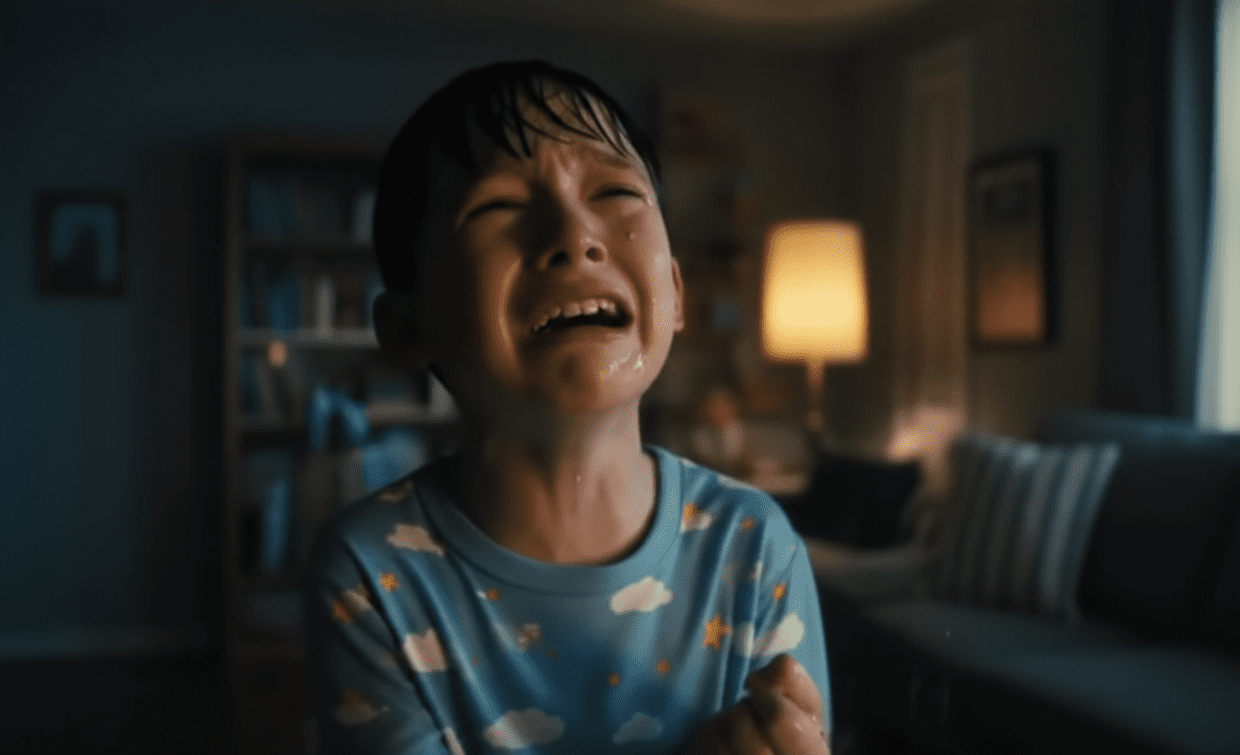
He ran down to find Leo at the back door, trying to force it open against the wind. Rain hammered the glass. The boy’s hands were bleeding.
“Leo! What are you doing?”
Leo ignored him. Kept pushing. Sobbing.
Jessica appeared. “Sweetie, come away from the door—”
“She can’t reach!” Leo screamed. His first words in three months. “She can’t reach it!”
He grabbed a dining chair. Swung it at the window.
Glass exploded outward.
Leo shoved the bread through the broken pane into the storm. “Mia! It’s here! I put it here!”
Mark grabbed him. The boy fought like a trapped animal.
“Who’s Mia?” Jessica’s voice cracked.
Leo went limp in Mark’s arms. Whispered: “My sister. She’s five. I promised… I always leave the bread where she can find it.”
The room stopped.
“What sister?” Mark asked carefully. “You don’t have a sister.”
“I do. I hid her. In the attic. At the old house. She was too little. They would’ve hurt her too.”
Jessica’s hand covered her mouth. “Oh God.”
“I told her to stay quiet. I told her I’d leave bread on the railing every night so she’d know I was okay. So she’d know to come out and eat.”
Mark’s blood turned cold. “Leo… how long was she in the attic?”
“I don’t know. Until the police came and took me.”
Three months ago.
Mark called 911. Then Child Protective Services. Then the police captain directly.
“We cleared that house,” the social worker insisted. “We did a full sweep.”
“Check again,” Mark said. “Now.”
“Sir, we can’t just—”
“Check. The. Attic.”
Jessica held Leo on the couch. The boy rocked back and forth. “I promised. I promised her.”
“We’ll find her,” Jessica whispered. “We’ll find your sister.”
The call came at 2 AM.
They’d found her near Interstate 40, wandering the shoulder in bare feet. Dehydrated. Silent. A trucker had spotted her.
St. Jude’s Group Home smelled like disinfectant and old carpet. A social worker led them to a small room where a tiny girl sat on a cot, knees pulled to her chest.
Hollow eyes. Tangled hair. Bruises on her arms.
Leo walked forward slowly. Pulled a slice of bread from his pocket.
Held it out.
The girl’s eyes locked on it. Then on Leo.
She lunged forward. Crashed into him. Wrapped her arms around his neck so tight he gasped.
“You came back,” she whispered. “You came back.”
“I promised,” Leo said. “I always leave the bread.”
Mark felt something crack open in his chest.
The caseworker cleared her throat. “We’ll need to place her in foster care. The process takes time—”
“She’s coming home with us,” Mark said.
Jessica turned to him. Tears streaming.
“Mark—”
“She’s coming home. Tonight. I don’t care what paperwork you need. We’ll sign it. All of it.”
The caseworker blinked. “You… you want to take her?”
“She’s Leo’s sister. That makes her ours.”
Six weeks of emergency placements. Mountains of paperwork. Background checks. Home visits. Legal fees that made Mark’s accountant weep.
Worth every penny.
One year later, Mark stood on the porch with his coffee. The railing was scratched and stained. Bread crusts littered the corner. Bird seed everywhere.
Chaos.
Complete chaos.
Inside, Leo shouted something about pancakes. Mia’s laugh rang out like bells.
Jessica stepped onto the porch. “You okay with this mess?”
Mark looked at the bread crumbs. The scratches. The stains he’d never quite scrub out.
“Yeah,” he said. “I’m okay with it.”
Leo appeared at the door. “Dad? Can we feed the actual raccoons now? Like, for real?”
Mark laughed. “Sure, kid. Why not.”
“And can Mia help?”
“Of course she can.”
Mia poked her head around Leo’s shoulder. Grinned. Her smile still came slow, still careful, but it was there.
Real.
Leo put his arm around her. She leaned into him.
“I told you he’d say yes,” Leo said.
“You always know,” Mia said.
That night, both kids put bread on the railing together. Stood side by side. Watched the woods.
After sixty seconds, they ran back inside, laughing.
Mark didn’t clean the porch the next morning.
Or the morning after that.
Some messes were worth keeping.
The bread had never been about raccoons. It had been a promise. A lifeline. A ritual of hope that survived neglect, silence, and a system that had failed them both.
But Mark and Jessica hadn’t failed them.
The porch would never be perfect again.
And Mark wouldn’t have it any other way.
The bread stayed on the railing. This time, raccoons actually came.
Leo and Mia named every single one.