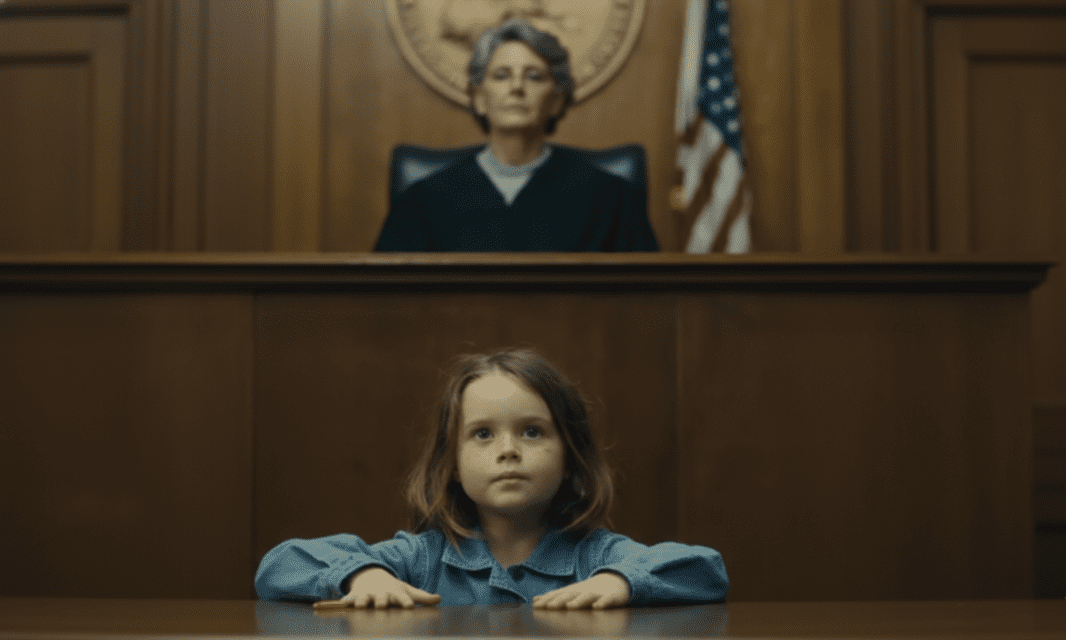
A five-year-old told the judge: “Let my dad go free, and I’ll make you walk again”… The courtroom laughed—until the judge stood up 30 days later.
The Maple Ridge courtroom was silent. Every seat filled. Standing room only.
Then a tiny girl with tangled brown hair stepped forward. Five years old. Faded blue dress hanging off her thin shoulders.
Judge Helena Cartwright had seen everything in twenty years on the bench. Rage. Desperation. Heartbreak.
But never this.
“Judge lady,” the girl called out, her voice clear and strong. “Let my daddy come home. I’ll make your legs work again.”
Laughter exploded through the room. Whispers. One man whistled low.
Helena stared at the child. Something in those green eyes—unwavering, certain—made her chest tighten.
Three weeks earlier, Marcus Dunne had made a choice that destroyed his life.
His daughter Nora was sick. Fever spiking. Breathing shallow. He had twelve dollars in his wallet and no insurance.
Lincoln Pharmacy wouldn’t give him credit. The medicine cost sixty-eight dollars.
So Marcus took it. Walked right out the door.
Security tackled him in the parking lot. Nora was alone in their apartment for six hours before social services found her.
Now Marcus sat in the defendant’s chair, head down, hands cuffed.
The prosecutor didn’t waste time. “Theft is theft, Your Honor. Empathy doesn’t erase the law.”
Marcus’s public defender stood. “This man has no record. He’s a devoted father. He was desperate.”
Helena had heard it all before. She’d ruled on a thousand cases just like this one.
Then Nora stepped forward.
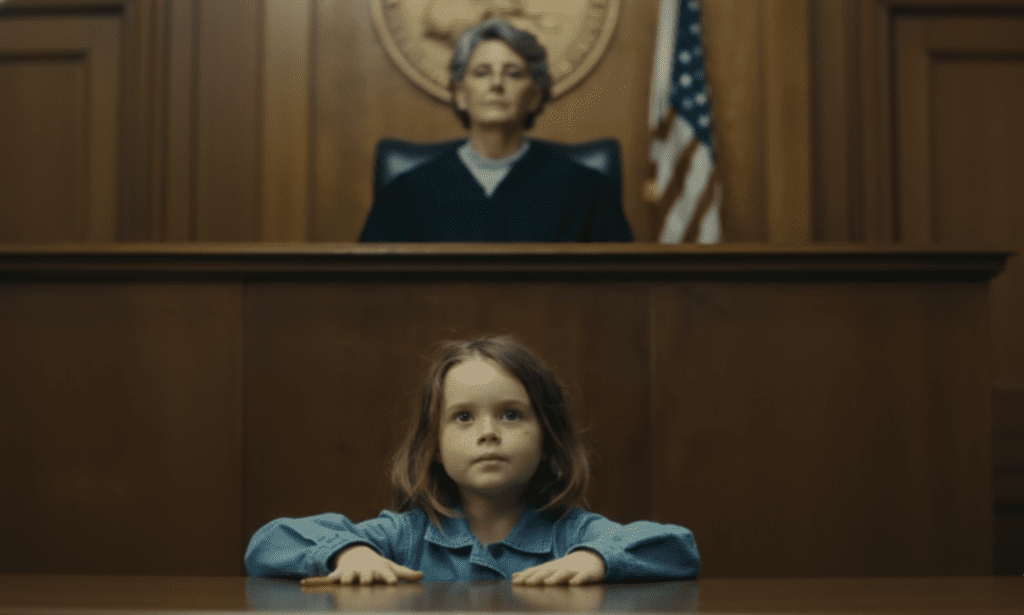
She walked right up to the bench. Put her small hands on the polished wood.
“Your legs don’t work,” she said, looking straight at Helena. “That makes you sad inside. I can help your heart remember. Then your legs will follow.”
The room froze.
Helena’s throat closed. She’d been in this wheelchair for eight years. Car accident. Three surgeries. No hope of recovery.
And this child—this impossibly small, impossibly brave child—was offering her a miracle.
“Bailiff,” Helena said quietly. “Clear the room. Everyone except the defendant, his daughter, and counsel.”
The crowd filed out, murmuring.
When the doors closed, Helena leaned forward. “Nora. What do you mean?”
“I can help you,” Nora said simply. “But you have to let my daddy stay with me. He needs to be home.”
Helena looked at Marcus. The man was crying silently, shaking his head.
“Your Honor, please,” he whispered. “Don’t listen to her. She’s just a kid. She doesn’t understand.”
But Helena was already making a decision that would end her career or define it.
“I’m postponing sentencing for thirty days,” she announced. “Mr. Dunne, you’re released to your daughter’s care. If—” she paused, barely believing her own words, “—if Nora’s promise proves true, the charges will be dismissed. If not, you’ll return to face the maximum penalty.”
The prosecutor shot to his feet. “Your Honor, this is—”
“Dismissed,” Helena said firmly. “Thirty days.”
The next morning, Nora knocked on Helena’s door.
Helena lived alone in a small house with ramps and rails everywhere. She opened the door, still skeptical, still wondering if she’d lost her mind.
“Ready?” Nora asked, smiling.
“Ready for what?”
“To remember,” Nora said.
She took Helena to the park. Made her feed the ducks. Made her laugh at their waddling.
“Feel anything?” Nora asked.
“No,” Helena admitted.
“That’s okay. Your heart’s still sleeping. We’ll wake it up.”
Day after day, Nora came. She brought flowers. Drew pictures. Told stories about her mom, who’d died when she was three.
“Daddy says Mom’s in heaven,” Nora said one afternoon. “But I think she’s in our hearts. That’s why we can still feel her.”
Helena felt tears on her face.
On day twelve, Nora brought music. An old CD player and a scratched disc.
“Dance with me,” she said.
“Nora, I can’t—”
“Not with your feet. With your arms. Come on.”
Helena raised her arms. Nora spun beneath them, laughing.
And then—just for a second—Helena felt something. A twitch. In her left leg.
She gasped.
“See?” Nora said, grinning. “Your heart’s waking up.”
By day twenty, Helena could wiggle both feet. By day twenty-five, she could stand with support for ten seconds.
Her doctor was baffled. “There’s no medical explanation,” he said, staring at the scans. “The nerve damage should be permanent.”
“Maybe it’s not about the nerves,” Helena said quietly.
Day thirty arrived.
The courtroom was packed again. Word had spread. People wanted to see what would happen.
Marcus stood at the defendant’s table, pale and shaking.
The prosecutor was ready. “Your Honor, clearly the defendant’s daughter is a lovely child, but—”
The back doors opened.
Helena walked in.
No wheelchair. Just a cane in her right hand.
The courtroom erupted. Gasps. Shouts. Someone started clapping.
Helena made her way slowly to the bench. Climbed the steps. Sat down.
“The charges against Marcus Dunne are dismissed,” she said, her voice strong. “Furthermore, Mr. Dunne, I’ve spoken with Lincoln Pharmacy’s owner. He’s offering you a position in their warehouse. Full benefits. Health insurance for you and Nora.”
Marcus collapsed into his chair, sobbing.
Nora ran to him. He scooped her up, holding her tight.
“You did it, baby,” he whispered. “You did it.”
“No, Daddy,” Nora said, touching his face. “We did it. All of us.”
The prosecutor stood frozen, then slowly sat down. He had no words.
Helena looked at Nora. “Thank you,” she mouthed.
Nora just smiled.
Six months later, Helena could walk without the cane. She started a foundation—small, but growing—to help parents in crisis afford their children’s medicine.
Marcus worked hard at the pharmacy. Saved money. Moved Nora into a better apartment with her own room.
And every Sunday, they visited Helena. The three of them would go to the park, feed the ducks, and dance to scratched CDs.
The doctors still had no explanation.
But Helena knew. Marcus knew. Nora knew.
Some miracles weren’t about magic or medicine.
They were about a little girl who believed that love—real, fierce, unstoppable love—could wake up even the most broken hearts.
And sometimes, when hearts woke up, bodies followed.
The courtroom had laughed at Nora that day. But she’d proven something no law textbook could teach: that faith, courage, and compassion could rewrite the rules everyone thought were permanent.
Justice had been served. But more than that—mercy had been given. Hope had been restored.
And three people who’d been lost had found their way home.