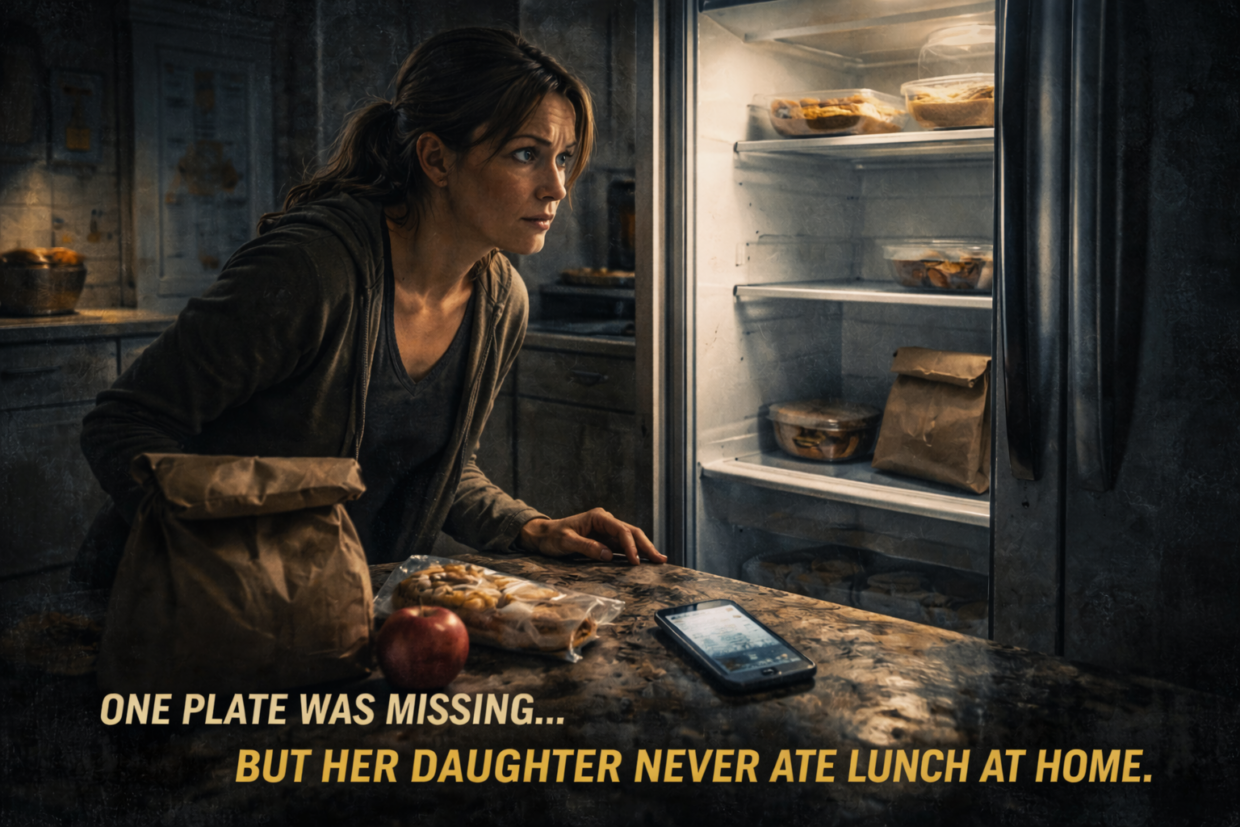
She checked the fridge — one plate was missing… But Harper never ate lunch at home.
She checked the fridge at 4:30 PM, counting the leftover plates from last night’s dinner. One was missing.
Harper sat at the kitchen table, backpack still zipped, claiming she was too hungry to start homework.
Nicole: Harper, did you eat lunch at school today?
Harper: Yeah, Mom. The usual.
The cafeteria had been closed for kitchen repairs all week. Nicole had packed lunches every morning, watching Harper grab the brown bag from the counter.
Harper’s lunch bag sat in the trash can, unopened. The sandwich was still wrapped, the apple untouched.
Nicole: If you ate at school, why is your lunch still here?
Harper’s eyes darted toward the hallway. Her fingers picked at the zipper of her jacket.
Harper: Oh, I forgot to eat it. I wasn’t hungry.
But ten minutes ago, Harper claimed she was starving. Nicole pulled the lunch bag from the trash, setting it on the counter.
The phone buzzed with a text from Harper’s teacher, Ms. Wilson.
Wilson: Harper wasn’t in class after lunch today. Is everything okay?
Nicole showed Harper the message. Harper’s face went pale.
Harper: She’s confused. I was there the whole time.
Nicole: Ms. Wilson says you missed math and science. Where were you?
Harper: I went to the nurse. I had a headache.
Nicole dialed the school nurse’s office. The nurse answered on the second ring.
Nicole: This is Harper’s mom. Did she visit you today?
Nurse: No, I haven’t seen Harper all week. Is she feeling alright?
Harper stood up abruptly, her chair scraping against the floor.
Harper: I need to use the bathroom.
She disappeared down the hallway. Nicole heard the bedroom door close, then the sound of drawers opening and closing.
Nicole called Ms. Wilson directly.
Wilson: Harper left after lunch and never came back. The counselor mentioned she’s been doing this frequently.
Nicole: What do you mean frequently?
Wilson: Mr. Green has been tracking her absences. She’s missed significant class time over the past month.
Nicole had never received any calls about absences. Harper brought home perfect attendance certificates every quarter.
Harper returned to the kitchen, her jacket now gone. She avoided eye contact.
Nicole: Mr. Green wants to see us tomorrow morning.
Harper: Who’s Mr. Green?
Nicole: The school counselor. Apparently you know him well.
Harper’s hands trembled as she reached for her water glass.
Harper: I’ve never talked to any counselor.
Nicole: He’s been tracking your absences for a month.
Harper: That’s impossible. I haven’t missed any school.
The next morning, Nicole and Harper sat in Mr. Green’s office. The walls were covered with attendance charts and behavioral tracking sheets.
Green: Harper, we’ve discussed this pattern several times. Leaving after lunch, missing afternoon classes.
Harper looked genuinely confused, glancing between Nicole and Mr. Green.
Harper: I don’t remember talking to you before.
Green: We’ve met six times in the past three weeks. You told me about feeling overwhelmed with schoolwork.
Nicole: Harper, is this true?
Harper: I swear I don’t remember any meetings.
Mr. Green opened a thick file folder, pulling out handwritten notes and signed forms.
Green: Here are the session notes. Harper’s signature is on each one.
Nicole examined the signatures. The handwriting looked like Harper’s, but something felt off about the letter spacing.
Nicole: Harper, did you sign these?
Harper studied the papers, her brow furrowed in concentration.
Harper: The writing looks like mine, but I don’t remember writing any of this.
Mr. Green leaned forward, his expression shifting from frustration to concern.
Green: Harper, what’s the last thing you remember about yesterday afternoon?
Harper: Eating lunch in the cafeteria with my friends. Then going to math class.
Green: The cafeteria has been closed all week for renovations.
Harper’s face went completely white. She gripped the arms of her chair.
Harper: But I remember sitting at our usual table. Emma was complaining about the pizza.
Nicole felt a chill run down her spine. Emma had been absent all week with the flu.
Nicole: Harper, Emma hasn’t been at school. She’s been sick at home.
Harper: That’s not right. We talked about the history test.
Green: There was no history test scheduled yesterday.
Harper began to shake. Tears formed in her eyes, but she looked more terrified than sad.
Harper: I don’t understand what’s happening to me.
Mr. Green reached for his phone, dialing the school nurse.
Green: We need the nurse here immediately. And please call Harper’s doctor.
Nicole: What’s wrong with her?
Green: These symptoms could indicate several medical conditions. Memory gaps, confusion about time and place.
The nurse arrived within minutes, taking Harper’s temperature and checking her pupils with a small flashlight.
Nurse: Her pupils are slightly dilated. Has she hit her head recently?
Nicole: Not that I know of. Harper, have you fallen or hurt yourself?
Harper: I don’t think so. Everything feels fuzzy.
The nurse checked Harper’s scalp, finding a small bump behind her left ear.
Nurse: There’s some swelling here. This looks like it happened recently.
Harper touched the spot, wincing.
Harper: It’s sore, but I don’t remember hitting anything.
Mr. Green was already dialing 911.
Green: We need to get her to the hospital immediately. These could be signs of a concussion.
Nicole: But when could this have happened?
Green: Memory loss and confusion can occur hours or even days after a head injury.
The paramedics arrived within ten minutes, asking Harper simple questions about the date, her address, and her teacher’s name.
Harper answered the date correctly but gave her address from two years ago. She couldn’t remember Ms. Wilson’s name.
Paramedic: Classic signs of post-concussion syndrome. We need to transport her for evaluation.
At the hospital, the CT scan revealed a mild traumatic brain injury. The doctor explained that Harper’s symptoms were consistent with a concussion sustained 24-48 hours earlier.
Doctor: The good news is that her confusion should improve with rest. The memory gaps might be permanent, but they’re limited to the period around the injury.
Nicole: So she really doesn’t remember the past few days?
Doctor: It’s likely she’s been functioning on autopilot, going through familiar motions without forming new memories.
Harper: Does this mean I’m not in trouble for skipping school?
The doctor smiled reassuringly.
Doctor: You weren’t skipping intentionally. Your brain was trying to heal itself.
Mr. Green visited that evening with Harper’s missed assignments and a get-well card from Ms. Wilson’s class.
Green: We’ll work with you on a modified schedule when you’re ready to return.
Harper: I’m sorry for all the confusion. I really thought I was going to class.
Green: You have nothing to apologize for. Medical conditions aren’t disciplinary issues.
Nicole tucked Harper into bed that night, finally understanding the missing pieces of the past week.
Nicole: How are you feeling?
Harper: Better. Less foggy. But I still can’t remember hitting my head.
Nicole: The doctor said that’s normal. The important thing is that you’re going to be okay.
Harper: Will you pack my lunch tomorrow? I want to make sure I actually eat it this time.
Nicole laughed, kissing Harper’s forehead.
Nicole: I’ll pack two lunches, just to be safe.
The next morning, Harper’s memory was noticeably clearer. She remembered the cafeteria renovations and Emma’s absence.
Harper: It’s weird how my brain filled in those gaps with fake memories.
Nicole: The doctor said it’s your mind’s way of making sense of missing time.
Harper returned to school the following week with a doctor’s note and a gradual re-entry plan. Ms. Wilson welcomed her back with understanding and extra support.
Wilson: Take your time readjusting. There’s no pressure to catch up immediately.
Harper: Thank you for noticing something was wrong. I’m glad my mom called.
Wilson: That’s what we’re here for. Looking out for each other.
Three weeks later, Harper’s attendance was perfect and her memory had fully returned. The only lasting reminder was a small scar behind her ear and a new appreciation for how fragile memory could be.
Nicole: Any headaches today?
Harper: Nope. And I remember everything from yesterday, including eating my entire lunch.
Nicole: Good. But I’m still packing extra snacks.
Harper: Mom, you don’t have to worry so much anymore.
Nicole: It’s my job to worry. But now I know the difference between defiance and medical emergency.
Harper hugged her mother tightly.
Harper: I’m sorry I scared you.
Nicole: You couldn’t help it. I’m just grateful we figured out what was really happening.
The mystery of the missing plate and forgotten lunches had been solved, not by punishment or confrontation, but by recognizing that sometimes the most puzzling behavior has the most innocent explanation.