




He walks on with a grin and a deck of cards, a kid who once rewound VHS tapes to learn secrets now standing under the hottest lights in American television. He says his name is Matt Franco. He says he7s going to do some magic. And over the span of a season, he does more than that. He turns tiny, fingertip mysteries into moments that fill an entire theater and, eventually, an entire country.
Before the first card is turned, there7s a story. How it starts matters: a four-year-old sees a magician on TV, records everything he can find, and scrubs every frame in slow motion. There are no mentors here, no dusty back rooms, just a kid teaching himself, one pause-and-play at a time. He tells the judges, simply, I started becoming fascinated with magic when I was four years old. He7s self-taught. He7s prepared. He7s ready.
Turning the Judges into a Deck
Franco7s opening audition is close-up and close-quarters, the kind that lives or dies by timing and tone. He asks to join the panel7s table and tells them he7s brought a story about season nine of America7s Got Talent. The characters are familiar: Howard Stern, the king of media; Heidi Klum, America7s sweetheart; Mel B, the queen of pop; and, of course, their favorite joker. He does not forget host Nick Cannon either: Don7t worry, Nick. I haven7t forgotten about you. You really are a jack of all trades.
What follows is a stream of patter and reveals that turns the judges into pips and court cards. He riffs about being twenty-five and consumed by magic twenty-four seven. He nods to the full house in the Dolby Theatre and jokes that he7ll never forget the address, 6801 pausing to admit that there is no zero in a deck, so sometimes he improvises. The deck stays in motion, shuffling through autobiographical beats and quick flashes of faces in the flesh. The humor is gentle and self-aware, and so is the skill. When the last punch lands, it7s not just a trick; it7s a prologue.
“I am generally not a big fan of card tricks. But your presentation made it all the more exciting… the story, how you link the cards with the numbers. I don’t know how you bloody did that, but that was quite genius.”
Mel B7s reaction cuts through the noise. Even a skeptic is leaning in. Howard Stern puts it another way: people come on and make a single card appear; Franco just made the whole deck appear to serve a narrative about the people in front of him. That difference more story, more connection becomes the theme of his run.
First Risk, First Reward
When he returns later, there7s a tremor of risk. He admits, I7ve never done it for an audience before, so this will be the first time. The setup feels like a dare to himself. He shows the deck around, the standard assurance that the cards are mixed and all different. Mel B says stop, and she locks a selection into her memory. Franco loses the card in the deck. That alone won7t impress, he says. Then he turns to Howie Mandel.
He sprays a blank canvas and grins that he7s no artist. The lines bloom into a playful portrait. It looks like the judge who7s watching it take shape. The room exhales: It7s me. It is. The moment comes fast. For the first time ever, what was the card you thought of? he asks Mel B. Seven of hearts, she says. The image answers back. The portrait carries the card, as if the canvas always knew the secret.
“Speechless. Oh my gosh. That was good.”
There7s the alchemy again: a close-up trick inflated to fill a studio, the heat of spray paint turned into a reveal you can7t blink and miss. Franco7s north star remains the same: take something small and make it play big, not with pyrotechnics, but with premise.
Is This Big Enough for Live TV?
Success builds pressure. Backstage whispers become honest questions. As fantastic as that is, on the stage of Radio City Music Hall, he keeps doing small things with cards. Is that gonna be spectacular enough for a live show? It is the kind of worry that has followed close-up magicians for decades: how do you scale wonder without smothering it?
Franco answers by trusting the intimacy and then adding a twist you can hear from the last row. He sets up a prediction with spray paint onstage and brings the judges in close again. Heidi is told to push her finger into a riffling deck to select a card at random. She locks eyes with the camera and shows it to America. Franco asks if she has the two of diamonds. No, she says, firmly. He doesn7t flinch. Hold on a second. Maybe I can fix this.
He pivots to Mandel, the one who didn7t choose a card at all. Howie, reach into your left back pocket right now. The room tilts. He pulls out a card: the two of diamonds. A wrong guess becomes a right destination.
“You blew my mind. Very good.”
Heidi breaks down what matters: she7s a hawk, she says, always watching to catch the move. There was no way. Her fingertip forced the selection. There is a simple clarity in that testimony that fills a building better than fireworks. Mel B offers the more elemental verdict: how do you do it? And then, with a smile that echoes the show7s looseness, she adds, you do make magic really hot.
Howard Stern steps back and frames it: Your stuff is great week after week. You7re a really cool magician. You make magic cool. It is time, he says, that America lets a magician get to the top. The language is not just praise; it is permission, an idea about what a magic act can be on a mainstream stage.
The Vanishing Phone That Rang From a Seat
By the time Franco hits Radio City, he knows the question he7s answering each time. He starts small on purpose. He asks three judges to slide cards from the deck. He places them in Mel B7s hand. He borrows her phone to take a snapshot of the evidence the six, four, and two clearly visible. There7s a second photo, just in case. The safety net matters for what7s coming next.
Now that we have photo proof of the cards, there7s no way I can switch them, he says, and the sentence splinters into chaos. Oh my god, Mel B blurts as the phone takes a bath it never asked for. Don7t worry, he says, with an actor7s calm. I have a backup plan. Step one is isolate the phone. Step two is drying it off. The phone is fixed, he claims. Then he smirks at the silence: Not only is your phone fixed, but it7s actually, believe it or not, gone.
Silence turns to sound. If your phone really is fixed, we should be able to hear it across America, he says. Heidi dials, and the theater leans in. It7s ringing. The two words cut across the room like light. They follow the sound through the aisles. He plants Mel B just so and warns her: This is about to get dangerous.
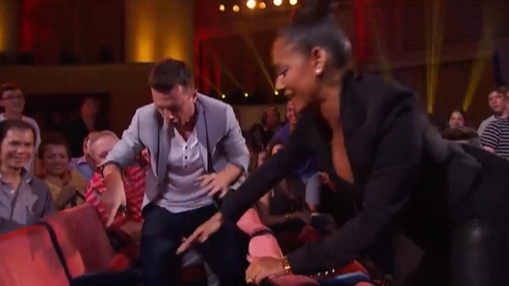
He slices into a theater seat. Mel B reaches into the cut and fishes through upholstery like a surgeon. There is something inside. She pulls out her phone. The screen shows the picture they took at the start proof that time bends in Franco7s hands. Finally, he adds the flourish that stitches the story closed. Look at the seat number, he says. 642. The very numbers that sat in Mel B7s palm a minute earlier are now a row and a seat, a breadcrumb trail hidden in plain sight.
What Franco achieves here is the answer to that backstage anxiety. A borrowed phone vanishing is intimate; a building hearing it ring is epic; and a number on a chair that matches three random cards is the kind of poetic tag audiences remember on the train home.
Preparation, Personality, and the Long Game
If there is a secret to why these moments land, it is not a method diagram. It is preparation and persona. The judges keep returning to it. You just didn7t come out and do a card trick, Stern says after an early performance. You did a whole routine and a routine that we7ve never seen before. Mel B hammers the same nail in a different way: presentation. The story. The numbers that suddenly matter.
Franco7s patter is more than filler. It disarms and organizes. Consider that first audition: he roasts and flatters without cheap shots, spins a memory of the Dolby Theatre into a gag about zeros and improvisation, and in the same breath makes the deck seem both ordinary and fated. He glances at Nick Cannon and calls him a jack of all trades. He tells Heidi she has six appeal, then catches himself before laying it on too thick. The jokes are clean, the mood is bright, and the rhythm never lets you get ahead of him.
Under the jokes sits a craftsman7s instinct. He telegraphs honesty at curious moments: I don7t claim to be an artist, he says before spray-painting Howie7s portrait. I7ve never done it for an audience before, he admits before a high-wire reveal. Those admissions recruit us into the risk. When the impossible happens, it feels earned, not canned.
Then there7s how he uses television. Stern makes a point audiences at home already feel: Even though you7re doing close-up magic, you managed to bring millions of people in on it. He knows where the judge7s camera is. He knows what a cutaway can ruin and what it can save. He gives us clear, visual anchors: a photo on a phone, paint on a canvas, a seat number on a plaque. They7re proof points you cannot argue away, even as your brain looks for trap doors.
Scaling the Unscalable
What haunted the season at mid-run was simple: can card magic hold a 6,000-seat room? Franco answers in sequences. The phone piece is the obvious example, but a smaller beat explains the philosophy. A wrong guess two of diamonds becomes a right card in a judge7s pocket. The miss is scripted, but the fix feels improvised, even cheeky. That tension between what seems like an error and what resolves as design creates a story arc inside a single trick. In a theater, story is scale.
He also spreads the load. He makes the audience the stage. He moves off the judges7 desk and into the aisles. He lets us hear, not just see. He coaxes instinctive reactions out of the panel that function as proxy for the viewers: Speechless. Wow. There was no way. By putting decisions and discoveries in the mouths and hands of other people, he multiplies the sense that something unrepeatable just happened.
What the Judges Saw
Read the through line in their words. Mel B starts as the skeptic and ends as a champion of his showmanship: I7m generally not a big fan of card tricks, she says, and then calls his execution genius. After the pocket surprise, she laughs at herself: how do you do it? and still finds a way to name what others are thinking: he makes the genre hot.
Heidi Klum7s praise is surgical. She keeps testing method and fair play. I7m always, like, looking what you7re doing exactly, she says, insisting she stuck her finger into the cards without any path for interference. You blew my mind. In an arena of skeptics, that sentence qualifies as a seal.
Howie Mandel plays the foil and the guest star. It7s me, he exclaims when the portrait comes alive, and then he7s the bewildered owner of the very prediction in his left back pocket. The comedy helps. The disbelief helps more.
Howard Stern frames the bet. Your stuff is great week after week, he says. You7re a pro. The word pro matters here. It suggests the craft we didn7t see: the hours where spray paint dripped wrong and cards bent at the edges, the mirrors that got smudged, the distances walked in empty theaters to test where a ringtone will land on an ear. When Stern tells America to vote for a magician, he7s not only lobbying for Franco. He7s lobbying for a kind of ambition: to make small miracles carry weight in the biggest rooms.
The Win and What It Means
There7s a shape to the season: an audition that reads like a mission statement, a mid-season performance that gambles on something he7s never tried, a live-show turn that feels like a prank on gravity, and a finale that makes the original pitch feel inevitable. America has voted before, and often for singers who can drown a room in a chorus. This time, the quietest act on the bill holds the last note. The out-loud amazement converts to the on-paper result: Matt Franco wins.
It matters because of what magic usually is on TV. Single beats. A pop of confetti. A gasp and a cut to commercial. Franco7s achievement is long-form wonder, a plotted arc with callbacks and consequences. The deck he introduced at the start doesn7t just reveal faces; it maps choices and echoes later decisions. The spray paint isn7t just a gimmick; it7s an art language his show can speak when he needs a wall-sized reveal. The phone isn7t just borrowed; it7s a promise to an entire audience that he will take something of theirs, risk it, and then give it back better.
There is also the simpler explanation: he is fun to watch. The jokes land. The rhythm is kind. The swagger is controlled. He does not scold us for not knowing. He invites us to be the kind of person who might figure it out, even as he stays a step ahead. When he tells Mel B to stand, when he plants Heidi as a caller, when he announces that something dangerous is about to happen, we believe him, but we also feel safe inside the moment. That safety lets the surprise hit clean.
What You7ll Notice When You Watch
Notice the way he handles distance. In small frames, his hands are economical, and his eyes are busy. In big frames, he creates anchors at the edges of the stage: a canvas in one corner, a prediction on a wall, an empty seat that will later matter. He7s constantly solving a geometry problem: how to make a decision you make with your fingertip feel like a decision the balcony can own too.
Notice how he uses language to plant fairness. He names what could make you cynical: the deck is shuffled; the cards are all different; please remember your card and show it to everyone at home. He gives you jobs that reinforce the idea that you, not he, control the crucial junctures. When he fails on purpose, it reads not as a bluff but as humility, and when he turns the table, you feel he7s earned the right to surprise you.
Notice, finally, how the judges function as a chorus. Their lines are more than applause. They are proof. There was no way, Heidi insists. Wow, Howie says, several times, as if the word has in it the acknowledgement that he makes a living finding punch lines and has nothing to add here except awe. You make magic cool, Stern says, which is both a compliment and a thesis.
The Season in One Image
If you needed to compress all of it into one picture, choose Mel B standing in the aisle, phone ringing somewhere not in her hand, a hundred strangers listening for a single tone. There is risk, there is scale, and there is the soft joke of a judge who is always on that phone being the one who loses it. When the phone comes out of the seat and the photo on the screen matches the start of the story, you can feel the logic of the season itself. That7s the trick Franco keeps doing: he makes the ending make the beginning inevitable.
It is tempting, after the confetti, to explain the result as a twist. The truth is simpler. This is what happens when a magician refuses to treat close-up work as a consolation prize for small venues. This is what happens when someone bets that story is a louder amplifier than smoke and sparks. Franco7s win is not a quirk; it7s a verdict on craft.
Along the way, he leaves souvenirs: a portrait that knew a heart it shouldn7t, a card waiting by a judge7s back pocket, a number on a chair that spelled out a choice made seconds earlier. He also leaves a blueprint for anyone who thinks a deck of cards is too small for a giant room. Make it personal. Make it playful. Make it proof.
Back where this all began, at a table with a shuffled deck, Franco smiles and says what he7s going to do. He7s done it now on the biggest stage he could find. The rest of the story lives in the reactions he sparked: the gasps that didn7t need explaining, the laughter that doubled as disbelief, the judges who kept finding themselves on the business end of a miracle and loving it.
Watch from the start and you7ll see the thread pull through every scene: a kid with a VHS habit grows into a pro who makes millions lean forward at once. Watch through the finish and you7ll see why America voted the way it did. And if you think you know how he did any of it, press play and try keeping that certainty past the first reveal. Consider it an invitation to be fooled well.
Ready to be pulled in? Set aside time and watch the full performance arc. You7ll see how a simple deck can hold a room, how a phone can disappear and call you from a theater seat, and how a spraypaint portrait can name a thought. Most of all, you7ll see a magician who made close-up feel big, and a season that ends exactly the way the opening promised.