



The stage that turns strangers into national conversations
Britain’s Got Talent has a habit of making ordinary people feel like they have been waiting their whole lives for one stage. The 2024 live shows, as gathered in this video, are full of that pressure. Audiences are not just watching performances; they are watching people answer years of doubt, rejection, and quiet practice. The judges’ reactions show why these moments spread: they are specific, emotional, and often impossible to ignore.
Sydney’s rainbow moment
Sydney’s performance of “Somewhere Over the Rainbow” is the kind of moment that makes a room go quiet. Simon says, “That is what I call a show stopping performance.” He adds, “a career defining performance.” Amanda says, “You took my breath away.” The line that lands hardest is the one about the lyric: “it felt so personal to you about what you must have wanted, you know, over the years with a god given talent like that, and for whatever reason, you’ve been ignored.”
Sydney had said, “I can’t believe it” at every step from audition to semifinals. Simon asks, “Are you starting to believe it yet?” Sydney answers, “A little bit.” That small answer is the emotional core. Later, Simon says, “it wasn’t a 10. It was an 11, in my opinion.” He also says, “if it wasn’t for people like you, I wouldn’t bother making this show. Seriously.”
The detail that makes the moment stick is the one after the applause. Sydney’s audition has been viewed over 50 million times. Yet Sydney says, “I go to work. I roll towels. I sell shakes. If you’d like to come, one rebel.” When asked if anything has changed, Sydney says, “No. Not really. Online.” That is the BGT paradox: a performance can become a national event while the performer’s daily life stays stubbornly ordinary.
Bruno’s operatic proof
Bruno’s tenor number is the opposite of Sydney’s soft ballad. It is big, dangerous, and full of risk. The judges call it “the gold standard for tenors.” One says, “Honey, you are unstoppable after this performance.” The performance is not just about hitting notes. The judge explains, “It’s about conveying the meaning, which in Italian really is all about hope, determination, be fearless about embracing your destiny, you know, being unstoppable.”
Bruno is emotional. The moment is blunt: “Bruno Yes, because he was crying like a baby throughout the whole thing.” The judges praise the humility. One says, “I am in awe of you.” Another says, “I don’t think anyone’s ever sung it as good as you just.” The song is described as “the biggest operatic song in the world,” and the judges say it “could have gone really, really wrong, particularly on a night like this, the final.” Bruno says, “I’m really, really grateful to be able to sing this song. It’s my favorite song for the longest time.”
The emotional point is not that Bruno sang a famous aria. It is that the aria became a response to years of frustration. The judge says, “I’m gonna prove every one of you wrong with this performance.” That line turns a vocal display into a personal argument, and it is why the moment feels viral: viewers hear a singer answering every person who said the song was too big, too old, too operatic, or too risky for a talent show.
Denise and Stephan: the blind couple who made the piano matter
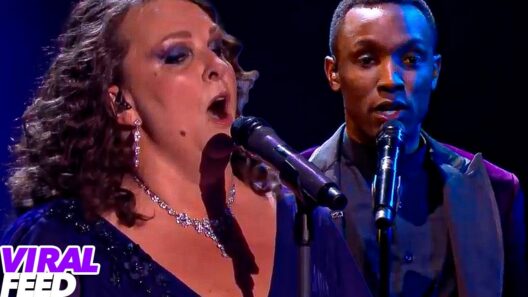
Denise and Stephan’s act is built on two things: a vocal that is clean enough to make the judges stop, and a piano part that is not a background decoration. Alesha says, “we fell in love with you at the auditions.” She adds, “that vocal was flawless, and the piano playing was stunning.” Simon says, “you absolutely brought the house down.” Amanda says, “That was so honest, so pure, so beautiful.” The judges also note that the performance “felt real at every moment” and that the pair “really have captured the heart of the nation.”
The public reaction is part of the story. In the video, the pair talk about messages after the audition. One says, “yours was one of the most memorable auditions.” The other recalls a taxi driver who said, “oh, you’re blind. Have you seen that blind couple that auditioned on BG today?” That line is funny and a little uncomfortable. It shows how quickly a performance can become a public object: people do not just remember the song; they remember the couple, the piano, the blindness, the moment.
The judges also praise the control. Simon says, “wasn’t just how good the vocal was. It was also how good the piano playing was.” That is a useful distinction. A lot of talent-show singing is judged by the voice alone. Denise and Stephan make the audience hear the arrangement, the support, and the way the piano carries the song. The result is not just a vocal performance. It is a partnership.
Ash’s impression marathon
Ash’s act is the video’s comic engine. The performance moves through gay idols and pop icons, and the judges name the references: “You’ve got all my favorite gay idols. You know, Bassey, Cher, Amanda.” Simon asks, “Can I see your hip action again? Like the Shakira thing.” The judges praise the range: “The vocal gymnastics and the different tones and ranges that you had to go between was absolutely brilliant.” One compares it to a marathon: “It was like you were running a marathon, and you paced it brilliantly.”
The act also shows how much work is hidden in a talent-show impression. The judges note that Ash “physicalized so much as well” and that the performer has “really worked on and expanded your act.” The reaction is not just laughter. It is recognition. Simon says, “I love auditions when someone has a regular job but has a dream to do something else and does it really, really well.” He also says, “I would put you at number one of the night.” That is a strong line for an act that could easily be treated as a novelty.
The viral value of Ash’s performance is that it makes the audience feel like insiders. The references are specific enough to reward viewers who know the songs, but the delivery is broad enough to carry people who do not. The judges’ comments about the “Amanda part” and “Cher was genius” show that the act is not just a list of voices. It is a sequence of character choices, each one timed to keep the room moving.
The choir that refuses to be boring
The choir segment is the video’s reminder that group acts can still feel fresh. The judges push back against the usual image of a talent-show choir. Alesha says, “There’s nothing stereotypical about this choir.” She adds, “I feel like all of us feel a part of it.” Simon says, “It is my dream for a choir to be in the final of this show.” The leader, Bill, is praised as a “wonderful leader,” and the arrangement is called “sensational.”
The judges also point to the song choices. Simon says, “choirs haven’t done so well over the years is that they choose boring songs, and you didn’t.” That is a blunt diagnosis. A choir can fail by sounding like a choir. This one tries to sound like a crowd. The energy is described as a “wind” when the group comes on, and the harmonies are called part of the joy. One judge asks for the name of “the lady with the glasses and the blue dress” and says, “Because you look possessed.” The follow-up is important: “I couldn’t keep my eyes off you. I mean, seriously, in a good way.”
The choir’s appeal is inclusion. The judges talk about the blend of voices, the soloist, and the way the group makes the audience feel included. The leader’s answer about choosing songs that remind him of “back in the night” and being “a raver back in the day” gives the act a personal history. It is not a generic group singing generic songs. It is a group with a point of view, and the judges respond to that point of view.
Cynthia’s high note and the audience’s verdict
Cynthia’s performance is the video’s most physically intense moment. The judges describe the build to the high note as “like a swell coming from the ocean, totally in control, hitting it with such clarity and power.” One says, “I thought I was gonna pass out during that.” Another says, “My heart was pounding the whole way through that with you.” The line that defines the moment is simple: “that is the job of a singer, to make us feel something, and you did that in abundance tonight.”
Simon’s reaction is the most memorable. He says, “it wasn’t a 10. It was an 11, in my opinion.” He also says, “The only people you need to trust is the audience. The audience always get it right.” That is a useful theory for a talent show. The judges can be impressed, but the audience decides whether a performance becomes a conversation. Cynthia’s high note is the kind of moment that gives the audience a reason to talk.
The judges also frame Cynthia as a masterclass. They mention the capacity, the fire, and the strength. One says, “You are a superstar in the making.” Another says, “That was stellar. One to beat.” The performance is not just a vocal feat. It is a test of nerve, and the judges make clear that the nerve held.
Why these moments travel
What ties these performances together is not just talent. It is specificity. Sydney’s “Somewhere Over the Rainbow” works because the lyric feels personal. Bruno’s operatic number works because it answers years of frustration. Denise and Stephan work because the piano and voice are treated as equals. Ash works because the impressions are specific and the physicality is committed. The choir works because it rejects the boring-choir stereotype. Cynthia works because the high note is built with control.
The judges’ language also matters. They do not only say “good.” They say “gold dust,” “show stopping,” “career defining,” “unstoppable,” “masterclass,” and “one to beat.” Those phrases give viewers a way to remember the performances. A viral moment needs a hook, and the judges supply the hook in real time. The audience then carries the hook into the wider conversation.
The video also shows the gap between fame and daily life. Sydney’s 50 million views sit next to towel rolling and shake selling. Denise and Stephan’s taxi-driver moment shows how quickly a performance becomes a public story. Ash’s act is praised as number one of the night, but the performer still has to keep working the material. The choir is told it deserves the final, but the final is still a vote. The video captures that tension: the stage can change a life, but it does not erase the life that came before.
For viewers, the best way to understand the 2024 live shows is to watch the reactions as carefully as the singing. The judges’ faces, the audience’s gasps, and the contestants’ quiet answers tell the story as much as the notes do. The video is a compact tour of the moments that made the season feel personal, risky, and worth talking about. If you want to see why Britain’s Got Talent still gets people talking, start with these performances and let the stage do the rest.