




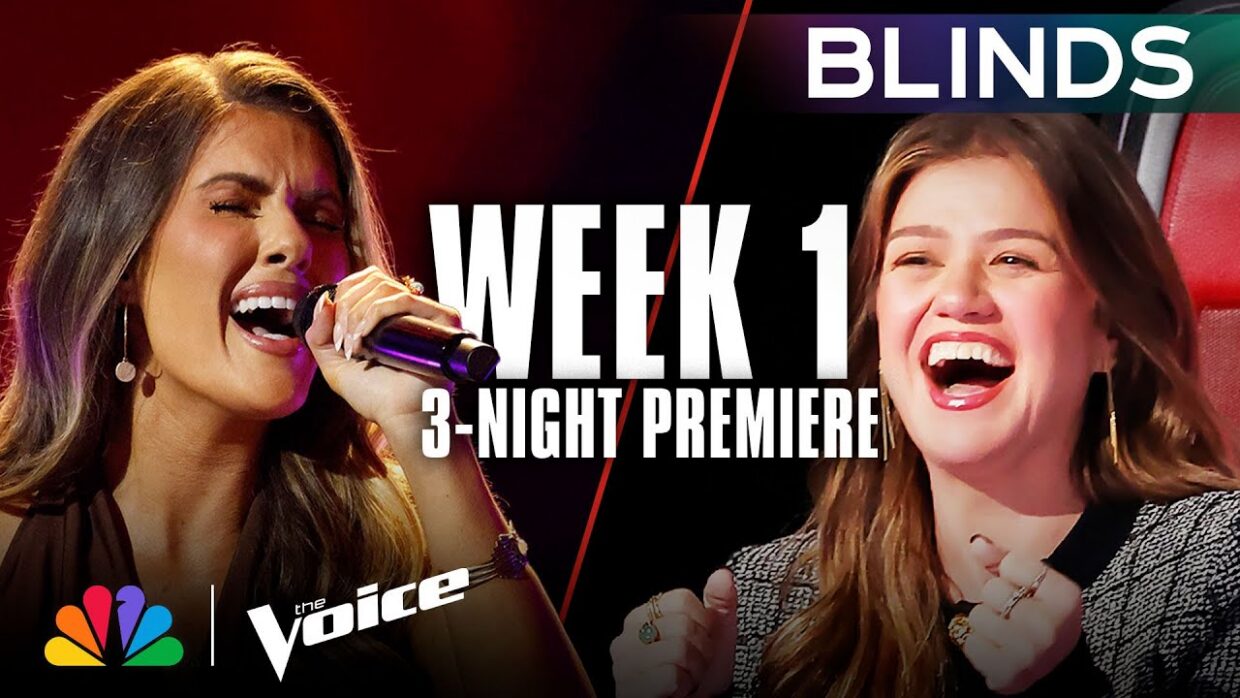
Kelly Clarkson presses her button and turns toward the stage. Riley Green follows. For the singer facing those red chairs, two coaches have now chosen to watch the rest of the performance. It is an early burst of encouragement in NBC’s AMAZING Blind Auditions from Week 1, a collection in which the reactions backstage can be as absorbing as the auditions themselves.
Over roughly 36 minutes, singers keep performing through button presses, rotating chairs and cheers. Clarkson gets up and dances. Adam Levine holds out until the end of one song. Queen Latifah turns toward a duo, and Green follows as their family jumps backstage. Each coach makes the same basic gesture, but the people waiting for it respond in their own way.
The families give these auditions a second point of view. From the stage, a turn means a coach has said yes. Backstage, children cheer for a parent, relatives jump, and supporters break into tears. The camera lets viewers watch both sides of that exchange: the performer who must keep singing and the people who can finally let their excitement out.
Kelly Clarkson gets out of her seat
Clarkson is among the most physically expressive coaches in the collection. Her early turn gives one performer a face to sing toward, and Green’s subsequent turn adds another. Later, she rises from her seat and dances along with a performance. Even without a spoken assessment, her response is easy to read.
That dancing offers a different kind of pleasure from the suspense of a button press. For a moment, viewers can watch a coach enjoy the music without waiting for her decision. The singer continues, and Clarkson moves along. Her reaction gives the performance room to feel like a show while the audition is still underway.
Elsewhere, she presses her button eagerly and turns with visible excitement. In another audition, she turns and throws her hands into the air. Those gestures give her decisions an extra burst of warmth. A singer looking out from the stage gets more than an occupied chair facing forward; they can see Clarkson’s enthusiasm.
Her most affecting turn comes with a cut to a singer’s children backstage. They cheer as she chooses their parent. Their response puts a specific relationship at the center of the audition. The person onstage is someone they know as a parent, now receiving encouragement from Kelly Clarkson in front of an audience.
A duo gets two chances to celebrate
The duo’s audition spreads the attention across two singers and the people supporting them. They harmonize onstage before Queen Latifah presses her button and turns. Green turns afterward, and the family backstage responds with screams and jumps. Each new chair gives the supporters another reason to celebrate.
For viewers, a second turn also changes how the rest of an audition feels. After the first, the performers have a coach facing them. After the next, they have another listener who has committed. The duo must continue singing together through that growing reaction, keeping their shared performance at the center of the moment.
A separate audition brings a quieter-looking response that becomes just as emotional. Queen Latifah turns and smiles at the performance. Green later presses his button, and family members backstage break into joyful tears. The coaches face the singer while the family reacts out of the performer’s sight.
These are the sequences that reward watching beyond the instant a chair starts moving. A button press is brief. The family’s reaction continues afterward, while the singer still has a song to deliver. Watching the two together gives the turn its full effect.
Big Country holds the stage
The singers have to command attention before any coach turns. Big Country does it with a powerful belted note, wearing a cowboy hat under the stage lights. It is one of the collection’s clearest performance images: a contestant committing to a big vocal moment while the audition remains in progress.
In another country performance, Green presses his button and swivels toward the stage. The movement is familiar by then, but it still redirects attention to the artist. Once he faces forward, viewers can watch his response alongside the performance rather than seeing only a coach listening with his back turned.
Another singer continues with visible intensity beneath dramatic lighting. That sustained effort deserves attention alongside the more easily isolated celebrations. The performer must carry the audition through the stretches before and after a coach decides, including the time when no chair is moving.
Across the collection, Queen Latifah and Green each make several turns. Their reactions vary, from Latifah smiling toward a performer to Green turning with a smile as Levine looks back in approval. Those exchanges between coaches add another set of responses to watch without taking the singer off the stage.
Adam Levine waits for the ending
Levine provides one of the collection’s strongest moments of suspense when he presses his button at the end of a song. The singer has nearly reached the finish before his chair rotates. Viewers have to wait through the performance to see that decision arrive.
A late turn leaves little singing time for the performer to enjoy the sight of that coach facing forward. It also makes the final stretch worth watching closely. An audition that has already delivered most of its music can still change in its closing moments, with one last decision from a coach.
Levine’s timing varies elsewhere. In one audition, he turns before Clarkson adds her own yes, making it a two-chair turn. The second decision gives the performer another response to take in. What began with one coach facing the stage becomes a performance for two who have pressed their buttons.
Amanda Mikkel also gets a turn from Levine. He presses his button and rotates to watch her perform, giving that audition a clear point of recognition. Later in the collection, another Levine button press prompts wild cheers from supporters backstage. His decisions produce both a change onstage and an immediate release among the people waiting behind it.
The singers keep going after the yes
The most engaging passages allow attention to move among the performer, the coaches and the family. Queen Latifah turns, and a family celebrates. Clarkson chooses a parent, and the children cheer. Green joins another coach, and relatives cry. The singer remains responsible for finishing the performance through all of it.
That continuing work gives the collection its shape. Big Country’s belted note and the duo’s harmonies belong alongside the dancing, tears and raised hands. The coaches react because someone is still standing onstage and singing, often while several people around them are visibly losing their composure.
Watch the full video for the stretch before Levine’s late turn, the duo’s successive yeses and the children cheering for their parent. Stay with the performances after the buttons are pressed, too. Clarkson’s dancing and the families’ celebrations unfold while the singers carry on with the songs that earned those responses.