Monowi, Nebraska, has one bar, one library and one resident—and she is the mayor, clerk, treasurer and bartender. Elsie Eiler has kept the town on the map since her husband died in 2004, signing her own liquor license and paying taxes to herself.
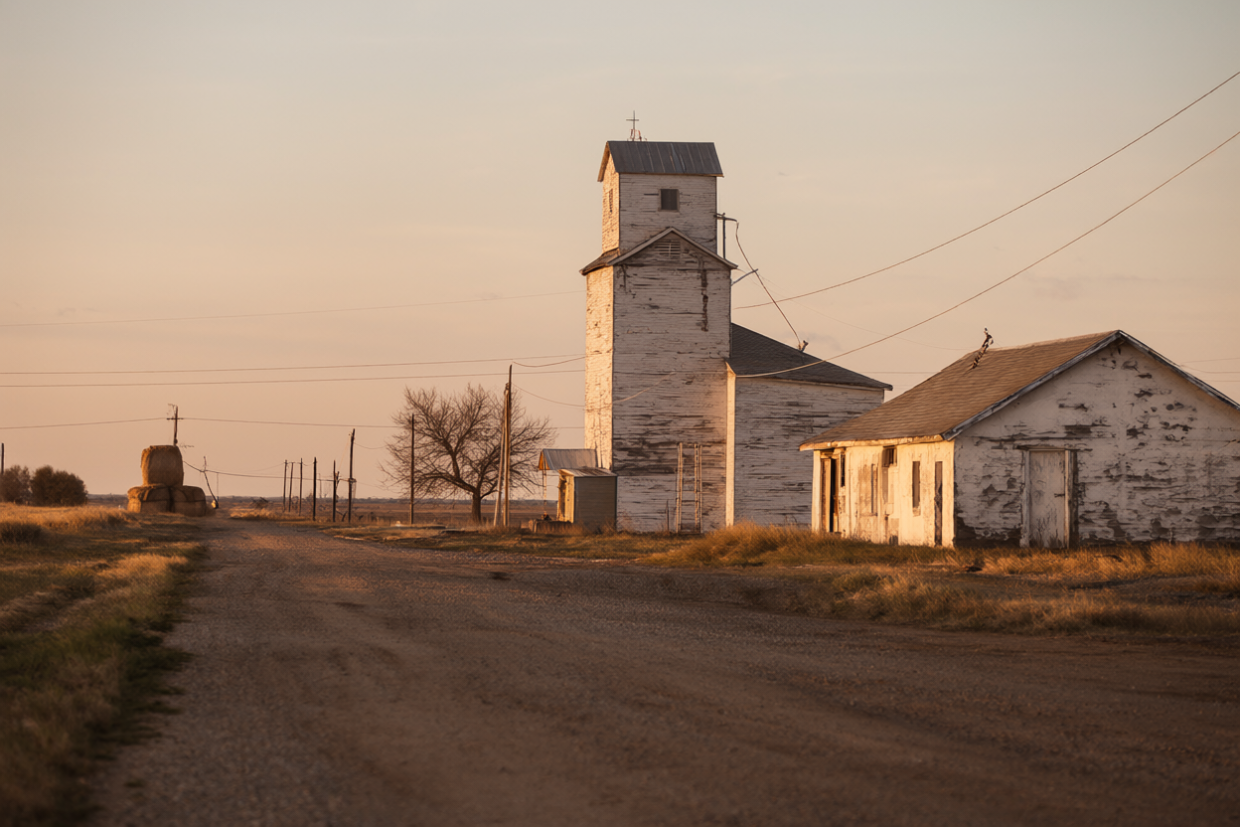
The road into Monowi, Nebraska, is dirt, and it runs past a white tavern with a sign that advertises the coldest beer in town. Beyond the building the prairie opens up in every direction, flat to the horizon. An abandoned church and the skeleton of a grain elevator break the skyline, and then there is nothing but grass, wheat and sky.
This is Boyd County, about five miles from the South Dakota line, ringed by wheat fields and prairie. Monowi is small even by the standards of rural Nebraska, but it holds a distinction the US Census tracks. It is the only incorporated place in the country with exactly one resident, and the count has held at one.
A census number is usually a measure of growth or decline. For Monowi, it is a description of who is left. The number has been one since 2004.
That resident is Elsie Eiler. She is the mayor, the clerk, the treasurer, the librarian and the bartender. When Monowi needs a decision, a signature or a drink, the same person supplies it. The town’s government is not a committee or a board. It is one woman with a set of keys.
The arrangement is unusual, but it is not a stunt. Monowi is incorporated, and incorporation comes with obligations. Someone has to sign the forms, and there is no one else. She does it because the alternative is a town that no longer exists.
Eiler grew up nearby. She met Rudy Eiler in the one-room schoolhouse. She married him at 19, after a stint with an airline in Kansas City, and in 1971 the couple reopened the Monowi Tavern. The building itself dates to 1903.
Monowi had been bigger once. At its peak in the 1930s it was a railroad stop of about 150 people, with shops, restaurants and a prison. The trains brought the people those businesses served. For a while, the town’s future looked like the future of the railroad.
The last train came in the late 1970s. After that the town began to empty. The shops closed, the restaurants closed, and eventually only one business remained. The tavern stayed open.
A town can disappear in stages: first the railroad, then the shops, then the people, then the paperwork. Monowi stopped at the last stage.
Rudy died in 2004. Elsie became the only resident, and every municipal office fell to her at once. She did not let Monowi’s incorporation lapse. Instead she took the jobs and kept the paperwork current.
The work is not symbolic. Each year she posts a mayoral election notice in her own bar and votes for herself. She files a road plan to collect state funds. She raises about $500 in taxes from herself, and that money keeps three streetlights and the water running.
State liquor and tobacco licenses arrive addressed to her as secretary. She signs them as clerk. Then she gives them to herself as the bar owner. The same signature appears at every step, and the tavern stays legal.
Ghost towns do not file road plans. Monowi does, and that is the difference. The paperwork is the town’s proof that it is still here, and she files it without ceremony.
Rudy’s Library was his dying wish. It fills a 320-square-foot shed with thousands of his books, packed shelf to shelf. The key hangs in the tavern, so the door is never far away. Checkout runs on the honor system.
The tavern is the town’s living room. Regulars come out for coffee and euchre. Some of them are fifth-generation customers, their families having made the drive for decades. The bar gives Monowi a place to be a town.
Others come from much farther away. Six guest books hold signatures from visitors from all 50 states and more than 60 countries. The books are the town’s record of the people who wanted to see Monowi for themselves.
For a town with one resident, that is a kind of census in reverse. It counts the people who came, not the people who stayed. The books are proof that a place can be tiny and still be a destination.
In June 2021, four generations of family and two county sheriff’s departments gathered for the tavern’s 50th year. The celebration ran four days. Picnic tables went up outside, and the deputies grilled burgers. The tavern had opened under Elsie and Rudy in 1971, and the party marked 50 years of the same family behind the bar.
When the subject of retirement came up, Elsie joked about it. She has said she has no plans to do anything else.
That is how Monowi stays on the map. The town does not depend on a boom. It depends on small acts repeated every year: a notice, a ballot, a signature, a tax payment, a road plan.
Elsie has been the town’s whole government for more than two decades, and she has been its bartender for much longer. The census says one; the guest books say the town has had company.
The regulars keep driving out to see her. The beer stays cold. The streetlights stay on.
“This is my home,” she said. “All my friends are around. Why would I want to leave?”
Sources: BBC Travel, AP News, AP News, The New York Times.