In 1587, John White sailed from Roanoke Island to England for supplies, leaving his daughter and newborn granddaughter behind. War with Spain kept him away three years. When he returned, the settlement was empty—and one word was carved into a wooden post.
In August 1590, John White came back to Roanoke Island after three years away. He found no trace of the colonists. The settlement on the coast of what is now North Carolina was empty, and the people he had left there were gone.
In 1587, White had led more than 100 English colonists to Roanoke Island. They came in families, not as a single company of men, and the settlement was meant to be England’s first permanent colony in the New World. It was a claim to the land built around households and the children they would raise there.
White’s own family was part of that plan. His daughter, Eleanor Dare, was among the settlers. Her infant daughter, Virginia, was the first English child born in the Americas.
Virginia’s birth gave the colony a future in the most literal sense. The settlement’s survival and her own were now the same question, and the supplies her grandfather sailed for were meant to keep both alive. For White, the venture was personal as well as official.
White sailed for England on August 25, 1587, and arrived in November. The voyage was for supplies. War with Spain prevented him from securing a relief expedition right away.
The gap between those dates is the heart of the story. In the colony’s first years, the settlers had no governor and none of the supplies he had sailed to fetch. Back in England, White spent those same years trying to mount the relief voyage that the war kept delaying.
Whatever happened on Roanoke happened without its governor. The colonists left no account of it, and White had no way of knowing how they had fared. The only report waiting for him was cut into wood.
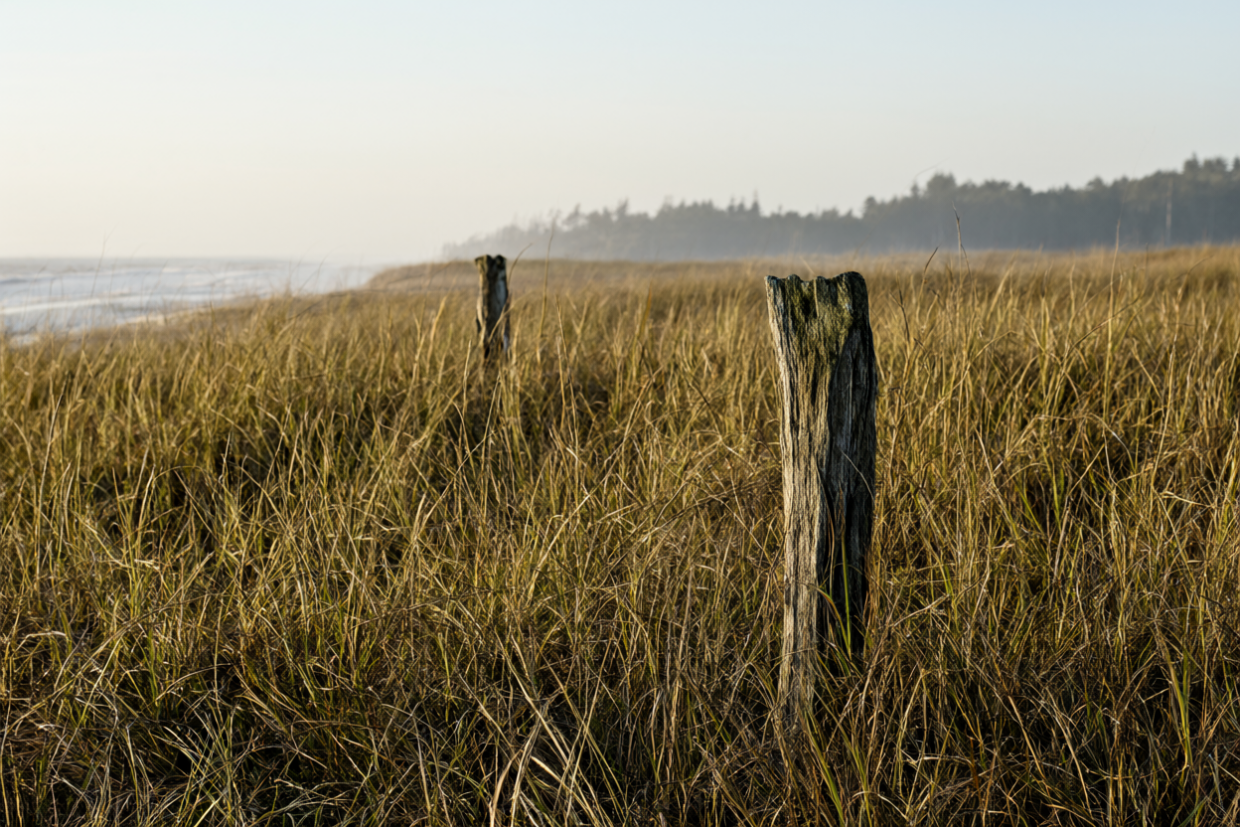
CROATOAN was carved into a post, and CRO was etched into a tree. The letters were the only message left for White. They were few, but they were specific.
The word was not random. Croatoan was an island, now Hatteras Island, and the name of a Native people friendly to the English. Carved into a post on Roanoke, it pointed south, toward a place and a people the colonists knew.
The carvings were not a map or a journal. They were a name and a fragment of a name, cut where anyone returning to the settlement would see them. White could read them as a sign of where the colonists had gone.
That direction was the best clue White had. A search to the south might have found the colonists or their trail. It might have answered what had happened to Eleanor and Virginia.
White did not get that search. A storm forced his ship to turn back before the colonists could be searched for. He never saw his family again.
One word was all the colonists left. It was enough to start a search, and not enough to finish one.
Centuries later, the search moved from the island to a map. A fort symbol was found hidden under a paper patch on White’s map at the British Museum. The mark had been covered, and it showed a fort.
The patch was small, and what it concealed had waited there while the colony’s disappearance was studied and debated. When the fort symbol came to light, it sent researchers inland.
The First Colony Foundation found English pottery at a site by the Chowan River, about 50 miles west of Roanoke. The distance was significant: the pottery lay far from the island White had left, and it suggested some colonists may have moved to the Chowan River.
For the foundation, the Chowan River site offered a possible answer to a question that had stood since 1590: whether some of the colonists left Roanoke for the mainland. The pottery was the kind of evidence a settlement leaves behind.
Not every archaeologist accepted that reading. Charles Ewen told National Geographic he was skeptical. The team, he said, was “looking to prove rather than seeking to disprove their theory.” His point was about method—a search designed to confirm an answer can pass over evidence that would change it.
Other evidence pointed toward the coast and the name on the post. Since 1998, the Croatoan Archaeological Project has found English-made artifacts in Croatoan villages. Those finds suggested some colonists joined the Hatteras people, living among them rather than vanishing.
The artifacts found in those villages are the strongest evidence that the message on the post was meant literally. They place English-made objects among the people the colonists had named, in the direction the carving pointed.
Even the label “Lost Colony” has a history. Author Andrew Lawler told Smithsonian that the name took hold only in the 19th century. Earlier generations assumed the colonists had been assimilated. The search goes on, and each find adds a piece to a story that earlier generations told differently.
The word “lost” frames the colonists as people who vanished without a trace. The evidence points to something more ordinary and more human: a settlement that broke apart, moved, and was absorbed into the places and peoples around it.
Two kinds of evidence now pull in different directions. One points west, to the Chowan River and a fort marked on a hidden map. The other points south, to Croatoan and the Hatteras people. Neither has closed the case, and both are still being tested.
Perhaps they were never truly lost—only folded into the land and its people, where their story is still being uncovered, one piece of pottery at a time.
Sources: Britannica, The Lost Colony of Roanoke, National Park Service, Fort Raleigh National Historic Site, Smithsonian Magazine, Pottery Fragments May Hold Clues to Roanoke Colonists’ Fate, First Colony Foundation, Hidden Images Revealed on Elizabethan Map of America, Britannica, John White.