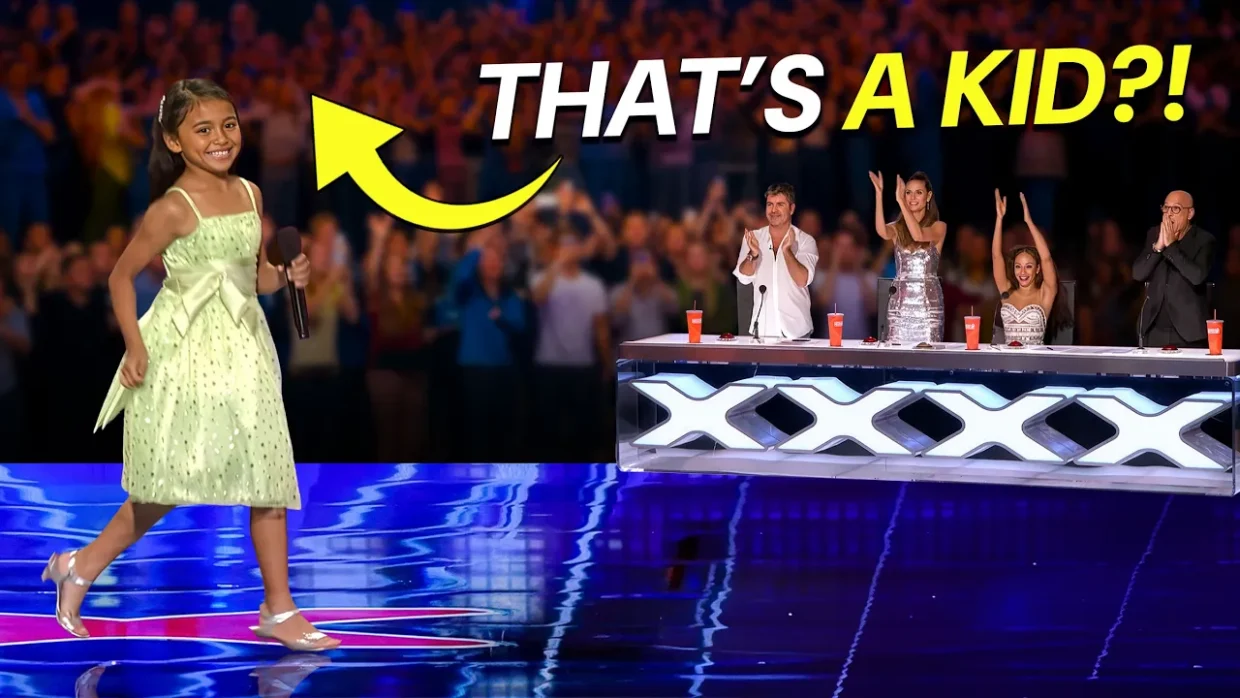
Charlotte Summers has a plan for the million-dollar prize: she would buy a guinea pig and name him Simon Cowell. If her sister gets one, he will be Howie. She is 13, thrilled to meet her idol, and happy to tell Simon that he was her first thought on audition morning. A few minutes later, all four judges are standing to applaud her singing.
“Are you sure you’re 13?” Gabrielle asks afterward. Charlotte confirms that she is. Gabrielle hears enough hurt and soul in the performance to imagine overdue rent and a relationship gone wrong. Charlotte has come to the stage talking about pets; the adults hear a singer who can make them believe in experiences far beyond her years.
That gap runs through this Got Talent compilation. Children introduce themselves, name the relatives waiting backstage and describe what they hope to win. Then they perform, and the judges struggle to fit the voice to the person in front of them. The best exchanges come when the children get to answer back.
A ten-year-old at the keyboard
Anna Christine admits she is nervous. She is ten, and she has come to America’s Got Talent to sing and play piano. Before she begins, a judge jokes about being the show’s Mister Rogers, the adult who is good with children. Anna settles at the keyboard under blue lights. By the end of her performance, her mother is crying backstage while the host comforts her.
Heidi Klum describes closing her eyes and thinking, “this can’t be a 10 year old girl’s voice.” Another judge praises the depth in Anna’s singing. The panel reaches for an adult measure of what she has done: one judge says she delivered what looked like thirty years of experience.
Anna keeps saying thank you. Four yeses send her toward Vegas, but the exchange leaves a more precise impression than the vote alone. She has handled two jobs, playing the piano and singing, while nervous enough to say so before she starts. The judges’ talk of experience follows a child’s demonstration of preparation and control.
The children have their own answers
Eight-year-old Ciana Pelekai tells the judges she has been singing since she was four. Asked what she would do with a million dollars, she says she would buy a new house for her mother, father and whole family. She starts singing under warm pink lighting, and the auditorium audience rises to its feet as she finishes.
“If I were you, I would start looking for a new house for your parents,” a judge tells her. Ciana’s wish gives that praise a personal target. She has named the people she wants to help before anyone has heard her audition.
Kadie Lynn arrives from Kemp, Texas, which she describes as a tiny town with one stoplight. Her mother and father have come with her. In cowboy boots, she strums an acoustic guitar and sings; afterward, she covers her face in tears as all four judges stand.
The panel praises her power, confidence and technical control. Howie Mandel takes a different route. She is 12, he points out, and she has sung a love story convincingly enough that he would believe it on the radio. What does she know about love? Has she ever been in love?
“With my mom.”
Her answer gives the conversation a scale she can speak to herself. Howie has asked about the adult attachment he hears in the song. Kadie names the love she knows. She leaves with four yeses, after Simon tells her he expects people to look back on this audition as the day they discovered her.
More than a powerful voice
The judges are most useful when they explain what the singers do beyond sounding older than expected. After Charlotte’s audition, one judge praises a voice that is strong and powerful without being overdone. Simon says he can hear her respect for the artist, then urges her toward more freedom if she reaches the live shows. “When you let go, you’re at your best,” he tells her.
Charlie Green brings a different kind of confidence. He chooses “Summer Wind,” and the response includes praise for his dancing and little moves. Backstage, the hosts dance and mime along. One judge predicts he could win the show; another asks whether he loves this kind of music. Charlie says yes.
That question gets closer to the performance than guessing his age would. Charlie has chosen music he enjoys and found a way to move with it. The judges respond to the whole act, from his singing to the gestures between phrases. He receives three yeses.
Sixteen-year-old Josh Barry faces a more qualified discussion. Still in sixth form, he says he wants to become a professional singer and sing in front of people. The judges praise his confidence, charm and stage presence. Simon, though, says that under normal circumstances he would advise Josh to join a band. Three yeses follow, and Josh runs over to shake Simon’s hand. Approval can still include a different idea about where a singer might fit.
When family comes onto the stage
Ten-year-old Calum Courtney has brought his mother, father, little brother, two friends and much of his family. Asked whether he is nervous, he says no. After he sings, that composure gives way to tears, and his little brother runs out to hug him.
The judges praise his tone and control. They also reassure him. One hopes his tears are happy ones and tells him he should be proud of the reaction he has received. Calum can sing with the assurance they admire and still need his brother beside him afterward. The embrace gives him a moment with someone who knows him beyond this audition.
Later, Mara Justine sings with both hands moving as she belts into the microphone. Her mother eventually runs onto the stage and wraps her in a tearful embrace. For both families, the distance from the wings to the performer becomes too much to maintain once the singing is over.
Big songs and the Golden Buzzer
Arisxandra Libantino states her choice without hesitation: “One Night Only” by Jennifer Hudson. She is 11 and has come with her mother and father. Wearing a sequined pink dress, she earns a standing ovation from the judges and audience.
“That wasn’t you singing, was it?” Simon asks. She tells him it was. He asks again, and she confirms it again. The exchange repeats the disbelief heard after Anna and Charlotte, but Arisxandra’s own account is brief. Asked how she feels, she says, “I feel amazed.” All four judges vote yes.
Pranysqa Mishra, nine, arrives from Tampa, Florida, with her parents and little sister. She describes herself as scared and excited. If the audition goes well, she wants to call her grandmother, who has wanted to see her on this stage. Pranysqa sings in a frilly white dress; Heidi later presses the Golden Buzzer, and gold confetti falls around her.
Other singers reach that same celebration through very different performances. Reid Wilson stands with the microphone for a soulful audition before Howie presses the buzzer. Fayth Ifil sings and dances across the stage before Simon presses his. Courtney Hadwin throws herself into an eccentric, high-energy rock performance, then covers her face in shock when Howie sends down the confetti.
Watch the video for those performances, but stay for the conversations on either side of the songs. Charlotte’s guinea pig plan, Kadie’s answer about her mother and Calum’s hug with his brother give each audition a life beyond the judges’ verdict. When the next singer walks out, listen to what they say before they begin.