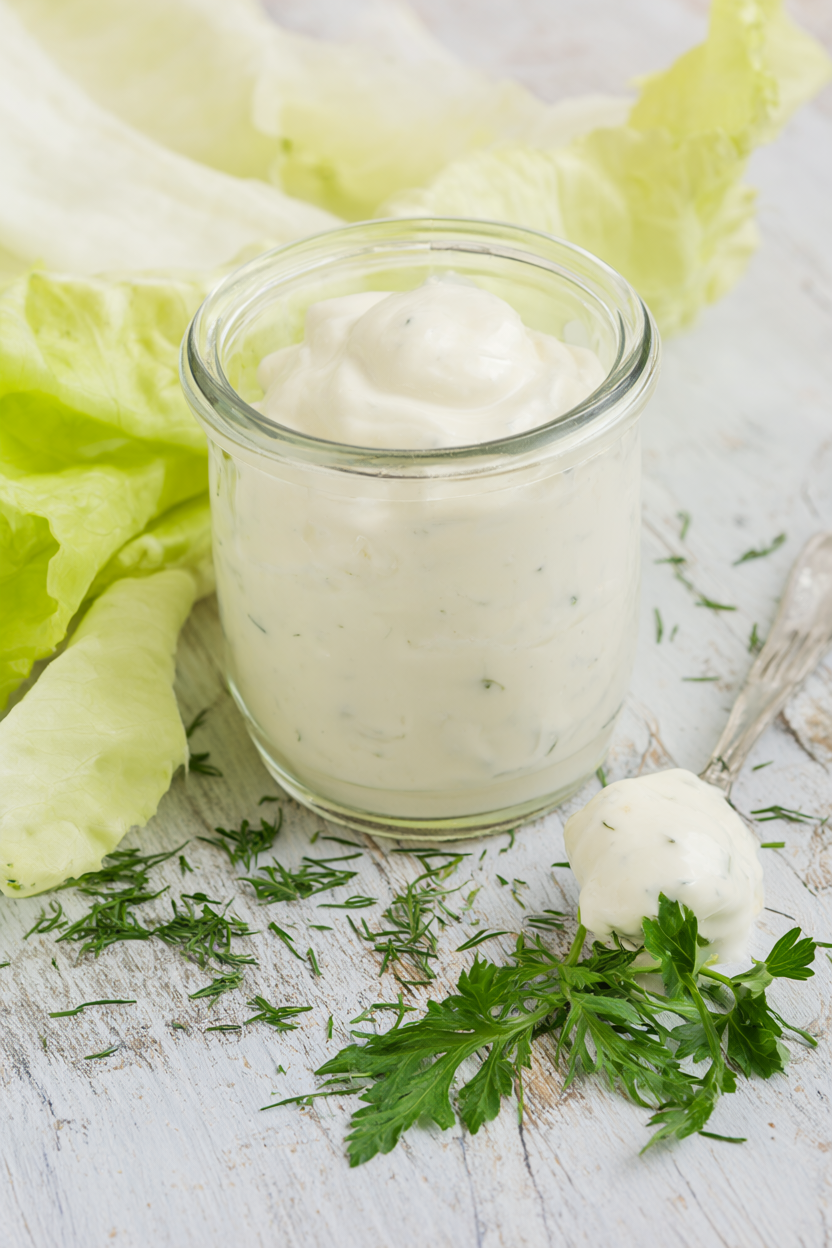
There is a moment in spring when the lettuce is finally tender enough to eat plain, and a heavy dressing feels like it would bury it. This yogurt dressing is the answer to that moment: half a cup of plain Greek yogurt, a squeeze of lemon, a spoonful of olive oil, and about ten minutes between the fridge and the table. It coats every leaf instead of pooling at the bottom of the bowl, and once you have the ratio in your head, one small swap changes the whole character of it.
Why Greek Yogurt Makes a Dressing That Clings
Start with the base ratio and you will not need to look it up again: 1/2 cup of plain Greek yogurt, 2 tablespoons of lemon juice or vinegar, and 1 tablespoon of olive oil. That makes about 2/3 cup of dressing — enough for a generous bowl of leaves, and just thick enough to hold on instead of sliding off.
Plain Greek yogurt does the job mayonnaise usually does, but with a cleaner, brighter tang. It is thicker and higher in protein than sour cream, so it gives the dressing body without making it feel heavy. That thickness is exactly why the dressing clings: the yogurt sits on the leaf rather than running straight down to the bottom of the bowl. A thinner dressing needs more oil before it coats anything, and then it tastes like oil. This one coats at full strength from the first toss.
A Teaspoon of Dijon Keeps the Yogurt and Oil Together
Yogurt and oil do not naturally want to stay mixed. One teaspoon of Dijon mustard per batch is the small trick that holds them together, and it is the difference between a dressing that looks smooth and one that looks streaky.
Skip it and you will notice: the oil starts to gather at the top sooner, especially after a night in the fridge. Whisk the mustard into the yogurt before the oil goes in, or put everything in a lidded jar and shake hard for twenty seconds. Either way, the finished dressing should look glossy and even, with no ribbons of oil running through it.
The Acid Sets the Flavor: Lemon, Lime, or Vinegar
The two tablespoons of acid are where the dressing gets its personality, and it is the easiest place to make it yours. Keep the amount the same and only the flavor moves.
- Lemon juice for herb dressings — bright and clean, and it lets dill or parsley lead.
- Lime juice when you are using cilantro — the two taste like they belong together.
- Red wine vinegar for a sharper, vinaigrette-style dressing that cuts through richer leaves.
- Apple cider vinegar for a milder tang when lemon feels like too much.
A dressing built on lemon tastes green and fresh; the same base with red wine vinegar tastes sharper and a little more grown-up. Make it once each way and you will know which one your table wants. The lime and cilantro version is the one to reach for when there is already a bunch of cilantro in the fridge, and the lemon and dill version is the default for a plain green salad.
Stir In the Herbs Last, Then Store It in a Jar
Chopped soft herbs go in at the very end. Stir 1 to 2 tablespoons of dill, parsley, or cilantro through the finished dressing and they keep their color and flavor instead of fading into the yogurt while it sits.
Store the dressing in a lidded jar for up to 5 days. It thickens when it gets cold, which is normal — loosen it with a splash of water or a little more acid, shake, and taste it on a lettuce leaf before it goes anywhere near the salad. That single bite is the only test that matters, and it tells you whether the dressing needs another squeeze of lemon or just a splash of water.
Once the ratio is in your head, this stops being a recipe and becomes a ten-minute habit — the thing you make on a weeknight when the greens are good and you want them dressed properly, without reaching for a bottle from the store.