A veil can be the quietest piece you wear and still change the whole silhouette. If you love clean lines, the trick is to choose one clear idea — an edge, a length, a single detail — and let everything else stay still. These six minimalist wedding veil ideas are built around that principle: no fuss, no crowding, just beautiful tulle and one considered finish. Each one works with a simple gown, and each can be removed or restyled as the day moves from ceremony to dancing. Think of the veil as the accessory that sets the scale for everything else, then keep your jewelry, hair, and bouquet in the same restrained register. Here is how to make each style work in practice, from the first fitting to the last photograph.
1. Raw-Edge Cathedral Veil
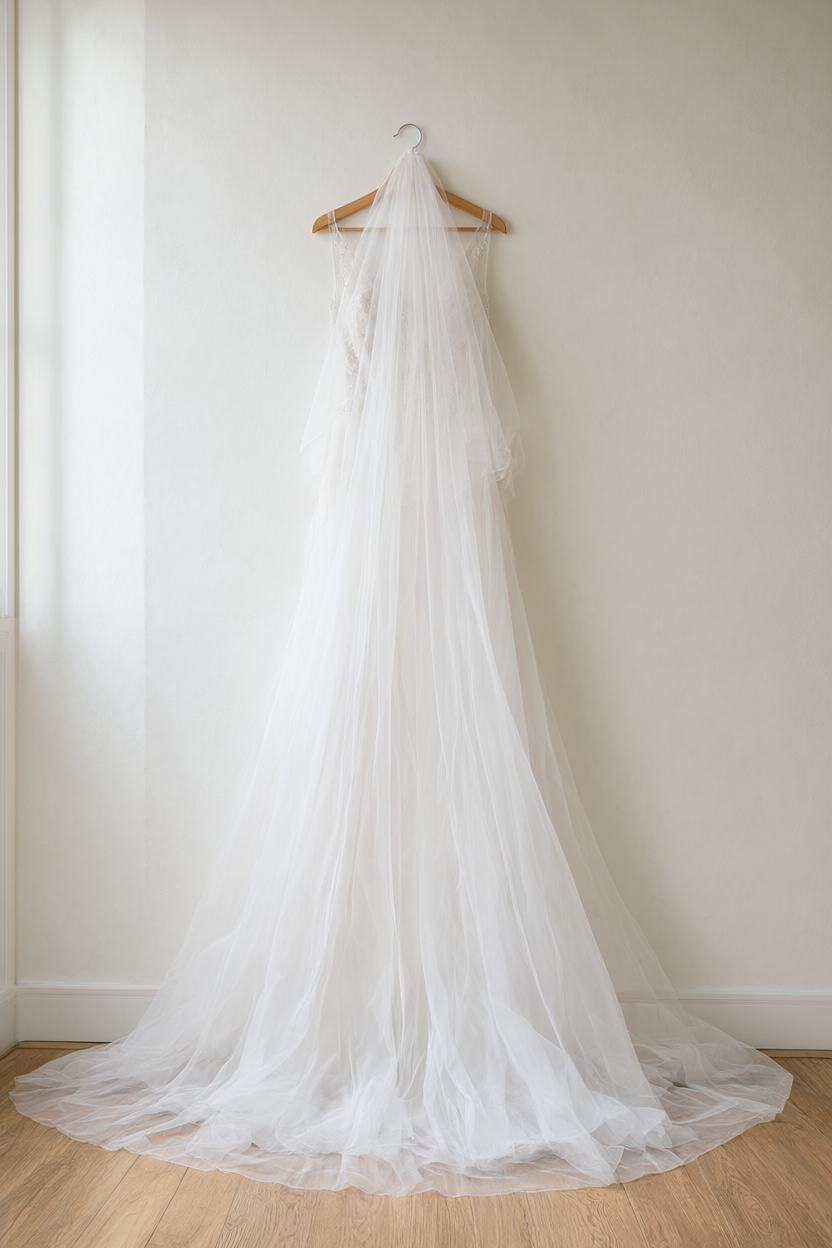
Ask for a single layer of fine, lightweight tulle that falls straight from the comb instead of fluffing outward, and hold a swatch up to the light to check that it drapes rather than stands away from your hand. Anchor the comb low at the crown, just above a sleek ponytail or low bun, and keep the hem cut clean and untrimmed so the length does the talking against your gown’s train. Remove the veil after the ceremony so the back of your column gown gets its own moment at the reception, and store it flat so the tulle does not crease before the photographs.
2. Satin-Ribbon Fingertip Veil
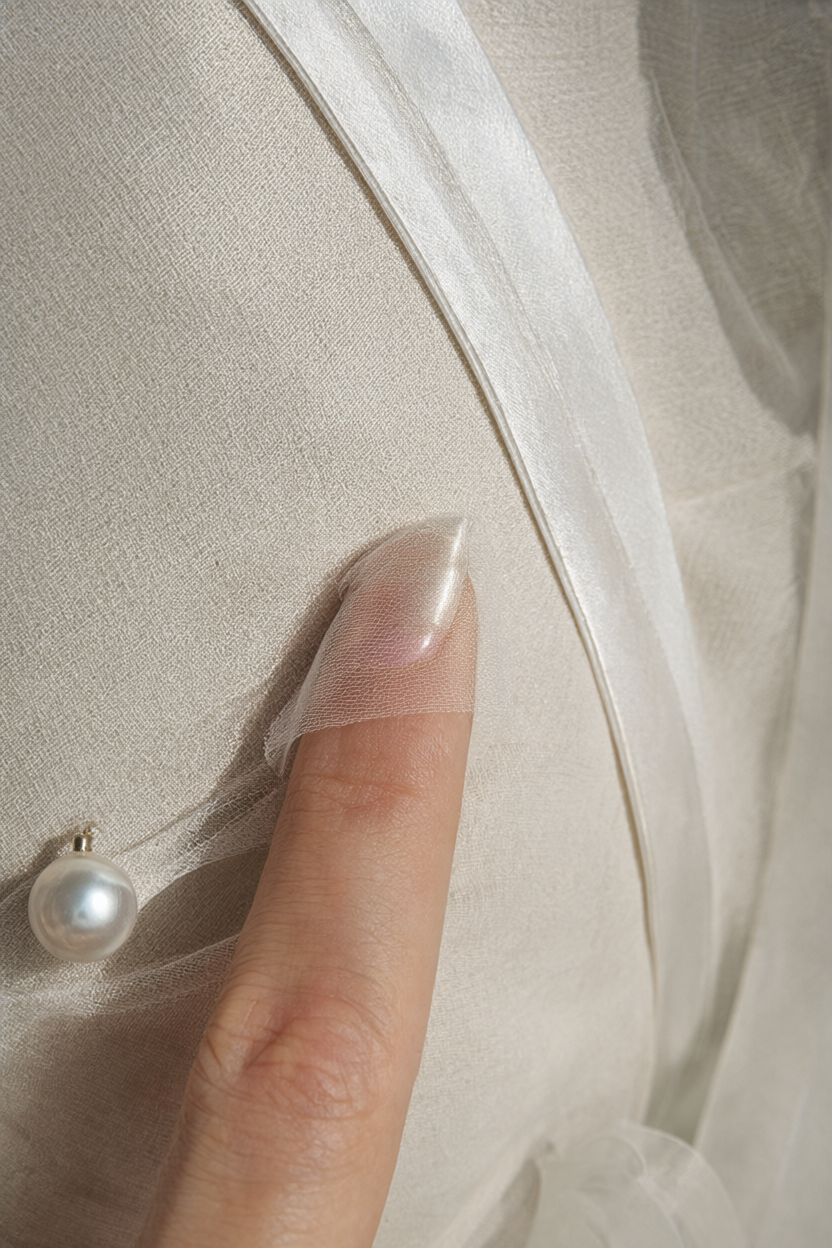
A fingertip veil edged in narrow satin ribbon reads tailored rather than sweet, because the ribbon gives the tulle a crisp outline that holds its shape in a breeze. Keep the ribbon in the same tone as your gown for a quiet monochrome effect, or echo one bridesmaid color if you want a small, deliberate link, and choose this length for an outdoor ceremony where a long train would collect grass and grit. Ask your seamstress to bind the edge evenly and to finish the corners by hand so the ribbon lies flat instead of rippling in photographs.
3. Scattered-Pearl Veil
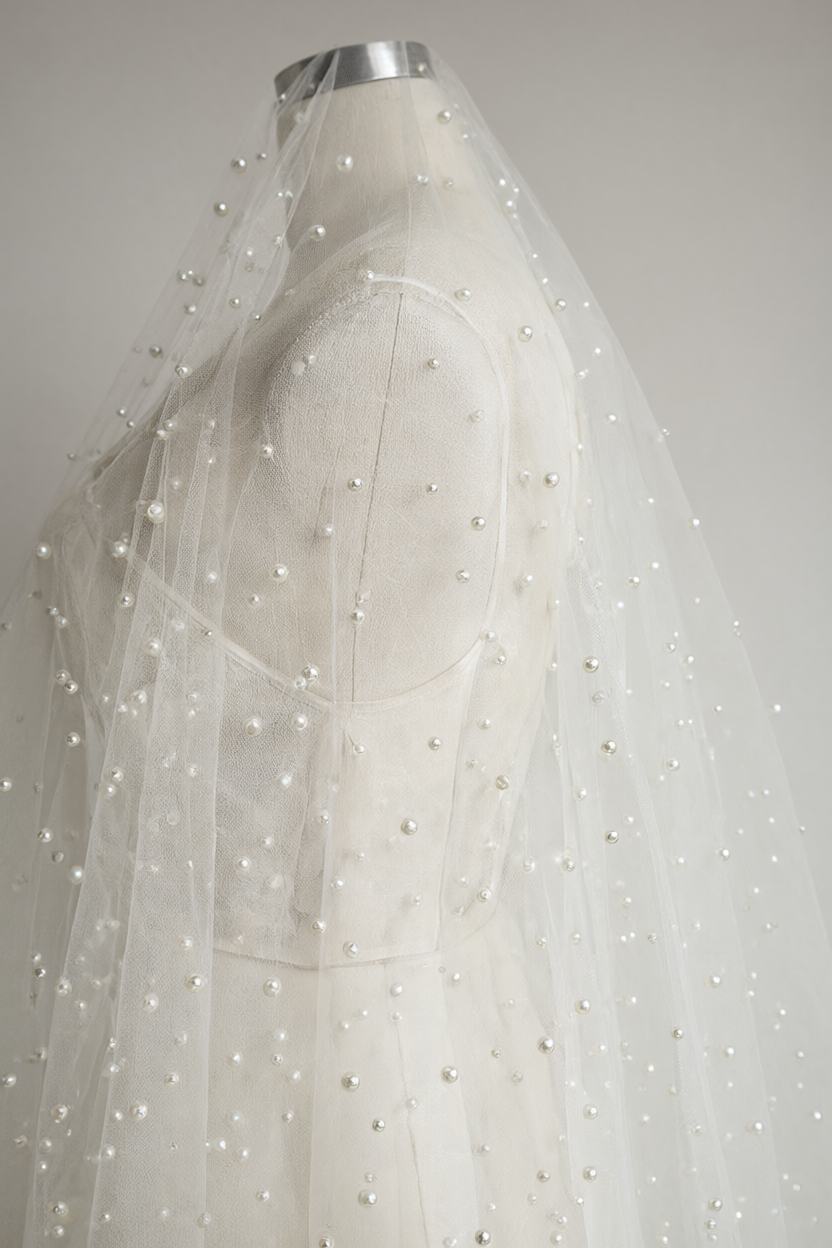
Small flat-backed pearls sewn across the last third of a plain tulle veil create detail that only appears when you turn or the light moves across it. Sew them by hand rather than gluing, spacing them irregularly so the pattern feels light and unforced, and work through only the top layer so the veil still falls in one soft sheet. Pair the veil with a clean neckline and skip other pearl accessories, letting the scattered shimmer be the only decorative note in your bridal look.
4. Micro Birdcage Veil
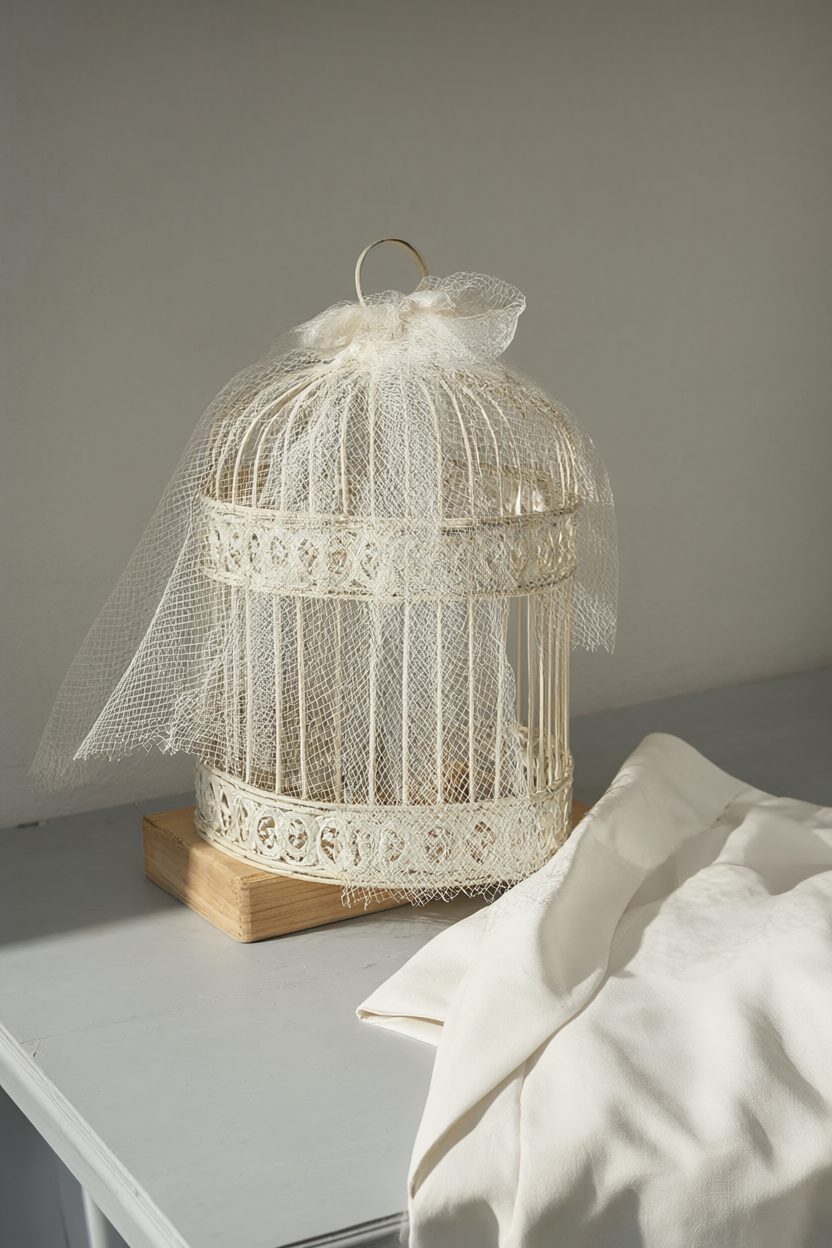
An ivory net blusher that covers just the eyes brings vintage texture without the weight of a traditional veil, and it attaches to a slim comb rather than a full headpiece. Keep your hair smooth and your outfit sharp, such as a clean suit or a short dress, so the small scale reads as intentional, and trim the net so it stops at the cheekbone instead of brushing your lips. It suits a civil ceremony or a second look, and it lifts off easily for dinner without disturbing your styling.
5. Horsehair-Hem Veil
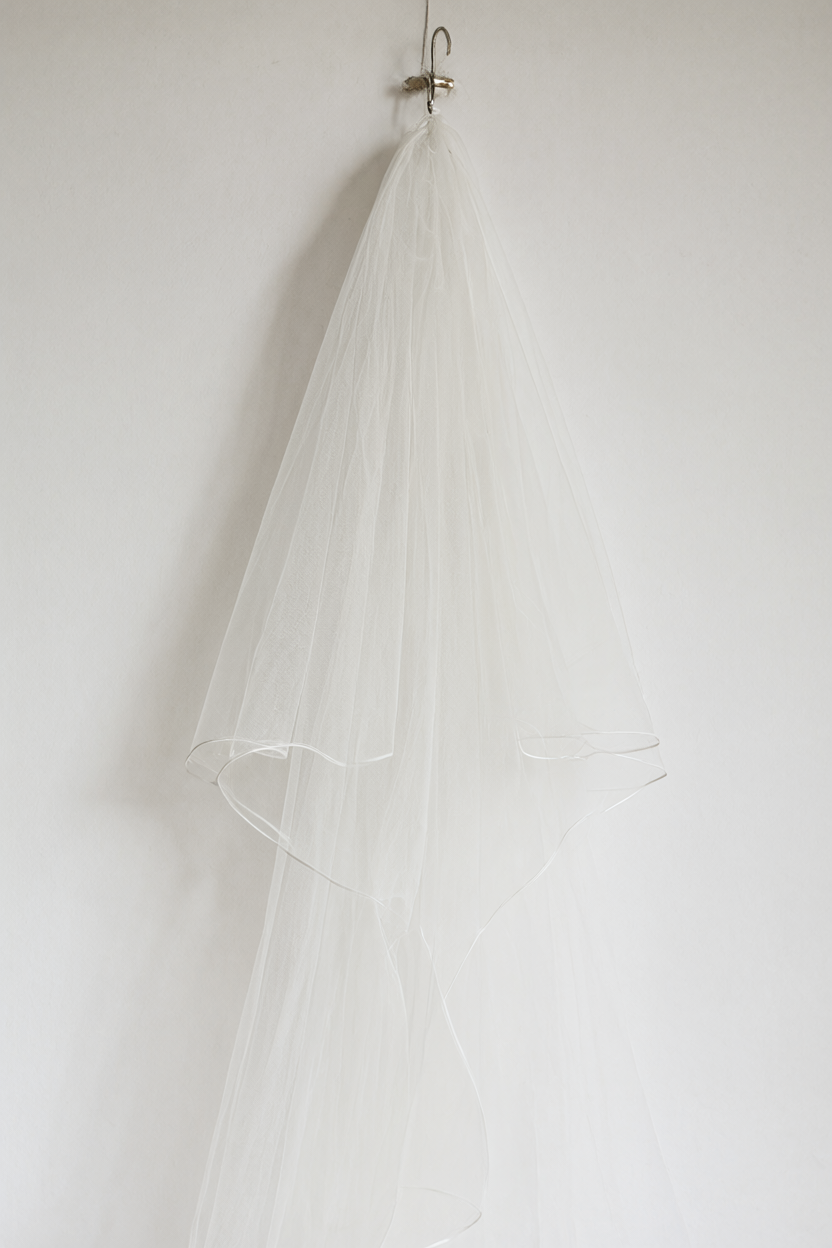
A stiff horsehair trim holds the hem of the veil in a wide, sculptural wave that keeps the tulle from clinging to your arms and gives photographs a crisp edge. Choose a waltz or midi length and let the veil be the single architectural detail against a plain dress, checking before the wedding day that the trim keeps its shape while you walk rather than collapsing against your back. Store it hanging from a padded hanger so the curl does not flatten, and let the hem hang free instead of tacking it to the gown.
6. Bow-Anchored Detachable Veil
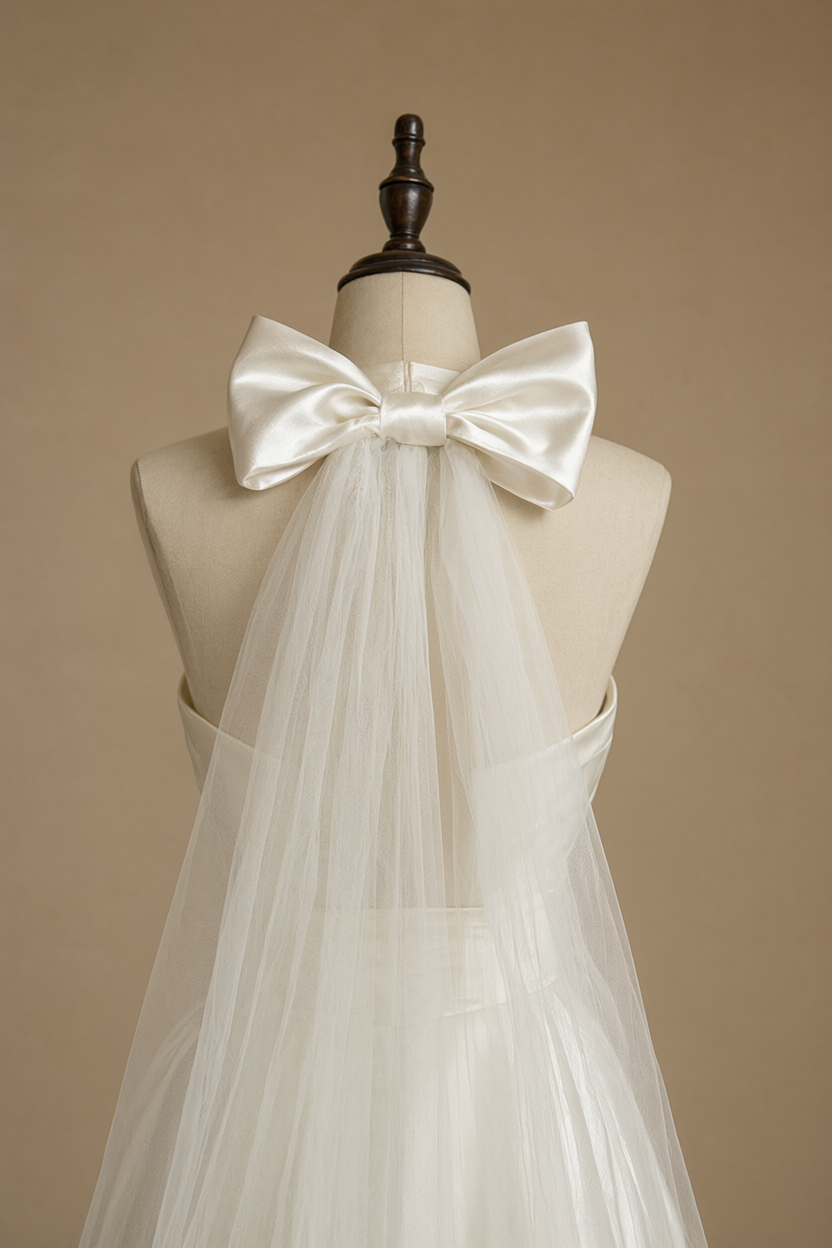
A plain tulle veil tied to a wide satin bow at the back of the head can be untied and handed to a friend before the dancing starts, which makes it a practical choice for a long reception. Place the bow above or below a low bun depending on where your gown’s back opens, press the loops so they hold their shape through the ceremony, and make sure the knot releases easily rather than pulling at your hair. Test the arrangement with your veil comb in place so the bow does not sit crooked, and let the bow double as your something-new detail, so it still looks deliberate once the veil is gone.
Minimalist veils work best when one decision carries the look. Pick the edge, the length, or the single detail that feels most like you, then let your gown, hair, and jewelry stay quiet around it. Try each style with your actual dress and hairstyle before the final fitting, walk a few steps and turn in front of a mirror, and choose the one you forget you are wearing. A veil that feels light and stays put will show in your posture as much as in the photographs.