He shared his sandwich with the old man every Tuesday for three years… But when the lawyer called his name at the reading, the family turned white.
Marcus Hayes pushed the wide dust mop down the empty third-floor hallway of Riverside Office Plaza, same as he had every weeknight for seven years. The fluorescent lights hummed overhead. His shift ended at ten. He’d eat his packed lunch on the way home, sitting on the park bench near the bus stop, same as always.
That Tuesday in September, the bench wasn’t empty.
An old man sat at the far end, wearing a wool coat too heavy for the weather, feeding pigeons with bread crumbs from a paper bag. Marcus sat down, unwrapped his sandwich—turkey and Swiss, nothing fancy—and pulled out his thermos of coffee.
The old man glanced over. “Evening.”
“Evening,” Marcus said.
They sat in silence for ten minutes. Marcus ate half his sandwich, then noticed the man had stopped feeding the birds and was just sitting there, hands folded, staring at the empty fountain across the path.
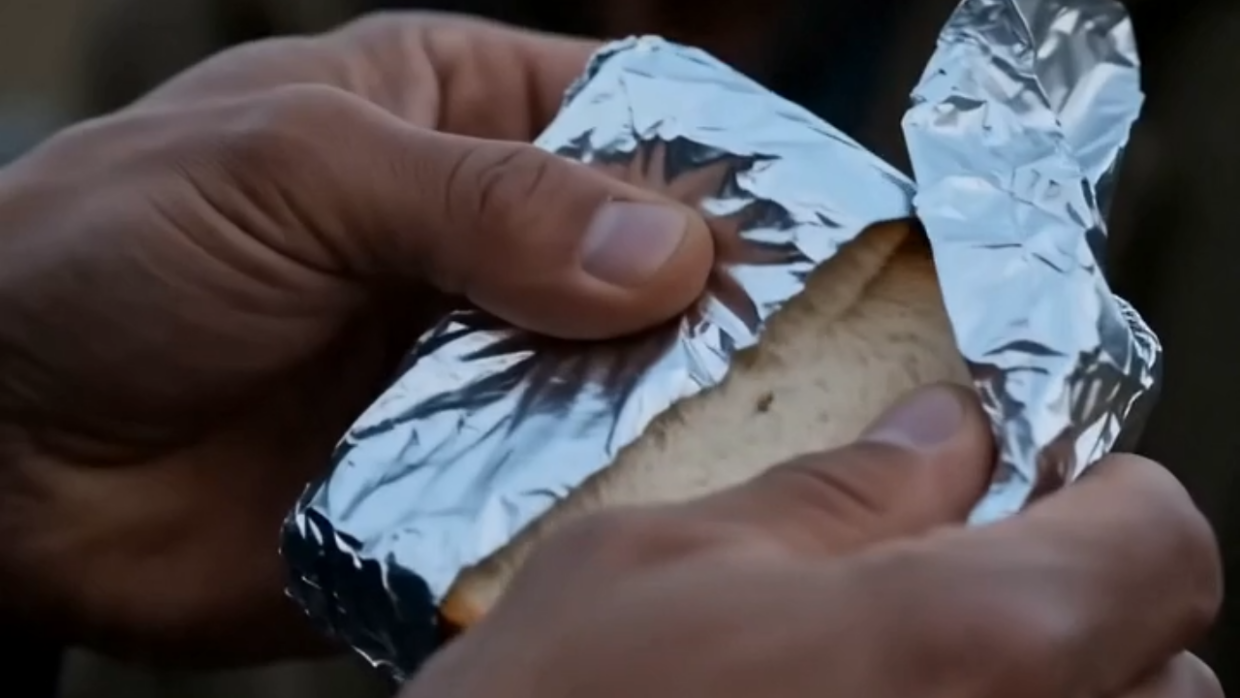
Marcus wrapped up the second half of his sandwich, hesitated, then held it out. “You hungry?”
The old man looked at the sandwich, then at Marcus. “You sure?”
“I’m sure.”
The man took it with a small nod. “Thank you.”
“No problem.”
That was it. Marcus finished his coffee, caught his bus, went home.
The next Tuesday, the man was there again. Same bench, same coat, same paper bag of crumbs. Marcus sat down, pulled out his sandwich, and without a word, split it in half before he even took a bite. He handed one half over.
The old man smiled. “You’re a good man.”
“Just a sandwich,” Marcus said.
“Still.”
They didn’t talk much. The man mentioned the weather. Marcus mentioned the construction on Fifth Street. They sat, ate, watched the pigeons. Marcus caught his bus.
It became routine.
Every Tuesday at ten p.m., Marcus would finish his shift, walk to the bench, and the old man would be there. Marcus always brought an extra sandwich on Tuesdays after the first month. Turkey and Swiss. The old man’s favorite, he’d said once.
“I’m William,” the man said one night in October, three months in.
“Marcus.”
They shook hands.
“You work nights?” William asked.
“Janitor over at Riverside. You?”
“Retired.” William smiled. “Long time ago now.”
Marcus didn’t ask what he’d done. Didn’t seem to matter.
Winter came. William still showed up, coat even heavier now, gloves with holes in the fingertips. Marcus started bringing coffee for both of them. William never asked. Marcus never explained.
“You got family, Marcus?” William asked one cold February night.
“Not really. Parents passed when I was young. Grew up in foster care. You?”
William paused, staring at the fountain. “I got kids. Three of them.”
“They around?”
“Somewhere.” William’s voice was flat. “We don’t talk much.”
Marcus nodded. He understood that kind of silence.
The years rolled on. Two winters, three springs. The bench, the sandwiches, the coffee, the small talk about weather and sports and the city budget cuts. William started moving slower in the third year, his hands shaking when he held the coffee cup.
“You feeling okay?” Marcus asked one Tuesday in July.
“Old,” William said. “Just old.”
“You seeing a doctor?”
“When I need to.”
Marcus didn’t push.
That last Tuesday in August, William was quieter than usual. He ate slowly, staring at the sandwich like he was memorizing it.
“You alright?” Marcus asked.
William looked at him for a long moment. “You’re a good man, Marcus Hayes. I want you to know that.”
Marcus felt something strange in his chest. “You feeling okay, William?”
“I’m tired,” William said. “That’s all. Just tired.”
They sat in silence. The pigeons cooed. The fountain stayed dry, same as always.
“You take care of yourself,” Marcus said when he stood to catch his bus.
William nodded. “You too.”
Marcus didn’t see him the next Tuesday. Or the one after that. He sat on the bench alone, eating his sandwich, telling himself William probably just moved, maybe went to stay with those kids he’d mentioned.
Six weeks later, Marcus got a phone call at work.
“Is this Marcus Hayes?” a woman’s voice asked.
“Yes?”
“This is Caroline Pritchard from Pritchard and Associates. I’m the executor of the estate of William Brennan. You’ve been named in his will. We need you to attend the reading this Friday at two p.m.”
Marcus almost dropped the phone. “I think you have the wrong person.”
“You are Marcus Hayes, janitor at Riverside Office Plaza?”
“Yes, but—”
“Then I have the right person. The address is 1247 Westbrook Avenue, suite 300. Please bring identification.”
She hung up.
Marcus stood there in the empty hallway, holding the phone, his heart pounding.
Friday at two p.m., Marcus walked into a law office that smelled like leather and old paper. The receptionist directed him to a conference room. Inside, three people were already seated—a woman in her fifties with sharp eyes and expensive jewelry, a man about the same age in a polo shirt and khakis, and a younger woman, maybe thirties, typing furiously on her phone.
They all looked up when Marcus entered.
“Who are you?” the older woman asked.
“Marcus Hayes.”
Her eyes narrowed. “And you knew my father how?”
Marcus froze. “Your father?”
“William Brennan,” the man said. “Our father. Why are you here?”
“I—we had lunch sometimes. I didn’t know his last name was Brennan.”
The younger woman looked up from her phone. “Lunch?”
“At the park. Tuesdays.”
The older woman—William’s daughter, Marcus realized—stared at him like he’d just appeared out of thin air. “You’re the one.”
“The one what?”
Before she could answer, the door opened and a woman in a gray suit entered, carrying a leather folder. “Good afternoon. I’m Caroline Pritchard. Thank you all for coming. Let’s begin.”
She sat at the head of the table and opened the folder. “This is the last will and testament of William James Brennan, executed on August twenty-seventh of this year, witnessed and notarized. Mr. Brennan passed on September third.”
Marcus’s chest tightened. September third. Five days after their last Tuesday.
Caroline continued. “Mr. Brennan’s estate includes his home at 428 Elmwood Drive, valued at approximately $890,000, a stock portfolio currently valued at $3.2 million, two rental properties, and various personal effects. The total estate is valued at approximately $4.7 million.”
The daughter leaned forward. “And it’s divided equally among the three of us, as we discussed.”
Caroline looked at her. “No, Mrs. Vance. It is not.”
Silence.
“What?” the son said.
Caroline pulled out a document. “The will specifies the following: To my children, Margaret Vance, Robert Brennan, and Susan Brennan, I leave one dollar each, and my acknowledgment that they are, legally, my heirs.”
Margaret shot to her feet. “That’s not possible.”
“It is legal and binding,” Caroline said calmly. “The rest of the estate—the home, the portfolio, the properties, and all remaining assets—are left to Marcus Hayes.”
The room exploded.
“That’s insane!” Robert shouted.
Susan’s phone clattered to the table. “He can’t do that!”
Margaret’s face went white, then red. “We’re his children! We took care of him!”
Caroline held up a hand. “Mr. Brennan included a letter of explanation, which I am required to read aloud.”
She pulled out a single handwritten page.
Marcus couldn’t breathe.
Caroline began reading. “To my children: You have not spoken to me in eight years, except when you wanted money. You did not visit. You did not call. You sent cards on holidays with no return address. When I was hospitalized last year, none of you came. I do not blame you. I was not a good father. But I will not pretend you were good children in return.”
Margaret was shaking. “This is—”
“Please let me finish,” Caroline said.
She continued. “To Marcus Hayes: You do not know me, not really. You know a man who sat on a bench and ate sandwiches and talked about nothing important. But you saw me. Every Tuesday for three years, you saw me. You shared your food when I had none. You brought me coffee when it was cold. You asked if I was okay. You never asked for my name, my money, or my time. You gave freely. That is more than I ever gave my children, and more than they ever gave me. You are a good man, Marcus. I want you to have the life you deserve. Use this wisely. Be better than I was. —William James Brennan.”
The silence that followed was suffocating.
Marcus’s eyes burned. He stared at the table, unable to look up.
Margaret’s voice was ice. “We’re contesting this.”
“You’re welcome to try,” Caroline said. “But the will is ironclad. It was written by Mr. Brennan, witnessed by two independent parties, notarized, and executed while he was of sound mind. I have medical documentation confirming his mental competency at the time of signing.”
“He was manipulated,” Robert said, pointing at Marcus. “This guy obviously—”
“Mr. Hayes had no knowledge of Mr. Brennan’s identity or financial status,” Caroline interrupted. “We have testimony from the witnesses confirming that Mr. Brennan drafted this will independently. There is no evidence of coercion or manipulation.”
Susan was crying now. “He was our father.”
“Yes,” Caroline said quietly. “He was.”
Margaret grabbed her purse. “We’ll see you in court.”
She stormed out. Robert and Susan followed.
The door slammed.
Marcus sat frozen, staring at his hands.
Caroline waited a moment, then spoke gently. “Mr. Hayes?”
He looked up.
“This is real,” she said. “The estate is yours. We’ll need to go through probate, but it should be finalized in six to eight months. In the meantime, I’ll need you to sign some paperwork.”
Marcus’s voice came out hoarse. “Why me?”
Caroline smiled sadly. “He told me once that you were the only person in three years who ever asked if he was okay. Not what he had. Not what he could give. Just if he was okay.” She slid a folder across the table. “He wanted you to have this.”
Marcus opened it.
Inside was a photo—William, younger, maybe in his sixties, standing in front of a house with a big front porch. On the back, in shaky handwriting: *428 Elmwood. It’s yours now. Take care of it.*
Marcus’s throat closed.
“There’s one more thing,” Caroline said. She handed him a small envelope. “He left this for you personally.”
Marcus opened it with trembling hands.
The note inside was short.
*Marcus—Thank you for seeing me when I was invisible. You gave me the only friendship I had in years. I hope this gives you the life you never got to choose. You deserve it.—William*
Marcus folded the note carefully, his hands shaking, his eyes wet.
“Take your time,” Caroline said softly. “I’ll be in my office when you’re ready.”
She left.
Marcus sat alone in the conference room, holding the note, staring at the photo of a house he now owned, trying to process that three years of sandwiches on a bench had just changed his entire life.
He thought about William—quiet, lonely, feeding pigeons, always showing up.
He thought about the daughter’s face, the son’s anger, the younger woman’s tears.
He thought about the last thing William had said to him. *You’re a good man, Marcus Hayes.*
Marcus folded the note, slipped it into his pocket, and stood up.
He walked to the window and looked out at the city—the same city he’d mopped floors in for seven years, the same city where he’d sat on a bench and shared a sandwich with a stranger.
A stranger who’d seen him, too.
Marcus wiped his eyes, straightened his shoulders, and walked out to sign the paperwork.
Three months later, the Brennan children’s legal challenge was dismissed. The judge ruled the will valid and binding. Margaret, Robert, and Susan were ordered to pay court costs.
Marcus moved into the house on Elmwood Drive in January. It had a big front porch, just like the photo. He kept William’s furniture, his books, even the wool coat that had been too heavy for the weather.
He quit his job at Riverside and enrolled in night classes at the community college. Business administration. He wanted to manage the rental properties himself, do it right.
On Tuesdays, he still went to the park. He sat on the same bench, brought two sandwiches, and left one wrapped on the seat next to him.
Sometimes someone would sit down—a kid skateboarding home, an old woman walking her dog, a man who looked like he hadn’t eaten in days.
Marcus would offer the sandwich.
Most of them took it.
Some of them stayed.
And Marcus would sit with them, ask if they were okay, and listen.
Because William had taught him something in three years of silence and sandwiches: being seen matters more than being remembered.
And kindness, given freely, comes back in ways you can’t predict.
Marcus never forgot that.