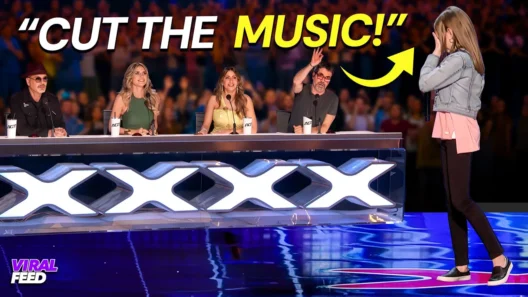
“Three minutes literally could change your life.” It’s one of those lines you’ve heard a thousand times on talent TV, but on a night that pitched from pure wonder to pure chaos, it felt like a promise and a dare. Season 21 of America’s Got Talent opened a door and let everything in: sweetness, nerves, danger, confusion, and a burst of gold that sent the panel into open debate.
It began simply enough. A young singer, a story about family, a wish to chase a dream. Then a judge leaned in and said it out loud.
“You are a star, and I wanna do something special.”
The room readied itself for confetti. Another judge followed with a second blessing—
“Let me tell you something. You deserve, you deserve this.”
What happened next wasn’t the easy, glowing moment this show usually packages so well. Chairs scraped. Hands moved. Voices overlapped. A judge murmured, urgently:
“Tell me. I wanna do this.”
Then a twist that sounded like courtroom drama more than talent show celebration:
“She was spectacular. I wanted her from the moment she started singing.”
And then, incredulously, not once but twice:
“It got stolen. It got stolen.”
Golden buzzer joy turned into a gold rush argument. Who pressed? Who meant to? Who had the right to? The camera found faces in the audience that mirrored the panel’s whiplash. Even in victory, the moment felt unsettled, as if the show itself had been surprised by its own heartbeat.
The promise and the panic
Laura Dee, from Sydney, Australia, had only just introduced herself when the tone of the night was set. Asked why she’d entered now, she didn’t overthink it: she wanted to pursue her dream, and this, she said, was “the stage where all dreams come true.” One of the judges smiled and offered the well-worn mantra—“three minutes literally could change your life”—and for once, everyone in the room seemed to believe it.
It’s rare to watch a show that runs on clockwork reveal the creak of its gears. That opening buzzer scramble did just that. In a way, it made the rest of the episode feel alive, even fragile. If the gold can wobble, anything can.
Roses, harmonies, and a first lesson in stagecraft
Charm arrived in the shape of two brothers from the North Shore of Oahu. “My name is Naja Music, and I’m Zaya Rhythm,” they said, with the assurance of teenagers who’ve rehearsed this exchange a hundred times at home. Sixteen and fifteen. Before they sang, they walked flowers out to the women on the panel. “Something for the ladies.” It could have been corny. Instead, it played as pure, nervous courtesy.
They chose an original called “Heartbeat.” The song itself didn’t sweep every judge away. “The song didn’t really connect with me,” one panelist confessed, honestly. But another judge heard something else and said so:
“You said that what inspired you to show up today was Grace Vanderwaal… and I have to say that your voice and the quality reminded me a little bit of Grace.”
That’s how TV manufactures a path. The brothers’ harmonies did the rest. “What did connect with me was your vocals and then your harmonies,” one judge added. Four yeses later, the boys were walking off grinning, reminded that the song you bring may not be the song that carries you—sometimes it’s the way you sing together that opens the door.
A dress breaks at 20 feet—and the act never blinks
Then came Sienna and Holland, a couple from Las Vegas who want what Vegas offers to the brave: their own show. Aerial silk isn’t new to AGT, but excellence always feels new in the air. Within seconds, the room was holding its breath—and then it wasn’t. A seam screamed. The zipper on Sienna’s dress gave way mid-flight.
They didn’t stop. They didn’t even stutter. They moved as if nothing had happened, spiraling and catching and threading through the hard parts like the risk was the routine. When they landed, one judge exhaled what everyone else was thinking: “I was super nervous from the beginning, but you kept going even though your dress broke in the middle of the thing.” Another called it “perfection,” and another, still smiling, asked the best question a show like this can pose: “What would you do next time?”
The pair had an answer ready—of course they did. “There’s something that I guarantee you’ve never seen.” It’s a TV promise, but theirs felt earned, the kind you want to see them keep. A yes kicked off the vote; the audience, and the judges, were already picturing act two.
“I don’t see anything big up there”—and then, the best magic of a career
Yoo Ho Jin walked out with the quiet of someone who has nothing to prove and everything to fix. He’d been here before, in Season 17, and left with a note from Simon Cowell: “I needed something bigger.” He remembered it. So did Simon. “Sometimes it’s just good to come back and do it better,” a judge said, almost like a coach forgiving a fumble.
Before the first move, another panelist squinted and teased, “I don’t see anything big up there.” Minutes later, a judge would say something else.
“I have never seen a better magic act in my life.”
In a night full of physical risk, the biggest gamble here was narrative: resetting your story after the world says you’re not enough. Yoo Ho Jin didn’t just go bigger; he went cleaner. The parts clicked. The astonishment spread. The panel’s praise piled up until you could practically see the Vegas skyline reflected in their eyes. If you believe in second chances, this was what they look like when you take them.
The couple who nailed it—literally
Then the tone changed. Brad Byers, retired from the University of Idaho’s surplus department, stood next to his wife, Dr. Tracy Scare. They smiled like neighbors borrowing sugar. He had a plywood board and a spike. “Here I have a five-inch long spike and a small plywood board,” he said, voice steady. “What I’m going to attempt to do now is literally nail this board to my face.”
On most shows, this is where the host cuts to commercial. AGT let it play. “Are you ready, Brad?” “I am ready, Doctor Scare.” The audience split into two tribes: can’t watch and can’t look away. After, one judge admitted the obvious, and delivered a verdict with a shrug: “I’m looking at the audience, and they were horrified. So I’m gonna say no.” Another countered: “I’m gonna give you your second yes.” The tiebreaker landed where the night kept landing—on the side of danger. “I’m going to do what I believe the audience at home now want me to do, which is yes.”
Some acts are arguments. This one was. One judge called it “one of the weirdest things I’ve ever watched on AGT” and “one of our favorites.” The couple’s backstory, told later—meeting at a gas station in Moscow, Idaho—only made the whole picture stranger. Sometimes, the show’s talent is persuasion: of the audience, of the judges, of each other.
Comedy that limped on purpose
When Rania Kendall arrived, she offered something the night needed: levity with a hook. “So this is how Christina Aguilera would stub her toe,” she began, and then cycled through a carousel of impressions—Ariana Grande, Kourtney Kardashian, Lady Gaga, Jennifer Coolidge, Mariah Carey—each one a tiny scene, each one an angle on the same small joke. It was repetitive by design, and that design worked.
The panel loved the premise. “You are hysterical. You are talented,” one judge said. Another, a comedian, turned workshop coach: “It was funny, but it could have been even funnier.” A third cast the deciding vote in the court of intent:
“It was hilarious because the impressions were brilliant. Secondly, even though it’s annoying, it was great annoying… then it got to the point where I was thinking, who are you gonna do next?”
If the brothers from Oahu learned lesson one—write a better song next time—Rania learned lesson two: keep the bit, sharpen the blade. The yeses promised room to do both.
Opera, but make it canine
Julia is an opera singer. Charlie is three and fluffy and, she promised, sings along on pitch. The audience was all in before the first note—how could they not be?—but show business is cruel to animals and children because show business relies on timing. Charlie’s was off.
Twice, Julia tried to coax the duet she swore he gave her at home. Twice, Charlie balked at the spotlight. The judges showed grace. “Why don’t we just kind of be quiet and then maybe… start singing casually so we can give him a chance to do his thing?” one suggested. It half-worked. Enough for a smile and a “Good boy,” but not enough to book a callback.
Then the joke that turned a no into a memory:
“I have a feeling Charlie is saying to you in dog language, please don’t sing.”
Two noes followed, softly. “Come back,” a judge urged, “I think you guys still need to figure it out.” The exit took a moment. “I’ve never actually had to tell a dog to leave the stage,” another panelist confessed, laughing. Charlie, who had stolen the room for a second without singing a note, finally padded off, fur backlit by the stage rig like a tiny opera cape.
Science, set ablaze
“Welcome to America’s Got Talent Season Twenty One,” came the cheery greeting as a man rolled out a contraption that looked like a museum’s idea of danger. “What is your name?” “I’m Kevin Quantum. I’m a scientist, and tonight, I’m gonna do a science experiment.”
On AGT, that line splits a room in two: talent or TED Talk? Kevin answered with a desk toy and a theory. “It’s called a harmonic pendulum,” he said, starting small. “I realized by watching these patterns over and over again, they were exactly the same every single time. In theory, an object could pass through the middle of these swinging balls without being struck.”
The camera traveled up to the rig hanging above him. “This up here is a supersize industrial one that could be deadly.” He detailed the tools of the dare: “They are 35-pound, eight-inch diameter cannonballs, solid steel, which will very soon be swinging across the stage, taking out literally anything in their path.” Then, because this is television and because he understands television, he added one more line:
“Judges, we all know that you love a bit of drama. So tonight, we’re gonna set these cannonballs on fire.”
Science, in the right hands, is theater. Kevin knew the math, timed the patterns, and when the moment came, he walked through a diagram that could crush him. That he emerged unscathed mattered. That the room had traveled from skepticism to awe mattered more.
The magic of second chances
Even the judges seemed to sense that something deeper threaded through this episode. The aerialists didn’t lose their focus when their costume failed. The brothers wrote a song that didn’t quite land and still earned a unanimous vote on craft and presence. The comedian built a set on repetition and found surprise inside sameness. The scientist turned physics into a story about trust. And at the center, the magician who once left with a note came back with an answer and heard a sentence any act would frame on a wall: “I have never seen a better magic act in my life.”
What tied the night together, though, was that wobbly shower of gold. AGT invents its own rituals. The golden buzzer is its christening, a shared fantasy that turns a room into a church. But rituals only work if people believe in them, and belief is messy. You could hear it in the asides across the desk—“Tell me. I wanna do this”—and in the complaint that popped like a balloon: “It got stolen.” The moment didn’t break the show. It reminded the show it’s live—and that fairness, like talent, is a conversation.
How the panel shaped the night
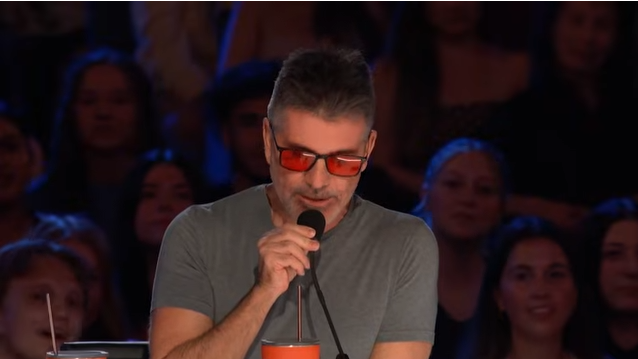
Sofia Vergara reacted with the bright candor that has become her hallmark—telling the aerialists that their broken zipper only heightened their heroism, cheering the comic for a bit that worked on loop, offering grace to a dog that would rather nap than hit a high note. Mel B weighed the laughs and asked for more. Howie Mandel did what Howie does, reading the room’s pulse, sometimes against the room—calling the sideshow act a no because the audience “were horrified,” and trusting that television can be a mirror for viewers at home. And Simon Cowell was Simon Cowell: challenging a returning magician to go “bigger,” then standing back as he did; prodding contestants to think about “what you’d do next time,” then opening a door when the answer excited him; cracking the joke that rescued a dog from embarrassment and an owner from heartbreak.
In the middle of all that, the phrase “three minutes could change your life” felt less like a platitude, more like a test. Not every act passed. But the ones that did did so by refusing to blink when the unexpected happened—when a dress failed, when a pattern of fire swung inches from a face, when a judge’s hand hovered over a gold button that seemed suddenly more complicated than it had a minute ago.
What this means for the season
AGT thrives on contrast, and this episode offered some of the sharpest in memory. A veteran of the stage returned to rewrite his legacy and, by the panel’s lights, succeeded. A couple in love trusted each other so completely that a wardrobe malfunction barely counted as a plot point. Two teenagers stepped into the glare with nothing but an original melody and the trust they’d built at home. A scientist set the room on fire and then strolled through it. A sideshow husband and wife turned queasy curiosity into approval. A comedian took a tiny, painful moment—stubbing a toe—and turned it into a carousel of characters that somehow kept spinning funnier as it repeated.
And then there was the audition that didn’t work, and mattered anyway. Julia and Charlie’s segment could have been a minute of cringe. Instead, it showed the panel working together to salvage something kind, and ended with a laugh that wasn’t cruel. “I’ve never actually had to tell a dog to leave the stage,” one judge said, and the line landed like a promise that the show still knows how to be human.
If you believe in signs, the night offered one more. Early on, a judge peered at a magician’s empty stage and said, “I don’t see anything big up there.” Hours later, the same stage had given us acts that were big in every way that counts: in nerve, in imagination, in the ability to bend an audience’s expectation without breaking the spell.
Why the gold mattered—and why the mess did too
For years, the golden buzzer has delivered perfectly edited catharsis. A hand reaches out. A sound erupts. Confetti falls like a blessing on a face that is suddenly wet with tears. You can set your watch to it. But the gold is supposed to affirm something we all know is true. On this night, the truth fought back. Whose discovery is this? Who gets to claim a moment? Who gets to say, “I wanted her from the moment she started singing,” and make that claim stick?
In the jumble, something lovely emerged. The panel didn’t hide the debate. The show let the friction play. When a judge said, twice, “It got stolen,” you could feel an entire apparatus designed to deliver clean, glossy joy admit that joy sometimes has jagged edges. The moment wasn’t perfect. It was real. And in the end, that reality might be what grants the gold its shine.
The takeaway—and what to watch for next
Watch how the brothers from Oahu use the panel’s notes. Do they bring a better original, or choose a cover that lets their harmonies soar without the burden of songwriting? Watch whether Sienna and Holland cash the check they wrote when they said they had a surprise “you’ve never seen.” Watch how Rania tightens her premise and finds a new gear for a joke that already sails. Watch what happens when Kevin Quantum’s physics meet the pressure of a louder room and a shorter leash. And above all, watch how the panel negotiates the gold now that the audience has seen it wobble.
That’s the joy of this show at its best. It isn’t just a parade of talent. It’s a study in how people make choices in front of you. Some are technical. Some are moral. Some are about taste, some about risk. On this night, the show remembered how to surprise itself. The rest of the season will tell us whether that feeling was a spark or a fuse.
There’s one more reason to tune in: the magician who returned with a note and left with a sentence likely to tilt his career. “I have never seen a better magic act in my life” isn’t handed out lightly. If you want to understand why a judge said it, and how a room came to agree, you need to see the hands, the misdirection, the pace—the craftsmanship that television can barely contain.
And if you want to understand why the first minutes felt like history stuttering—why a star-making ritual suddenly needed a referee—you need to hear the overlap of those quick, urgent phrases across the panel: “I wanna do this.” “It got stolen.” You need to feel the awkwardness, and then the applause, and then the show moving forward anyway.
This episode is a ledger of what AGT can be when it allows itself to be messy: earnest, daring, funny, humane, and gloriously unpredictable. Watch the full video to see how the confetti almost fell, how a dress didn’t end a dream, how a dog stole a scene by refusing to sing, and how a quiet man with nothing onstage made a room believe in magic again.