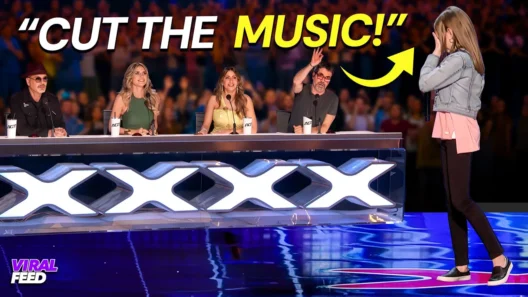
Some auditions sing, and some auditions soar. The newest compilation of standout vocals from Britain’s Got Talent Series 19 is a reminder of why this stage still matters: it’s where everyday lives meet extraordinary sound. Across one charged evening after another, the judges leaned forward, the hosts grinned, and an audience swung from laughter to silence to disbelief—then back to its feet. This was not just a parade of big notes; it was a slate of big choices, bold personalities, and honest craft delivered under bright lights.
What makes a vocal moment “outstanding” on this show is not only the note itself, but the story, the timing, the nerve. Each performance here carries its own weather system. Some singers float in quietly and leave the judges blinking in surprise. Others tear the lid right off the room. Together they stitch a portrait of a season unafraid of contrast: classic ballads next to Disney anthems, tender folk next to powerhouse pop, a harp beside a roar. It’s a feast of voices and a study in character.
Maddie Jay Breaks the Spell
From the second Maddie Jay bounced onstage, the room felt different. “Oh my gosh. I can’t believe you guys are real people,” came the breathless opener, equal parts awe and impish charm. The 27-year-old introduced a backstory built on grit: “My name is Maddie Jay. I’m 27 years old, originally from The Philippines, but in the last three years, I’ve been living in Glasgow.” A part-time waiter by day, a relentless dreamer by night, Maddie declared a mission to rewrite a painful label: “I have been waiting for this chance to finally put an end to this long thing that I’ve been thinking of about myself that I will always be a singing competition loser.”
With the panel warmed by the unabashed honesty—and a zinger for the ages, after a cheeky sci-fi question—
“Do you ever watch Star Wars?” “No. I’m too gay for it.”
—Maddie stepped to the mic. Then came the switch. The mic left the stand, and the room watched a persona lock into place. In a matter of bars, the panel’s reactions piled up: “Matti, your range is insane.” A judge pinpointed the transformation with a single line that felt like a case closed:
“As soon as you took that mic off that stand, you became a superstar.”
And the praise kept coming—hungry, a little stunned, deeply sincere. “What a treat… I need more. Whatever you’re about, I just need more of it.” Another judge found a way to describe Maddie’s appetite for drama in a metaphor only a Brit could love: “You’re the kind of artist where I would say you wanna put, like, eight spoonfuls of sugar in your tea. You put about 10 thousands in.” The room’s reaction said the rest. Then came a rare, generous flourish that set the tone for the whole showcase:
“And by the way, to everyone in this audience, I’m gonna say this is your golden buzzer as well, genuinely.”
The joy wasn’t just in the vocal fireworks, but in the person wielding them: a theatrical soul with goals as big as the stage. “My dream is to sing for these amount of people and to sing every day and to make music and to conquer the world.” It felt less like an audition, more like a declaration.
A Harp, A Hush, and a Teen from Ireland
Neve, 17, arrived with a gleaming harp and a soft smile that said she knew exactly who she was. “I think the harp’s really unique,” she offered, almost cautiously. It was the calm before the loveliest of storms. Fingers landed, voice rose, and a rare thing happened in a packed theatre: people listened with the kind of quiet usually reserved for chapels and libraries.
The panel recognized the fusion instantly. One judge marveled, “You’ve got an angelic instrument, an angelic voice. Combining that together was just perfect.” Another added, “You’re very unique. This is not an act that we see all the time. It was heaven.” And then a straight-line assessment of raw talent that cut through any nerves:
“You’ve got an amazing voice. I mean, people are just born with great voices, and you have that.”
What elevated Neve wasn’t volume, it was poise. A judge praised her “beautifully, quietly confident” presence and “really lovely audition.” By the time four yeses landed, the harp had done its gentle work: a room eased, a singer arrived.
Joan, the Nurse Who Sings with Nothing but Voice
“My name is Joan, and I’m a nurse.” Fifteen years in a breast clinic does something to a person’s patience and compassion. Onstage, it turned into an elegant stillness. No prop, no trick—just a singer and a song. The effect was cleansing. After the last note slipped away, the panel was plainspoken and moved.
“Joan, you just nailed that really beautiful song with nothing but just your voice.”
Another judge called it what it was: “It felt very pure. That’s what I loved about it. It’s one of those special gifts when singers sing in such a beautiful way.” Then a line that could hang in a rehearsal room for years:
“Very simple, beautifully sang. That’s sometimes all a great audition needs.”
Four yeses later, the nurse walked off as a singer who had reminded everyone that sometimes the bravest thing is to stand still and tell the truth.
Twelve and Fearless: James Finds the Magic Note
James, 12 and from East Sussex, arrived with half his neighborhood in tow—“Mom, dad, brother, nan, granddad. Whole family.” He shook off the jitters—“Yeah. A bit nervous. But that’s natural.”—and then did the thing all young singers dream of: he hit the note. The one that lifts a song from catchy to unforgettable.
The panel beamed like proud aunties and uncles. “James, that is how you do it.” One judge laughed with hard-earned parenting humility:
“Everybody loves that big moment at the end. I cannot tell you how many times my children have tried to attempt that last moment in the song. No one. It’s the magic moment, and you smashed it.”
Another conjured a scene vivid enough to smell popcorn: “I felt like I was watching a Disney kids show.” Then came the cheeky, affectionate line that any 12-year-old would put in a frame:
“I cannot believe that a little sausage like you has the pipes for something so huge.”
Beyond the punchline, the point was clear: the falsetto, the focus, the finish. “Your parents must be absolutely fuzzy. My favorite part of your voice is your falsetto. That was absolutely phenomenal.” Four yeses sent James back to his family having proven something quiet and enormous to himself.
Finley from York Brings Old-School Heart
Some performers saunter; Finley bounded. Twenty years old, from York, he brought a pack of friends, a pair of proud parents, and a plan for the prize. Asked what he’d do with £250,000, he didn’t blink: “I’m gonna give half of it to my mom and dad. They’re the reason I’m here today. They’ve put a lot of sacrificing for me today.” Then the grin returned. The floor was his.
The voice that came out startled and delighted the panel. When a judge teased, “I’m guessing that’s an original song,” Finley deadpanned, “No. It’s not. It’s Elvis. I’m kidding. It’s a twist.” The joke landed because the sound did. As the audience leaned in, a judge zeroed in on the moment:
“What I love most about that audition was how you responded. When you saw the audience get behind you, your confidence grew.”
Finley felt it too. “I’m not gonna lie. That is probably the best gig I’ve ever done in my life… I’m absolutely knackered from that.” Then came the self-portrait of a busker who has heard it all: “I busk every week in York. And the amount of times I have heard people say that I don’t look like how I sound… I love all types of music, but my favorite music to sing is the older generational stuff. And it’s not everybody’s cup of tea, but it’s my cup of tea.” The theatre, being Yorkshire for the night, answered with a chant and a wink toward the kettle—“We love a cup of tea around here.” Then the yeses stacked up. It wasn’t nostalgia; it was commitment.
Crystal Herrera Claims Whitney—and Herself
“I feel like today is my big day,” said Crystal Herrera, standing beside a dream she could name: “My biggest dream is to perform in front of the king.” She had her husband in the audience and caution in her voice when asked how the morning felt. “Scared.” Whitney Houston is a mountain even on the best days. Crystal climbed.
The first reaction was simple shock. “Honestly, like, that was unbelievable.” Another judge took in the family angle with envy and warmth: “Your husband must be over the moon. Being able to hear that every day of his life. I wanna see more. I wanna see more.” Then came the verdict, twice and thrice over:
“Wow. Wow. Wow. Crystal, this is your year. That was sensational. Absolutely outstanding.”
Technical praise followed with precision: “Your technique was 10 out of 10. Absolutely fantastic. I loved it.” Then the observation that captured the turning of a page:
“What I’m finding extraordinary is how sort of little and shrunk you are. And when you sang, you turned into a complete diva, baby.”
Finally, a note every singer wants but few can earn: “The way you go from head voice to chest voice so effortlessly is unbelievable… I really hope that you get more confidence because you’re incredible.” Four yeses sealed a performance that felt like the parting of clouds.
From the Backline to the Front: Nick Varney Roars
Nick Varney introduced himself the way working singers do: with a résumé shaped by gigging and grit. “In my current music career, I’ve always been at the back. So now I think that it’s time for me to be on the spotlight.” He arrived with his children and mother-in-law cheering from the crowd and a classic in his pocket. What happened next turned heads for its clarity.
A judge, half-laughing at an early quip, delivered the post-song headline:
“Nick, I’m speechless. You weren’t in the thick of it. You owned it.”
Another laid out the reasons in plain terms: “Your vocals were so crisp, clean, and made the crowd go crazy.” Then came a line every backup singer deserves to hear at least once:
“Wow. You’re not a backup. You are the main event.”
What made it stick wasn’t just power, it was refinement. “The clarity of your voice, you’ve got such an amazing tone… you really, really make that song your own… I don’t know why it felt like I was hearing it for the first time.” The heights he hit sealed the image: “You have got such a powerful voice. The fact you can get that high was just incredible to see.” The yeses landed in a rush, and Nick left with a new title—frontman.
What These Auditions Teach About a Song Well Sung
Across these standouts, there’s a through line. Technique is crucial—head voice to chest, clean tone, falsetto control, dynamic build—but without personality it can turn bloodless. Here, personality is not just sparkle; it’s point of view. Maddie poured a decade of proving people wrong into a single performance and was told, in so many words, to keep pouring. Neve reframed an instrument we think we know and revealed how purity of sound can feel brand new. Joan showed how restraint is a choice with its own quiet thunder. James found the courage to execute a finish most adults avoid. Finley wore his influences on his sleeve and turned a crowd into co-conspirators. Crystal used a big song to introduce her own voice. Nick came forward, at last, and sang like someone who has done the hours and is ready to be seen.
The judges didn’t just rubber-stamp the big notes. They noticed the changeovers, the breath, the story, the audience’s response. Watch how they lock onto growth in real time. When one judge told Finley, “When you saw the audience get behind you, your confidence grew,” it pinpointed something half of performance school tries to teach: listening back to the room matters. When a judge turned to Joan and said, “Very simple, beautifully sang. That’s sometimes all a great audition needs,” it was a lesson in economy. And when the panel told Crystal she “turned into a complete diva, baby,” they weren’t just praising theatrics; they were recognizing a threshold crossed—fear into authority, apology into command.
Even the metaphors carried weight because they fit the singers. The “sugar in your tea” line about Maddie was not a scold but a grin: more of everything, please. And the “main event” coronation for Nick wasn’t a compliment, it was a correction. On this stage, identity expands or hardens or changes. You might come in a 12-year-old with a quiver and walk out with a note only you and a handful of grown-ups could hit. You might arrive a harpist and leave a headliner.
The Pressure and the Payoff
There’s a moment that happens again and again in this lineup: a breath right before sound. You can hear a pin drop where there were cheers a second ago. Nerves are part of the entertainment—hosts coax them, judges acknowledge them, the audience tries to will them away. “Yeah. A bit nervous,” James admitted. “But that’s natural.” And it is. It’s also why the payoff feels so good. When a note lands and holds, when a run snaps into focus, lungs unclench across the stalls.
These singers remind us that an audition is also a measure of time. Years of practice, months of planning, a day of travel, an hour backstage, a minute to decide if the mic stays on the stand. “As soon as you took that mic off that stand, you became a superstar,” one judge told Maddie, naming a second that will probably live on this performer’s highlight reel forever. Choices become moments, and moments become narratives—the nurse who stood still, the teen who hushed a theatre, the busker who saw belief swell and rode it, the backup singer who stepped into the center and didn’t look back.
Family, Belief, and the Rooms We Carry
Family threaded through the night in thick, visible lines. James arrived with “Mom, dad, brother, nan, granddad.” Finley promised half the prize to his parents, “the reason I’m here,” and then played an entire theatre like a Friday crowd on a sunlit street. Crystal’s husband sat in the audience, his pride practically a character, prompting a judge to tease, “Being able to hear that every day of his life. I wanna see more.” Nick’s children watched their dad claim a spotlight he had earned, hearing strangers say the thing they’d probably been saying at home for years.
Belief, too, had its own stagecraft. Some of it was learned—busking every week, practicing a Whitney modulation until it is second nature, honing falsetto so it rings and doesn’t fray. Some of it felt baked-in. Simon Cowell, hearing Neve, put it bluntly: “People are just born with great voices, and you have that.” But in a way, belief is communal on this show. It’s a pact between performer and audience: give us your best, and we will tell you what it feels like to hear it.
That’s why the night’s most generous line didn’t crown a single person so much as it crowned a feeling. “I’m gonna say this is your golden buzzer as well, genuinely,” one judge told the audience after a performance that brought the house down. The message was clear: when a singer lifts a room, everyone gets to keep a little of the gold.
Why These Voices Linger
We remember specific words because they hang meaning on sound. “Very pure.” “Sensational.” “Crisp, clean.” “Main event.” We remember images: a harp against a hush, a mic leaving a stand, a small figure turning into a tall one, a young singer bracing and then bold. We remember laughs as valves of relief—“It’s Elvis. I’m kidding. It’s a twist.”—and chants that turn a theatre into a pub—“Yorkshire.” And always, always, we remember the faces right after the last note, when performers hear that first burst from the crowd and realize what they’ve done.
Across this slate, the songs are familiar, but the stories are not. That’s the trick and the gift. A classic heard as if for the first time. A standard reframed by a new instrument. A ballad stripped to its bones. A pop line flexed just enough to sparkle without breaking. Technique without story is just exercise; story without technique is just intention. These singers brought both.
The Next Round Begins
Auditions are only the start, of course, and this season’s stakes haven’t shrunk. £250,000 still changes lives. Stages beyond this one still beckon. Some of these voices will have to scale up—bigger arrangements, riskier choices, the kind of details that separate great auditions from great careers. But if these highlights prove anything, it’s that Series 19 has a spine of singers who can hold the weight.
So settle in and let the moments bloom. Watch the mic come off the stand. Hear the harp find the note no piano can. Feel the stillness when a nurse refuses to hide behind a trick. Catch a 12-year-old’s grin when the magic moment lands. Witness a busker turn an arena into a city square. See a husband marvel. See children cheer their dad at last. Listen to a panel hunt for new words to say “yes,” and to a crowd that knows when it’s part of something. The next chapter is waiting backstage; these voices just opened the door. Press play and meet them where they shine.