The button that turns a stage into a story
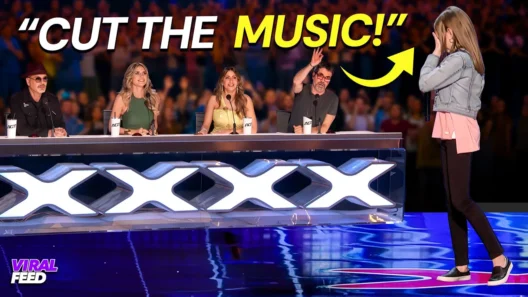
A golden buzzer is a small device with a big job. On talent shows, it tells a contestant they are going further, and it tells the audience that something unusual just happened. This video collects those moments from America’s Got Talent, Britain’s Got Talent, and Canada’s Got Talent. The buzzer rarely lands on a polished act. It lands on a person whose life has already been tested.
The title promises over 2 billion views, and the footage earns that number. The singers span ages, countries, and backgrounds. A 13-year-old from New Orleans walks in nervous. A 23-year-old street performer calls his grandpa before going on stage. A 15-year-old in Milton Keynes says she is studying for her GCSE. A 49-year-old palliative care attendant from Chikutimi, Quebec, says she wants a better life for her children. Each audition becomes a story because the singer gives the judges a reason to care before the first note.
New Orleans, street corners, and a grandpa on FaceTime
The video opens with Courtney, a 13-year-old singer who tells Howie Mandel that music is her favorite subject. When he asks what kind of music, she answers, ‘I don’t know.’ That small pause sets the tone. She is a kid who knows she belongs on a stage. Mandel compares her to Janis Joplin, telling her, ‘You are not from this era. You’re from a whole different era.’ He adds that he can give her the golden buzzer.
Then Jordan Blue arrives. He is 23, from New Orleans, and he tells the judges that his mom was a cop, his dad was a lawyer, and he ‘got down the wrong path.’ He was homeless for a while, sleeping in bathrooms at work until his grandpa picked him up. Before his audition, he asks to FaceTime his grandpa. ‘Just wanted to give you a call and let you know I’m about to go on stage,’ he says. The grandpa asks whether it is on television. Jordan confirms it. That phone call gives the performance a reason beyond applause. He is singing for the man who took him in.
After the song, the judges react to the voice and the story. One says, ‘It was like I was hearing that song for the first time,’ and calls the delivery ‘pitch perfect.’ Another says, ‘You, young man, are going to the side.’ Jordan’s girlfriend and newborn son are in the audience, and his grandpa is on the phone. The golden buzzer lands on a young man who had already learned what it means to keep going.
Britain’s buzzer moments: a 15-year-old and a comeback
Sarah Ikumu is 15, from Milton Keynes, and she is in year 11. Her mom is a carer, and her dad is an HGV driver. She chooses a song that she says ‘shows my vocal ability the best.’ The judges hear a performance that starts strong and then, in one judge’s words, becomes ‘possessed halfway through.’ Alesha Dixon tells her, ‘You are not allowed to have that much talent at your age.’ That line lands because Sarah is a teenager studying for exams, and the buzzer gives her a future she did not have before.
Kyle Tomlinson, also 15 and from Sheffield, brings a different kind of tension. He tells the judges that David Walliams told him to get a singing teacher when he was 12. ‘Here’s your chance to prove David’s wrong,’ one judge says. Kyle does not need a speech. He sings, and the judges respond to the emotion. One says, ‘You put your heart and soul on the line, and we all felt it.’ Another says, ‘I’m really glad you came back and proved me wrong.’ The moment works because Kyle answers a doubt that had been hanging over him for years.
Canada, Quebec, and a palliative care worker
Janique Fournier is 49, from Chikutimi, Quebec, and she works as a palliative care attendant. She tells the judges that she has two children, Johan and Emma, who have Down syndrome. ‘If I win, it’s an opportunity for me to give a better life for my children,’ she says. The line is simple, but it changes the stakes because she sings for a family that depends on her.
The judges react with a mix of humor and respect. One asks whether she is going to do palliative care, and she corrects him. The moment shows how these auditions work. The contestant is a performer and a person with a job, a family, and a reason to be on stage. When Janique sings, the audience hears a voice shaped by years of caring for others. The golden buzzer becomes a gift for her children as much as for her.
The wider cast: janitors, elders, kids, and strangers
The video does not stop with the first few names. It moves through a wider set of singers who became internet favorites for different reasons. A janitor who has worked for 23 years sings to keep his voice alive. An 82-year-old sings ‘Send It the Clowns’ for a late husband. A cancer fighter performs an original song. A blind autistic boy sings with his mom. His dad hides an 11-year-old in the audience, and the boy sings during a commercial break. An audience member walks on stage and receives a golden buzzer after 19 years. Each of these moments has a different shape, and they share the same core. The singer brings a life into the studio, and the audience cannot look away.
The singers range from school-age kids to elders who have lost a spouse, from small towns to cities. One singer lost her hearing at 18. Another has a 2 percent chance of something the judges do not fully explain. A singer named Sydney Christmas becomes a name people remember. A performer named Lauren finally puts a face to a song that had already moved viewers. The video works because it treats each audition as a complete story.
Why these auditions keep getting replayed
Talent shows have always sold the idea that two minutes can change a life. The golden buzzer makes that idea visible. It is a physical object, a bright light, a sound that tells the room the decision has been made. The person behind the button is why these moments spread. The audience sees a singer who has been told no, who has worked hard, who has lost someone, or who has kept showing up. The buzzer confirms what the audience already feels.
The video keeps working because it lets the moments build on each other instead of asking the viewer to choose one favorite. A 13-year-old in New Orleans, a 15-year-old in Milton Keynes, a 49-year-old in Quebec, a janitor, an 82-year-old, a cancer fighter, a blind boy, a hidden 11-year-old. Each one carries a different story, and each one earns the same reaction. The audience wants to know what happens next. Watch the video to see how a single buzzer can turn a stage into a moment people still talk about.
” }