A powerful audition can change meaning in a single sentence. A singer explains who a song is for, a judge recognizes the courage behind it, or an unexpected arrival turns a talent competition into a family reunion. These moments stand out because the stakes become personal: being heard, finding a connection, or finally receiving encouragement after years of doubt.
Across these auditions, the most memorable exchanges reach beyond technical praise. They reveal why a voice matters to the person using it—and why the judges find themselves responding to much more than a performance.
A voice that leads back to family
One singer begins with a puzzle: she was adopted at birth, and her adoptive family has no musical talent. She describes them as wonderfully supportive, but the question of where her own musical ability came from remained.
At 21, she asked her parents for information about her birth mother. She learned that Amy Ross Lopez had died, and that she had been a musician performing in Bisbee, Arizona. Listening to her recordings brought an extraordinary recognition: their voices sounded alike. Later, contact with her wider birth family revealed that they all sang.
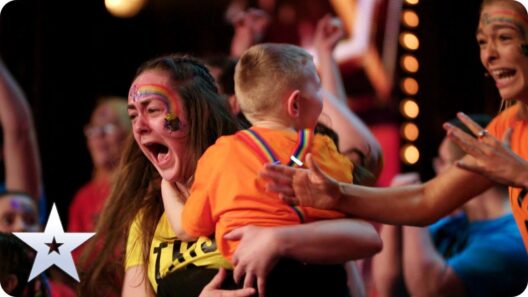
That discovery gives the subsequent reunion its weight. Invited to bring her family in for the final judgment, she opens the door and finds her birth family standing there. The exchange becomes a flurry of questions as everyone tries to understand what has happened. Then comes the simple, intimate line: “I want to touch you.” Someone suggests giving the family an hour together—a fitting acknowledgment that this meeting deserves room of its own.
Josh gives a familiar emotion another meaning
Josh explains that he lost his best friend two years earlier, when his friend was just 18. They had done everything together. His account of receiving a call to go to the hospital because his friend would not last the day establishes the grief behind his song choice.
He then explains how he hears its words differently. For him, jealousy means imagining his friend happy in heaven while he remains here, missing their life together. Before the singing begins, that interpretation gives the audition a specific emotional purpose. He is bringing the memory of their friendship into the room.
When praise reaches the limits of the rules
Another audition prompts a judge to call its message astonishingly strong and describe it as something they will never forget. The praise centers on how the performer communicated that message in their own way.
Then an obstacle enters the conversation: there are no golden buzzers left. The judges say the audition would have deserved one, before the exchange takes a turn: “Sometimes I feel you should just break the rules.” The supplied exchange leaves the next action unstated, but the declaration itself is a memorable expression of how strongly the performance has landed.
Jade and Christian make room for honesty
Jade introduces an act combining singing and sign language, then explains why communication means so much to them. They had been told Christian would never be able to communicate. She taught him sign language because she refused to accept that there was no way for him to express himself.
Her account is full of determination, but Christian supplies the moment’s wonderfully direct finish. Asked whether it is exciting, he answers, “No.” After a conversation about helping him communicate, he uses that freedom to give an entirely unvarnished opinion. The humor belongs naturally within their story.
Finn’s collar holds the answer
Finn’s appearance brings a different kind of anticipation. Simon is asked to kneel, face Finn and look into his eyes while selecting a word from pages containing descriptions suggested by friends.
Simon reveals his choice: “Heroic.” The performer then directs him to the tag on Finn’s collar, explaining that a word was engraved there before their arrival. Simon reads it aloud: the same word. The sequence works through a clear progression—selection, disclosure and a matching inscription—with Finn at the center of the reveal.
Vulnerability earns a clear answer
Aiden receives praise for a song described as revealing and vulnerable. The judges connect that openness with strength and courage, while also praising his voice and the balance of his performance.
Their encouragement becomes especially direct when one tells him, “You’re not a joke.” Calling him a force to be reckoned with, the judge follows that reassurance with an absolute yes. It is an affirmation of both his performance and his right to take himself seriously.
Christian’s audition offers another version of that recognition. One judge admits that the first song did not quite connect, but the second brought them fully on board. The panel praises his personal writing, honesty and bravery. Four yeses give that change of mind a definite conclusion.
Love expressed through remembrance
Colin introduces his tribute to Joan through the history of their marriage. They married in 1950 and spent 66 years together. He credits her gentle support with his progress in the army, giving his choice of “The Wind Beneath My Wings” a deeply personal foundation.
He recalls Joan dying in his arms in December 2016 and says he still talks to her, telling her what is happening. His belief that she would be pleased to see him onstage makes the audition feel like another part of that continuing conversation.
Harry also brings a loved one into his songwriting. His original song, “Not Alone,” is a tribute to his grandmother, who was diagnosed with Alzheimer’s three years earlier. He had played it for her; although she was not fully aware of what was happening, she looked happy. That small observation gives the song’s longing for recognition and connection a tender focus.
Being seen after years of doubt
Grace describes years of singing in pubs and restaurants while people predicted she would stay there, performing Amy Winehouse songs in a corner. Her original song carries the happiness of pursuing what she wants and being able to say she has done it. A judge’s response—“That is a hit song”—provides a striking answer to those earlier expectations.
Caitlin’s exchange with the judges centers on her father’s support. One judge relates through their own dependence on their parents; another recalls hearing Kelly Clarkson years earlier and calls Caitlin the best singer they have had. The praise is substantial, but its emotional foundation remains her account of being helped by someone she loves. As with so many of these auditions, the performance opens the door, and the personal connection makes the moment stay.
Source: Top Talent on YouTube