A story idea can feel full of possibility until you sit down to write and wonder what happens next. This story map template helps you connect a character, a problem, and a meaningful choice before you draft, and a free two-page printable is included.
What’s inside the printable
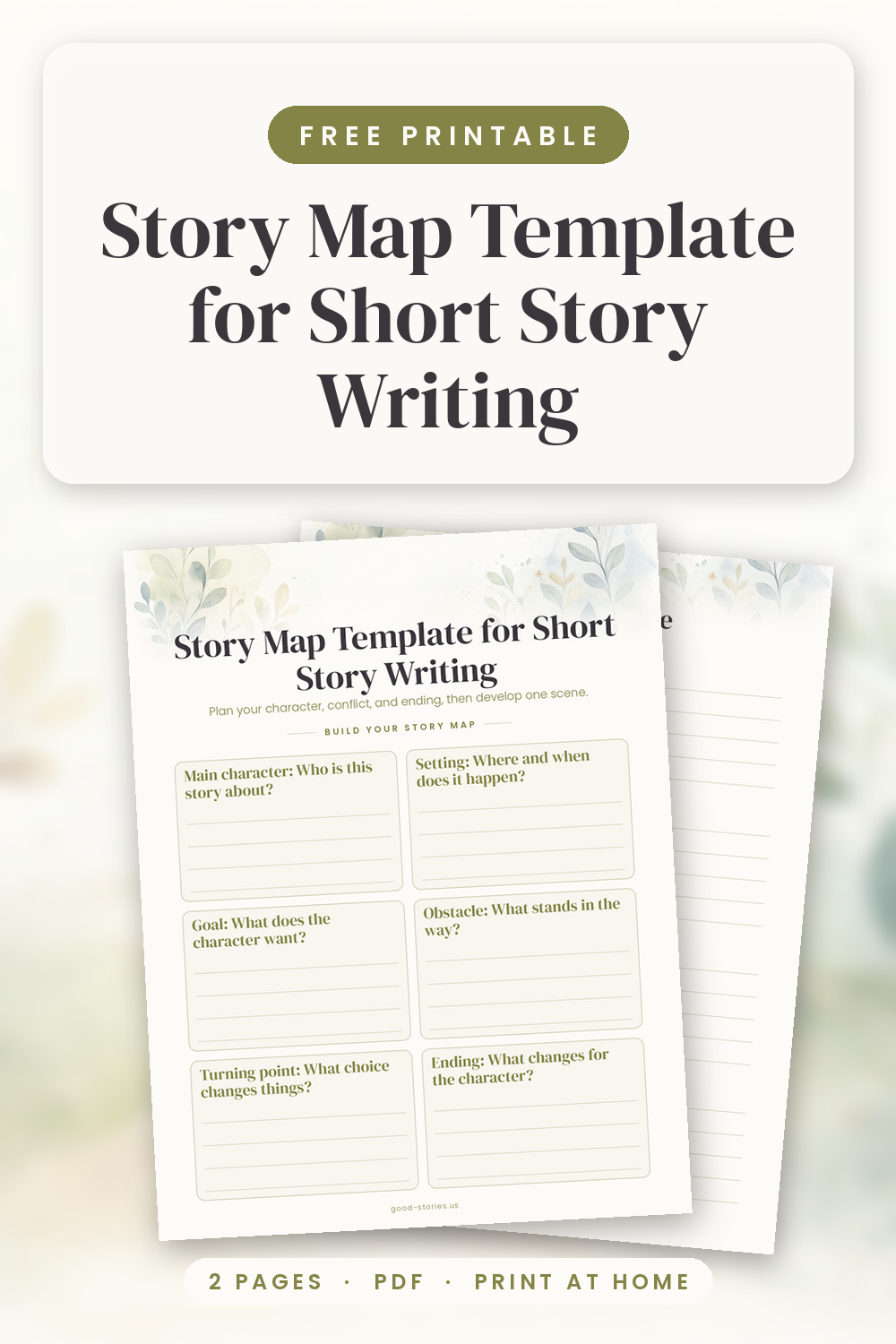
The PDF keeps planning small enough to finish without turning it into a separate project. Its two pages give you space to sketch the whole story and then focus on a single scene:
- Page 1: Build Your Story Map — six boxes with writing lines for the main character, setting, goal, obstacle, turning point, and ending.
- Page 2: Develop One Scene — four guided prompts with writing lines covering the scene goal, obstacle and response, a setting detail, and the choice that moves the story forward.
What a Story Map Does for Your First Draft
A story map organizer puts the main parts of your idea beside one another so you can see how they connect. Your character wants something, the setting shapes what is possible, and an obstacle makes the goal difficult. A turning point gives the character a choice, while the ending shows what changes because of it.
You do not need a polished plot before using the page. A few plain phrases are enough: a nervous beginner, a community garden, a flower show. The map becomes useful when those details start affecting each other. If you know the setting but cannot name a goal, that empty box tells you where to spend a little thinking time.
Fill In Your Story Map with Connected Choices
Start with the main character and write one detail that matters to this particular story. Instead of listing every trait, ask what makes the goal hard for them. A gardener who is afraid to ask for help has a different problem from one who cannot stop giving advice.
Next, give the character a concrete goal. Something readers can recognize as achieved or missed is easier to follow than a broad wish to be happy. Entering a flower show is specific; wanting confidence can sit underneath it as a personal reason.
Choose an obstacle that interferes with that goal, then connect the turning point to a decision. Ask, “Because this happened, what must my character choose?” For the ending, note both the practical result and any change in attitude. Keep each answer brief so you can revise it without feeling attached to a perfect sentence.
Try a Simple Example with a Beginner Gardener
Imagine a beginner gardener who wants to enter a neighborhood flower show. The setting is a community garden in the weeks before the event. They hope the entry will prove they belong among the more experienced growers, but they have kept their worries to themselves.
Then they lose their seedlings. This obstacle threatens the entry and exposes their reluctance to ask anyone for help. Their first response might be to hide the empty trays and decide that entering was a foolish idea.
At the turning point, they choose to start again with borrowed cuttings. That choice connects the outward problem with the personal one: rebuilding the entry means admitting they need other people. The ending could show them arriving with a modest display and feeling part of the gardening group. Winning a prize is optional; the change grows from the decision they made.
Turn Your Map Into a Scene with a Clear Goal
Use the second worksheet to choose one moment from your map. You do not have to begin with the opening scene. Pick a moment where the character wants something and another person, event, or worry makes getting it difficult.
For the gardener, a scene might begin with the goal of asking a neighbor for cuttings. The obstacle could be embarrassment: they reach the garden gate, see the neighbor tending healthy plants, and almost leave. Their response gives you action to write, rather than a paragraph explaining their feelings.
Add one setting detail that readers can picture, such as damp soil on the gate latch. Then decide what choice ends the scene. Asking for help creates a next step: gathering cuttings and beginning again. Let the worksheet guide the scene without requiring every sentence to follow a fixed plan.
Print and Use the Free PDF as Your Draft Changes
This short story planning worksheet has two US Letter pages: one for the overall story and one for developing a scene. You can complete both before drafting, or fill in the map first and return to the scene prompts when you need a more manageable starting point.
Treat the answers as working notes. If drafting reveals a stronger obstacle or a more believable ending, cross out the old answer and update the map. A story mapping template is most helpful when it reflects the story you are discovering. You can also revisit the scene page for another moment that feels unclear.
How to use your printable
- Print on US Letter paper. If you use A4 paper, choose “Fit to page” in the print settings so the page fits your sheet.
- Use a pencil if you like making changes, and keep early answers to a phrase or two so you have room to add details.
- Keep the story map beside your draft and glance at it when you lose track of what the character wants.
- Use the scene prompts for a short writing session, or discuss your answers with a writing partner before drafting.
Begin with the box you can answer today, even if the rest are uncertain. A character with a clear want and one difficult choice can give you enough direction to write the next scene.