The DNA test came back negative for the third time… But the sheriff still wouldn’t drop the charges.
Marcus Rivera stared at the courthouse steps, his hands shaking as he clutched the dismissal papers. Six months of hell, and it was finally over.
The charges had been dropped. All of them.
But as he walked toward his truck, he noticed the stares. The whispers. Nothing had changed in Millbrook, Texas.
His phone buzzed. A text from his former boss at the auto shop.
“Sorry, Marcus. Position’s been filled.”
He’d called every garage in three counties. Same response everywhere.
The apartment complex had rejected his application too. Bad publicity, they said. Not the image they wanted.
Marcus drove to the one place that might still feel like home. Rosa’s Diner on Highway 6.
The bell chimed as he entered. Conversations stopped. Forks paused midway to mouths.
Rosa Martinez looked up from behind the counter, her weathered face breaking into a smile.
Rosa: You look like you need coffee and about twelve hours of sleep.
Marcus: Just coffee. Can’t afford to stay long.
Rosa: Nonsense. Sit.
She poured him a cup and slid a plate of eggs across the counter. He hadn’t eaten a real meal in days.
Marcus: Rosa, I can’t pay for this right now.
Rosa: Did I ask you to?
The bell chimed again. Marcus tensed as Deputy Williams walked in, the same officer who’d arrested him.
Williams nodded awkwardly and took a seat three stools down.
Williams: Morning, Rosa.
Rosa: Tom.
The silence stretched like a taut wire. Marcus focused on his eggs, but his appetite was gone.
Williams: Marcus, I owe you an apology.
Marcus: You were doing your job.
Williams: No. I was doing it wrong.
Williams pulled out a folded newspaper clipping. The headline read: “Local Man Cleared of All Charges – Real Perpetrator Arrested.”
Williams: This should have been front page. Instead, it’s buried on page six.
Marcus: Doesn’t matter now.
Williams: It does to me.
The deputy stood and walked over. He extended his hand.
Williams: For what it’s worth, I’m sorry.
Marcus stared at the offered handshake for a long moment, then accepted it.
The bell chimed once more. This time, it was Sarah Chen, the prosecutor who’d pushed so hard for his conviction.
She approached hesitantly, her usual confidence nowhere to be found.
Sarah: Marcus, I need to speak with you.
Rosa: Lady, this boy’s been through enough.
Sarah: Please. Just five minutes.
Marcus: What do you want?
Sarah: To make this right. There’s a civil settlement offer. Substantial compensation for wrongful prosecution.
She slid a document across the counter. The number at the bottom made Marcus’s eyes widen.
Sarah: It comes with a full public apology from my office. Press conference. The works.
Marcus: Why now?
Sarah: Because I couldn’t sleep knowing what we put you through.
Rosa refilled Marcus’s coffee, studying Sarah with sharp eyes.
Rosa: Money doesn’t give him back six months of his life.
Sarah: No. But it might give him a future.
Marcus read through the settlement terms. It was more money than he’d ever seen.
Marcus: There’s a catch.
Sarah: No catch. Just an acknowledgment that we failed you.
Williams: Take it, Marcus. Use it to start over somewhere else.
Marcus: Run away, you mean.
Williams: Sometimes that’s not running. Sometimes that’s winning.
Marcus looked around the diner. At Rosa, who’d fed him when he was broke. At Williams, who’d swallowed his pride to apologize. Even at Sarah, who was trying to fix her mistake.
These people had seen him at his lowest. Some had helped. Others had hurt him. But they were all here now.
Marcus: I’m not leaving Millbrook.
Sarah: Marcus, be practical. Your reputation here—
Marcus: Will recover. Or it won’t. But I’m not running from my home.
He signed the settlement papers with firm strokes.
Marcus: I want the press conference. I want everyone to know the truth. And I want to use this money to help other people who get railroaded by the system.
Sarah: You’re sure?
Marcus: I’ve never been more sure of anything.
Rosa: That’s my boy.
Williams: You’re braver than I would be.
Marcus: Not brave. Just tired of being afraid.
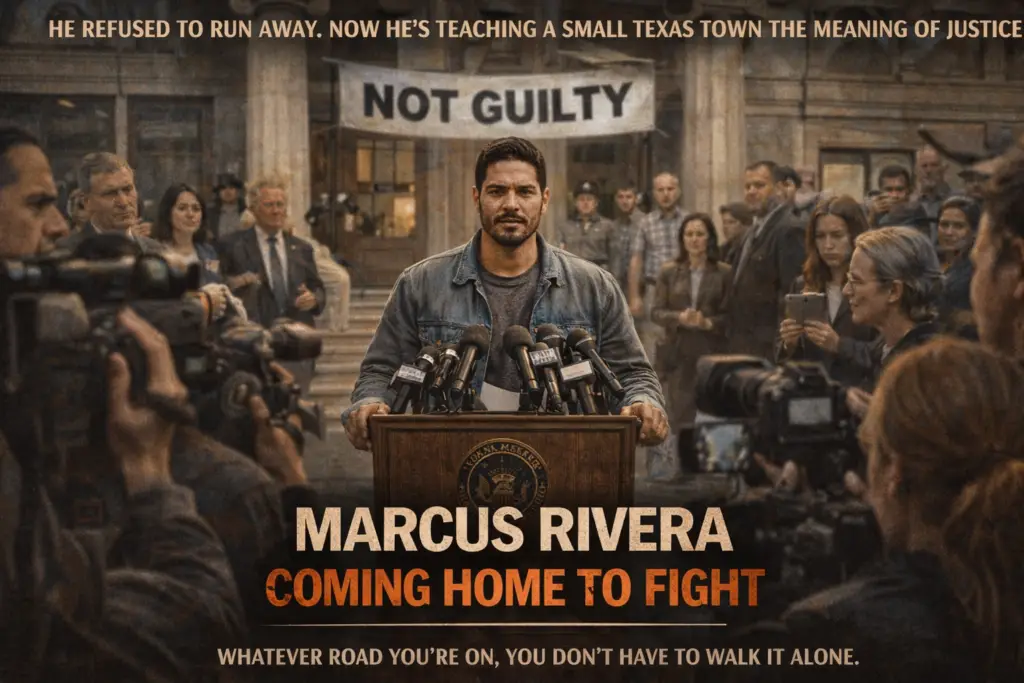
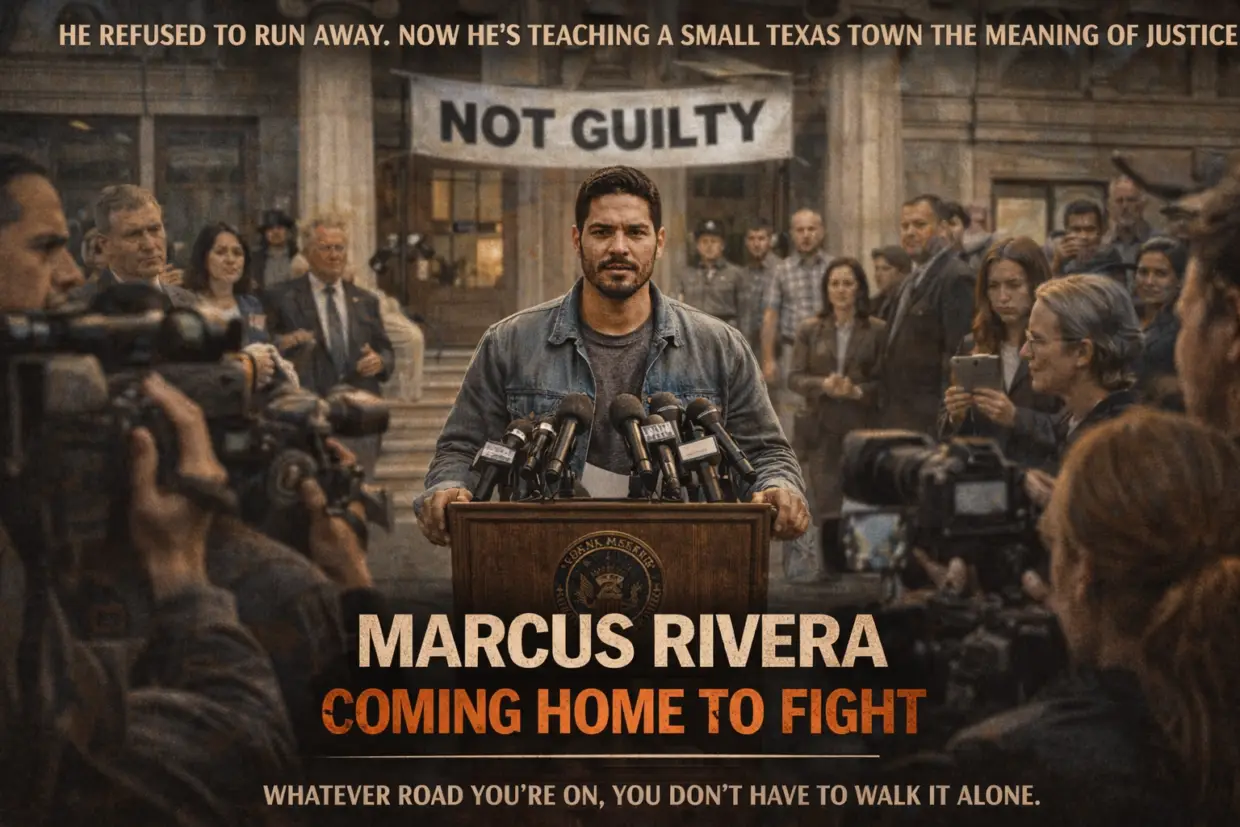
Three weeks later, Marcus stood behind a podium outside the courthouse, facing a crowd of reporters and townspeople.
Some faces showed shame. Others showed respect. A few still showed doubt.
But Marcus Rivera was no longer running from any of them.
Marcus: My name is Marcus Rivera. Six months ago, I was falsely accused of a crime I didn’t commit. Today, I’m here to talk about what happens next.
The crowd listened. Some nodded. Others took notes.
And for the first time in months, Marcus felt like himself again.
He wasn’t the same person who’d been arrested. He was stronger now. Wiser. And he was home.