She threw his lunch in the trash and told him, “You’ll learn”… But he didn’t argue—he just asked, “Can I still have the note back?”
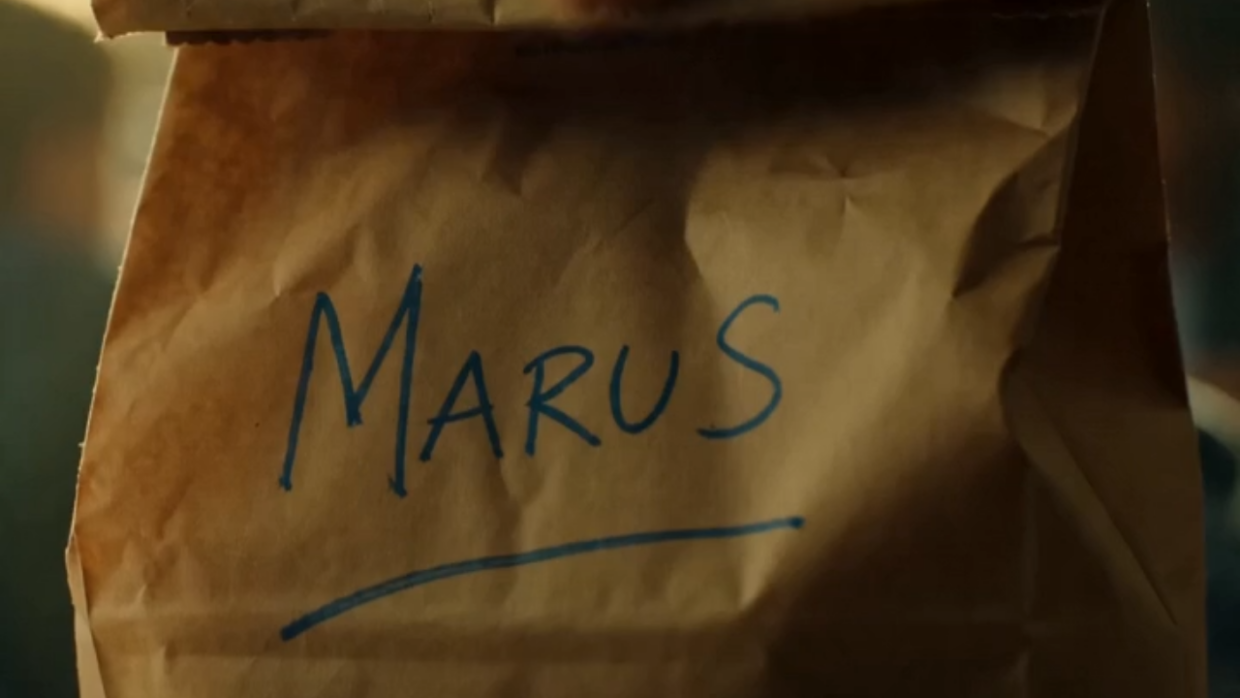
Marcus sat in the back corner of the cafeteria, his brown paper bag resting on the table in front of him. The bag was wrinkled, folded over twice at the top, his name written in blue pen across the front in his mother’s careful handwriting.
Around him, the noise of two hundred fifth-graders echoed off the tile walls—trays clattering, voices competing, chairs scraping. Marcus didn’t join in. He never did.
He was unfolding the top of the bag when Ms. Patterson appeared beside his table.
“Marcus,” she said, her voice sharp enough to cut through the cafeteria din. “You know the rule.”
Marcus looked up. Ms. Patterson was the lunch monitor this week, a fourth-grade teacher with a reputation for rigid enforcement. She pointed at the paper bag.
“No outside food,” she continued. “Cafeteria meals only. It’s been the policy since September.”
Marcus’s fingers stilled on the bag. “My mom made this,” he said quietly.
“That’s not the point.” Ms. Patterson reached down and picked up the bag. “The rule applies to everyone. No exceptions.”
“But I—”
“You’ll learn,” she said, cutting him off. She turned and walked toward the large trash bin near the cafeteria doors.
Marcus stood up, his chair scraping back. “Wait—”
Ms. Patterson dropped the bag into the bin. It landed with a soft thud on top of discarded milk cartons and half-eaten pizza crusts.
The students at the surrounding tables had gone quiet, watching.
Marcus walked toward Ms. Patterson, his hands at his sides. His voice was calm, almost too calm for an eleven-year-old who’d just lost his lunch.
“Can I still have the note back?” he asked.
Ms. Patterson turned, frowning. “What?”
“The note,” Marcus repeated. “Inside the bag. Can I have it?”
Ms. Patterson’s expression shifted—confusion replacing certainty. “There’s a note?”
Marcus nodded. “My mom always puts one in. Can I get it out?”
Ms. Patterson hesitated. She glanced at the trash bin, then back at Marcus. “It’s… it’s in the trash now.”
“I know,” Marcus said. “But I just need the note. Not the food.”
A few students had stood up now, craning their necks to see. One of the cafeteria aides, Mrs. Brennan, approached from the serving line.
“Everything okay here?” Mrs. Brennan asked.
Ms. Patterson’s jaw tightened. “He brought outside food. I enforced the policy.”
Mrs. Brennan looked at Marcus, then at the trash bin. “What’s this about a note?”
“His mother apparently put a note in his lunch,” Ms. Patterson said, her tone defensive. “He wants it back.”
Mrs. Brennan’s face softened. She walked to the trash bin and looked inside. “Which bag, sweetheart?”
“The brown one,” Marcus said. “With my name on it.”
Mrs. Brennan reached in carefully, pulling out the wrinkled paper bag. She opened it and found a sandwich wrapped in wax paper, an apple, a small bag of pretzels—and a folded piece of lined notebook paper.
She handed the note to Marcus.
“Thank you,” he said quietly. He unfolded it, his eyes scanning the handwriting, and then he folded it again and slipped it into his pocket.
Ms. Patterson crossed her arms. “The rule still stands, Marcus. You can’t bring outside food.”
“I know,” Marcus said.
“Then why didn’t your mother pack you a cafeteria account card? Or send money?”
Marcus didn’t answer. He just looked at her, his face unreadable.
Mrs. Brennan stepped closer to Ms. Patterson. “Can I talk to you for a second?” she said, her voice low.
They moved a few feet away. Mrs. Brennan spoke quietly, but her words carried just enough.
“His mother’s in the hospital,” Mrs. Brennan said. “Has been for three weeks. Kidney failure. He’s staying with his aunt, but she works doubles. The lunch was probably made last night, or maybe even earlier this week.”
Ms. Patterson’s face went pale. “I didn’t—”
“No,” Mrs. Brennan said. “You didn’t ask.”
Ms. Patterson turned back toward Marcus, but he was already walking back to his table. He sat down, his hands resting flat on the surface, the note secure in his pocket.
Ms. Patterson approached slowly. “Marcus,” she began, her voice softer now. “I’m sorry. I didn’t know about your mom.”
Marcus looked up. “It’s okay.”
“It’s not,” Ms. Patterson said. “I should have asked. I should have—” She stopped, swallowing hard. “Do you want me to get you a cafeteria tray? I’ll pay for it.”
“I’m not hungry,” Marcus said.
“You need to eat something.”
“I’m fine.”
Ms. Patterson crouched down beside his table, her eyes level with his. “The note,” she said carefully. “Is that why you wanted it back? Because of your mom?”
Marcus nodded. “She writes me one every day. Even when she’s in the hospital. My aunt brings them to me.”
Ms. Patterson’s throat tightened. “What does it say? If you don’t mind me asking.”
Marcus pulled the note from his pocket and unfolded it. His voice was steady as he read aloud.
“‘Marcus, I’m so proud of you. Keep being kind. Keep being strong. I’ll see you soon. Love, Mom.'”
The cafeteria had gone almost completely silent now. Even the loudest tables had stopped talking.
Ms. Patterson blinked hard, her eyes wet. “I’m so sorry,” she whispered.
Marcus folded the note again. “It’s okay. You didn’t know.”
But Ms. Patterson shook her head. “That’s not an excuse.”
Mrs. Brennan returned, carrying a tray with a cheeseburger, fries, and a carton of chocolate milk. She set it in front of Marcus. “On the house,” she said gently.
Marcus looked at the tray, then at Mrs. Brennan. “Thank you.”
“You’re welcome, honey.”
Ms. Patterson stood up, her hands trembling slightly. She walked back toward the trash bin and stared at it for a long moment. Then she turned and left the cafeteria without another word.
The noise gradually returned—voices rising, trays clattering—but the students at the tables nearest Marcus kept glancing over, their expressions subdued.
Marcus picked up a fry and took a small bite. He chewed slowly, his other hand resting on the folded note beside his tray.
By the end of lunch, word had spread. Teachers in the hallway whispered about it. The principal, Mr. Dawson, appeared in the cafeteria doorway and spoke briefly with Mrs. Brennan.
When the bell rang, Marcus stood and threw away his trash—most of the food still uneaten. He kept the note in his hand.
As he walked toward the exit, Mr. Dawson stepped in front of him.
“Marcus,” Mr. Dawson said. “Can we talk for a minute?”
Marcus nodded.
They stepped into the hallway, away from the crowd of students flooding out of the cafeteria.
“I heard what happened,” Mr. Dawson said. “I’m very sorry.”
“It’s okay,” Marcus said again.
“It’s not,” Mr. Dawson replied, echoing Mrs. Brennan’s words. “Ms. Patterson made a mistake. A big one. But I want you to know—we’re going to make sure this doesn’t happen again.”
Marcus looked down at the note in his hand. “She didn’t know about my mom.”
“She should have asked,” Mr. Dawson said firmly. “And from now on, if you need to bring lunch from home, you have my permission. No questions asked.”
Marcus’s eyes flicked up. “Really?”
“Really,” Mr. Dawson said. “And if you ever need anything—anything at all—you come find me. Understood?”
Marcus nodded.
“Good.” Mr. Dawson paused. “How’s your mom doing?”
Marcus’s expression didn’t change, but his voice was quieter. “The doctors say she’s getting better. But it’s slow.”
“I’m glad to hear she’s improving,” Mr. Dawson said. “And Marcus—those notes she writes? Those are special. Don’t ever let anyone take that away from you.”
“I won’t,” Marcus said.
Mr. Dawson smiled, a sad, small smile. “Go on to class. I’ll talk to your teacher and let her know you might be a few minutes late.”
Marcus walked down the hallway, the note still in his hand.
When he reached his classroom, his teacher, Ms. Harmon, was waiting by the door. She’d clearly heard what happened—her eyes were soft, her smile gentle.
“Hey, Marcus,” she said. “You okay?”
“Yeah,” he said.
“Good.” She touched his shoulder lightly. “Take your seat. We’re just starting math.”
Marcus sat at his desk and slipped the note into the front pocket of his backpack, where he kept all the others—twenty-three notes so far, one for each day his mother had been in the hospital.
He pulled out his math workbook and opened it to the correct page, his pencil ready.
The classroom was warm, the afternoon sun streaming through the windows. Around him, students worked quietly, the scratch of pencils on paper filling the silence.
Marcus wrote his name at the top of the page and began solving the first problem.
He didn’t think about the cafeteria anymore. He didn’t think about Ms. Patterson or the trash bin or the students who had stared.
He thought about his mother’s handwriting—the way she looped her Ls, the way she always underlined “Love, Mom” twice.
He thought about the next note, the one his aunt would bring tomorrow.
And he kept working.
That evening, Marcus’s aunt, Linda, picked him up from school. She was a tall woman in her forties, with kind eyes and a tired smile. She worked as a nurse at the same hospital where Marcus’s mother was staying.
“How was school?” Linda asked as Marcus climbed into the car.
“Fine,” Marcus said.
Linda glanced at him. “Just fine?”
Marcus hesitated. Then he told her about the cafeteria, about Ms. Patterson, about the note.
Linda’s hands tightened on the steering wheel. “She threw away your lunch?”
“Yeah,” Marcus said. “But I got the note back.”
Linda was quiet for a long moment. Then she pulled the car over to the side of the road and turned to face him.
“Marcus,” she said, her voice shaking slightly. “I’m so sorry. I should have—”
“It’s okay, Aunt Linda,” Marcus said. “Mr. Dawson said I can bring lunch from home now. It’s fine.”
Linda reached over and hugged him, her arms tight around his shoulders. “You’re a good kid, Marcus. You know that?”
Marcus didn’t answer. He just hugged her back.
When they pulled into the hospital parking lot twenty minutes later, Marcus felt the familiar knot in his stomach—the one that appeared every time he visited.
They walked through the automatic doors, past the reception desk, and up to the third floor.
Marcus’s mother, Diane, was in room 312. She was sitting up in bed when they arrived, her face pale but smiling.
“Hey, baby,” she said, her voice soft.
Marcus walked to her bedside and hugged her carefully, mindful of the IV line in her arm.
“How are you feeling?” he asked.
“Better,” Diane said. “A little better every day.”
Linda stepped forward. “I’ll give you two some time,” she said, and slipped out into the hallway.
Marcus sat in the chair beside the bed. He reached into his backpack and pulled out the note, unfolding it on his lap.
Diane’s eyes filled with tears. “You got it,” she whispered.
“Yeah,” Marcus said. “I got it.”
Diane reached out and took his hand. “I’m sorry I can’t be there with you. I’m sorry you have to go through this.”
“It’s okay, Mom,” Marcus said. “You’re getting better. That’s what matters.”
Diane squeezed his hand. “You’re so strong, Marcus. Stronger than I ever was at your age.”
Marcus looked down at the note. “I keep all of them,” he said. “Every single one.”
Diane smiled through her tears. “Good. Because I’m going to keep writing them. Every day. Until I can come home and make your lunch again.”
Marcus nodded. “I know.”
They sat together in the quiet of the hospital room, the machines beeping softly in the background, the afternoon light fading outside the window.
And for a little while, everything else—the cafeteria, the trash bin, the stares—faded away.
All that mattered was this: his mother’s hand in his, her words folded carefully in his pocket, and the promise that she would come home.
Two weeks later, Ms. Patterson requested a meeting with Marcus and his aunt.
They met in Mr. Dawson’s office after school. Ms. Patterson sat across from them, her hands folded on the table, her expression serious.
“I owe you an apology,” she said, looking directly at Marcus. “What I did was wrong. I didn’t take the time to understand your situation, and I hurt you because of it.”
Marcus didn’t say anything.
Ms. Patterson continued. “I’ve been teaching for fifteen years, and I’ve always prided myself on following the rules. But I realized something after that day—rules are important, but people are more important. And I failed to see you as a person. I only saw a rule being broken.”
Linda leaned forward. “I appreciate you saying that.”
Ms. Patterson nodded. “I also wanted you to know—I’ve spoken with the administration. We’re changing the lunch policy. Students who need to bring food from home for any reason can do so, no questions asked. It should have always been that way.”
Marcus looked up. “Really?”
“Really,” Ms. Patterson said. She reached into her bag and pulled out a small, wrapped package. “This is for you.”
Marcus took it and unwrapped it carefully. Inside was a sturdy, fabric lunchbox—dark blue with reinforced sides and a zippered pocket on the front.
“The pocket is for notes,” Ms. Patterson said quietly. “So they stay safe.”
Marcus ran his fingers over the fabric. “Thank you,” he said.
Ms. Patterson’s eyes were wet. “I’m so sorry, Marcus. Truly.”
Marcus looked at her for a long moment. Then he nodded. “It’s okay.”
Linda put her arm around Marcus’s shoulders. “We appreciate this,” she said to Ms. Patterson. “Really.”
Ms. Patterson stood. “If there’s ever anything I can do—anything at all—please let me know.”
After she left, Mr. Dawson walked them to the front entrance.
“Your mom’s doing better, I hear,” he said to Marcus.
“Yeah,” Marcus said. “She might come home next month.”
“That’s wonderful news,” Mr. Dawson said. He crouched down to Marcus’s level. “You’re a remarkable kid, Marcus. Don’t ever forget that.”
Marcus smiled—a small, genuine smile. “I won’t.”
When Diane finally came home five weeks later, the first thing she did was make Marcus lunch.
She stood in the kitchen, still weak but steady, and made him a turkey sandwich with extra pickles, just the way he liked it. She sliced an apple, packed a bag of pretzels, and wrote a note on a fresh piece of notebook paper.
“‘Marcus,'” she read aloud as she wrote. “‘I’m home. I’m here. And I’m so proud of you. Love, Mom.'”
She folded it carefully and tucked it into the front pocket of the blue lunchbox.
The next morning, Marcus walked into the cafeteria with his lunchbox in hand.
Students glanced over, but no one said anything. Ms. Patterson was at her usual post near the trash bins. When she saw Marcus, she smiled—a small, respectful smile—and nodded.
Marcus nodded back.
He sat at his usual table in the back corner, unzipped the lunchbox, and pulled out the note.
He read it twice.
Then he folded it, slipped it into his pocket, and started eating his sandwich.
Around him, the cafeteria roared with noise and life.
But Marcus didn’t mind.
He was home—in every way that mattered.
And his mother’s words were safe in his pocket, exactly where they belonged.