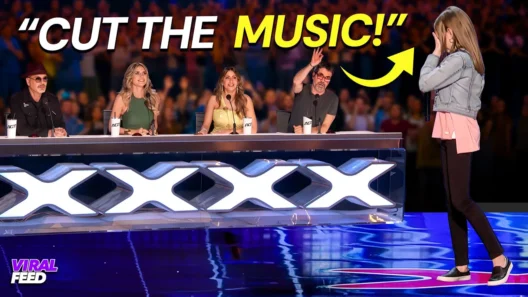
Golden Buzzers are not just confetti cannons. On Britain’s Got Talent, they are sudden verdicts on what matters: courage, craft, heart. The 2026 season delivered a run of buzzer moments that felt unusually personal, even by the show’s standards. They ranged from an inventive teen who claims sound can be seen, to a farmers’ choir born out of isolation, to a high-flying daredevil who converted a skeptic in real time. The video collecting these auditions is more than a highlight reel. It is a record of how a talent show, at its best, becomes a conversation about art, work, joy, and the many ways people find their way to a stage.
It helps that this year’s panel is a lively mix. Simon Cowell has seen nearly everything. KSI brings gamer-era wit and wide-eyed delight. Alicia is a pulse-true musician, and Stacey steadies the mood with warmth that never goes soft. Together they toggle between critique and celebration, and when the buzzer lights up, you can feel the whole room sprint toward one sudden, shared decision.
Across these auditions, one pattern stands out: each Golden Buzzer hinged on a specific, indelible idea. A trick you can’t unsee. A note that refuses to land. A team committed to a communal spark. If the button is the punctuation, these acts supplied the sentences you want to keep reading.
The teen who wanted you to see sound
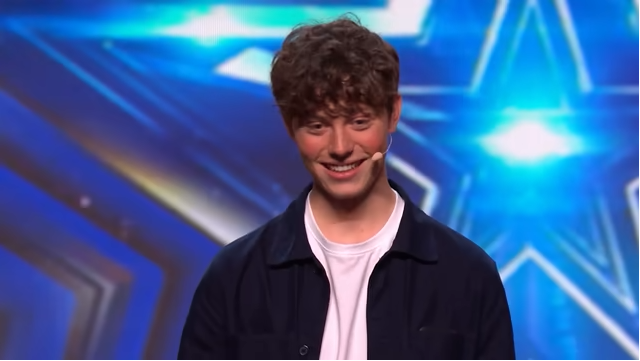
He started humbly, as teenagers often do on this stage. A slight wave to calm the nerves; a joke about being six-foot-four at sixteen; the steadying knowledge that his family was cheering from the seats. Rafferty Coop said he had two passions, music and magic, and then suggested a third: wonder.
He looked at Simon and confessed the thing that set him apart: he believes there is magic in music. Then he tried to prove it. He asked for Simon’s hand, talked about how sound can pass through solid matter, and made that invisible idea feel tactile. Rhythm, he argued, would be the heartbeat of what came next. He even pulled a bright egg shaker from his pocket, because you do not need expensive instruments to tap a groove into a crowd.
‘I believe that there’s magic in music.’
Then came the sleight of mind. Rafferty set down a deck of cards with letters written on the back and roped KSI into the chaos. Cards fell into a neat, odd order: Ace, 3, 5, 8, 10, Queen, 10. Nonsense, unless you mapped them to a keyboard and read the sequence as notes. Ace, three, five, eight, ten, ten. Play it faster. Listen harder. It morphed into a classic you could feel arriving before you admitted it to yourself.
‘Don’t Stop Believin’,’ he hinted, and the theatre inhaled. When KSI flipped the cards, the letters told a story the room already knew: the band’s name spilled out in front of everyone. The trick was not simply that the tune emerged. It was that discovery happened to the judges and audience at the same time.
‘Now do you see why I find sound so cool?’
When the last note snapped into place, the comments came with that giddy edge that marks a real find. One voice called the routine ‘very good.’ Someone else praised the mix of craft and charm. As the judges cued up their praise, the line that stuck to Rafferty like a medal came in a simple burst of truth.
‘You’re 16 years old, and you’re a bright light.’
The button followed, and you could see its impact. Relief gave way to disbelief, then to tears and laughter. A teenager dared to make music visible, and a panel that has watched a decade of reveals still leaned in at the right instant. His victory felt like a thesis for the season: ideas matter, and the oldest song can still become a new surprise if you rewire the route to it.
A voice that refused to land
Some singers arrive with a resume. Others carry a wound. Matty Jay, 27, walked in with a grin, a Glasgow address, and a confession: he had always feared he was doomed to be a singing competition loser. The room laughed when Simon asked whether he watched space operas.
‘Do you ever watch Star Wars?’
‘No. I’m too gay for it.’
Humor is a kind of armor. In his case, it was also a welcome mat. What followed was a performance that felt both studied and free, a dial that turned up and up without splintering. One judge collapsed the reaction to four words.
‘Your range is insane.’
It is always revealing when a panel stops cataloguing and starts reaching for metaphors. Another judge compared the sensation to the shock of discovering a new restaurant you cannot stop talking about. Someone else said that the moment he took the mic off the stand, he became something else entirely.
‘You became a superstar.’
Matty’s joy felt importable; you could take it with you. Simon, looking out at a crowd that had spent the song on its feet, gave the moment back to the people who made it roar.
‘To everyone in this audience, I’m gonna say this is your golden buzzer as well, genuinely.’
The confetti made it official, but the feeling was inked earlier: not just a singer in full flight, but a performer convinced, finally, that his story could change. A waiter from Glasgow, Filipino by birth, stood there shivering and smiling like a person who had just turned a page he had dog-eared for years.
Anti Gravity and the art of the impossible
The troupe from Ukraine introduced themselves with a name that promised the improbable. They delivered the sort of staging that short-circuits neat description. It wasn’t only acrobatics or illusion or dance; it was something about how bodies draw lines in air and then pretend not to touch the floor.
Jokes bubbled at the edges. A judge argued about whether someone had said an ‘n’ or ‘insert the coin,’ then wondered, mock-seriously, where the coin had gone. That is one of the pleasures of a big team act done well: there are jokes baked into the tension, little comedy beats that pop the stress before it flares.
The praise was striking in its unanimity and its reach. It also arrived with the kind of word you never want to misuse on television.
‘I think that was the coolest thing I’ve seen on BGT.’
‘Absolutely out of this world’s brilliance.’
‘Never seen anything like that before.’
What sealed the memory, though, was the scramble that followed. Two judges lunged, or thought about lunging, for the button. One teased the other about who had gotten there first. Another admitted he had tried to stop a colleague from beating him to it. The outcome was preordained; the tussle just underlined the urgency. The troupe basked in a verdict that felt bigger than a single finger on a single buzzer. It was the panel’s collective acknowledgment that the act had redrawn a boundary.
When they came offstage, the words tumbled over each other in disbelief and delight. They had dreamed of that moment. Now they were living in the glow of what can happen when craft and theater swarm a stage at once. Someone hinted at the path forward with a line that always hangs in the air after a buzzer lands: could win.
Silks, risk, and a skeptic’s conversion
Some Golden Buzzers slow your breath. Paul Nanari took it away. The Sydney performer arrived with a promise to rock the crowd’s pants off. You could hear the panel chuckle at the bravado. Even they had no idea how literally that boast would feel by the end.
He climbed, flipped, tightened, and dared, working on silks in a way that made the apparatus feel like a partner rather than a prop. Midway through, he blindfolded himself, as if difficulty was merely a starting point. Someone on the desk stared at the stage and blurted the obvious.
‘You are a madman.’
Reactions turned reverent. Judging on BGT is theater, but every so often the script falls away and you get the core emotion, undiluted. One judge admitted he was speechless. Another went bigger.
‘That’s one of the greatest things I’ve ever seen in my life.’
Then Simon, long allergic to a certain kind of aerial act, offered the season’s cleanest arc in three sentences. He did not like silks. He could not help himself. He had changed his mind.
‘They’re called silks, right? I’m not a huge fan. However, I’ve now changed my mind.’
‘Actually, one of the most incredible things I really do believe that I’ve ever seen.’
The golden thunder followed. Backstage, Paul grasped what had just happened and who had set it in motion. He tried to name the scale of it, and stumbled in the charming way people do after they have shocked a room and then been shocked back.
‘Simon’s been around for so long. He’s seen so much, and to have him give me the golden buzzer was just a dream, a treat. I’m very, very happy.’
Paul’s act did more than convert a skeptic. It threaded the season’s larger theme: bravery is technique joined to heart. When the paper fell, the sense was not of a stunt well executed. It was of a person who had taken a risk that set the room alight and then landed like a pro.
A choir that beats loneliness
Not every Golden Buzzer is about velocity. Some are about weight. The Hawkstone Farmers Guac walked out as a community first and a choir second. Their origin story began with a television host who brought them together to sing. The deeper truth arrived in a quiet, farmerly cadence that made the stage feel like a village hall.
‘We work by ourselves day in, day out, sometimes sixteen, seventeen hours a day, and this has brought us together.’
‘We love what we do, but it can be incredibly hard, really lonely, very isolating.’
The voices braided into something solid and tender. People in the audience wept almost immediately. On the panel, emotion registered as surprise, then identification, then gratitude that the show had made room for this.
‘As soon as you started, I completely welled up. I felt so much power.’
‘Music is so powerful. It’s like therapy, and you could really, really feel that. It sounded beautiful.’
It is easy to be cynical about choirs on television. They can blur into the same beat, the same long notes and easy swells. This one felt different because its stakes were everyday, not theatrical. The payoff was not a key change, but a key placed in a door. The buzzer lifted them straight into the semifinals. When they bowed through tears, you could see that this was not only a win for a group. It was a rallying point for a profession that feeds people and too often works out of sight.
From Japan, a detonation of craft
Every season needs a breakout team that arrives with discipline, speed, and a sense of spectacle. This year, a crew who introduced themselves simply and boldly fit that bill. They were performers and a hip-hop team. They had crossed an ocean to compete. Their aim was plain.
‘We want to win BGT.’
What they brought was a precision riot: bodies snapping in sync, firing into new shapes, stopping on a sixpence, then roaring forward again. The judges groped for words in the wake of the blast. KSI, Alicia, Stacey, and Simon exchanged looks that read like a scoreboard in the sky.
‘Genuinely, I don’t even know where to start. It was like an explosion of energy. It’s just unbelievable.’
If the British talent stage is a global arena now, this audition captured why. The set fused street language with theatre-scale visuals and the kind of muscle memory that only arrives after long, late hours in a studio. The Golden Buzzer underlined a simple idea: excellence speaks any language.
The season in miniature: playfulness, pressure, payoff
What ties these stories together is not genre or geography. It is the feeling that each act knew precisely what they wanted to give, and the panel understood exactly when to take the leap. Along the way, the judges made the show feel alive. They asked for hands. They played with egg shakers. They bickered, gently, about who struck first, like friends dashing for the last slice and laughing about the mess. Even the smaller moments became part of the glue. Someone noted how rhythm is the heartbeat. Someone else admitted that an act made them feel like they had discovered a whole new place to eat, and they wanted to go back tomorrow.
In between, there was room for delight and cheek. The line about being too gay for a certain science-fiction franchise ricocheted around social feeds for good reason: it was honest, funny, and instantly human. The same is true for the way the panel let themselves be moved. You can tell when a judge has their eye on the camera instead of the act. That did not happen here. The camera caught them tripping over their own reactions, and the buzzer confirmed those instincts in gold paper.
There is a sturdier current beneath the neon. The farmers’ choir named loneliness with no shame. The Ukrainian troupe brought craft and defiance from a country that has taught the world a lesson in grit. A teenager put intelligence at the center of a trick. A flyer on silks risked everything and taught a veteran judge to bend. The message was not smuggled; it was sung aloud. Talent is a place to put your fear where the light can hit it.
What the judges told us about the year
Across these auditions, the feedback became a story of its own. Simon, whose job for years has been to do a convincing impersonation of skepticism, seemed to delight in getting it wrong. He relaxed into wonder instead. Alicia returned to first principles: pulse, tone, the way rhythm animates everything. KSI toggled between comic foil and true believer, popping into the action when a volunteer could unlock a reveal, then sitting back in good-natured shock when the stage solved a puzzle he hadn’t seen coming. Stacey channeled the audience’s yearning to be part of something big and safe and gleeful. Each time a button landed, you could sense how much they value surprise, but also how much they value clear intention.
They were also generous with the language fans carry out of the theatre. Think about the phrases that keep ringing after the confetti sweep: a range called insane; a boy named a bright light; an act anointed one of the greatest things seen on that stage; a choir that sounded like therapy. People do not repeat technical notes. They repeat conviction. This season packed the show with statements that sounded less like evaluation and more like endorsement.
The Golden Buzzer as a promise
When that plunger thuds, the show collapses time. You leap past yeses and nos and deliberation. You skip the tidy staircase of progress and take the drop. But that leap is not just for the act. It is also a pledge to the audience that this is something worth anchoring a season around. That has consequences. It shapes the semifinals, yes. It also defines what sort of talent Britain and the world want to celebrate right now.
Based on this year’s slate, the answer spans invention, community, precision, and guts. A teen uses logic to spark lyricism. A singer turns fear into fuel and lets his voice throw the net. A troupe bends gravity and then cracks a joke. A father from Sydney stakes his case on weightlessness and wins. A choir yokes work to art and proves that solidarity can sound like a song you already know by heart even if you have never heard it before.
Between the jumps and the jokes and the tears, that seems like a worthy map for a show built on the hope that anyone can walk in and bring a room to its feet. The Golden Buzzer does not guarantee a Royal Variety performance. But it does certify this: for one clear, electric minute, a room full of strangers believed the same thing at the same time, and that belief felt good. In 2026, that feeling showed up again and again.
Why this collection is worth your time
Watching these auditions in one sitting sharpens what each one means alone. The reveals stack. The judges’ running jokes pay off. You start to see how a season teaches its audience to listen and look. You notice the small beats you might have missed the first time: the careful way a magician asks for a hand; the breath a singer takes before a note he knows will split the room; the way a dancer glances at a teammate and smirks before the next explosion of shape; the quiet lines farmers speak that carry the weight of fields and seasons.
Caught together, the Golden Buzzers feel less like isolated detonations and more like a build. That is the joy of a well-edited chronicle: you can watch the tradition renew itself in almost real time. Surprise, sincerity, and scale. The show leaves space for laughter, even when the stakes are high. And it risks a tear, even when the laughs are easy.
There is, finally, the reward of seeing judges who could coast lean in instead. When a veteran changes his mind on television, he hands the power back to the act and the audience. When a pop-schooled panelist says that music is therapy, she names something that people working long days in hard jobs already know. When a digital-era star stands in for a spectator touching the impossible, we get a conduit for our own shock. That is the chorus line under the confetti: empathy, translated into gold.
Britain’s Got Talent thrives on novelty, but the Golden Buzzer thrives on conviction. This season’s collection overflows with it. If you want to remember how it feels when risk meets readiness and a room decides to say yes all at once, the video is your map. Watch for the moments when the judges stop performing and simply react. Watch for the craft that lets a set breathe and then burst. Watch for the glances between strangers that become a shared story in the space of a song.
Then press play again with someone you love. These are the auditions people will keep talking about when the series turns toward its finish. And if the live shows are anything like these golden minutes, there is more wonder on the way. Dive in, and let the buttons fall where they may.