America’s Got Talent opened its 2026 season with the kind of premiere that reminds you why this show endures. It was a night that started with a family’s dream and ended with confetti, a tug-of-war over a Golden Buzzer, and a string of yeses that felt like permission slips for people to stop pretending to be ordinary. In between came a surreal dance with robots, a knife act redefined by survival, a French comic testing the speed of humor in a new language, and a choir that turned a TV studio into morning light.
The family from Edmonton that turned courage into confetti
“What’s your name of your group, and where are you from?” The answer arrived with bright smiles and a neat little mission statement: a tight-knit troupe from Edmonton—older sister energy up front, little sisters buzzing behind—who said they’re “all one big family.” When asked about their ages, the eldest announced, “I’m the oldest at 21,” and another tiny voice popped up from the end: “Seven.” The judges laughed and cooed. The follow-up question cut to the heart of their intent: “If you win, how do you split the money?” Their answer didn’t mention cars or trips. “We wanna upgrade our studio. More studio space. We wanna have a hangout area, better change room.”
That honesty lingered as they took the stage. The routine that followed wasn’t just tight acrobatics and crisp lines. It had cheerful chaos, kids who looked like they’d choreographed their summer, and—yes—dogs flying into the choreography with goofy joy. Sofia Vergara, an instant fan, couldn’t hold herself back: “What is my two favorite acts, which is dancing and dog act together.” Then she laughed at her own delight, piling on, “You guys are so good. You’re having fun. The dogs are having fun. It was the perfect idea to come to ADT.”
The applause was still rolling when Howie Mandel made the kind of impulsive decisiveness that turns episodes into memories. “I got golden buzzer. I’m sorry. Wow.” Gold cascaded. He kept talking through the sparkle, half laughing at himself and half overcome. “I’ve never seen an act like I’ve been doing this for seventeen years. I’m Canadian. And there’s there comes from Edmonton.” Then, hilariously, life intruded: “My wife just showed up. I just said, you missed the best act of the season.”
It wasn’t just a win for a team. It was a small manifesto for any kid looking at a worn-out practice space and thinking, if we work hard enough, maybe we can fix everything we share.
The dancer who gave robots rhythm
When a performer introduced himself as “flying bug,” a 26-year-old from Sichuan, China, the room tilted toward curiosity. “Are you going to win?” a judge asked. He didn’t blink: “Of course. I think no one come here than create victory.” The lights dimmed. Figures that looked like metal sentries assembled behind him. Then came the surprise—the machines seemed to listen. Hands flicked, hips synced, and the theater slid into a trance as the robots moved like a corps of perfectly drilled dancers.
A chorus of half-laughter and half-fear followed. “Oh, no. It’s robots.” “It’s scary.” “Look. He’s moving them with his hands.” By the end, no one could deny the groove. “I mean, that was ins that was insane. Nasty. Brilliant.” Another judge wrestled with awe and unease: “I do find it a little bit freaky, but they all knew the choreography. If anyone was out of sync, it was you because they were all perfect. I loved it.”
Someone asked, charmed by the tech with personality, “Do your metal friends have names?” The answer came with a grin. “Yes. His name is Jackie… because he really love kung fu.” A quick, “Can I have Jackie?” got a rapid-fire string of “No. No. No. No. No.” And then the verdict: “You’ll have four yeses.” A novelty act? No. It was dance with a different heartbeat.
A 14-year-old steadies her breath, then time stops
Her name was Lei. She is 14. From Texas. The first thing we saw was not a big note but a breath you could almost hear. Simon Cowell, in coach mode, leaned in: “If you’re nervous, that means you’re alive. That’s good. And I’ll tell you a secret. We have the best audience in the world.” He asked, half-joking, half-parenting, “Do you want some water or anything?” She took a sip. “Do you want a sandwich?” She smiled. “No.” It felt like the room adopted her.
“Are you ready?” someone asked. “Yes.” The music started. A voice poured out that didn’t match the teen before us so much as it matched what she dreamed she could do. At one point, a judge just muttered, “Words aren’t necessary.” Another, searching for the edges of disbelief, asked, “That wasn’t her singing. Right?”
Then chaos—the good kind. A hand slammed the Golden Buzzer. Confetti again, and the kind of backstage sprint that only happens when you’re 14 and something impossible just happened. Minutes later, they called her back. The on-camera postscript was as messy and human as the moment itself. “I told him that I’m gonna give her the golden buzzer, and he got up and did it. Don’t tell him. He took her from me.” When she reappeared, she apologized for running off in happiness: “I’m sorry for leaving you.” The judges kept the playful squabble alive. “You steal my golden buzzer.” The response was pure Cowell theater, half confession, half conviction: “You got such a gift, and now you take this opportunity.”
Someone asked her, gently, “Do you know how special you are? Well, now I hope you do because now you’re Simon’s golden buzzer. How does that make you feel?” Lei’s answer was as simple and open as her opening breath: “Really good.”
Love, danger, and a knife thrower with one good eye
They introduced themselves plainly: “I’m Tyrone Leonard.” “I’m Margot Sarova.” Married. The kind of couple that walks in looking like action heroes and proves it. You could feel the audience recalibrate as knives appeared and the air stiffened. The speed did most of the talking, blades fanning so fast that some of the judges looked away. “I’m not watching,” one admitted, peeking through fingers.
When it ended, Simon asked the question that hangs over every high-stakes act: “Has there anything ever gone wrong during one of these acts?” The answer was a gut punch. “Two years ago, we had a big accident in a live show, and, one of the knives hit her face… and stuck in the eye.” Then the sentence no one expected: “That’s why she shoot to me now.” Margo explained the cost and the courage without drama. “I’m using now one eye because second eye, recover just only 30%.”
The praise was immediate and specific. “It was the speed that got me.” “Margo, you look so sure of what you’re doing… It was spectacular.” Howie took it further: “You could be like a Marvel superhero character… The fact that you only have 30% vision in one eye, you have a lot riding against you, and yet you rose to the occasion.” The panel lined up: “Yes. Yes. Yes. Yes.” Four yeses.
Backstage, the story gained its real center: loyalty. “Every day when I was in the hospital under the surgeries, I was not able to open the eyes to the same how beautiful I am. And I want to say that support… bring me here.” A judge, still rattled and moved, translated the feeling in plain language: “Anyone who’s a couple should love each other like this.”
A choir from Atlanta stops pretending to be normal
When Diana Dixon walked out with a group from Atlanta, Simon greeted them like neighbors he’d just met in a green room. The pitch wasn’t about hustle so much as identity. “The reason why we’re here is so we can stop pretending to be normal people and do our dreams full time.” The room laughed and nodded because the line fit everyone who’s ever walked onto this stage. Their day jobs stretched across city blocks—“stockbroker, a banker, and an Uber driver”—but the choice of song said it all. “We will be doing ‘Lovely Day’… and in a time where the world can be so dark, everybody could use a lovely day.”
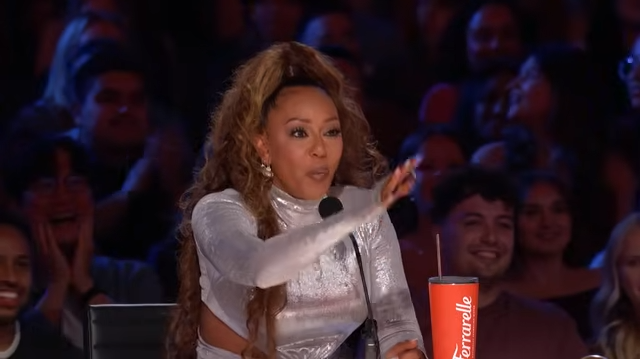
When they sang, everything else fell away. The harmonies built like sunrise, with choreography that glided without stealing breath from the voices. Mel B popped up from her seat: “That was just everything for me. The harmonies, the vibe, the swag. I loved it. Loved it. Loved it.” Sofia called it “the perfect audition,” then added the quiet compliment every artist hopes for: “The song was perfect. It brought everyone, like, like, a beautiful energy.” Simon, not always generous with superlatives, went big. “I honestly think this is one of the best choirs we’ve had in years… The choreography was amazing. The vocal arrangements were amazing… You have sensed the mood and done exactly the right thing, which is give us something which makes us feel great.” Four yeses arrived like an encore the group had already earned.
Jokes with jet lag: a Parisian comic tests American speed
“I come from Paris,” said the stand-up who introduced himself as Kev—before explaining that his mother named him after a late-20th-century bodyguard. “My mom called me like that because she was a huge fan of the movie, The Bodyguard with Kevin Costner… So I hate my name and I hate this movie.” The room cracked up as he delivered the punchline about his brother: “I’m the lucky one in the family because I have a little brother, and his name is Whitney Houston.”
Comedy in a second language is a high-wire act of its own, but Kev worked it by leaning into confusion with American idioms. “I’m still learning English… For example, hang out. Everybody says that here. Hang out.” He described how the phrase shifted depending on who asked, building to a boyish refrain: “Do you wanna go to my house? We’re gonna hang out?” and then, the next day, “Hey, bro… we’re gonna hang out.” The audience rode the twist with him.
He also took aim at distance in a country built on highways. “There’s so many differences… This country is too big.” He talked about being told to visit Las Vegas because “it’s right there,” which led to the kind of five-hour drive Americans call a hop and Europeans call an odyssey. What made the set work was the simple truth in it: the trouble of translating life, not just words.
The messy middle: misses, fixes, and the long road
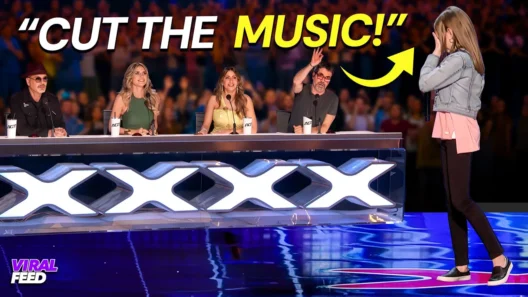
The premiere didn’t glide from triumph to triumph. It lurched and learned the way first nights do. One hopeful stepped out and, for a moment, the room didn’t know what to make of them. Then the fix arrived, simple and exact. A judge summed it up with a line that doubled as a thesis for the night’s surprise turnarounds: “What a difference music makes.”
Another artist carried a different kind of history to the microphone and said, in a voice that carried as much life as notes, that “music got me through leukemia.” Before they sang, that sentence filled the place between stage and seats with a quiet hope. Elsewhere, someone explained their journey “from the streets to this stage,” and you could see the judges lean forward—not with pity, but with a kind of trust earned before a single beat dropped.
Not everything hit. One performance bravely tried to dance without music. The judges squinted, curious at first, then confused. A variety act brought flames into a food gag and left everyone asking whether a single hot dog can survive celebrity. Another performance got buried under X’s—a storm of them—before the act had time to find its center. And late in the night, the panel split over an act that felt halfway between art and dare, trading “yes” and “no” with the mild, respectful stubbornness that keeps this show from turning into a parade.
But the center of the evening stayed steady. It was a simple set of ideas poured into different containers: family goals that sound like blueprints; tech that finds a groove; comedy that crosses a border; a choir that trades day jobs for daylight; a knife thrower whose composure outshines steel; and a teenager who needed a sip of water before she washed the room in sound.
How the judges shaped the show
The panel found its rhythm early—Sofia as the excitable barometer of joy, Mel B as the one who leaves her chair when harmony hits, Howie as the proud Canadian who presses first and rationalizes later, Simon as the exacting sponsor of dreams. Their lines punctuated the night and gave the audience a way to measure how wild or warm things had just gotten.
When the robots hit, someone said out loud what many were thinking: “I don’t know if I’m, like, scared of.” Yet even that made space for praise. “These ones have rhythm… It was like watching people dance.” When the choir wrapped, Sofia did not hold back: “It was perfection.” For the knife act, Howie’s “Marvel superhero” line folded danger into mythology without making light of recovery. In the moment with Lei, Simon dispensed the sentence that often becomes a lifeline: “You got such a gift, and now you take this opportunity.”
Even the small jokes mattered. The banter about water and sandwiches before Lei sang made the theater feel like a living room. The quick, “Can I have Jackie?” after the robots strutted was both a laugh and a compliment. The Golden Buzzer tug-of-war—“You steal my golden buzzer”—kept things human. It reminded us that big decisions are made by people who get caught up and care too much, just like the rest of us.
What this premiere says about the season ahead
Every opening night plants flags. This one planted several. First, that joy counts. Dance is better when dogs have fun, and choirs shine when they choose songs that meet the moment. Second, that risk can wear a lot of faces—from metal companions learning to groove, to a married duo rebuilding trust at speed, to a teenager claiming a stage that can feel twice her size. Third, that story still rules. Lines like “stop pretending to be normal people” lodge in your head because they say the quiet part out loud, for all of us.
It also suggested that the season will love contrasts: analog blades and digital beats, a Texas teen and a Paris comic, a Canadian family troupe and an Atlanta chorus of transplants. The show’s old promise felt new again—this isn’t a contest of sameness. It’s a night market. You come for one thing and leave carrying three.
And then there is the Golden Buzzer math. Two in one premiere reshaped the field fast: Howie’s exuberant “I got golden buzzer. I’m sorry,” followed by Simon’s claim to Lei with, “now you’re Simon’s golden buzzer.” In both cases, the button landed not on spectacle for spectacle’s sake, but on performances carrying purpose—studio space for a family, belief for a teenager.
The note that lingers
As the credits edge closer on nights like this, the afterimage isn’t just gold in the air. It’s phrases that hang back with you after the screen goes dark. “The dogs are having fun.” “These ones have rhythm.” “You could be like a Marvel superhero.” “It was the perfect audition.” And, quietly, the sentence that can change a life: “You got such a gift.”
This season looks ready to mix thrill with warmth, speed with stillness, and laughter with tears in the same hour. If Week 1 is the measure, the bar is already high, and the runway is long. Watch the video, meet this year’s dreamers in their own voices, and pick your favorites now—because the next episode will arrive fast, and the stories only get bigger from here.