There are comeback stories, and then there are full-circle moments that feel written for prime time. Jessica Sanchez’s return to America’s Got Talent after two decades became both—a season-long arc powered by timing, grit, and a voice that only grew stronger in the space between. She stepped onto the twentieth-anniversary stage, smiled, and said plainly, “My name is Jessica Sanchez. I’m 29 years old, and I sing.” Moments later, a revelation: “I recently found out that I’m pregnant.” By the end of the season, as fireworks and confetti rained down, she would be something else, too: the newly crowned champion.
The voice that came back home
AGT has always been a show about second chances and sudden stardom. For Sanchez, the stage was also a map back to herself. She first stood beneath those lights as a kid, a contestant on the very first season. She remembers the shock of it, the carnival of auditions and the nerve of those first notes. And she remembers how it ended. “I did get eliminated. It was devastating,” she says now, not as a complaint but as the start of a longer sentence about purpose. “But it really did, like, help me realize, like, I wanna sing. AGT was the beginning of that fire sparked inside of me.”
Between then and now, the years didn’t take her voice; they taught her where to place it. “Throughout the years, I kind of fell out of love of music because I was really young, and I was so swayed by what everybody wanted me to be, who they wanted me to be,” she explains. “It took me twenty years, but I know exactly who I am. I know exactly what I want.” The timing was irresistible: her return coinciding with AGT’s twentieth season. The story, almost impossible: a first-season alum reappearing as a grown woman, a wife, and soon, a mother.
Backstage, amid the nerves and nostalgia, the emotion of her news landed like a drum hit. Judges and audience members lit up; the studio swelled. She said it without fanfare, as if it were just another line on her life’s setlist: “I recently found out that I’m pregnant.” The room burst with congratulations. It wasn’t just a twist—it was a lens that reframed her entire run. Every breath would be shared now. Every note would carry two hearts.
Audition night: a roof raised, a buzzer struck
When she began to sing, the shift was instant. The power was clear, the control even clearer. The judges leaned in. The audience rose. Confidence replaced caution in one swoop of the chorus. Simon Cowell captured the sense of return that everyone in the room felt: “Twenty years is, is a long time, but well worth the wait.” Then he sealed it with a simple verdict: “You blew the roof off the place. You are so wonderful.”
“You’ve got a voice of a bloody angel. Beautiful.”
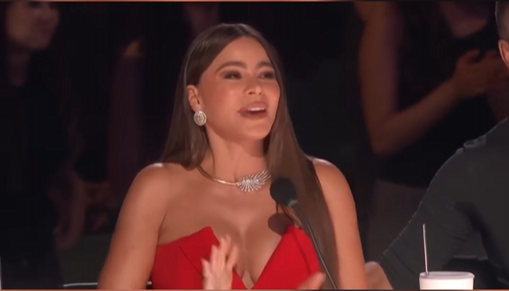
That came from the panel, the kind of praise that leaves a performer blinking back tears. Soon, gold confetti was falling like summer rain—Sofia Vergara’s Golden Buzzer bathing Sanchez in a shower of light and approval. Onstage, they embraced. Offstage, they laughed together, a quick exhale after a door-swinging-open kind of moment. The season had its heartbeat now, and its headline.
Live shows, heavier stakes
As the competition moved to the live rounds, the dream complicated. Pregnancy changes a body, and breath control is a vocalist’s foundation. Before one show, she felt off, enough that Simon quietly offered the out any artist both dreads and needs: the choice not to go on. “I heard that she wasn’t feeling too good,” he told the audience later. “I said, look. Honestly, genuine is your choice whether you wanna do this or not.” Her answer was the story in a sentence: “No. I wanna do this.”
What followed was not bravado but craft. She stood firm, centered her stance, and sang with deliberate phrasing that let the melody breathe. The room found her again. Sofia spoke for the swelling crowd: “That was amazing… that was spectacular. And America is loving you. You are the best.”
Howie Mandel added the levity that trailing nerves often need: “When you hit those big notes, I was worried that this production was gonna turn into a reproduction.” The joke worked because the room knew she’d done the hard thing. She’d climbed the stairs to the stage, belly first, and still delivered.
Simon named what people couldn’t stop noticing when she walked on: presence. “You have such an amazing tone,” he said, “and… you have this amazing, I call it, a glow. Right?” He wasn’t just referencing stage lights. It was the often-unnameable effect that great performers have when they are exactly where they’re supposed to be.
Song choices and a singer’s center
Jessica’s set list became a running conversation. Howie crystallized the math of the moment with one of the show’s classic high-wire statements: “With the right song choice, you could take this all the way and be the million dollar winner.” Mel B echoed the technical side of that, paying her the kind of compliment that doubles as a responsibility check.
“Your vocals were just magical. You have a range that’s very similar to Mariah Carey. You can go up, down, and round the corners, and you always land on point.”
Whenever a performance leans softer, a debate opens. Was the song too inward? Did it swell enough? Howie kept the question alive one night: “America’s gonna have to decide whether that was the right song choice… for me, it’s just the choice.” But Simon countered with a quiet confidence in the route she had taken. “I love the song choice, actually. Genuinely. I really, really did. It… showed a different part of your voice. That’s what I call a kind of a moment performance. Genuine.”
Then he tugged on the season’s throughline—will and waiting. “Not only are you talented,” he said, “you’ve never given up over all of these years, and you could have done, but you haven’t. You kept going. Timing’s everything, by the way. And, importantly, you are very, very likable.” It’s easy to overlook that last metric until the votes come in. Likability is not the same as popularity. It’s the human bond that awards shows trade in. Viewers felt that bond with her.
Backstage, her own priorities were as practical as they were profound. “I keep telling my baby,” she admitted, half-laughing, half-pleading as the finals neared. “I’m like, please just stay in there another week.” It was more than a wish. It was the plain-language prayer of a mother who is also an artist, asking time to bend just enough to let her finish what she started.
The semifinals crest
By the semifinals, Sanchez’s tone had ripened into something both airy and fearless. She could lean into softness, then crest into power that hit the back row without turning harsh. Sofia’s commentary read like a proud producer’s notes: “I’m so proud that you’re my golden duster. Jessica, you get better and better. It’s perfection… Your voice, your little belly, your story.” She laughed at the malapropism and still nailed the essence: nothing about this arc felt manufactured. It was lived and sung, moment by moment.
Critiques continued to orbit the setlist. Mel B kept it balanced—celebration, then calibration. “Whether that song affected everybody the way that you wanted it to, I’m not sure,” she said, “but I could see that it affected you, and that’s the most important thing. It was beautiful.” Simon’s reply was almost a thesis statement for the season: show us a different corner of your voice, but don’t lose the honesty that built the bridge.
Jessica answered the way she always had: by singing a little braver the next time out.
The finals: grace under lights
Finals night demanded control under maximum pressure. She arrived in a bright, clean silhouette and stood in front of a stage design that let the song be the spectacle. Her phrasing was long and sure. Her air was anchored. The high notes bloomed, the low notes held warmth. Sofia put the room’s pulse into words: “You look like a like a little pregnant angel… I mean, you look beautiful. Your voice, I’ve never heard anything like that. Bravo, Jessica.”
Mel B underscored the consistency that had come to define her across the season’s climactic stretch.
“Every time we see you, you kind of bring us into your world more and more. You give us more emotion, more passion… No matter what song you sing, your vocals are just flawless and pitch perfect every single time.”
Howie didn’t hedge. He stepped out onto the plank of a night when everything is being measured against everything else. “I agree with everything my fellow judges say… so far, this is the best act of the night.”
Then came Simon, with the quip that punctured the tension and honored the reality everyone could see and feel. “There are two of you, so it’s like a duo. Right?” he smiled, before steering straight into the show’s core lesson. “It was so important for our twentieth anniversary that you came back, importantly, to show that even if you don’t win the first time, you’ve got to always believe in yourself.” He looked up at her, proud and a little moved. “I thought you sounded amazing. Seriously? Amazing. It was, I think, the best performance we heard from you so far.”
Final pairing, final push
In a final-night flourish, Sanchez performed while acrobats from Circa Morea swept and spun above her, a visual echo of the lift in her voice. Instead of crowding her, the motion framed the song’s build. After, the host asked what their presence felt like in real time. Sanchez didn’t overthink it. “I feel like they made the song come alive,” she said. “I mean, they’re just so amazing, aren’t they?” It was the nod of a headliner who knows a well-made picture is built by many hands—and that her job is to place the voice at the center of the frame.
America votes—and a circle closes
Results shows compress a season’s worth of suspense into a single minute. The lights narrowed. The room hushed. “America has voted,” the host said, building to the sentence that changes a life. The pause felt longer than a bar of silence. Then came the release: Jessica Sanchez—the AGT champion and winner of $1,000,000. Confetti spiraled across the stage. Fireworks lifted. Sofia, Simon, and Terry closed in, all hugs and bright smiles. Sanchez’s face crumpled into happy tears, the kind that come only when a long-held dream arrives on time.
What made the moment land wasn’t just the headline. It was everything the season had put in front of us to get there: the black-and-white memory of a young girl fighting back tears backstage years ago; the simple, steady testimony of a woman who found herself in the quiet spaces between performances; the humbling logistics of pregnancy woven into the unglamorous labor of art. And after all of that, the soft laugh of a new mother-to-be who could finally let her shoulders drop and breathe in.
Why it resonated
AGT is built for discovery, but it thrives on recognition—the shared recognition that people change and still remain themselves. Sanchez’s run was a masterclass in this paradox. She did not return to prove the judges wrong from twenty years ago; she returned to prove the little girl right. The voice was always there. The years taught her how to use it with taste and with timing. They also taught her how to make quiet as dramatic as loud.
Consider Simon’s checklist across the season. Tone. Glow. Likability. Timing. Add Mel B’s calibration around song choice and the Mariah Carey-range compliment. Fold in Howie’s habit of translating micro-decisions into the macro of “million-dollar winner” stakes. Sprinkle Sofia’s unswerving belief across the whole map. At the center of it all was Sanchez’s own mantra, as modest as it was unbreakable: “I wanna do this.”
There’s also the undeniable power of the motherhood thread, which never became a gimmick and never receded from view. It was simply true. She adjusted breath. She carried weight. She paced herself. She listened when her body said pause and when her heart said push. On camera, she teased out the tension with the kind of gentle humor that makes audiences lean closer. Asked how she was coping with two life-changing moments at once, she smiled and said, “I just keep telling my baby… please just stay in there another week.” The laugh came easy. The resolve did not.
The craft underneath the shine
It’s easy to mistake confetti for a story’s climax when the real turning points happen in rehearsal rooms and between heartbeats. Sanchez’s technique matured into a suite of choices that served her timbre and storytelling. She plotted phrases to protect breath, let vowels carry tone, and saved dynamic spikes for lines that needed them. She found ways to make belting feel like release rather than strain. And she learned to land the end of a song with the same care she began it—a small thing that reads as authority to anyone listening closely.
That’s why the judges kept using words like “genuine,” “moment,” and “perfection.” Those are squishy descriptors if you can’t back them up with detail. Sanchez did, night after night. When she leaned intimate, she didn’t fade; she deepened. When she went big, she didn’t blast; she bloomed. That blending is what separates good TV vocals from great records—and what turns a season storyline into something that lives past its finale.
A banner season, a fitting winner
Against the backdrop of AGT’s twentieth season, her win felt less like a surprise than a completion. The show’s brand promise is baked into Simon’s on-air instruction: “Even if you don’t win the first time, you’ve got to always believe in yourself.” It’s a line so clean it risks sounding like a poster, until a person walks onstage living it. Sanchez did, and the show’s history was better for it.
After the confetti settled and the hugs ended, the best quote to summarize the arc might be the simplest, spoken on that very first night back: “I came here to sing and to try and win this competition.” The sentence did not strain. It did not oversell. It was just plain. And then it became true.
What her win means next
Winning AGT is not an end point; it’s a runway. For Sanchez, the road forward looks both busy and bright. There will be a newborn to hold, a debut season as a champion to plan, and a public that already knows how to pronounce her name. There may be a record to make or a tour to map, and perhaps even a residency that puts her voice in a room designed around its edges.
The most exciting prospect might be the one we can’t guess yet. The years she spent recalibrating taught her how to choose her lane. With a national platform widened by a win—and a story that opened so many hearts—she now gets to choose where to drive it. If the season is any guide, she’ll steer by feel and by craft. She’ll listen more than she reacts. And when it’s time to go big, she’ll do what she did all summer: step forward, plant her feet, and let the note rise.
Watch the full journey
For anyone who missed a week, or for those who simply want to feel it build again, the complete season arc is collected in one place: the audition that “blew the roof off the place,” the Golden Buzzer shower, the near-miss backstage when she almost didn’t go on, the semifinals debate over song choice, the finals performance that drew “best act of the night,” and the confetti-sparked celebration of a champion. It’s all here, set to a voice that found its truest form right when it mattered most. Press play, turn up the volume, and watch how a twenty-year promise gets kept—in full color, under bright lights, with a new life already keeping time.