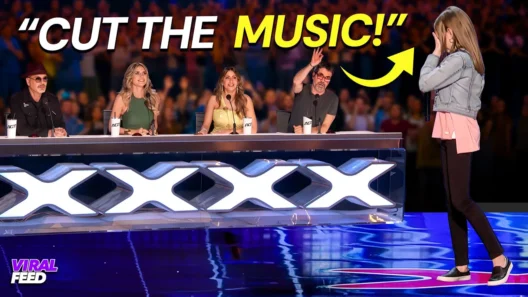
There are talent shows that entertain, and then there are talent shows that recalibrate what entertainment can feel like. The all-magicians showcase from Britain’s Got Talent 2018 does the latter. It sidesteps the old binary of tricks versus stunts and argues that modern magic is a conversation: with risk, with luck, with memory, and most of all, with the audience. The result is an hour of wonder that remembers to be human.
The night real magic changed its meaning
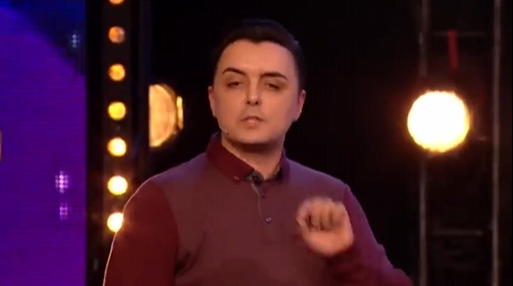
Mark, a softly spoken magician from North London, takes the stage carrying everyday objects: a box of crayons, a family paperback, a child’s deck of picture cards, and a Rubik’s cube. He is 46, a husband and a dad, and he tells the audience he once wondered what it would be like to experience real magic. Then his life changed two years earlier. The premise sounds modest. What follows is anything but.
He hands Amanda a scrambled cube to mix. David chooses a crayon at random without looking. Alesha touches any one card from his daughter’s picture deck. Simon circles a word in a family novel, eyes closed as the book drifts over his marker, selecting a place by instinct rather than instruction. The choices feel messy, personal, and unpredictable—exactly the way choices in real life are.
Then Mark folds the chaos into a single, crystalline reveal. David announces his color: red. Alesha reads the name on her freely touched card: a puppet penguin. The top of Amanda’s cube shows a pattern Mark claims he could not have known. But the coup de grâce lands when Simon reads his circled word aloud—three simple letters that somehow punch through the room: hat.
Mark doesn’t gloat. He lowers the house lights of expectation and plays a recording. His young daughter’s voice, soft and clear, asks the question he posed years ago: if Daddy were to audition on television in two years, what word would Simon think of? She answers herself with that same ordinary word. In that moment, gimmicks become family lore. The judges react not as critics, but as parents.
“Absolutely gobsmacked… I have a feeling this act is gonna change your life.”
That’s Simon, moved first to silence and then to faith. He isn’t alone. David calls it magnificent. Alesha praises the calm, the control, the way the family story lifts the routine. Mark replies with a line that doubles as thesis: she’s my magic. In a show that traffics in astonishment, the heart is what steals the scene.
Speed, color, and a cube that forgets its own white
Where Mark draws power from story, Maddox, a young sleight-of-hand specialist, leans into precision. He begins with a warning—that from too far away you might miss the moment—and then makes sure you don’t. A cube solves itself at chest height, colors knitting into clean faces as if remembering their places all along. He asks to take it closer, hungry to share the moment across the footlights rather than at their edge.
He has Alesha mix another cube, then invites Simon to choose a color and hide it from view. When the reveal comes—white—the trick seems poised for a standard restoration. Instead, Maddox swerves. He asks Alesha to hold the mixed cube flat like a table and to think of white, only white. She does. Then the line that detonates the theater follows:
“White just vanished from every single side of this cube.”
It hasn’t disappeared from one corner or one face or one planned panel. It has disappeared from every side but one, a visual punchline that works because it refuses to be tidy. Then, for a final turn, Maddox recruits Amanda to solve a cube behind her back—no peeking, no memorization, just muscle and belief. He reminds everyone that there are, as he puts it, 43 quintillion ways to scramble a cube. He isn’t asking her to beat odds; he’s asking her to outgrow them. The floor shakes with relief when it works. Miracle by proxy is still a miracle.
The card, the knife, and the roar
Danger is the oldest trick in the book, yet Andrew Lee manages to make it feel uncomfortable again. He arrives from Malaysia with a deck of cards and a sharp blade, then welcomes Ant and Dec into the blast radius. Dec chooses a card and tears off a corner as his receipt. The deck spreads in Ant’s hands. A knife glints above it. Andrew deadpans to Dec: take a deep breath and relax. Then he turns to Ant with a request designed to empty the lungs of the arena: toss the cards high.
One more drumbeat. Will the blindfold go on or off? “Off. I’ll have it off,” Ant says, half-joking, half-pragmatic. The music swells, the theatre counts, and the deck explodes skyward. The knife meets paper in a single savage cut. When the confetti settles, a lonely card hangs skewered on steel—torn corner perfectly matching Dec’s keepsake. It’s showmanship by crosswind, a trick designed to land once and to land loudly. It lands.
A pencil that makes things true
Where some magicians wear mystery like armor, Mandy Muden wears it like a smirk. The London comic conjurer opens with a premise so simple it has to be cheeky: whatever she writes or draws on her pad becomes reality. Then come the baubles—literal and metaphorical. She quips about timing and melons, about being called a witch, about stroking David’s aura, and the room loosens around her.
Her mind-reading isn’t grandiose; it’s social. “Think of somebody you’re very, very attracted to,” she tells David. He answers without flinching: Simon. The crowd is already hers before she turns to Alesha: think of something you like to do most days. Alesha answers like everyone’s best friend: food. Punchlines ricochet, but the magic still kicks. When Mandy reveals a number prediction—triple sevens—it lands with the odd chill that comedy can sharpen rather than soften. She reminds us that the best laugh is also a gasp.
Japan sends a curveball in pastels
Then comes Sora, 26, from Japan, brimming with courtesy and mischief. He introduces an assistant carrying three flip-books: a sketchbook of a cartoon girl in different outfits, a second of panties in different colors and designs, a third of stockings. He fans the pages to prove that every option is different, every page is another possibility. The judges each choose a page from a different book. Sora is careful with his words as he underlines the premise:
“Combination is completely random.”
It is random—until it isn’t. Sora announces, with shy showman’s pride, that the sequence is actually a prediction. He asks if we want to see it. The payoff is playful, a wink more than a leer, and it’s the wink that sells it. You can laugh at magic without laughing it off.
Shadows, cages, and the chill of the unknown
Not every conjurer here is sunny. Marcel calls himself a fantasy illusionist, and the title fits. His act trades on atmosphere—lights slipping to blackout, a hush in the room, a sense that something is where it shouldn’t be. “The house is out,” someone murmurs, and it’s true in more ways than lighting. There’s talk of a cage, a warning not to go to it, not to cut it, and a sidelong aside about how scary the whole thing feels. You can’t clap your way through tension this tight; you have to breathe your way out of it.
These pieces remind you that stage magic isn’t confined to clever hands or cleverer pockets. It is stagecraft: sound, timing, movement, and the slow conviction that the next second will be different from this one in a way that matters. Marcel courts dread. Others court delight. They are two faces of the same coin.
Ordinary things, impossible claims
Across the night, the most striking throughline is how domestic the props are. Crayons that belong in a toy chest. A paperback you could leave on the kitchen table. A cube you’ve probably held ten times since childhood. A flip-book of drawings that looks like a fairground prize. Even the knife in Andrew’s hand isn’t exotic; it’s simply sharp. By anchoring the impossible to the familiar, the magicians close the distance between the stage and the seat.
This is why Mark’s routine blooms so fully. Nothing he uses screams apparatus. He makes a point of avoiding sleight-of-hand as he invites Alesha to simply touch a card. He insists the word in Simon’s book lives inside a circle Simon has drawn himself, offhand and imprecise, a human choice. When the word “hat” tolls across the room and his daughter’s voice answers it from the past, the trick stops being about how and starts being about why.
The judges, drafted into the miracle
The panel isn’t just an audience; it’s a laboratory. Amanda mixes and unveils. David chooses and confesses. Alesha selects and steadies. Simon circles, names, praises, and—in a rare turn—admits awe. At one point after Mark’s revelation, he says the thing magicians dream of hearing:
“I don’t care how you did it. It was magnificent.”
He follows with a benediction: “You have just taken magic to a whole new level.” The rest of the table lines up behind him. The feedback is less about method and more about meaning. “We’re all parents,” one judge says, “and that is the greatest magic in the world.” Mark’s reply carries no varnish: “And she’s my magic.” That exchange could sit at the center of a film. It sits here at the center of a show instead.
Anatomy of a perfect reveal
Take the architecture of Mark’s set. It’s a lattice of independent choices: a color pulled blind, a child’s picture selected by a fingertip, a word ringed inside a book, a cube mixed into a pattern no one could forecast. Each choice lives on its own branch—crayon, card, word, cube—yet the ending gathers them as if they were always leaves of the same tree. Magicians call this structure layering. Viewers call it conviction.
What keeps the trick from collapsing into a logic problem is tone. Mark doesn’t bargain with the audience; he confides in it. He talks about “real magic” changing for him two years before, then proves he means it by offering proof that seems to have been recorded two years before. It’s a time capsule and a thesis statement all at once. The applause that follows sounds different because it is different—less a salute to camouflage and more a thank-you for letting everyone in.
Risk rewires attention
On a different branch of the same tree, Andrew Lee demonstrates how risk focuses the collective eye. When a knife is armed and a deck is in flight, the room narrows to a single line through the air. Every spectator becomes a statistician for three seconds. The relief that follows isn’t just about safety; it’s about resolution. In those beats, danger changes from spectacle to a socket where revelation can plug in and light the house.
Comedy does something parallel for Mandy. A joke stretches the rubber band; a hit of mind-reading lets it snap. When she says, “Whatever I write or draw on this pad becomes a reality,” the line is set up for parody. Then something she’s written becomes too neat to be a coincidence, and the parody flips on its author. The crowd laughs because it recognizes the trick and gasps because it isn’t supposed to work so cleanly.
The global in Britain’s Got Talent
The international mix also matters. Sora’s courtesy and cadence inflect his pacing; he waits for chuckles to catch up to his premise, then springs the surprise. Andrew arrives with a different show-business DNA, crisp and cinematic. Maddox nods to internet-era visual punchlines. Mandy channels the British music-hall tradition where a one-liner and a revelation can share a stage without blinking. Mark, with his family props and father’s voice, delivers something that feels universal but also deeply homegrown.
This diversity does more than keep the hour moving. It makes the larger case that magic isn’t a genre; it’s a toolkit. Each performer reaches for a different combination of psychology, plot, humor, and fear. The audience, in turn, reaches for a different part of itself—curiosity here, courage there, empathy always.
Why this showcase lingers
Ask a dozen people what they remember and you’ll hear a dozen answers: the cube that solved itself in front of your eyes, the color that vanished on command, the father who took a word out of yesterday and made it live today, the card pinned by a whisper of steel, the comedian whose scribbles acted like contracts, the Japanese showman who made random feel inevitable, the mood that thickened around a cage we were warned not to approach.
What lingers underneath all of it is the feeling that magic is, at its best, a mirror. It reflects our wagers with chance, our appetite for fear when it’s tamed, our hunger to be surprised without feeling lied to. This episode understands that. When a judge says, “I’ve been doing this show now, what, seven years? And I genuinely never ever thought a magic act would move me like that,” he isn’t ranking skill. He’s testifying to contact.
Watch with someone
Magic is more fun when it’s shared, and this collection rewards company. Watch with a friend who loves puzzles and see which turns they call. Watch with a skeptic and see where their eyebrows finally lift. Watch with a parent and notice when their throat tightens. Beyond the reveals and razzle, these performers invite you to trade your perspective for theirs for a minute or two—and then trade back.
However you come to it, come ready. There’s family in it, danger in it, laughter in it, and the hum that follows when strangers collectively lose their bearings in the best possible way. Press play, and let yourself be, in the most British sense of the word, gobsmacked.