The gold rains down like confetti and relief. It is the short, shining punctuation mark that says a life just changed, a community just got seen, a promise just got kept. In this video collecting the most emotional Golden Buzzer moments from the Got Talent stage, you can feel what the button was built to do. It is not about perfection. It is about proof—proof that courage, joy, and belonging can still stop a theater cold and make hardened judges go soft at the edges.
Across these auditions, ordinary people walk out under those bright lights carrying something fragile: a new language learned out of love, a song written in grief, a classroom’s loud dream, a theatre’s open door, a father’s fear and hope. They meet four judges who have heard everything—and still find themselves surprised. The result is a rush of chaos and clarity, noise and quiet, and more than one moment when an entire room hears itself say yes.
The Language of Belonging
They begin at the simplest place a human story can start: sister and brother. Jade steps forward. Her little brother, Christian, looks up, four years old and already a veteran of other people’s doubts. “We were told that Christian would never be able to communicate,” she says. “I taught him sign language so then he could talk, and he’s here, a little miracle, proving everybody wrong.”
There is a crackle in the air that is not about pitch or choreography. It is about a family making its own tool when the world would not offer one. Before the music, before the applause, there is personality. Someone asks Christian how he’s feeling. He considers. “Exciting, isn’t it?” Jade prompts. “No,” he fires back with comic timing, and then, with a grin, “Cheeky.”
What follows is not only performance; it is translation—of sound into shape, of love into movement. When they finish, a judge can only manage, “I genuinely can’t find the words.” Another voice reaches for meaning: “That song is such an anthem for people who maybe don’t feel part of the world or part of anything, and I just found it really, really moving.” And then, to the smallest person onstage, “Christian, you are an absolute little star.”
Simon Cowell frames it this way, linking this moment to a promise he once made to a brave young fan: “You’d say this is me, and I’m thinking you are us because you define what this show should be all about. This is an audition I will never ever forget.” Long after the final note, that verdict hangs in the air like an open door: you are us.
Family, Framed by a Spotlight
The theme deepens when a father and son—Tim and 12-year-old Jack—take their places with a homegrown song and a well-worn bond. Their exchange with the panel feels like a family kitchen, mismatched mugs and all. Jack confesses he likes to watch Simon’s “best insults.” Everyone laughs. Then Tim explains what brought them here: “This is a song called The Lucky Ones. Jack and I write together, and this is one of ours… we’ve all had family losses and things like that. And as a father and son, it’s a kind of father son song, family song. It’s about us… how lucky we are to have what we have.”
They sing it like they mean it, because if you have written a melody over your grief and handed a verse to your child, you are already performing a minor miracle. There is no Golden Buzzer in their hands, not yet. But there is that same tug that runs through the best auditions: a simple truth sung without flinching is often the bravest act of all. When they finish, you can feel a theater remember its own families and, maybe, its own losses—and count, with them, what remains.
A Playground Takes the Palladium
Then come the children who turn a famous stage into an organised mess of joy. “I’m the head teacher of Flake… Primary School, and this is our choir,” says a man who looks, at once, proud and outnumbered. “We’re a real eclectic group. We’ve got ranges from four all the way through to 11. Some are amazing singers. Some are just enthusiastic.” The line lands, half joke, half credo. The dream that got them here came from a seven-year-old in assembly: “She wanted to go on Britain’s Got Talent,” the head says, “and here we are.”
Their set-up is endearingly chaotic. Backstage, little voices buzz, advice flies—“Big deep breath. We can do this.”—and you can almost hear shoelaces being retied. “You’re amazing kids. Let’s go for it,” their headteacher says. “Smile.” They do.
What happens next is the best kind of school assembly: loud, honest, slightly off-kilter, and irresistible. Somewhere along the way, a child gets stuck in a plastic bin. The adults do not panic, because this is real life with children, and real life is funny. The audience, and the judges, are gone—out of their seats, out of their usual posture. “Press the gold, David. Press the gold,” someone yells, and then the room explodes into sound and glitter.
“That was absolute chaos and absolute joy.”
It is a perfect review. Simon adds, “I think you are so important to kids this age to remind them, you know, to have fun. Your joy that you radiate it is infectious. And this to me is what Britain’s Got Talent is all about.” David Walliams looks a little like a child himself, just given permission to run. “It’s just one of the most joyous things I’ve ever seen. I think you’ve just made all our hearts soar today… what you want your children’s childhood to be like, which is just full of unbridled joy.”
In the golden afterglow, the headteacher is told, with something close to affection, “You’re a great teacher. You’re a great, great teacher.” He deflects, as great teachers do. Somewhere offstage, a voice calls back to the most school-like subplot of the day: “He’s been stuck in the bin.” The audience laughs through tears. Childhood, seen and celebrated, is somehow more than entertainment—it is a public good.
A Theatre That Says Yes
The stage widens again when Chicken Shed arrives, not as a troupe so much as a movement. “Chicken Shed is an amazing theater company based in North London. Everyone and anybody from all walks of life come to Chicken Shed,” a member explains. The company’s ethos is radical in its simplicity. “We’re an inclusive company. We don’t audition,” another says. “That’s why there’s so many of us, and we celebrate our differences, and we love that.”
They do not just say it. They show it—through bodies that do not match and voices that do, through wheelchairs and wild hair and a collective ability to make a thousand choices look like one. Before the first downbeat, the group offers a manifesto in rhyme and resolve:
“This is a message to our generation and all the so many struggles we’re mentally facing. We live in a world that’s messed up and kinda wild… remember, I’ll be by your side with comfort and care… one day you’ll be victorious wearing the crown.”
It is theatre as an open hand and a raised fist, the sort of performance that makes you realize how starved we are for the unpolished beauty of people doing something together. When the final note lands, the response is immediate and warm. “Beautiful and powerful,” a judge says. “Every character came alive. The story came alive.” Amanda Holden adds, “I thought the singing was amazing. The choreography was fantastic… for me, it’s all about the love that’s on that stage in front of us and everything that you represent. It was a brilliant performance.”
Simon has been waiting for this. “I’ve known about Chicken Shed for a long time, and I’ve always wondered when’s the year you’re gonna come on… And the work you do actually is incredible,” he says, then delivers the line that defines why a giant golden button was ever invented: “This really, really, really, really is a golden buzzer of audition. That’s what the golden buzzer is for.”
Alesha Dixon, eyes bright, makes it official. “I love every single thing that you stand for and what you represent,” she says. “Inclusivity is so important. Everybody feeling represented, and you do that in abundance. And you’re giving young people this incredible opportunity and platform. And, honestly, I don’t know what else is more important than that… So it’s my honor to give you a golden buzzer.” The stage floods with confetti and relief, yes—but also with a vision of what art looks like when the first rule is welcome.
When a Word Becomes a Lifeline
A different kind of magic arrives with a man who has practiced for years and was remade in days. He starts without flourish. “I’ve always wondered what would it be like to experience real magic,” he tells the judges. “Well, two years ago, I did, and it changed me and my life forever.” There is weight there—something unsaid but understood.
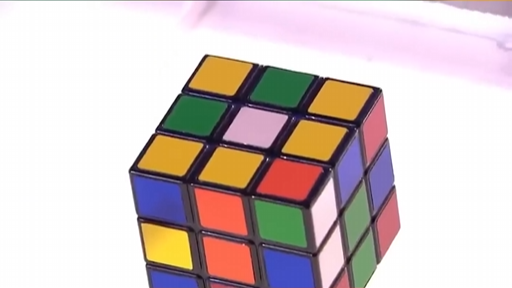
His routine is a careful web. Amanda is handed a Rubik’s cube and told, “keep on mixing.” David is offered a box of crayons and asked to take one “without looking.” Alicia is shown a deck “belonging to my daughter” and taps a single card: “Puppet penguin.” Simon, the skeptic-in-chief, is given a thick book and told to hold a pen under it and draw a circle around a word—any word—without looking. The point, the magician insists, is that no one cheats: “It doesn’t matter which, but what is very, very important is that I don’t do any sleight of hand.”
He gathers the pieces and sets them on the table. Amanda reveals the cube’s top face, unique and cluttered with color. Alicia lifts her hand to show the cartoon penguin she chose. David opens his palm to the red crayon. Simon peers into the white pages and finds the word he circled by chance. The magician smiles, almost shy.
“Now if I told you that I knew this exact outcome yesterday, a week ago, or a month ago, you’d say… that would have to be magic. But it’s not real magic… This to me is real magic.”
The light changes. A home video flickers to life. His daughter—tiny, brave, undeniably herself—looks into the camera. “If daddy was gonna do Britain’s Got Talent in two years from now,” she says, “what random word do you think Simon would think of?” She pauses, then answers: “Hat. H A T.” Back in the theater, Simon has chosen the same word. Amanda covers her mouth. Someone whispers, “Oh my god.” It is not a trick you can reverse-engineer with mirrors and dry ice. It is a father’s worst season turned into a lifeline, time itself bent around love.
Simon speaks for the room, voice softer than usual. “Absolutely gobsmacked,” he says. “I mean, first of all, thank god your little girl’s okay… I have a feeling this act is gonna change your life. It was unbelievable.” The older magic of show business—it can make you famous—collides with the newer magic of survival—it lets you keep what matters. One word holds them both.
Courage, Collected
Thread these stories together and a pattern emerges. Again and again, the Golden Buzzer seems less like a prize and more like a promise kept. A sister refuses a diagnosis of silence and, through patience and signing hands, gives her brother a voice. A dad takes the ache of “family losses” and writes, with his son, an anthem called “The Lucky Ones,” a title that sounds less like bragging than gratitude. A headteacher listens to a seven-year-old’s ambition and says, in effect, why not, then builds a runway the length of a national stage. An inclusive theatre takes the gate out of gatekeeping and replaces it with a chorus of “you belong.” A magician survives the longest day of his life and finds a way to make the next days brighter for others too.
Even the way judges respond becomes part of the story. They do not hide behind expertise; they lend it. “Your joy… is infectious,” Simon tells the de facto ringleader of a chaotic school choir. Amanda looks at a stage covered in different bodies, different needs, different strengths and sees, clearly, “everything that you represent.” Alesha does not just praise technique; she stakes a public claim—“Inclusivity is so important… I don’t know what else is more important than that”—then does the only logical thing and hits the button.
The video makes room, too, for quieter glances. In one sequence, we’re reminded that a child named Ella once looked up at Simon at a national awards show, and he told her, “You are the sweetest, bravest little girl, and you deserve this.” When the same Ella later stands among friends and sings, she is not just another voice in a choir; she is a promise fulfilled, proof that encouragement can echo across years and crash over a stage at just the right time.
Joy as Serious Business
It can be tempting, in a world tallying streams and votes and “wins,” to treat joy like frosting—fun, but optional. These auditions argue the opposite. Joy is serious business. It is strategy and shelter, art and ethic. The Flakefleet kids scorch the room not because every note is perfect but because their happiness is uncontained and contagious. The judges do not let it pass; they name it. “This is what Britain’s Got Talent is all about,” Simon says, drawing a circle around delight the way he did around a word in a book. David pushes the point further, sketching a world in which children’s lives are “full of unbridled joy.”
The same current runs under Chicken Shed’s victory. To decide that the stage is for whoever loves it is not naive, it is brave. It asks more of choreographers, more of leaders, more of audiences. It asks us to update our sense of what excellence can look like—and then it shows us, right there, in harmony and in step, what that future feels like. The applause that follows is not just loud; it is relieved. When Alesha says, “You’re giving young people this incredible opportunity and platform,” she is measuring, out loud, the distance between the world as it is and the world as it could be, then using a buzzer to shorten it.
What the Gold Really Buys
Gold looks like a prize, but in these rooms it acts like permission. Permission to be as you are and still belong. Permission to be messy and glorious. Permission to say what happened to you—“we’ve had family losses,” “we were told he’d never communicate,” “two years ago, everything changed”—and to turn it into something other people can carry.
Listen closely and you’ll hear how often the word “about” appears. The father and son’s song is “about us.” The inclusive theatre is “about celebrating our young people.” The headteacher says the kids had a dream “and here we are.” These are not audition tapes for individual stardom; they are dispatches from communities declaring themselves alive. The Golden Buzzer recognizes that and says, keep going, faster, farther, higher. Not because confetti solves everything. Because visibility does something nothing else can.
The Anatomy of a Moment
So what makes a Golden Buzzer moment land? The video offers a rough formula. First, the craft must be real. Whether it’s the tightness of a massed ensemble, the sincerity of a home-written ballad, or the precision of a mentalist’s reveal, the work has to hold. Second, the stakes must be personal. A child’s voice glimpsed years earlier. A classroom’s wish said out loud. A parent’s fear made public and then, carefully, transformed. Finally, there must be a surprise that reframes what you’ve just seen. Often it’s laughter—“He’s been stuck in the bin”—arriving like a grace note. Sometimes it’s a single word—“Hat”—that lights up a hundred clues hidden in plain sight. Sometimes it’s a judge, more often a panel, choosing to stop pretending they’ve seen it all.
These elements let the audience do the other half of the work. People do not only watch; they recognize. They see their own families in the father and son, their own children in the little boy who calls himself “Cheeky,” their own schools in a headteacher coaching kids to breathe, their own cities in a theatre that says yes first and figures out the rest later. Recognition is what turns a stage into a mirror and applause into a kind of pledge.
A Chorus of Aftermaths
The minutes after a Golden Buzzer are where you can most clearly hear what the show is selling. Not fame. Not even victory. It is selling aftermath. Teachers who go home with permission to keep saying yes. Choirs that see themselves, suddenly, as citizens. Kids who understand that enthusiasm is not a flaw; it is a fuel. Parents who realize that their ordinary love is, in fact, extraordinary.
For the magician, the aftermath is deeper still. You can watch the judges search his face the way you search a horizon after a storm, looking for signs that the water has gone down. “Thank god your little girl’s okay,” Simon says, and it feels like the only criticism that matters has been answered. The trick here, if that’s the word for it, is not a method. It is a meaning: that even when a family is tested beyond bearing, a father can still walk onto a stage full of strangers, set out a cube, a crayon, a card, a book, and build—right there, in front of everyone—a bridge back to wonder.
Why It Still Matters
Television has shifted since the first gold button fell. We stream more and scroll faster. But a collective moment is still a rare and necessary thing. A crowded theater inhaling at the same time. A judge forgetting to perform their role and simply reacting. A child yelling to a grown-up to “press the gold.” These are civic experiences disguised as entertainment. They sharpen, for an instant, our sense that we live together.
That is why the most resonant lines in this video are not the genre’s usual superlatives—though those are here, and they matter. “Brilliant,” “amazing,” “unbelievable.” The lines that last are the ones that point beyond the stage: “You are us.” “Your joy… is infectious.” “Inclusivity is so important.” Each takes a private performance and makes it a public principle.
In that sense, the Golden Buzzer is not only an end to an audition; it is a beginning. It commissions more work—more teaching, more rehearsing, more late-night writing at a kitchen table, more translating of a world into signs a child can read with his hands. It tasks a theatre in North London with growing bigger hearts in more cities. It asks a headteacher to explain to the next seven-year-old with a dream that sometimes, not always, but sometimes, the grown-ups will say yes.
And it turns out that one word can hold all of that. Not just “hat,” though that will echo for a while. The word that keeps appearing here is smaller, sturdier: us. Us, as in a choir that includes everyone. Us, as in a panel that can be moved. Us, as in a family making a new language. Us, as in a nation choosing to celebrate its children when they are loud and when they are lost and when they are found again.
If you need to be reminded what that looks and sounds like, this video does the job. You will meet a cheeky four-year-old and a sister who would not take no for an answer. You will hear a father and son call themselves lucky without irony. You will get caught in a school’s joyful stampede. You will stand with a theatre that starts with welcome and ends with thunder. You will watch a father rebuild reality with a cube, a crayon, a card, a book—and a child’s voice from the worst days saying, clearly, that hope can predict the future.
Then the stage will go quiet for a beat, the way stages do when something real has happened. The judges will look at one another, and someone’s hand will hover over the big, bright button. If you’ve read this far, you already know what you want them to do. Press it. Let the gold fall. And then, do yourself a favor: watch the video from start to finish. The confetti is lovely. The courage is better. And the joy—well, the joy speaks for itself.