If you love reading but forget the details of books a month later, a reading journal is the simplest fix. It gives every book a place to land: what you thought, what you felt and what you would tell a friend. This free printable kit includes three ready-to-print pages — a reading log, a 12-book challenge and a goals sheet — so you can start today.
What’s inside the printable
The free PDF has three pages, each made for a different part of the reading life:
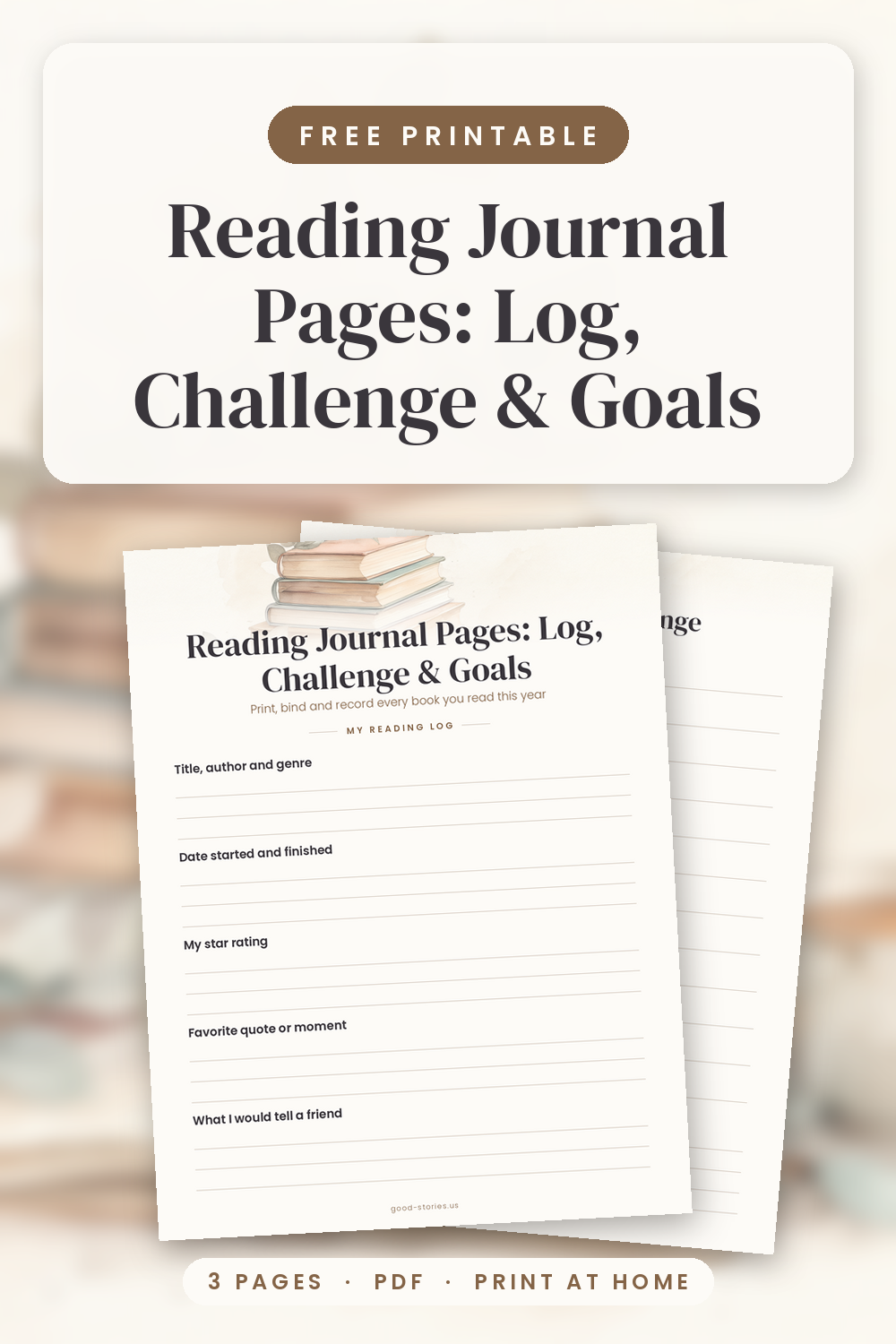
- Page 1 — My Reading Log: a per-book log with prompts for the title and author, the dates you started and finished, your star rating, a favorite quote or moment and a takeaway to share.
- Page 2 — 2026 Reading Challenge: a checklist of 12 book prompts — a classic you have never read, a memoir, a friend’s recommendation, a green cover and more — to tick off through the year.
- Page 3 — Reading Goals & Notes: lined prompts for your reading goal this year, the best times and places to read, genres you want to explore and books you want to reread.
What a reading journal is and why it beats a plain book list
A reading journal is a record of the books you read, kept in a way that helps you think about them. Where a plain book list only tells you what you finished, a journal asks a few gentle questions: What did you think? What stayed with you? Would you recommend it? Answering those takes two minutes, but it turns reading from a blur into a collection of memories.
Keeping prompts next to each entry also makes the habit easier. You do not have to decide what to write — the page already knows what it wants: the title, the dates, a rating, a quote and a takeaway. That structure is what makes the journal worth keeping, and it is what makes looking back through it so satisfying a year later.
How to set up your free printable pages
Start by printing the three pages on plain US Letter paper. If you use A4 paper, choose “Fit to page” in your printer settings so nothing gets cut off. Print one copy of each page to see how they feel, then print more reading logs as you need them: a single log page holds several books.
Next, decide how to keep them together. A simple folder or three-ring binder works well, and so does a hole punch with a piece of twine. Some readers clip the pages into the back of their current book or tuck them into a reading nook. The important thing is to keep the pages somewhere you will see them.
When do you fill them in? The reading log is easiest to complete right after you finish a book, while the story is still fresh. The challenge checklist gets a tick whenever a book matches a prompt, and the goals page is worth revisiting at the start of each season to see how the year is going.
How to use the reading log prompts
Each entry starts with the basics: title, author and genre. Then come the dates you started and finished, which quietly show you your reading pace and remind you what a busy month looks like.
The star rating is yours to define. Give five stars only to books you would press into a friend’s hands, four to books you loved with one small reservation, three to solid reads, and use the lower ratings honestly. A personal scale is more useful than a borrowed one.
Leave room for a favorite quote or moment. Copying a single line forces you to notice the writing, and rereading those lines later is one of the quiet pleasures of a reading journal. Finish with a one-line takeaway — what would you tell a friend about this book? — and the entry is complete.
Taking on the 12-prompt reading challenge
The second page holds a checklist of twelve prompts: a book with a one-word title, a friend’s recommendation, a classic you have never read, a memoir, a book set in another country, a book you can finish in one day, a book about a hobby you love, a mystery or thriller, a book with a green cover, a book published this year, a book someone gave you and a book you abandoned once.
The point is not to race through them. The point is to let a small prompt nudge you toward a genre, an author or a format you would not have picked up otherwise. Tick them off in any order, at any pace, and let a few carry over into next year if that is how the reading goes.
Setting reading goals you can actually keep
Goals work best when they describe habits, not numbers. Instead of “read 50 books,” try “read for twenty minutes with my morning coffee” or “keep a book in my bag for waiting rooms.” The goals page has room for exactly that: your reading goal this year, the best times and places to read, and the genres you want to explore.
Choose one new genre to try rather than five, and note the books you want to reread — revisiting a favorite is one of the easiest ways to rebuild a reading habit. Keep the page somewhere visible and glance at it whenever you finish an entry, so your goal stays a gentle guide instead of a chore.
How to use your printable
Print on US Letter for the intended layout. On A4 paper, select “Fit to page” so the pages scale cleanly. A few ideas to make the kit yours: print a fresh set every January; keep the log in a binder and watch the stack grow; slide the challenge sheet inside your current book as a bookmark; or use finished logs as a recommendation list when friends ask what to read next. If you read on an e-reader or listen to audiobooks, the pages work just as well — a finished book is a finished book.
There is no wrong way to keep a reading journal. Print the pages, log the next book you finish, and let the little ritual of writing it down bring a bit more intention to your reading life. Happy reading.