A bag of frozen vegetables and a hot sheet pan are the quiet heroes of a busy weeknight. No washing, no chopping, no thawing — the vegetables go straight from the freezer to the oven and come out tender inside with crisp, browned edges. Here’s why it works and how to make it your default side.
Why Frozen Vegetables Work
Frozen vegetables are picked and frozen soon after harvest, at the moment they’re at their best. That quick freeze locks in most of their vitamins, so a bag of frozen broccoli can be just as nutritious as fresh broccoli that has spent days traveling to the store and sitting in the crisper drawer. They also come washed, trimmed and cut, which means a real vegetable side dish is almost no prep away — a genuine gift on nights when dinner has to happen between homework and bedtime. It’s not a compromise; it’s a shortcut that keeps the goodness and drops the work. Keep a couple of plain bags on hand and “eat more vegetables” stops being a project and becomes a default. That’s the case for a bag of frozen vegetables: real vegetables, real nutrition, no schedule required.
Reading the Label on Frozen Vegetables
Not every bag is the same, and two bags can look identical on the front while being very different inside. Plain frozen vegetables contain only the vegetable — no added salt, sugar or sauce. Seasoned and sauced blends are convenient, but they do add those, sometimes more than you’d expect. Ten seconds with the label tells you which one you’re holding:
- Plain bags list one ingredient: the vegetable itself.
- Seasoned blends add salt, sugar, oil or sauce — check how much.
- Sauced mixes can be a handy shortcut, but they’re a different thing from a plain vegetable.
A plain bag leaves the seasoning to you, which is exactly what you want when the plan is roasting — it keeps every option on the table.
The No-Thaw Roasting Trick
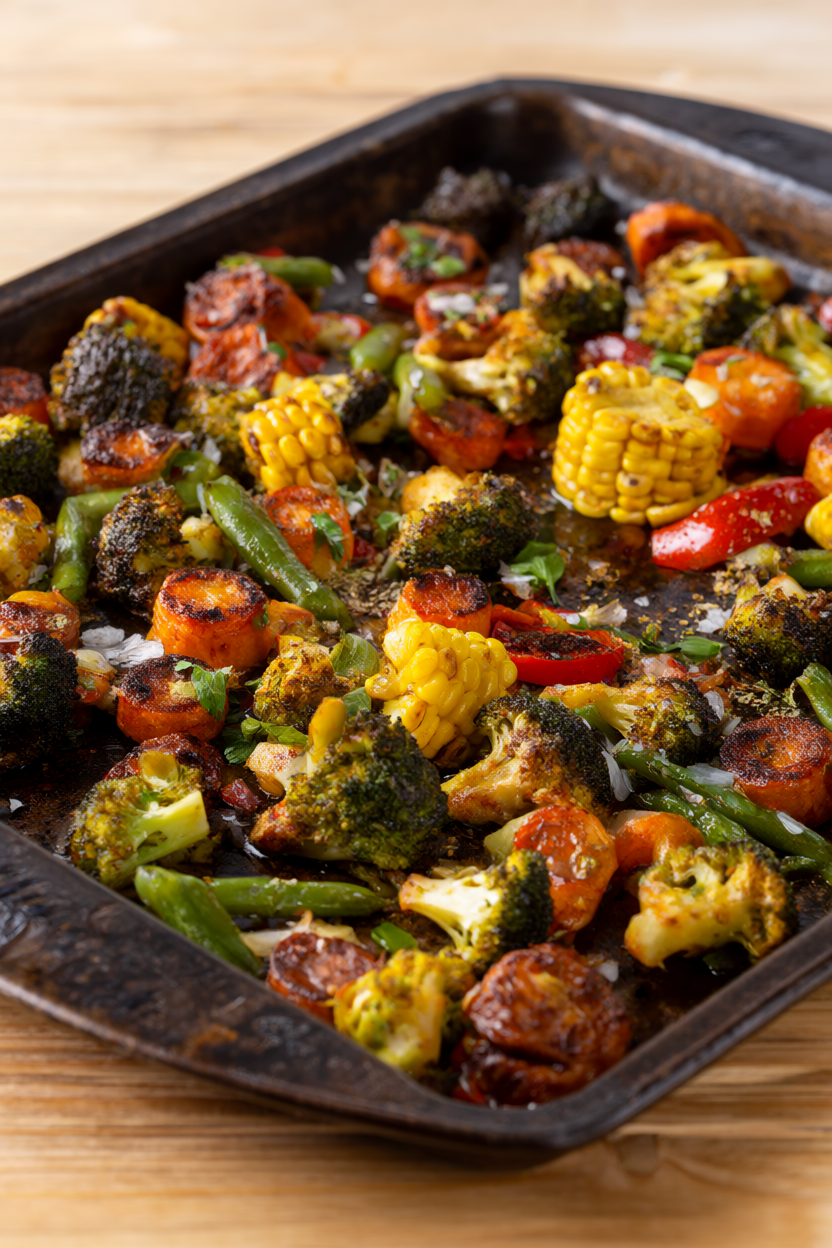
Here’s the trick the title promises: don’t thaw. Frozen vegetables go straight from the freezer onto a hot sheet pan, where they roast up tender with crisp, browned edges. There’s no soggy middle, no overnight defrosting, and no waiting for a bag to soften on the counter. This works with any plain bag in the freezer. A few small things make it work:
- Get the pan hot first, so the vegetables start browning the moment they land.
- Spread them in a single layer. A crowded pan steams; a roomy one roasts.
- Toss with a little oil and season to taste — salt, pepper and a pinch of garlic powder cost you no effort.
- Stir once or twice while they roast so more sides get time against the hot pan.
That’s the whole method: the freezer does the prep, the oven does the rest, and the result tastes like you fussed — without the fuss.
Storing Frozen Vegetables (and Buying a Few Bags)
A freezer stocked with plain frozen vegetables means vegetables are always on hand. There’s no wilting drawer, no last-minute store run, and usually a lower price than out-of-season fresh. Because the vegetables are picked in season and frozen, the cost stays steady in a way fresh produce can’t when its season ends.
- Keep the freezer at 0°F so the bags stay at their best for months.
- Buy several bags at once — they’ll keep, and one shopping trip covers lots of dinners.
- Mix it up: broccoli, carrots, peas, green beans, corn, peppers and stir-fry blends all roast well.
Roasted from frozen, they make an easy side dish for almost any night of the week — no thawing, no fuss.
So there it is: buy plain bags, keep them at 0°F, and skip the thawing step entirely. A hot sheet pan turns frozen vegetables into a tender, browned side that tastes like effort and takes almost none. Once the no-thaw trick becomes a habit, the freezer stops being a backup plan and starts being the plan. That’s frozen vegetables in the oven: less work, more vegetables, and a side dish you’ll actually repeat.