The Alpha rejected me at the First Snow Vigil and threw my mother’s locket into the snow, then I found the 1906 letter proving my “traitor” bloodline was framed and learned the border mist answers only my blood. The Long Snow is coming.
“There is no bond, Opal. You are not mine.”
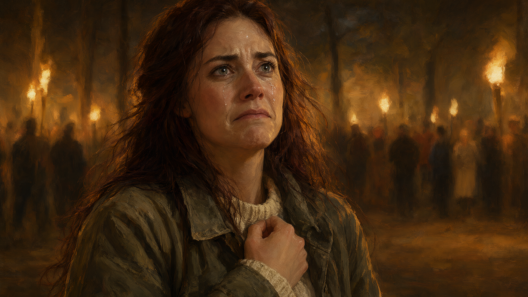
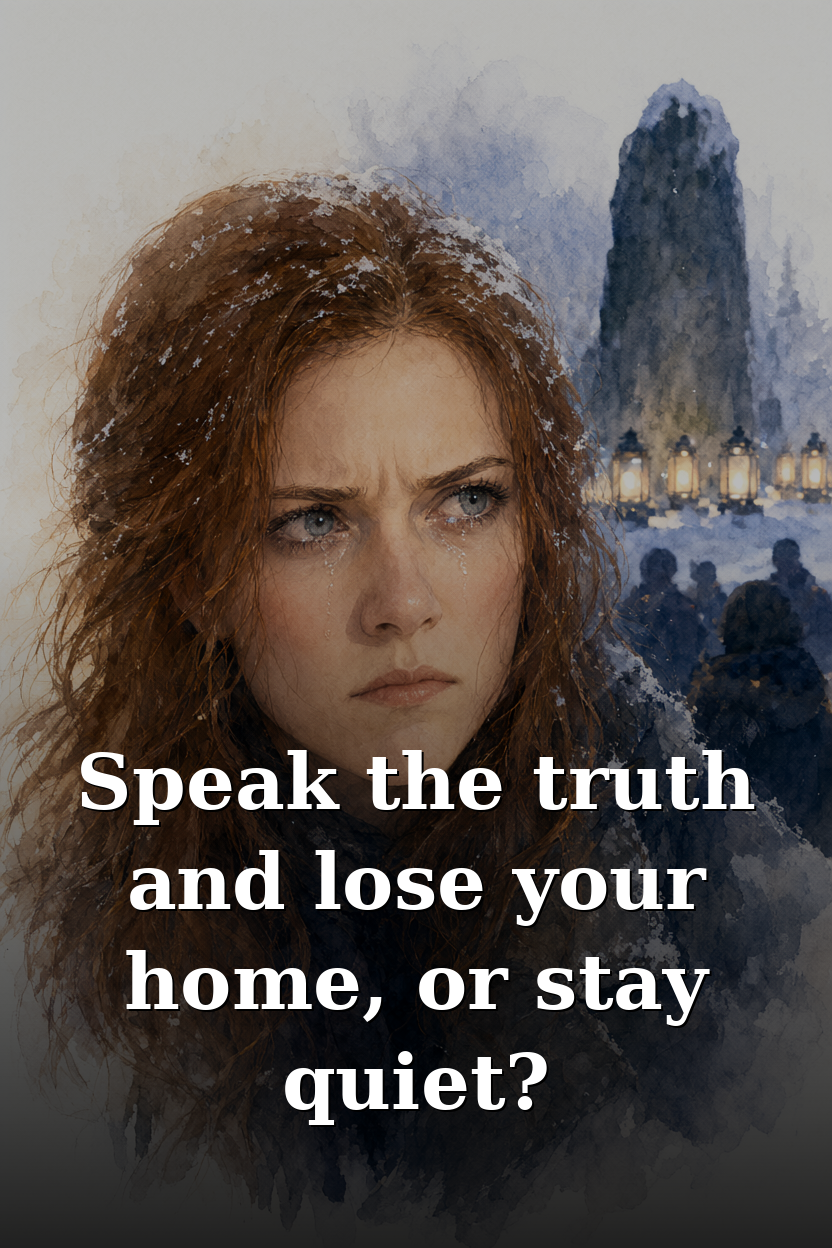
Reid Callahan said it at the First Snow Vigil, one hand flat on the Hollow Stone, four hundred wolves watching.
Under my ribs, something burned cold. A real bond, denied, burns. A false one doesn’t burn at all.
“Her great-grandfather sold the Hallow road to the hunters,” Portia Drayton said into the silver horn. “The Harts are hunter-kin. No Hart stands on hallow ground. Walk, girl.”
“She’s one of us,” said Maddie Callahan, the Alpha’s sister.
“Then say her wolf’s name.” Portia turned to me. “Go on, Opal. Name your wolf.”
Everyone knew the answer. None. Twenty-five, no first shift, no silver eyes. The Unnamed.
“You saw the thread in the moonlight three winters ago,” I said. “On hallow ground. Between us.”
“The bond-sight shows when both wolves are awake.” His jaw was stone. “Yours never woke. That’s not a bond. That’s a wish.”
“Three winters, no mist,” Portia said softly. “Since your mother stopped standing where she didn’t belong.”
My mother’s hands were always cold. I’d learn why later.
“Margot Shaw stands beside me at the Long Snow,” Reid said, and opened his fist.
My mother’s locket fell in the snow at my feet. All she left me.
I picked it up and walked out of the light. Nobody stopped me.
I cried for a mile, then went to work. I keep the pack archives.
Rebinding the old Drayton ledger, I found a folded page between pages 44 and 45. A letter. October 1906.
“Received of Mr. Alastair Drayton, four thousand dollars, for the opening of the Hallow road. — E. Crowe, Crowe Timber.”
In the margin: “Crowe pays half now, half when the mist falls. Blame the Hart. They’re dead. The dead don’t argue.”
My great-grandfather died on that road. The valley only remembered the lie.
I photographed the page and slid the letter inside my coat.
I pulled down the Vow book I’d rebound myself. Faded ink: “The mist rises for the blood of the First Mate. She gives her warmth to the mist; the pack gives it back threefold, and she is never cold again.” Under it: “The First Mate’s wolf sleeps until the Stone calls it.”
The door opened. Reid.
“Portia knows you’re digging. Pack a bag. I’ll get you out before the Long Snow.”
“Out. Like you got me out of the circle.”
“Portia said a Hart was asking the Crowes about their road. If I claimed you, the Council would void my seat, and someone would hurt you. My father’s last order was that no Hart sits beside the Callahan seat.” He rubbed his face. “I chose the seat, Opal. I told myself it kept you breathing.”
“You kept me breathing,” I said. “You just made sure nobody remembered I was alive.”
He left.
Three nights later I went to the Stone and pressed my palm flat against it.
Mist. A thread of it, white and alive, curling from the snow between my fingers. Under my ribs, the sleeping thing turned over. My eyes went white — I saw it in the ice at my feet. For one second, I had a wolf.
Then the cold came, through me like water through paper, and my knees hit the snow.
“No.” I tried to pull my hand back. “Not yet.”
The last thing I saw was headlights on the Hallow lane.
I woke under a heat lamp. Reid sat beside me, snow melting off his coat.
“Your hand was frozen to the Stone,” he said. “The lane was white, Opal. All the way to the treeline. What are you?”
On his wrist, a pale line of light flickered once and died. He saw it. He went very still.
“That,” I said, “is what your father’s order told you not to look at.”
Margot Shaw wore my mother’s locket the next morning outside the hall.
“Take it off,” I said.
“Make me.” She smiled at her friends. “Oh, that’s right. You can’t.”
I took one step toward her. The porch lights popped, and the window beside us went white with frost.
“Freak,” she whispered, and walked away fast.
Portia’s office door stood open that afternoon when I came to return the archive keys. She was on the phone, doing business.
“Half the sum now, Mr. Crowe. Half when the road opens at dawn. The Council votes at midnight, after the mist fails.” She laughed. “Tell your father the road will be clear by breakfast.”
I held my phone up and recorded it.
She hung up, saw me, and didn’t flinch. That was the worst part.
“Clever girl,” she said. “Your great-grandfather was clever, too.”
“He died trying to keep the Crowes off that road. I have the 1906 letter, Mrs. Drayton. It says your grandfather took their money. It says blame the Hart.”
One fast blink. Then nothing.
“If you play that letter tonight,” she said, “I’ll have the Council declare you hunter-kin and walk you across the line myself.” She stepped close. “Road money keeps this valley fed, girl. Ask yourself what one Unnamed girl is worth.”
She didn’t know I’d asked myself that every day for twenty-five years. And she didn’t know the answer had changed.
The night before the Long Snow, Portia’s men turned my cabin over. I let them. The letter was sewn in my coat, the recording was on Maddie’s phone. A smart girl doesn’t keep her proof in her house.
At dawn the notice went up: Opal Hart, last of a hunter-kin line, walked across the line at first light.
“Whatever you’re planning, do it tonight,” Maddie said. “Reid’s been in his office since midnight with the Vow book. He won’t eat.” She put her phone in my hand. On it: Elias Crowe Junior at the treeline before daylight, taking a bank slip from Portia’s gloved hand.
“Show it at the ceremony,” she said.
“They’d never let a Hart on hallow ground.”
“No.” She looked at me. “So we stop asking permission.”
At dusk, the pack stood in the lantern circle.
“The Road Accord,” Portia said, holding the paper up. “At midnight, this Council grants Crowe Timber passage through Fen Hollow. The mist has failed three winters. We open the road, we take the money, we survive. And after tonight, no Hart blood stands between this pack and its future.”