Some nights the thought of chopping, roasting or even rinsing one more vegetable is enough to send you to the pantry for crackers. That is not a character flaw — it is just a busy evening. The good news is that eating more vegetables does not require a stack of new recipes or a total kitchen overhaul. It comes down to a handful of small habits that fit into the meals you already make, and once they are in place, they quietly do the work for you. Fall is a lovely time to start, with squash, sweet potatoes and sturdy greens filling the markets, but every habit below holds up in any season.
Why the Half-Plate Rule Works
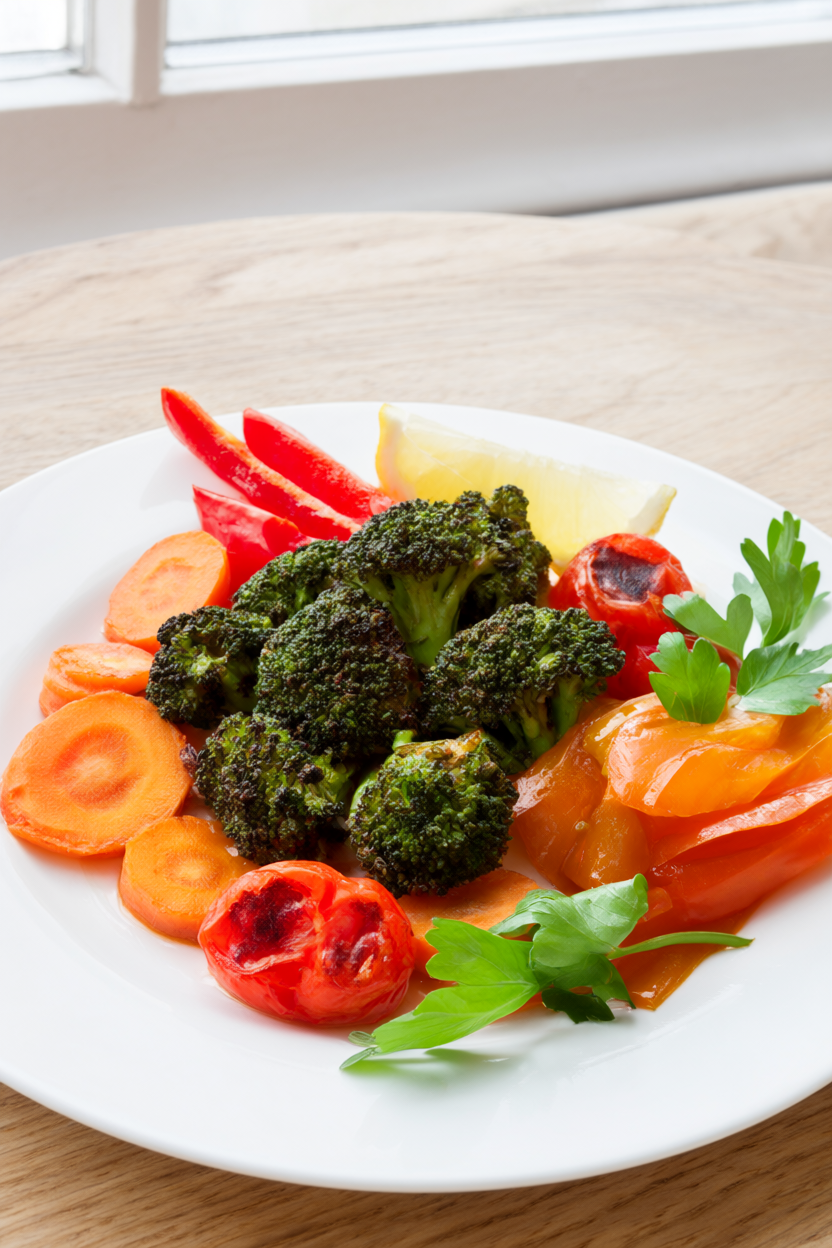
Start with the plate itself. USDA’s MyPlate guidance recommends filling half of it with fruits and vegetables, and the order you fill it matters as much as the math. Put the vegetables on first — pile the roasted broccoli into one half — then add the protein and the starch beside it. By the time the chicken and rice land, the vegetable portion is already set. That is the quiet genius of the half-plate rule: it settles the portion before hunger, habit or a second scoop of rice gets a vote. You do not have to weigh anything or count anything. The plate simply arrives at the table with vegetables holding the biggest share.
Tuck One Vegetable Into Meals You Already Cook
The easiest way to eat more vegetables is to stop treating them as a separate dish. Every meal you already cook has a spot where a vegetable can slip in without changing the recipe:
- Stir a handful of spinach into scrambled eggs while they are still in the pan.
- Grate zucchini into pasta sauce and let it simmer in.
- Fold chopped peppers into rice as it finishes.
None of these asks you to learn a new recipe or wash an extra pot. You are not cooking differently; you are adding one ingredient to something you already know how to make.
Roast a Full Tray, Keep Cut Vegetables Ready, and Lean on Frozen
Roast one full tray. Heat the oven to 425 °F, chop whatever vegetables you have into similar-size pieces, toss them with oil and salt, and roast for 20 to 25 minutes. One tray is not one meal — the cooked vegetables keep for three to four days in the fridge, so a single session covers several dinners and lunches.
Keep a ready-to-eat vegetable in reach. At the start of the week, wash and cut carrots, cucumbers and peppers, then put them where you will see them. Pair them with hummus or a yogurt dip and the snack urge has somewhere to go that is not the cracker box.
Use frozen without apology. Frozen vegetables are chilled soon after harvest, which means they keep their fiber and vitamins, and they go straight into the pan or oven with no thawing step. A bag in the freezer is a backup plan that never spoils.
Change One Meal at a Time
Big overhauls are where good intentions go to die. Pick one meal instead — breakfast or lunch is usually the easiest — and add a vegetable there for two weeks. Once that feels automatic, add another. The point is not which vegetable you choose; it is that one meal changes at a time, so the new habit has room to become normal. Six habits built this way will outlast six habits attempted at once.
None of this asks you to like every vegetable or to cook anything new. It asks for a bigger pile on the plate, one extra ingredient in a familiar pan, a tray in the oven and a bag in the freezer. Pick one of the six habits tonight and let the rest follow when they fit. A vegetable does not have to be the star of the meal to change how the whole week feels.