Pancake mornings do not need a special occasion or a boxed mix. These Greek yogurt pancakes come together with a bowl, a whisk and a hot skillet, and they land on the plate in about 25 minutes. The yogurt keeps the crumb tender and adds a gentle tang that plays well with berries and maple syrup. Whether it is a slow Sunday or a hurried school morning, a stack like this is an easy win.
Why Greek Yogurt Works in This Pancake Recipe
Greek yogurt does two quiet jobs in this batter. First, it is thick, so it adds moisture without thinning the mix the way a splash of milk alone would. Second, its acidity gives the baking soda something to react with, which helps the pancakes rise as they hit the heat. The result is a pancake with a soft, tender crumb rather than a rubbery one.
Eggs do their part too, binding the batter and adding richness. Two large eggs to one cup of flour is generous by pancake standards, and that is on purpose: it keeps the stack custardy in the middle while the outside browns. The batter is meant to be thick. If it pours like water it will spread thin in the pan, so resist the urge to loosen it too much.
Greek Yogurt Pancake Ingredients and Easy Swaps
You probably have most of this in the pantry already: flour, baking powder, baking soda, salt, eggs, milk, honey and vanilla. The one thing worth a trip to the store is a tub of plain Greek yogurt. Full-fat or 2% both work; nonfat will still bake but gives a slightly drier pancake.
A few swaps that hold up:
- No honey? Use the same amount of maple syrup or a tablespoon of sugar.
- Out of butter for the pan? A neutral oil works; brush it on lightly so the pancakes do not fry.
- Want a heartier stack? Swap half the flour for oat flour, but expect a denser crumb.
- Berries are optional. Fold a handful into the batter or keep them on the side so they do not weigh down the stack.
Whole-milk Greek yogurt gives the richest result, but any plain variety will do.
Tips for a Fluffy Greek Yogurt Pancake Stack
Let the batter rest. Five minutes is enough for the flour to hydrate and the bubbles to settle into an even texture. Skip it and the first pancake is often the pale, patchy one.
Do not overmix. Fold until the dry flour disappears and stop. A few lumps are a good sign; a smooth, glossy batter usually means the gluten has been worked too hard.
Watch the heat. Medium is the setting you want, not medium-high. Butter should sizzle softly when the pancake hits the pan. If it browns in under a minute, turn the burner down.
Use a quarter-cup scoop. It keeps the pancakes the same size so they cook evenly, and it makes the stack look tidy.
Wait for the bubbles. The surface should be dotted with broken bubbles and the edges should look dry before you flip. That is the signal the structure has set.
Keep the finished pancakes warm in a 200°F oven on a sheet pan, uncovered, so they stay crisp at the edges rather than steaming.
Storing and Serving Greek Yogurt Pancakes
Leftover pancakes keep well. Let them cool completely, then stack them with a small sheet of parchment between each one and store in an airtight container in the fridge for up to three days. Reheat in the toaster or a low oven; the microwave works in a pinch but softens the edges.
To freeze, lay the cooled pancakes on a sheet pan, freeze until firm, then move them into a freezer bag. They will keep for about two months. Reheat straight from frozen in the toaster.
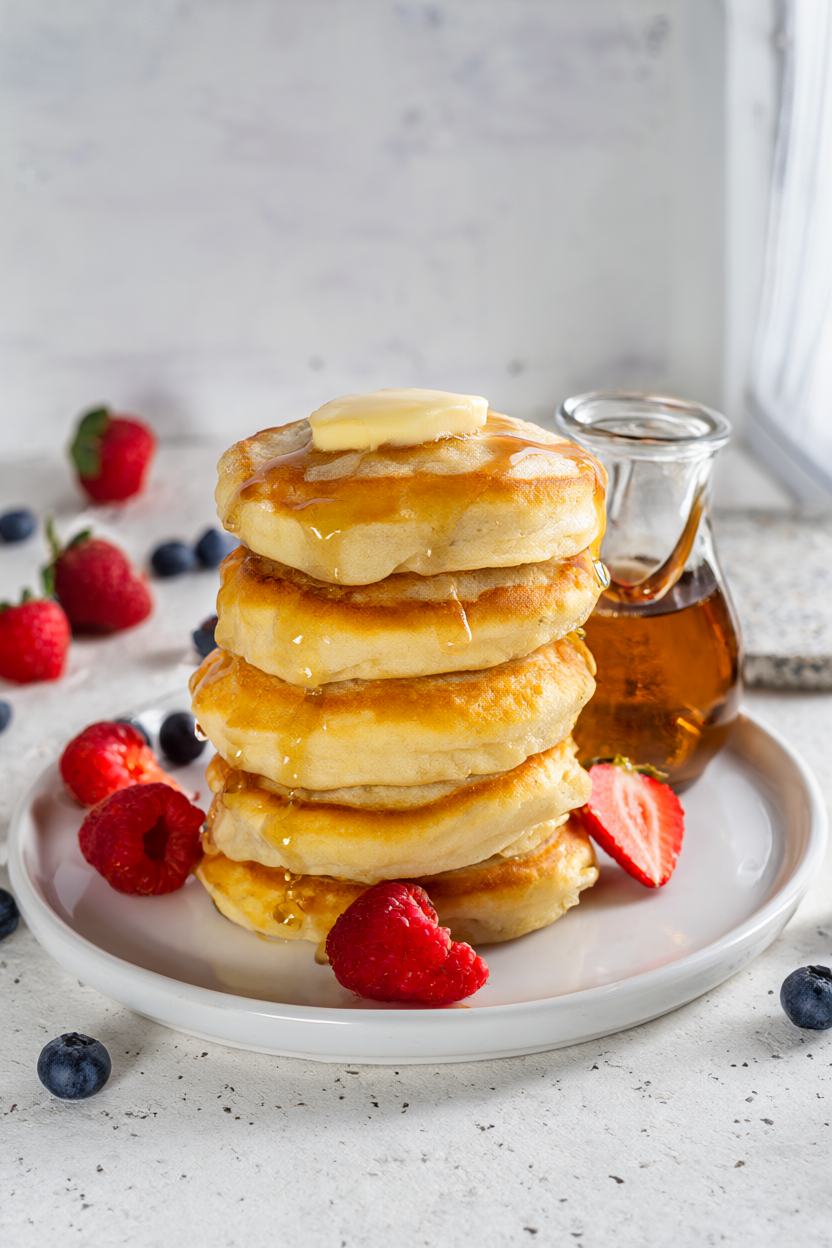
For serving, keep it simple: a pat of butter, a pour of maple syrup, and a handful of berries. Sliced banana and a spoon of peanut butter turn the stack into a sturdier breakfast. If you are feeding a crowd, set the pancakes out on a warm platter with the toppings alongside and let everyone help themselves.
Greek Yogurt Pancakes Recipe: 25-Minute Fluffy Protein Breakfast
Ingredients
Method
- Whisk the flour, baking powder, baking soda and salt together in a large bowl.
- In a second bowl, whisk the Greek yogurt, eggs, honey and vanilla until smooth. Stir in 2 tablespoons of milk, then add up to 2 more tablespoons until the mixture is thick but pourable.
- Pour the wet ingredients into the dry and fold just until no dry flour remains; small lumps are fine. Let the batter rest for 5 minutes while the pan heats.
- Heat a nonstick skillet or griddle over medium heat (350°F on an electric griddle) and brush it lightly with butter.
- Scoop 1/4 cup of batter per pancake into the pan, leaving space between them. Cook for 2-3 minutes, until bubbles break on the surface and the edges look set, then flip and cook for 1-2 minutes more.
- Transfer the finished pancakes to a plate and keep them warm while you cook the rest, adding a little more butter if needed. Serve with berries and maple syrup.
These pancakes are the kind of breakfast that feels like a small luxury and takes less effort than a trip to a diner. Make a batch on a quiet morning, freeze the extra, and you have a fast breakfast waiting on the busiest days. If you try them, come back and tell us how the stack turned out.