There is a particular kind of disappointment that comes with a pot of soup that tastes like salt and not much else. The fix is not a bland bowl of broth for the rest of the season. It is a handful of small moves, most of them made before the soup ever starts simmering, that let the vegetables and herbs do the talking. Here are six ways to cut the salt in low sodium soup without losing the flavor that made you want soup in the first place.
Why Broth and Bouillon Decide How Salty Your Soup Tastes
Broth is usually the biggest sodium source in a pot of soup. Everything else sits in that liquid, so the salt in the broth reaches every spoonful. That is why the easiest place to cut back is right at the start: choose low-sodium or no-salt-added broth and you have given yourself room to season later.
Bouillon cubes and many seasoning blends are high in sodium too, and they sneak in as shortcuts. Salt-free blends and single spices do the same job without the salt. Two swaps are worth keeping in mind:
- Instead of bouillon cubes, use low-sodium broth with a bay leaf and dried herbs.
- Instead of a seasoned salt blend, reach for a salt-free blend or a single spice you already like.
Read the label once, pick the ones you like, and keep them where you can reach them. A pot of soup is a lot easier to keep low in sodium when the low-sodium choice is also the easy choice.
Rinse the Canned Beans and Vegetables Before They Go In
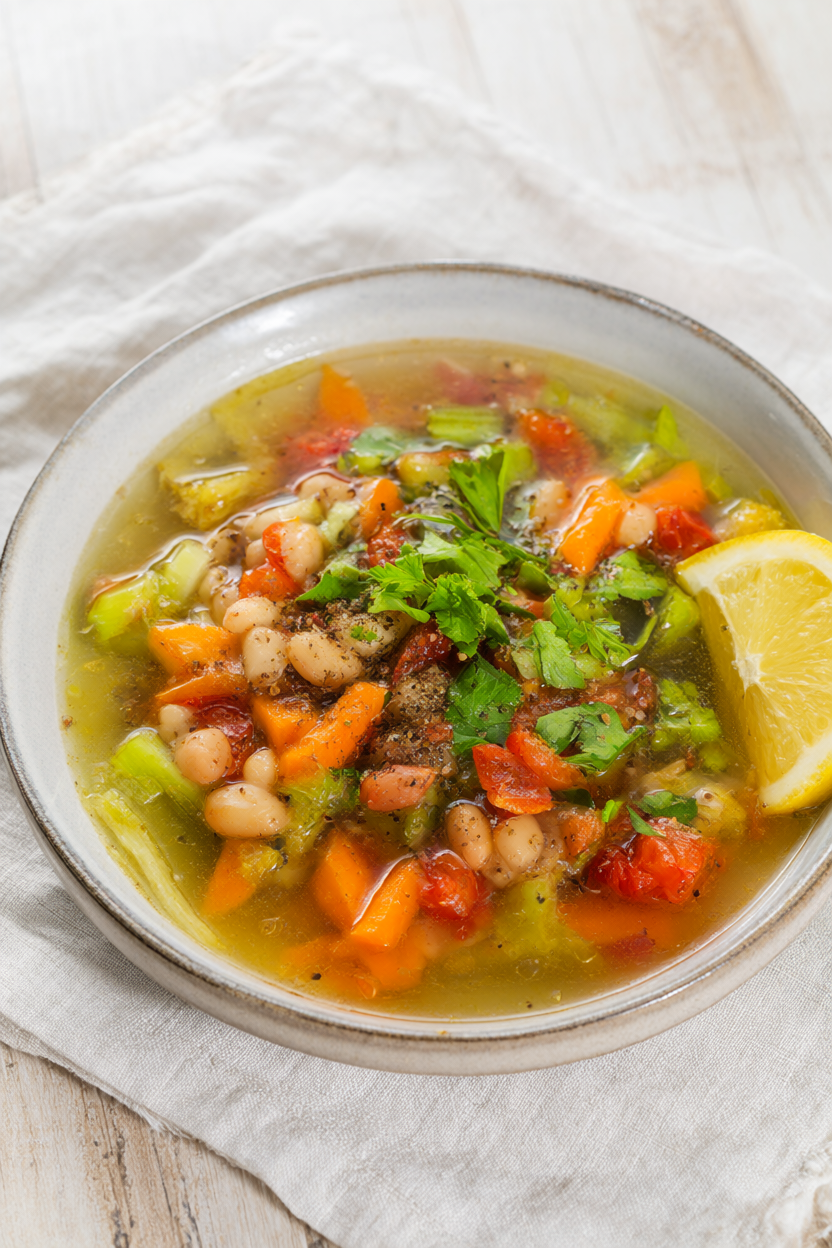
Canned beans and canned vegetables are convenience food, and there is nothing wrong with that. They just arrive with some added sodium clinging to them. A quick rinse under cool running water, and a good drain, washes off some of that sodium before the beans or vegetables ever meet the pot.
This step takes a minute and asks nothing of you. Open the can, tip it into a strainer, run the water over it, shake it dry. For canned vegetables, drain the liquid and give them a rinse too. You are not chasing a number or doing anything fussy. You are just starting the pot from a better place, and the soup will taste like the vegetables instead of the can.
Onion, Garlic, Celery, and Herbs Add Flavor Without Salt
When people cut salt, they often cut flavor at the same time, and that is the wrong trade. Onion, garlic, celery, and carrots are the backbone of a good soup, and they bring sweetness and depth that salt cannot fake. Let them cook a little longer than you think you need to, until they are soft and smell like dinner, before the broth goes in.
Dried herbs belong here too. A bay leaf, thyme, oregano, parsley, and a few grinds of pepper all add something to the pot without adding sodium. Build the flavor in layers as you go, and by the time the soup is done it will taste seasoned even though you have barely touched the salt shaker. If you want a shortcut, keep a salt-free seasoning blend next to the stove and use it the way you would use salt: early, and a little at a time.
A Squeeze of Lemon and a Late Pinch of Salt
Acid is the quiet hero of low-sodium cooking. A squeeze of lemon or a splash of vinegar at the end of cooking brightens the broth so it needs less salt to feel finished. Add it off the heat, taste, and add a little more if the soup still seems flat.
The other half of the trick is timing. Taste before you salt, really taste, and season at the end rather than the beginning. A pinch scattered on the surface tastes saltier than the same pinch stirred in early, where it disappears into the pot and leaves you reaching for more. If you do add salt, add it in small amounts, stir, and taste again.
Together, those two habits, a bright finish and a late hand with the salt, are usually what makes a low sodium soup taste like it was never missing anything.
None of this requires a special pot, a new pantry, or a longer evening. It is broth you choose, beans you rinse, vegetables you let soften, herbs you reach for instead of the shaker, and a lemon at the end. Do those things and the soup still tastes like the season it came from: warm, generous, and worth a second bowl.