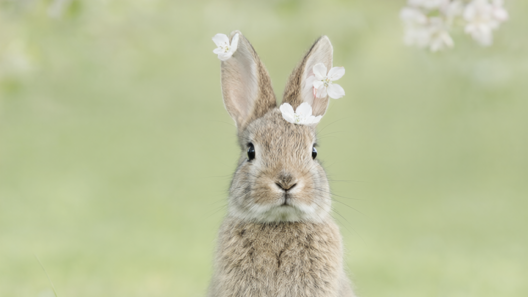
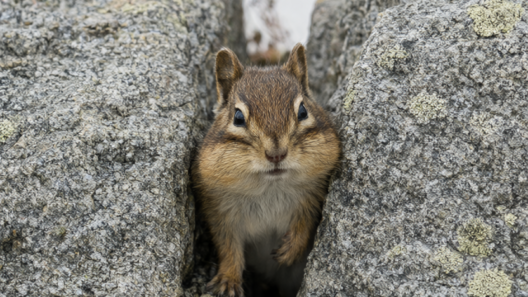
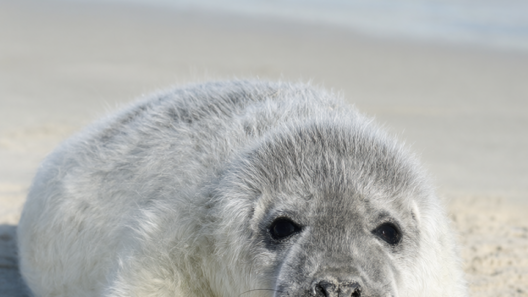
There is something about a very small animal in very wet weather that undoes the whole day. One look at a fox kit with a raindrop on its nose, and the gray sky stops being a problem. Ten of them are waiting in this gallery, all caught on the same soft autumn afternoon, and every one of them is busy with something important: a snail, a leaf, a doorstep that happens to be dry.
Each picture comes with a little something extra. Under every photo you will find a fact about the animal itself, the sort of thing you might repeat at dinner without quite remembering where you heard it. So take your time, let the little ones do their quiet work, and enjoy how much personality fits into such small bodies.
All photos in this gallery are AI-generated illustrations.
1. The Fox Kit On The Wet Stones
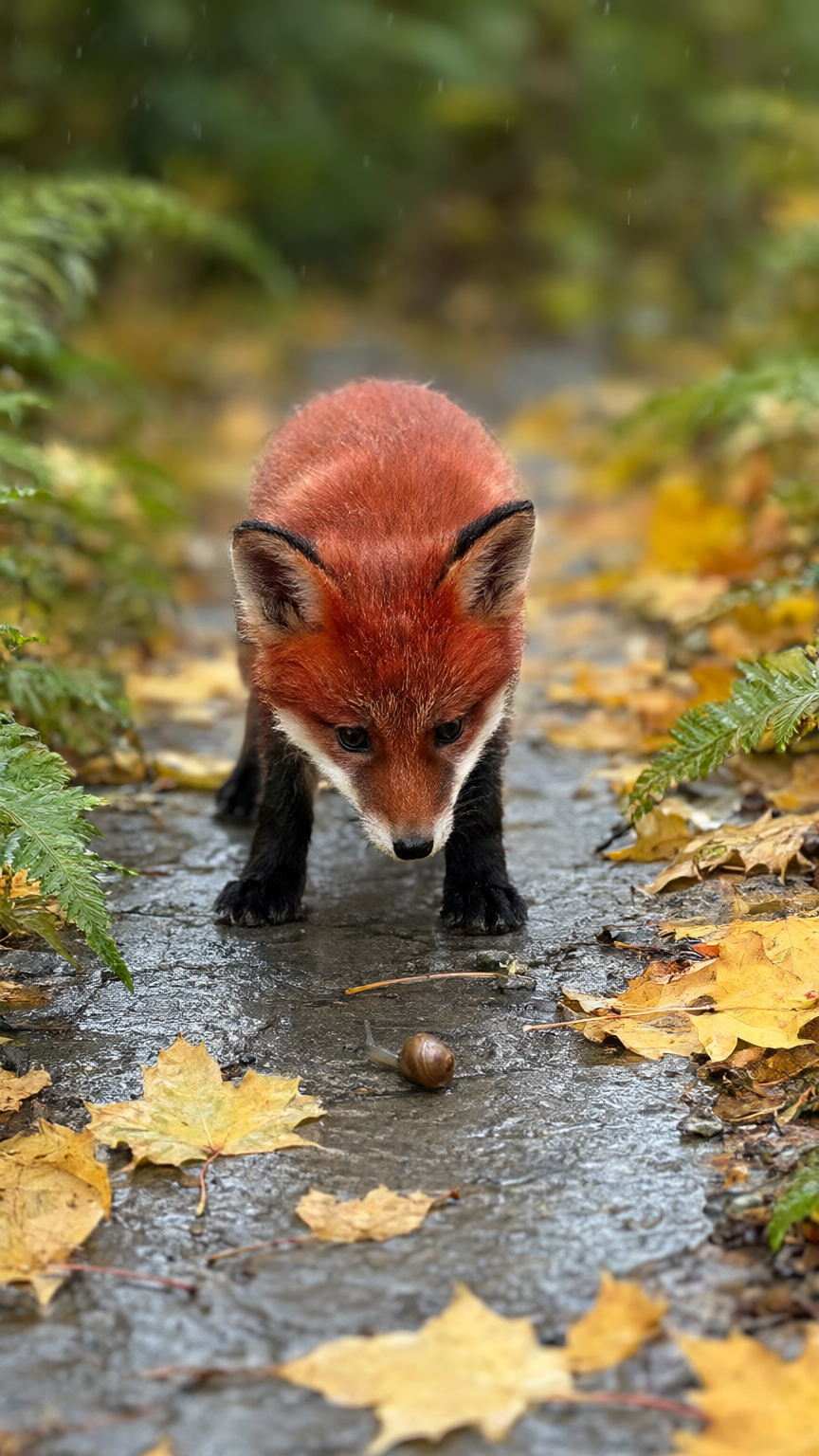
The fox kit has found something on the path and decided it is the most important thing in the world. Its nose is down at snail level, black legs planted on wet stone, and it is not moving. Rain keeps coming down on yellow maple leaves, and the kit gives this snail its full attention, as if they had an appointment. A kit this small has no reason to hurry, which is exactly why the moment is endearing.
Red foxes are born blind and deaf, and stay in the den while their parents hunt. By the time a kit is out on wet paths, its nose does most of the thinking, which is why one snail can hold it for so long.
2. A Hedgehog Under The Big Leaf
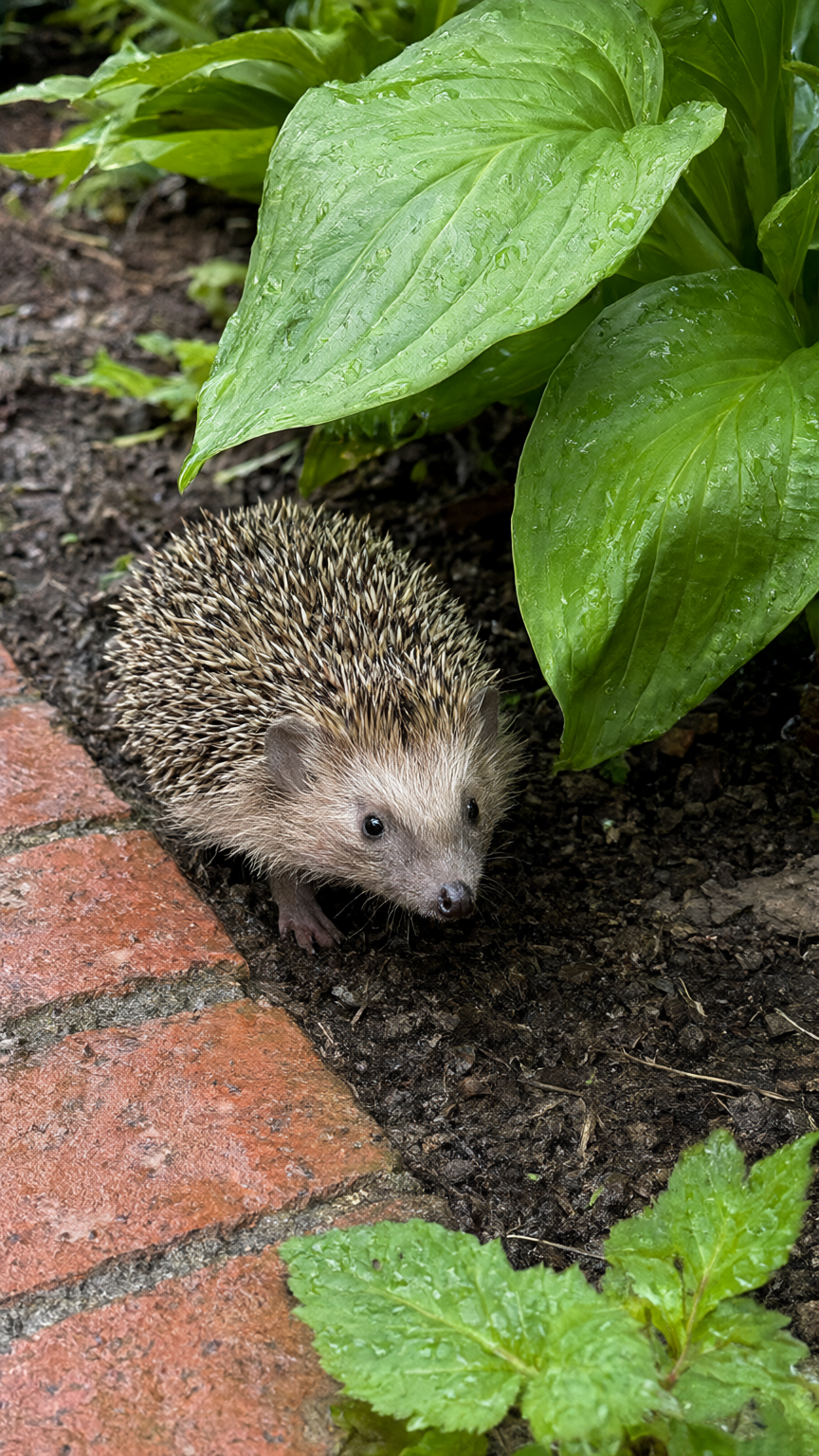
Look at the hedgehog’s face and you forget the spines entirely. It is walking along dark soil under a hosta leaf that is holding rain in fat beads, and its little pale face is tilted forward with a bright, curious eye. A single drop is enough to stop it. Hedgehogs spend their working lives at nose level, and a wet garden after rain is a whole library of smells to them.
Hedgehog spines are modified hairs, stiff and sharp, and they do their job when the animal rolls into a ball. But a hedgehog has no interest in being a ball when there is a garden to inspect. It would rather walk on, nose down, under a leaf that keeps the worst of the rain off.
3. The Squirrel Who Shook It Off
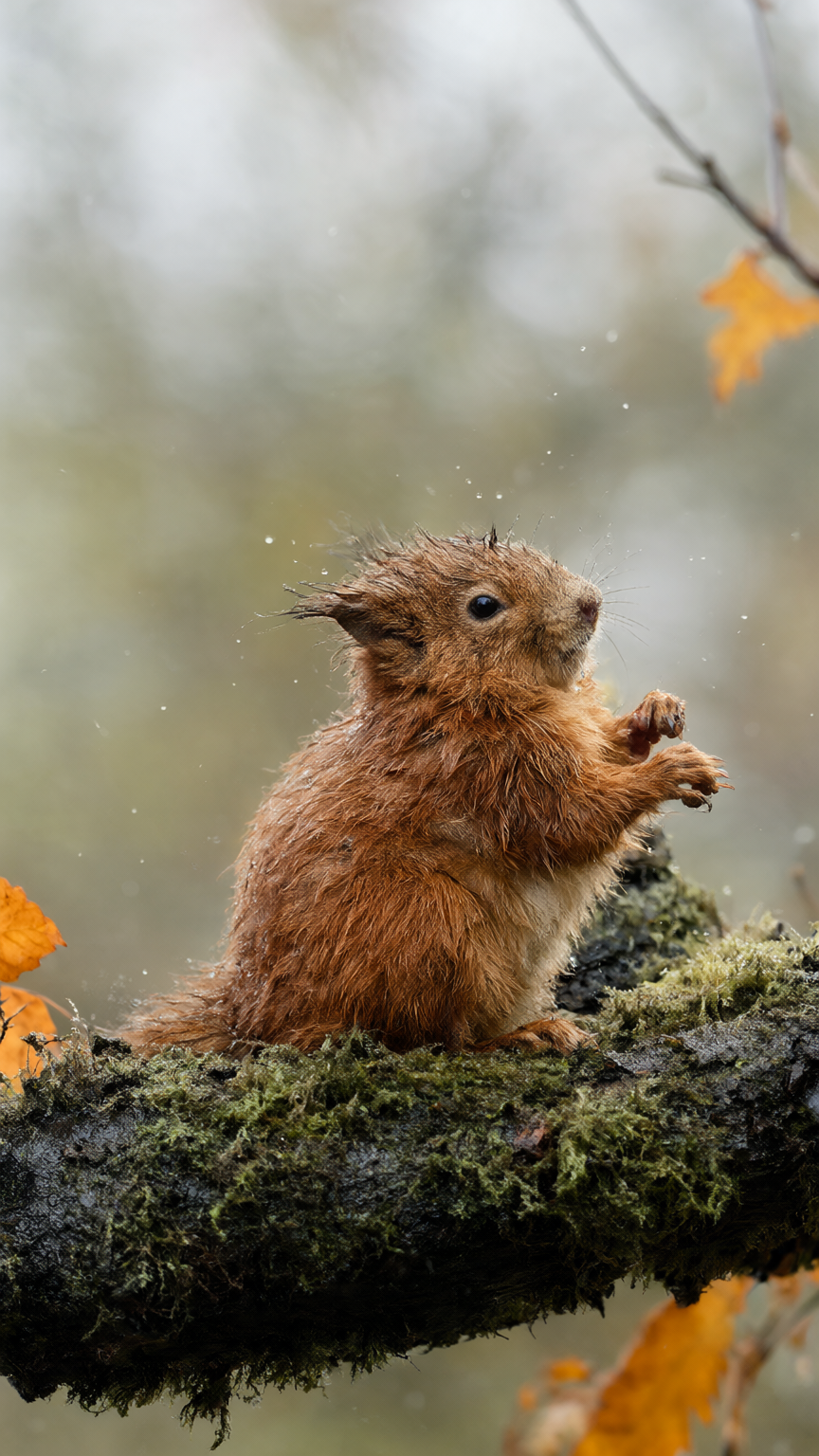
The squirrel has clearly had enough of the rain. It is crouched on a mossy branch with its paws up and its fur in every direction, and you can almost hear the shake. Droplets are still in the air around it. What is endearing is the outrage of it: one small animal refusing to accept that it is wet, doing the only thing it can think of about the problem.
Squirrels use their tails for balance on branches and also as a kind of umbrella or blanket, curled over the back. It is not waterproof fur, though, so a shake is the practical answer. A squirrel can also turn its ankles to run headfirst down a trunk, a talent most climbers do not have.
4. A Striped Face At The Sett Door
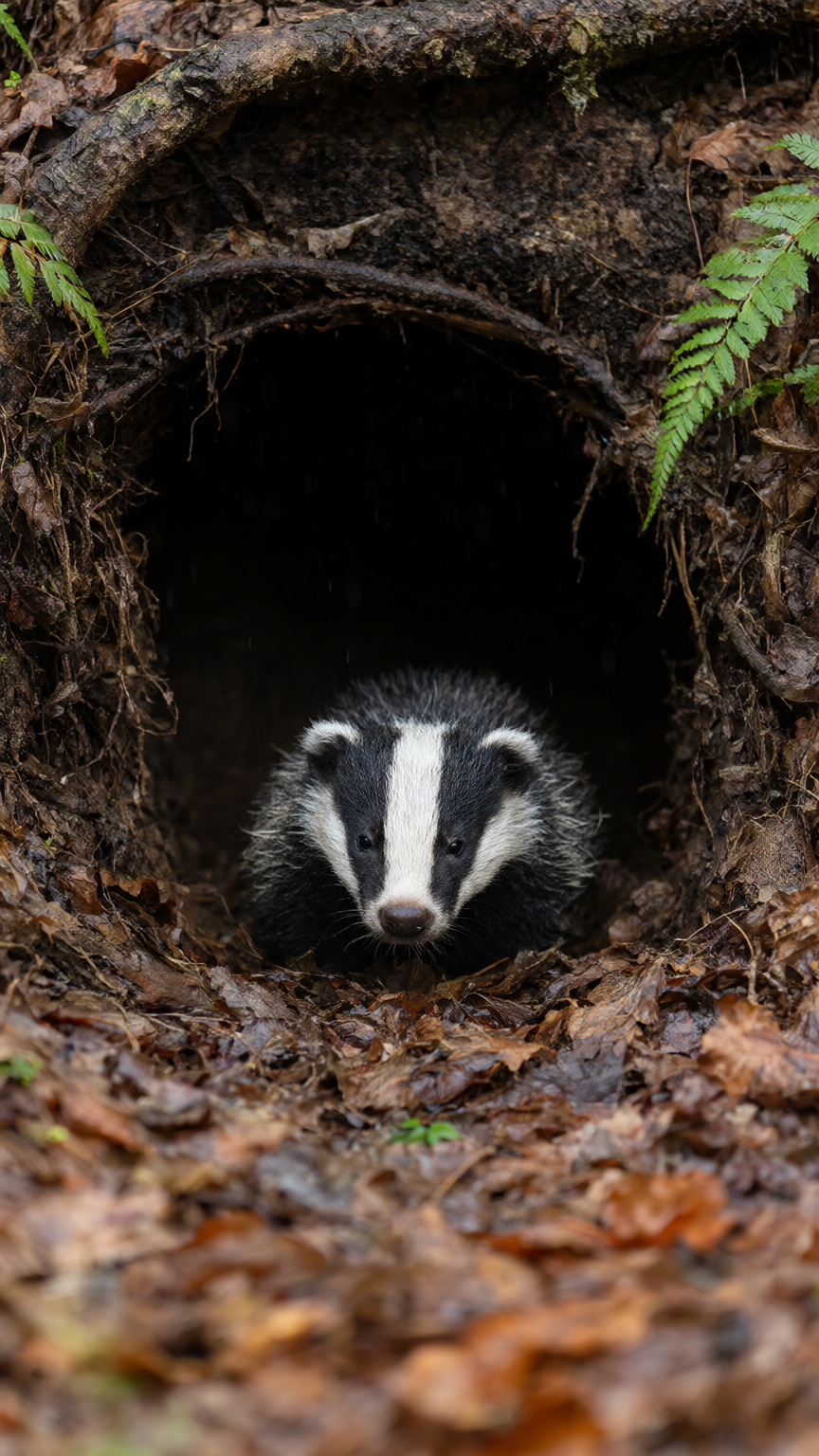
Half of this badger is still inside the sett, and that is the whole charm. One striped face appears at the tunnel mouth, eyes forward, checking the wet world before committing the rest of itself to it. Brown leaves and fern fronds frame the opening, and the rain patters on. A cub at the door is a small picture of caution and curiosity arguing with each other, and curiosity is winning.
Badgers dig underground homes called setts, and they keep them in the family for a long time, adding and repairing tunnels over the years. Strong front claws and a low, wide body make them excellent diggers. A cub born in a sett inherits the burrow, and the habit of checking the weather first.
5. The Fawn In The Silver Grass
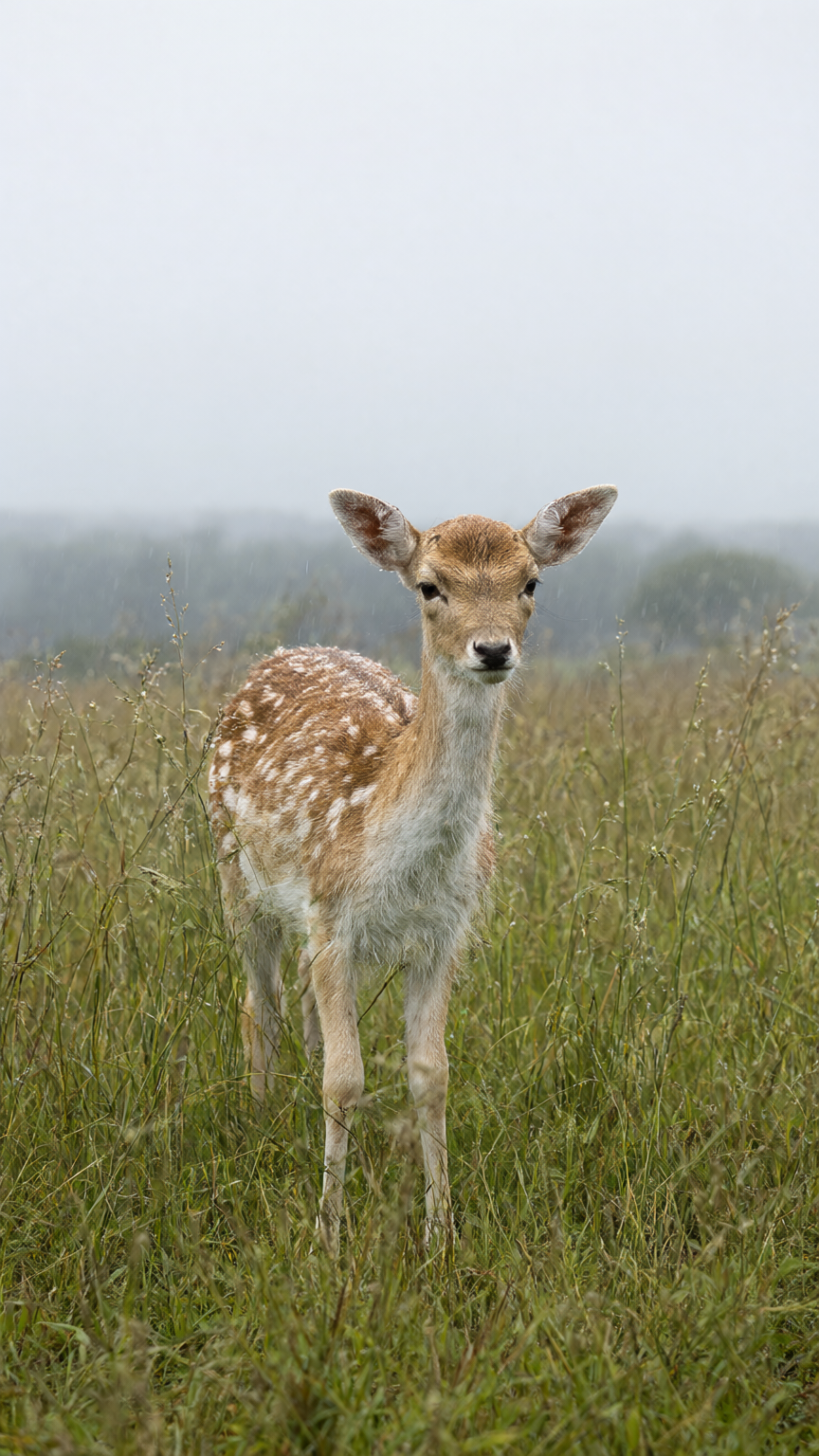
The fawn stands in the grass as if it grew there, and in a way it did. Its tan coat is covered in white spots that copy the look of sunlight on a meadow, and with rain beading on every spot it almost disappears into the silver seed heads around it. Only the ears give it away, pricked forward, listening to the weather. It is the calm that draws you in: a small animal standing still in a large, wet field, entirely at home.
Fawns are born with those spots for camouflage, and they fade as the animal grows and no longer needs to hide in dappled light. Young deer stay still and low when they sense danger, which is why a fawn in tall grass can be nearly impossible to spot until it moves.
6. A Grey Cygnet In The Reeds
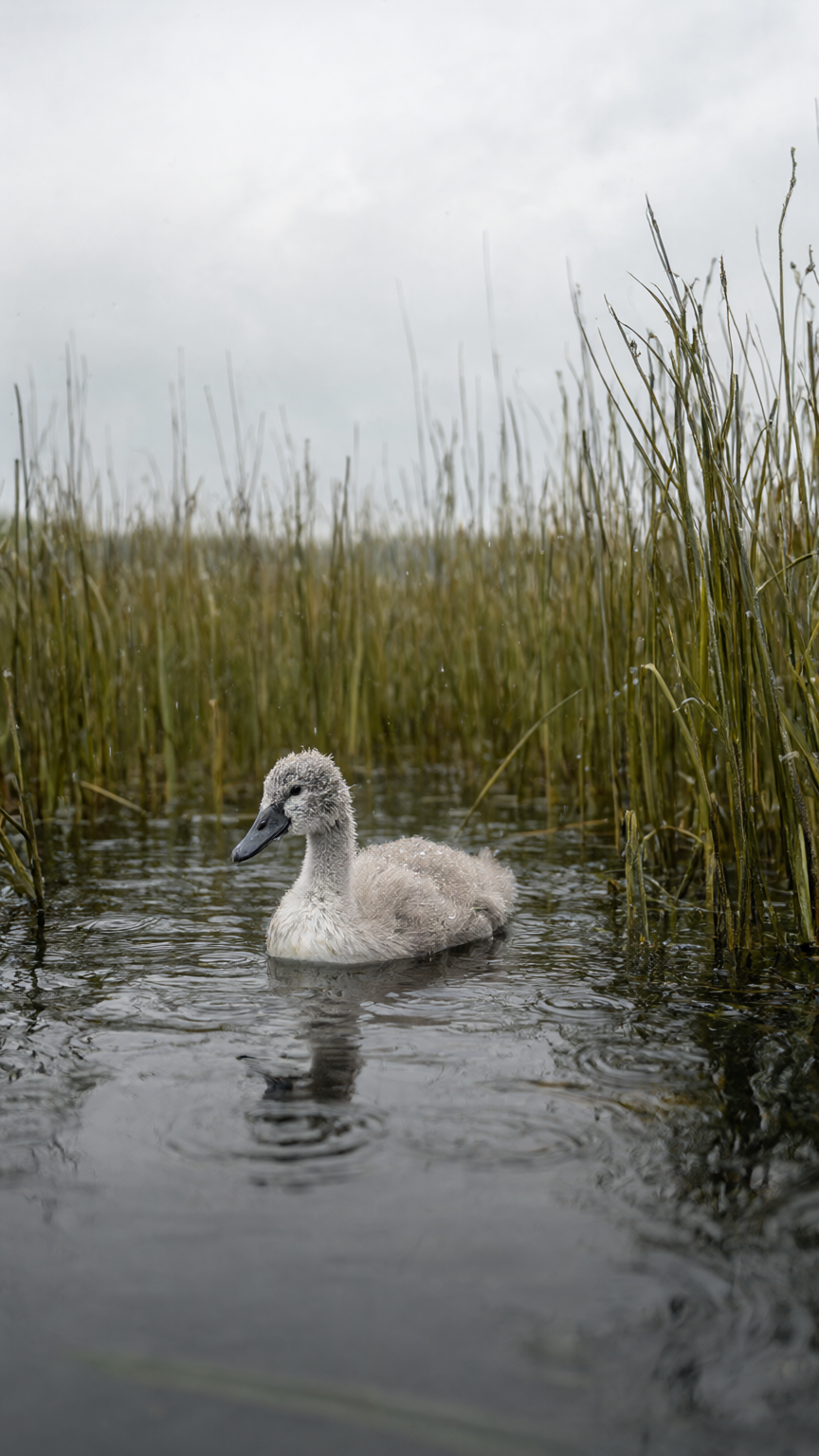
The cygnet floats like a small gray cloud that has decided to try water. Its down is beaded with rain, its dark pond is calm, and the reeds stand around it in a loose circle. Every so often it moves and the water answers with rings. The charm is in the fluff: a cygnet looks unfinished, all soft edges, and it has the serious composure of a bird that will one day be the largest thing on the pond.
Cygnet down is not waterproof the way adult feathers are, so a young swan can get waterlogged and tired, which is one reason its parents keep such a close watch. Swans also have more neck vertebrae than most birds, which lets them reach deep water without diving.
7. The Kitten On The Dry Step
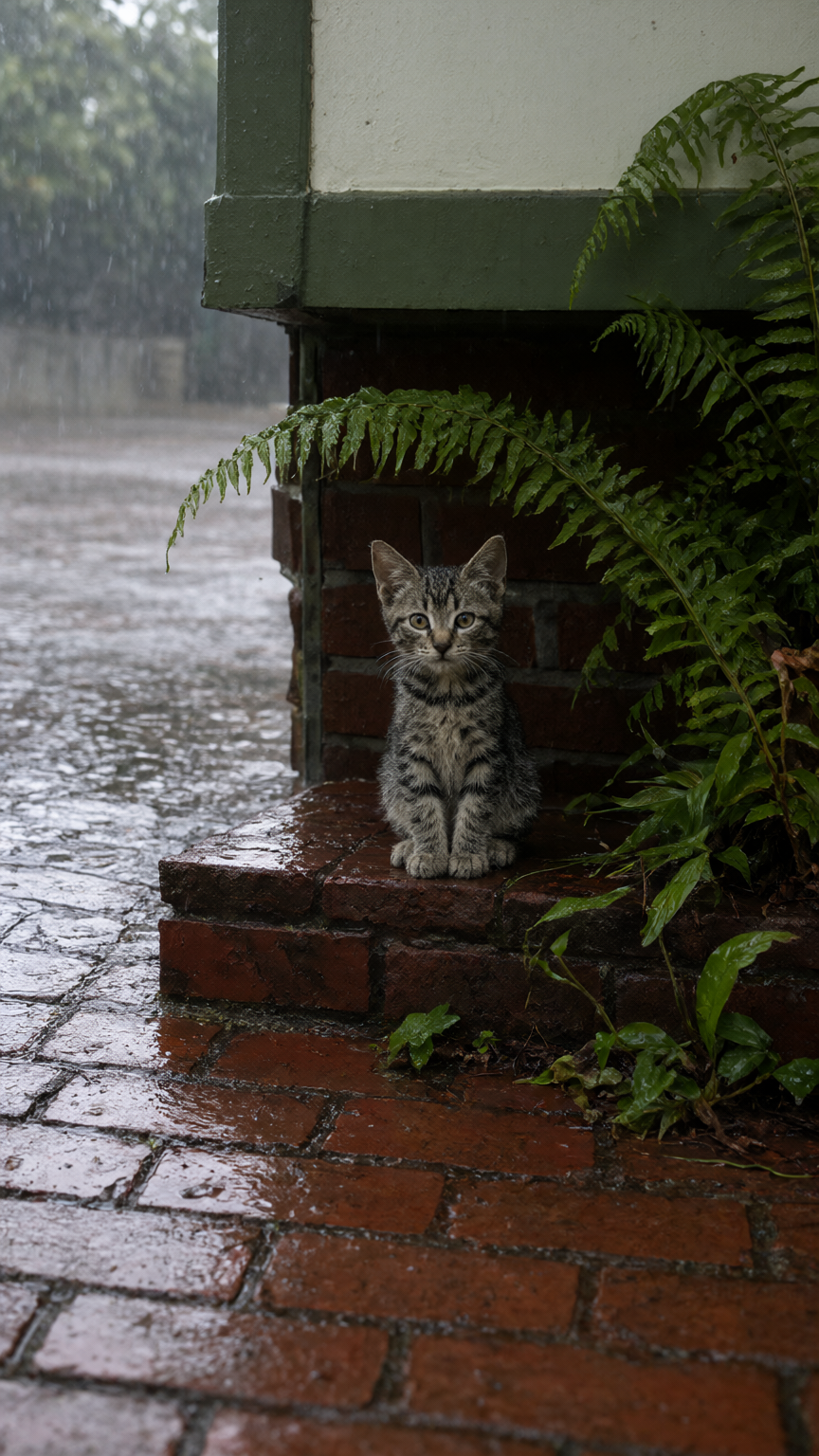
Here is a kitten that has worked out the situation completely. The bricks beyond the step are dark with rain, the ferns are dripping, and the kitten is sitting in the one dry spot in the frame, paws together, ears up, watching the weather from under the porch. It looks smug in the most lovable way, like a small landlord who is not going out in that.
Kittens are born with their eyes closed and open them during their first weeks, and those first eyes are blue in most kittens, with the adult color coming in later. This one has clearly had its eyes open long enough to find the best seat in the house.
8. Ears Up In The Rain
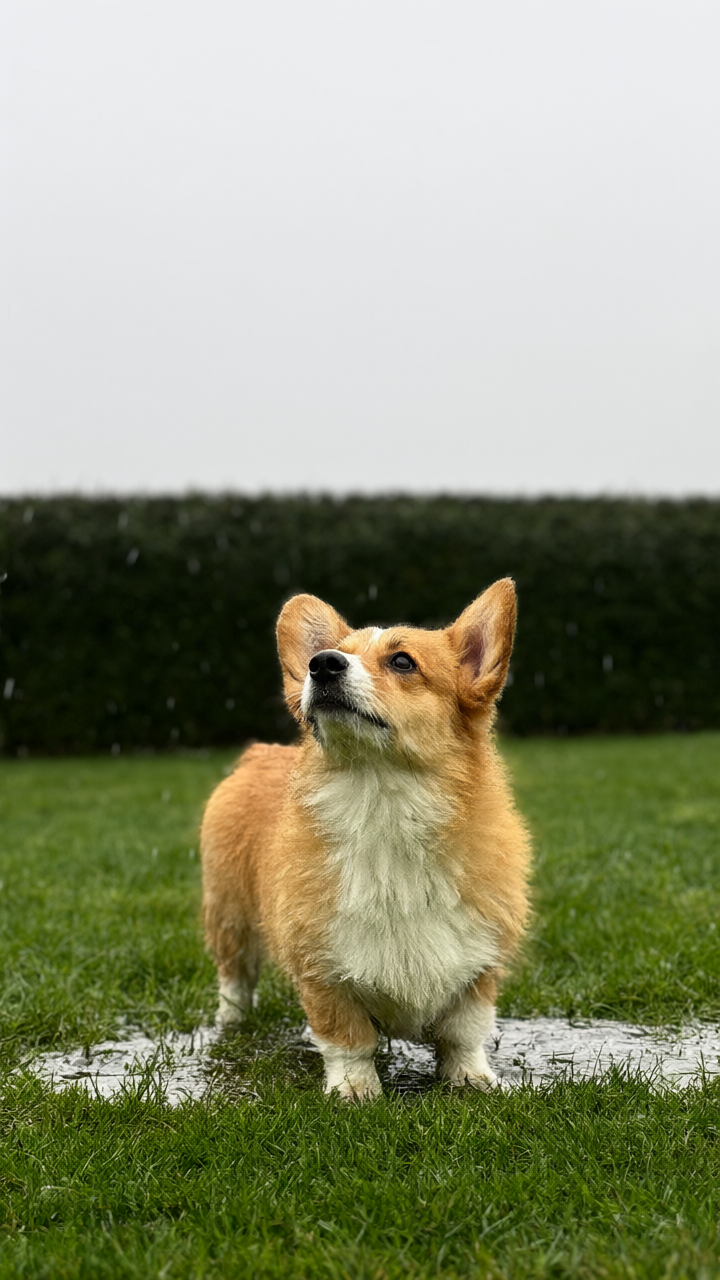
The corgi is doing the opposite of hiding. Rain is coming down, the lawn is soaked, there is a puddle right under its chin, and the puppy has its muzzle lifted to catch the weather on its face. The ears are up as if this were a job. It is pure puppy logic: if something is falling from the sky, you should absolutely stand in it and see what happens.
Corgis were bred as herding dogs, small enough to work cattle without being kicked, and they are famously sturdy for their size. That low, solid build comes with a big dog’s energy and appetite for work. A corgi puppy standing in the rain with its ears up is already practicing the alert, busy attitude it was bred for.
9. A Pink Piglet By The Barn
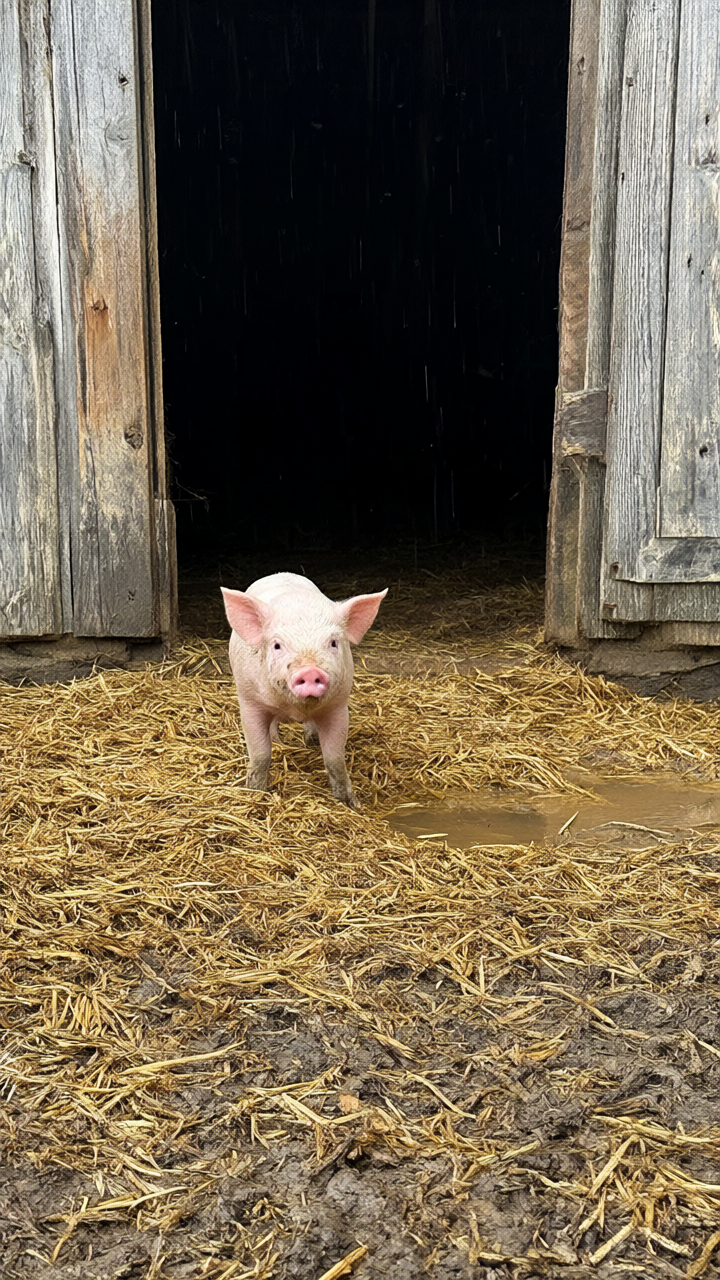
The piglet has stepped out of the dark barn into the rain and is now considering the puddle with the gravity of a small philosopher. Golden straw is stuck to its trotters, its snout is down, its ears are forward, and the rain keeps streaking past the doorway behind it. The scene is a whole afternoon in one frame: a warm dry place behind, a wet world in front, and a piglet deciding which one to explore first.
Pigs are widely considered among the cleverest farm animals, quick to learn and good at solving problems. They also have very little hair and few working sweat glands, which is why a mud wallow on a warm day is not dirt for its own sake but a way of cooling down. On a rainy afternoon, the dry barn wins.
10. The Smallest Climber In The Ferns
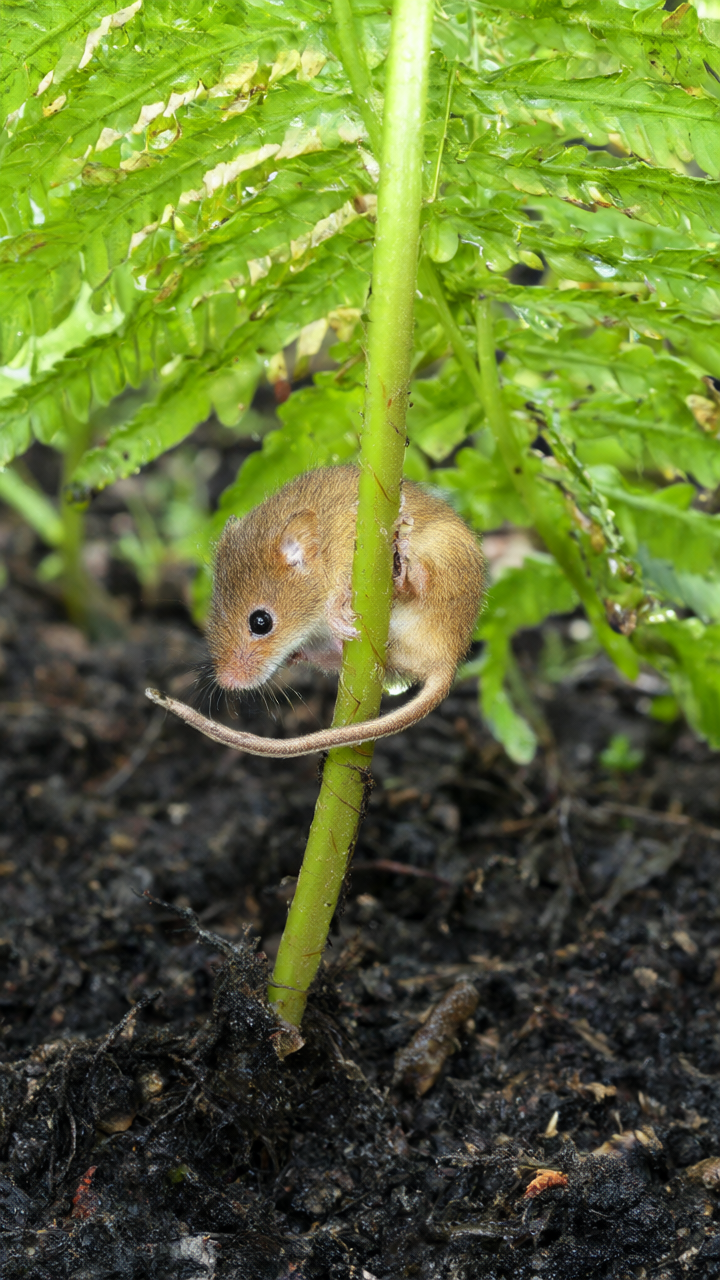
A harvest mouse on a fern looks like a trick of scale. The stem should not hold it, the raindrops should be bigger than its head, and yet there it is, head down, tiny paws wrapped around the wet green stalk, long tail wound along for extra grip. It is the eye that gets you: bright, steady, entirely unbothered by being the smallest thing in the garden. Being small, it turns out, is a whole way of moving through the world.
Harvest mice are among the smallest rodents in Europe, light enough to climb thin stems that would bend under anything heavier. They weave round nests in tall grass and reeds, often above the ground, and their tails help them balance and grip while climbing. A wet fern is not a problem for a mouse built like that.
Rainy days suit small animals better than we think, and these ten have made the most of the weather. If one of them has been following you around since you scrolled past it, that is a good sign you found your favorite. Take the wet noses and the tiny paws with you, and come back soon for the next gallery. There are always more small neighbors out there.