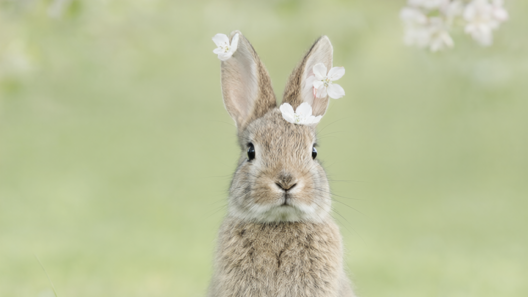
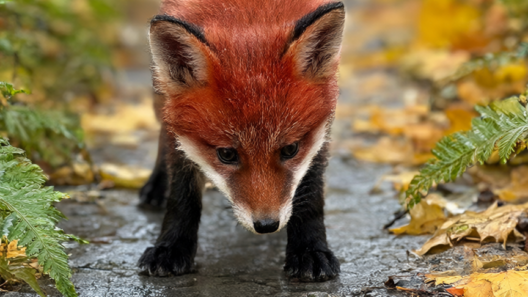
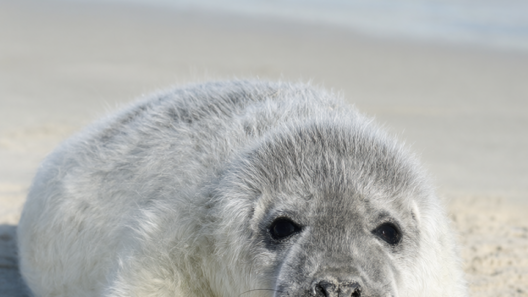
There is a particular brand of joy that arrives when a small animal decides to be shy. One moment the world is empty — a rock, a fence post, a tangle of reeds — and the next there is a nose, a pair of bright eyes, a single lifted paw. These twelve AI-generated illustrations celebrate that little reveal, the moment an animal stops being hidden and becomes a friend.
Each picture arrives with a small piece of real animal lore, because the creatures behind these peekaboo faces are every bit as fascinating as they are charming. A hayloft, a pond edge and a hedgerow can each hide a whole personality — and the fact that they decide to show themselves at all is a gift.
So scroll at a happy pace, smile at the nose over the gate, and collect the facts as you go. Every one of these little ones had to leave the safety of cover to say hello, and every one of them is worth the wait.
All photos in this gallery are AI-generated illustrations.
1. The Tiniest Tenant In The Rocks
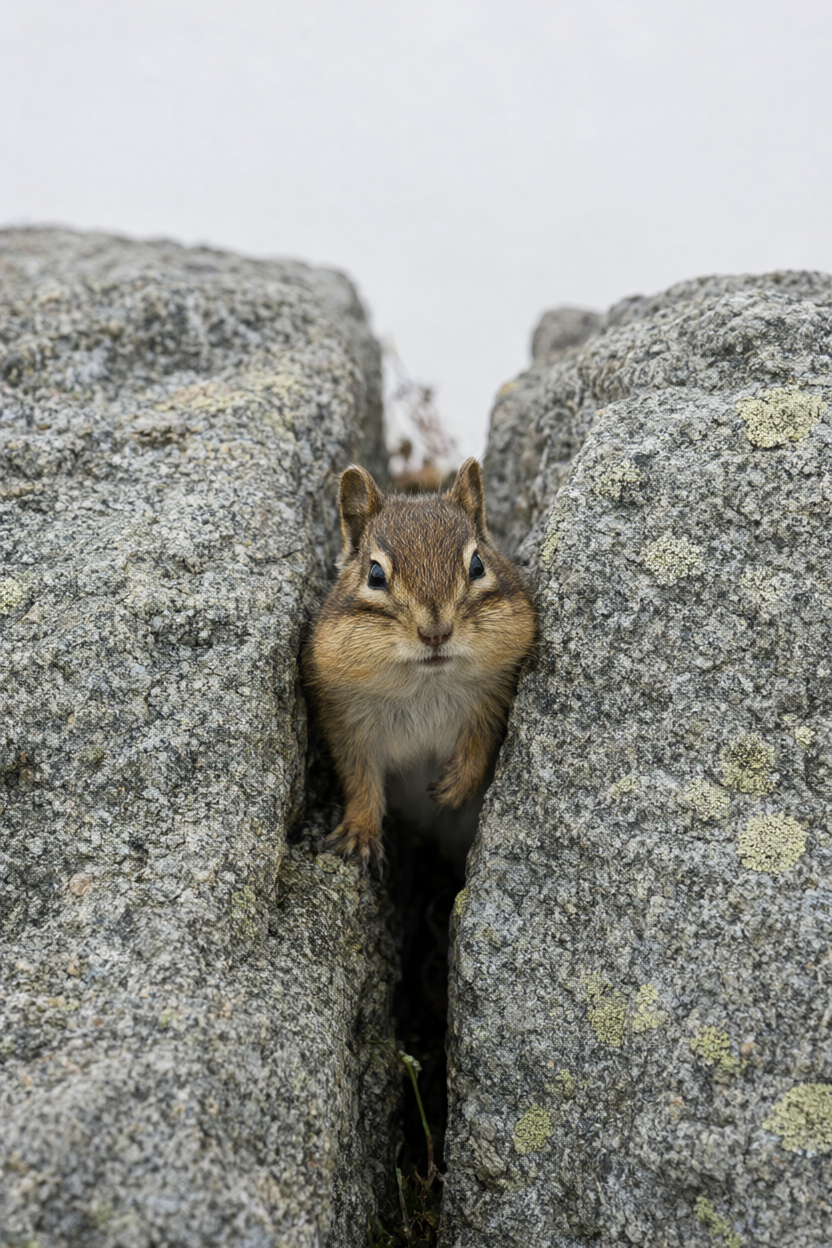
Grey stone, a green tuft of lichen, and then a face. The chipmunk has wedged itself into a crack barely wider than its shoulders and is looking at us with the calm certainty of a creature that knows exactly how small it can make itself. Its cheeks are so full they bulge past its whiskers, which somehow makes the pose less shy and more smuggler.
Chipmunks belong to the squirrel family, and those famous cheeks are working equipment. The pouches inside can stretch to carry a surprising load of seeds and nuts, so the animal can gather a meal in the open and ferry it back to the burrow in one trip. Next time you spot one on a stone wall, watch the cheeks: a busy chipmunk always looks like it has just raided the pantry.
2. Someone Parted The Reeds
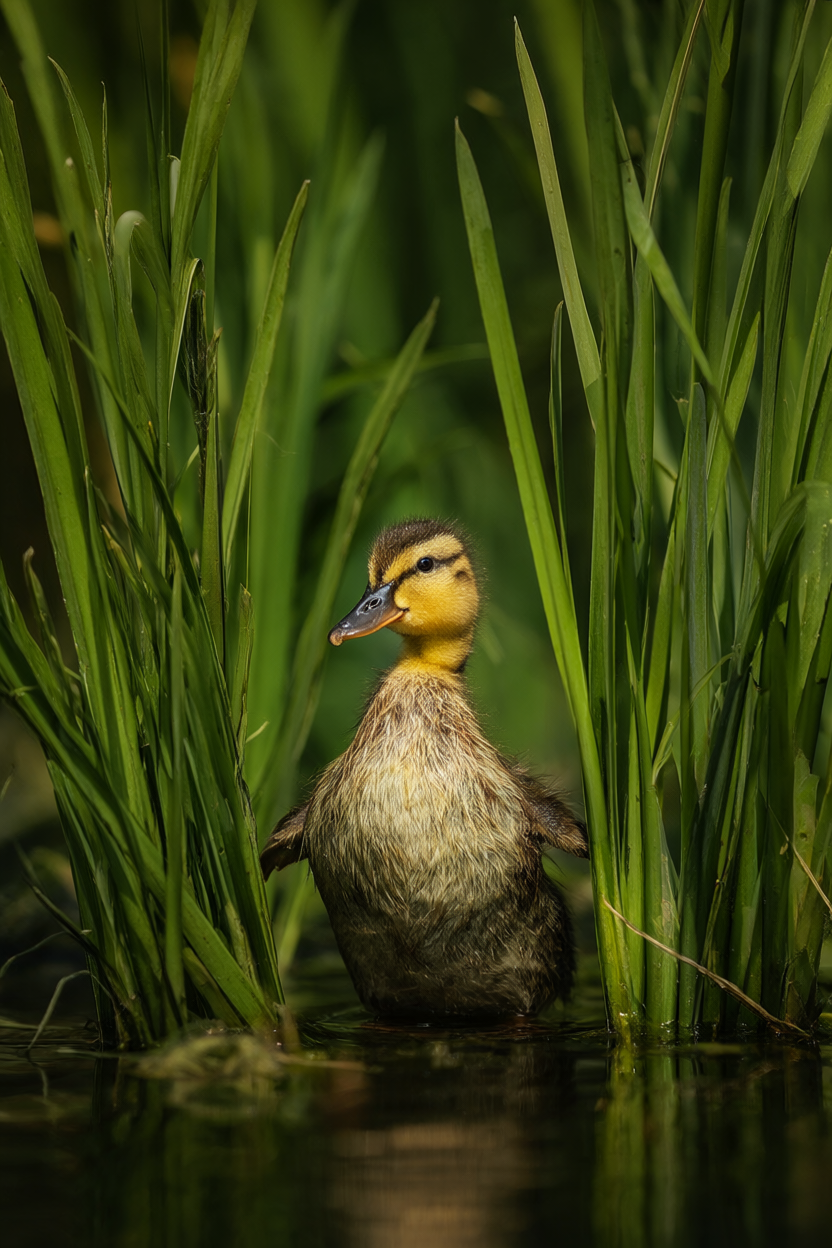
Two green curtains of reed part just wide enough for a duckling to consider the world. Its down is still the fuzzy yellow-brown of a very new bird, and its bright eye holds a mix of caution and curiosity. The dark pond water behind turns the reeds into a stage, and the little one is clearly deciding whether the audience is friendly.
Ducklings are precocial, which is the tidy word for ready almost immediately. Mallard chicks hatch covered in down and can walk, swim and feed themselves within hours, following their mother in a neat line. The reeds are their nursery: dense cover at the water’s edge keeps them hidden from hawks while they learn. A duckling that pauses like this one is not lost — it is checking that the coast is clear before the next paddle.
3. Over The Stable Door
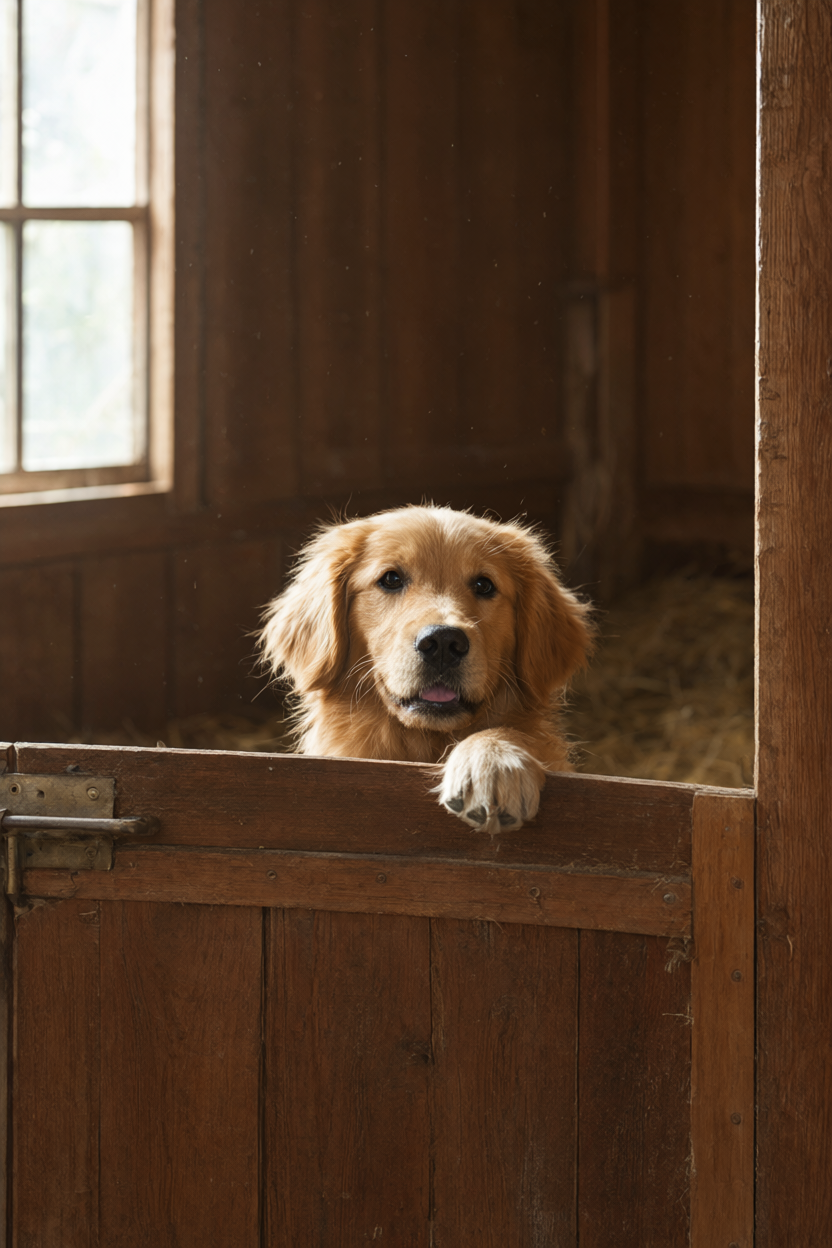
A weathered half-door makes a fine fortress when you are the size of a loaf of bread. This golden retriever puppy has claimed the top edge as its lookout, one hopeful paw hooked over the wood, ears soft as felt. The tongue just showing suggests it has already decided that whoever is coming is a friend. It is the least convincing guard dog, and it knows it.
The breed was developed in the Scottish Highlands to retrieve fowl from land and water, which is why a golden retriever treats every doorway as a place worth investigating. That soft mouth was bred for carrying game without damaging it, and the same gentle nature is what makes the breed such a popular family dog. Watching this pup stretch over the door, you can almost see the patient adult it will become.
4. Behind The Old Fence Post
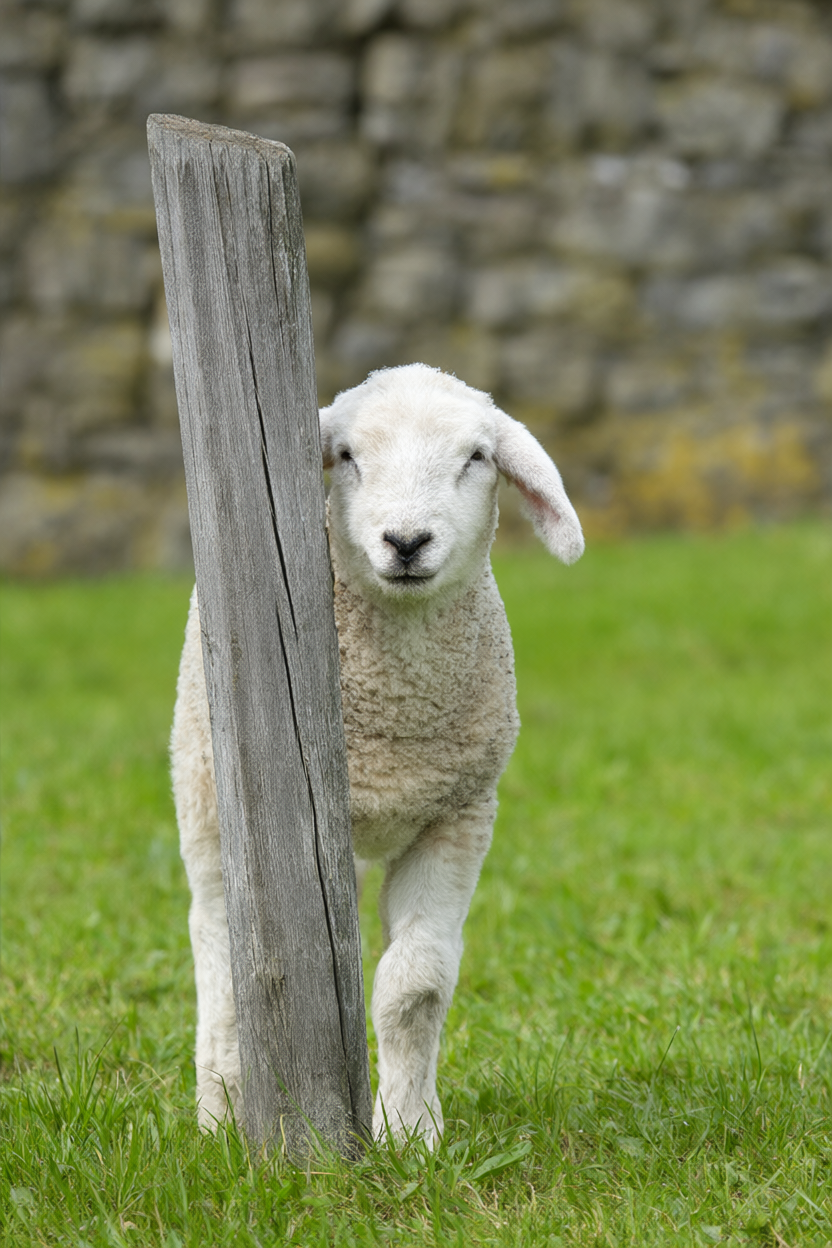
A thick grey post is all the cover this lamb needs. It has arranged itself so that one bright eye, one flopping ear and a slice of woolly shoulder are visible, as if it has been practicing this entrance. Behind it the pasture is almost too green, and the blurred stone wall gives the scene the hush of a quiet afternoon. The lamb looks pleased with its hiding place.
Lambs learn their mother’s voice quickly, and ewes can pick their own lamb out of a crowded flock by its bleat. That is a remarkable skill in a field full of nearly identical voices. The next time a lamb calls across a pasture, listen for an answer: somewhere in the flock, a mother is already on her way.
5. A Snout Behind The Feed Trough
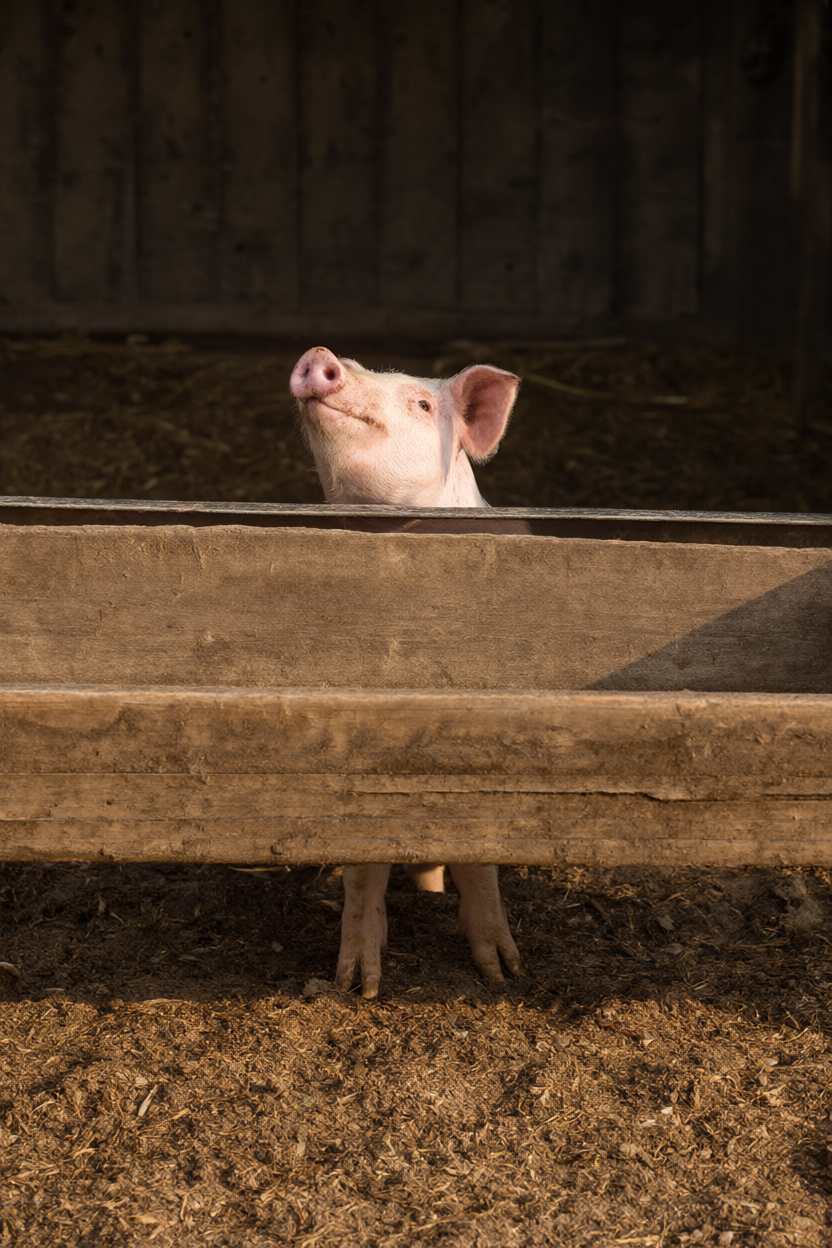
Only the essentials are showing above the trough: a snout, a flopped ear, two front trotters and a pair of eyes doing their best to look innocent. The piglet has found the one spot in the farmyard where a small animal can watch everything without being watched, and it is making the most of it. Straw dust hangs in the warm air.
Pigs are among the cleverest of farm animals, and their snouts are far more than a nose. A pig’s snout is packed with nerve endings and is sensitive enough to root out food buried in soil, which is why piglets explore the world nose first. This little one may not be hiding from us at all. It is simply conducting important snout research behind the trough.
6. The Kid On The Stone Wall
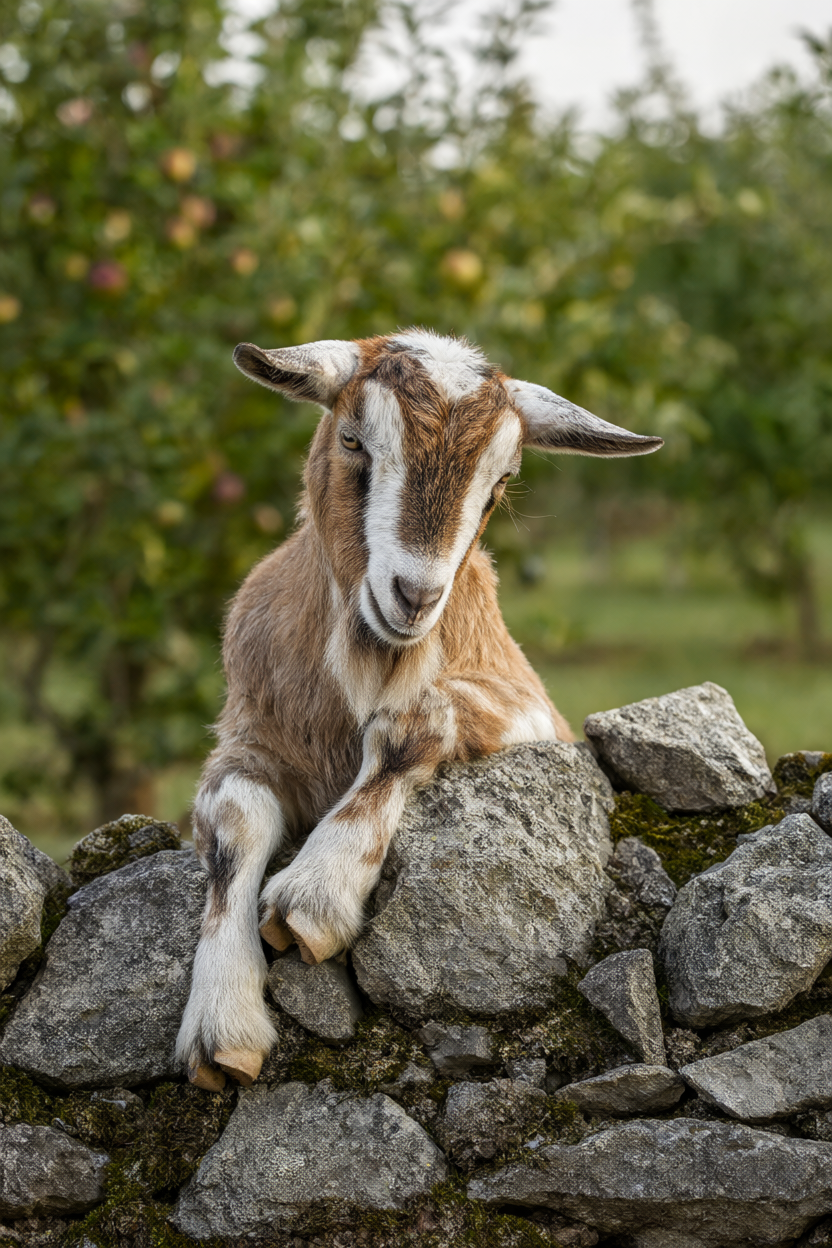
Front hooves on the wall, ears out like small flags, chin tilted down toward the camera: the goat kid has turned a dry-stone wall into a balcony. The moss in the gaps and the soft blur of the orchard behind make the stones look warm. It is the posture of an animal that has never once doubted its own balance.
Goats are famous for their rectangular pupils, which give them a wide field of view and help them spot danger while their heads are down grazing. Kids are climbing almost from the moment they can stand, and a low wall is simply an invitation. A goat that looks down its nose at you is not being rude. It is using the eyes nature gave it.
7. A Curious Face At The Stall
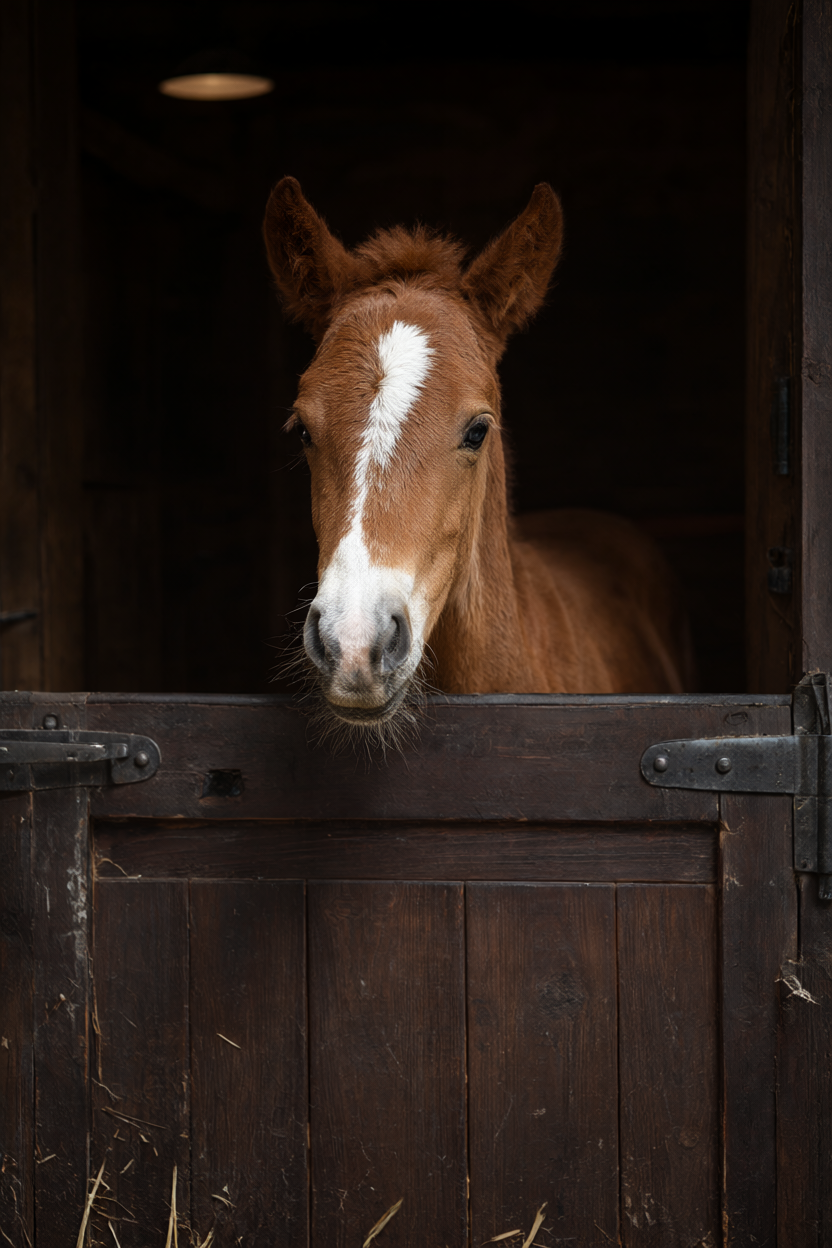
A dark stall door, a warm lamp somewhere out of sight, and a chestnut head stretched over the top. The foal’s neck is long and awkward in the way of very young horses, its white blaze bright against the brown, ears pricked toward whatever sound we made. Straw lies soft underfoot. It looks as though it has been waiting all afternoon for someone to say hello.
Foals can stand and take their first wobbly steps within hours of birth, and many can trot alongside their mothers by the end of their first day. That early start matters in the wild, where a newborn must be ready to move with the herd. Here, behind a stable door, the same instinct shows up as pure curiosity: a young horse meets the world nose first, one visitor at a time.
8. Around The Red Barn Corner
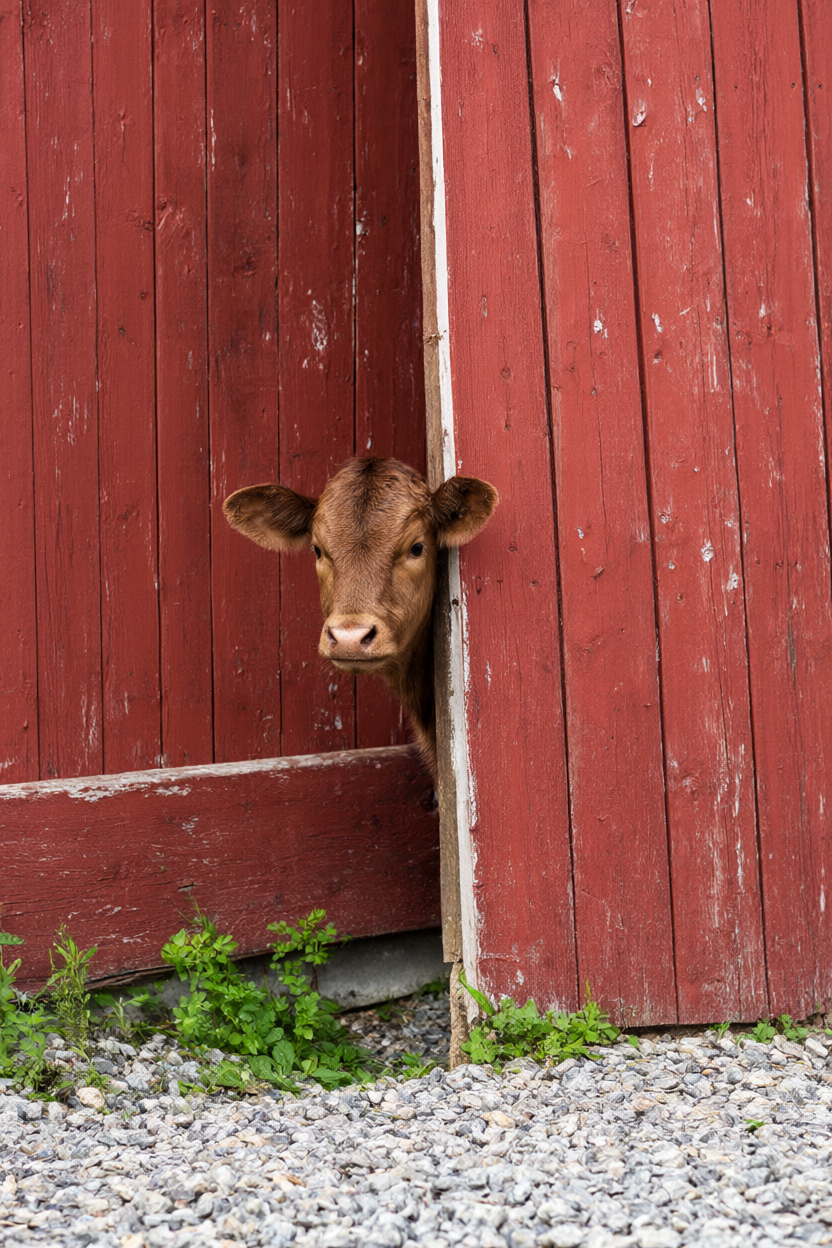
The red barn has a corner, and the calf has found it. Only a head and a stretch of neck appear past the weathered boards, ears wide as leaves, eyes fixed on us. The gravel and green weeds at the base of the wall say this is a farmyard in ordinary weather, but the calf has turned the corner into a curtain.
Calves are herd animals from the start and stay close to their mothers in the first weeks, calling to each other when they are apart. Cows are famously good at recognizing one another, and a calf learns the voices and faces of its group early. So a calf peeking around a barn is doing something quite serious: checking who is there, and whether they belong.
9. The Black Fluff In The Grass
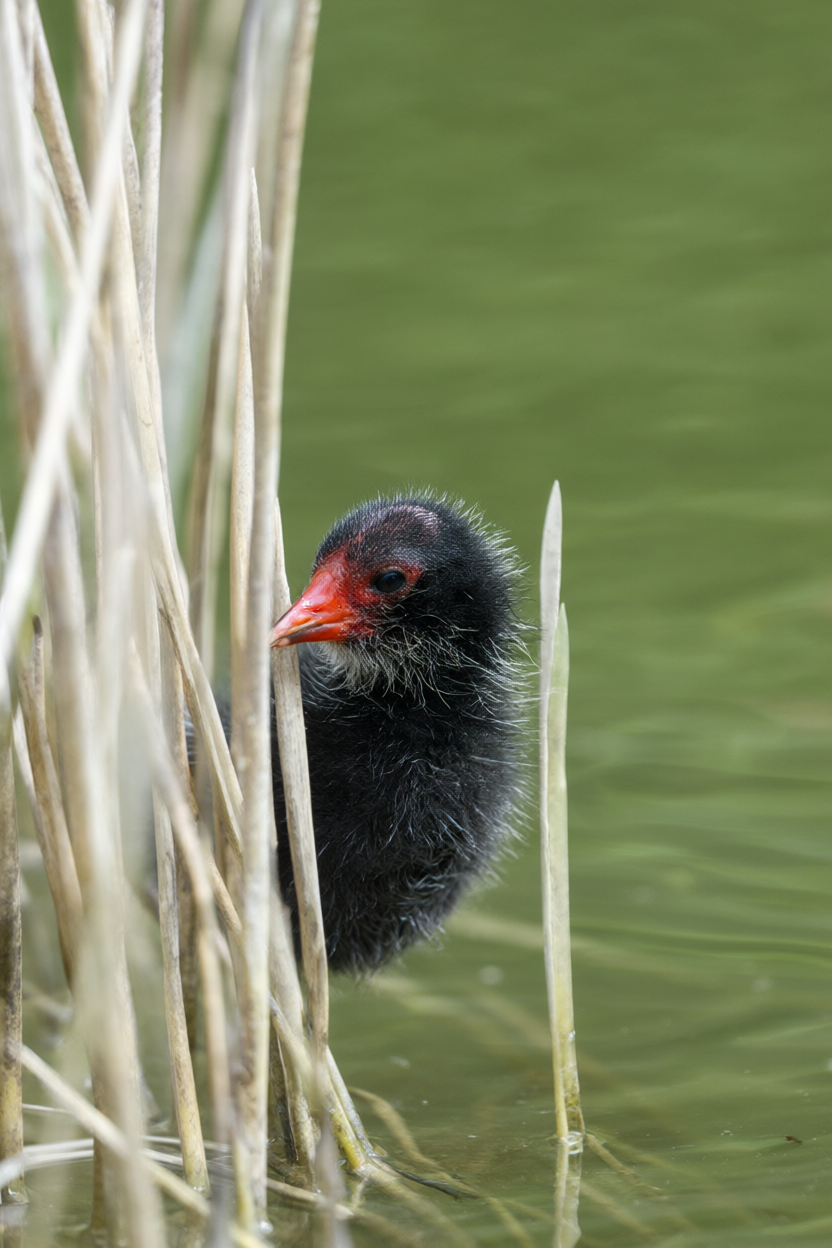
A ball of black fluff with a beak like a tiny painted arrow: the moorhen chick has pushed between the reeds and stopped, as if surprised to find the world so wide. Its down is still ruffled from the squeeze, and the still green water behind doubles every stem. It is the sort of small, serious face that makes a pond feel like a secret.
Moorhens are waterbirds in the rail family, and their chicks hatch ready for a life on the water. The bright bill is a family trademark — adults wear red and yellow, and even the chicks show a flash of color. Young moorhens can swim soon after hatching but spend much of their time tucked into reeds, which is exactly where this one has learned to feel safe.
10. Just A Rock, Or Something More?
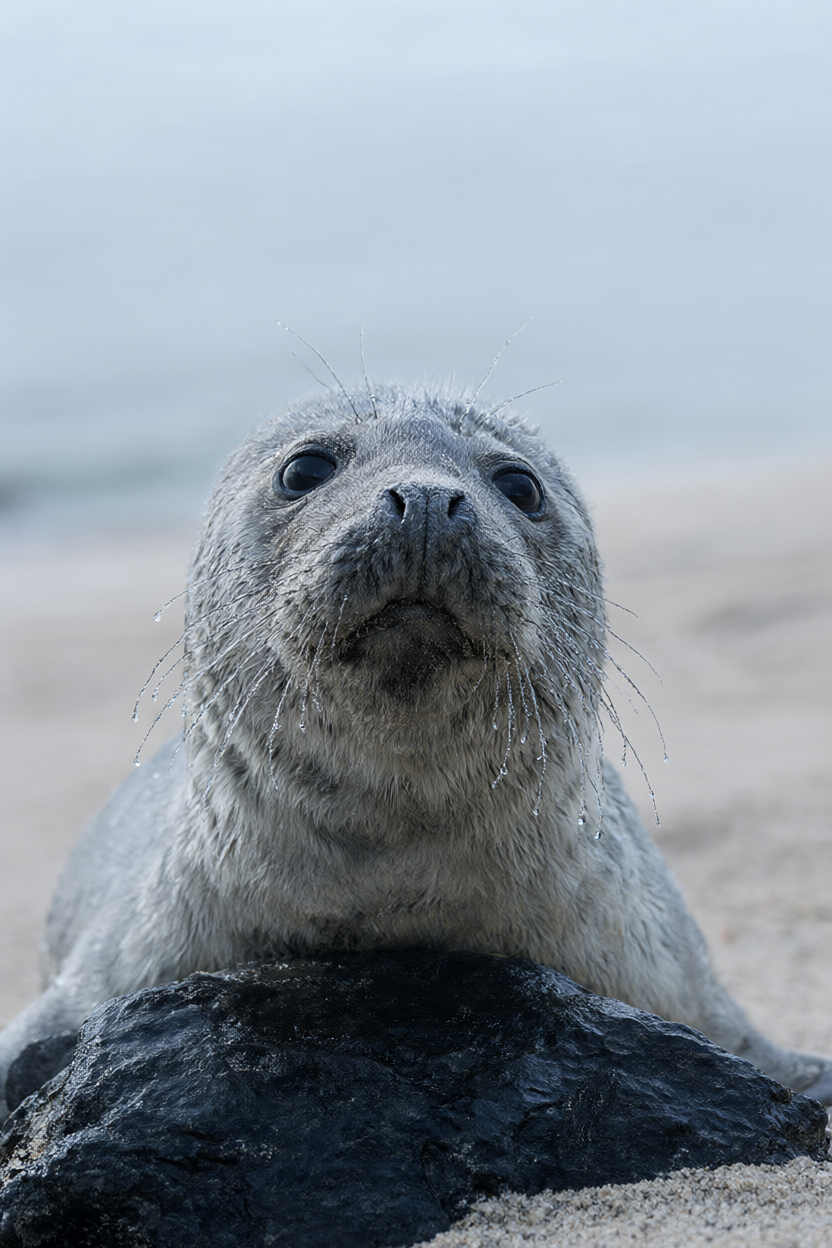
At first the beach looks empty: pale sand, soft mist, a wet black rock. Then the rock grows whiskers. The seal pup has lifted its head and shoulders into view, dark eyes steady, water beading on its fur. The whole scene is grey and blue and very quiet, and the pup seems to be waiting to see what we will do.
A seal’s whiskers are precision instruments. They pick up the tiny movements a fish makes in the water, letting the animal hunt even when visibility is poor. Seals also slow their heart rate when they dive, which helps them stay under for long stretches. On land, though, they are large-eyed and curious, and this one has decided we are worth a look.
11. The Smallest Thing In The Wheat
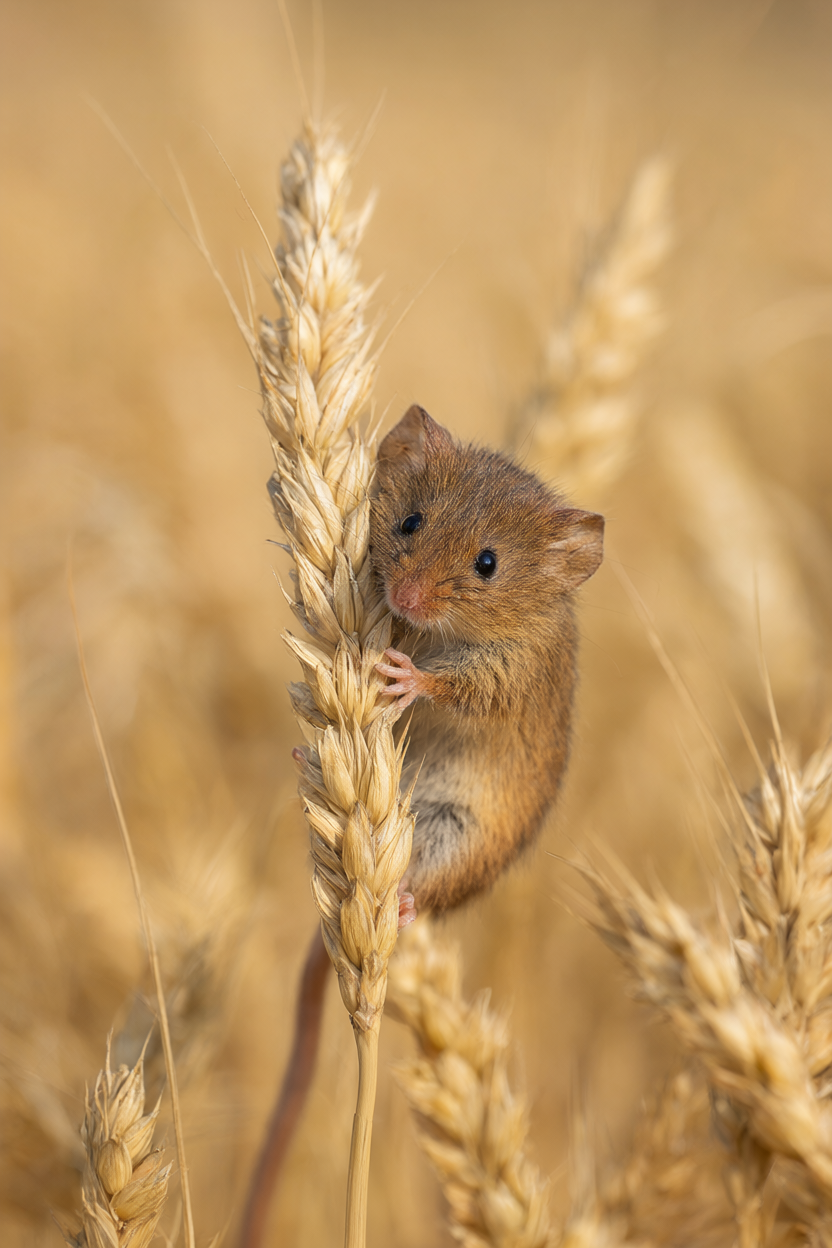
Wheat is a forest if you are small enough. The harvest mouse has climbed a stalk and grips it with feet and tail, its head pushed between the golden heads of grain. Round ears, black eyes, a coat the color of dry grass: everything about it is built for vanishing. Yet here it is, plainly visible, holding on like a tiny acrobat.
The harvest mouse is one of Europe’s smallest rodents, and it lives its whole life among stems. It weaves round nests of grass, often several of them, and its prehensile tail works almost like an extra hand when it climbs. A single mouse may build a new nest whenever the old one is worn, and this one has picked a stalk with a view of the whole field.
12. The Busy Little Dam Builder
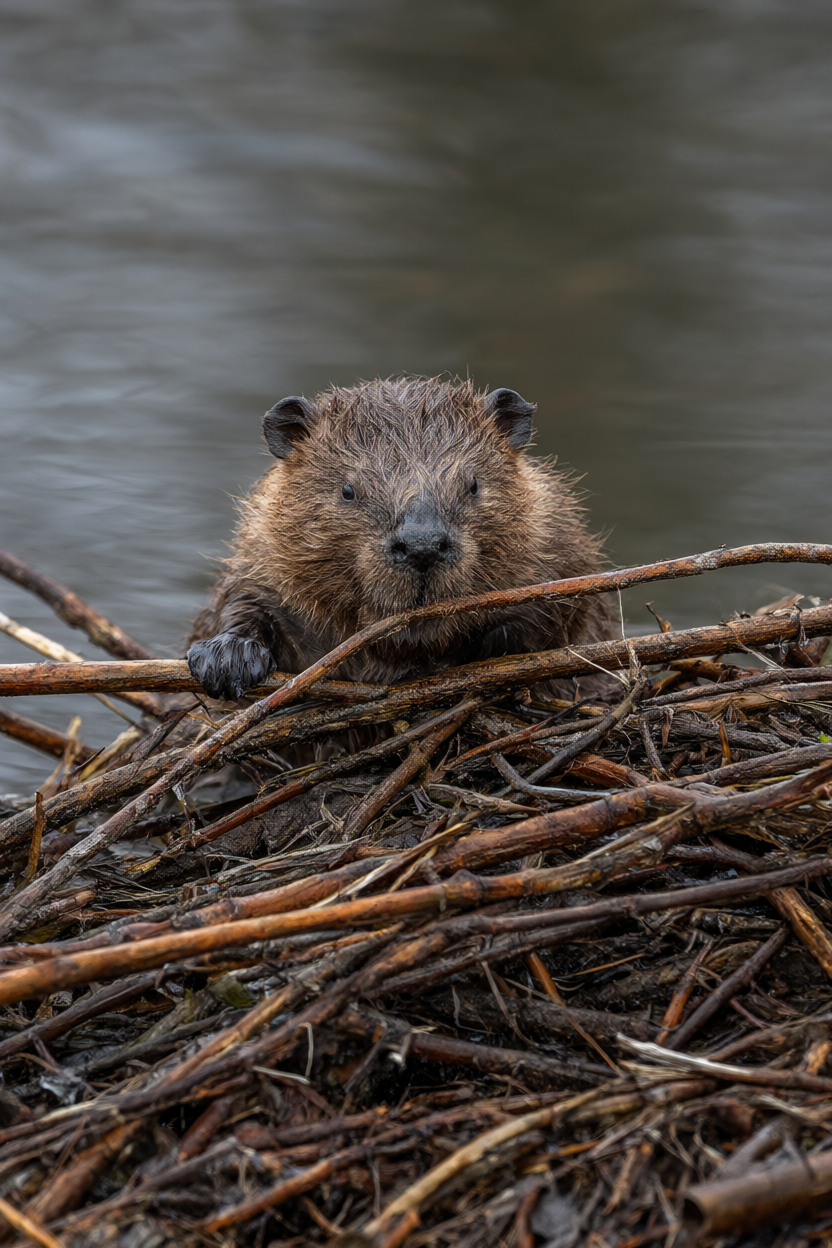
Twigs, mud and a wet brown head: the beaver kit has hauled itself over the dam and paused at the top. One dark paw rests on the sticks, its fur is slick from the pond, and for a moment it looks like the smallest engineer on a very large project. The water behind is still, the light soft and grey.
Beavers are nature’s dam builders, and the ponds they create are shared with fish, frogs, insects and birds. A beaver’s teeth are orange because of iron in the enamel, which makes them strong enough to fell small trees. The flat tail does more than steer: a slap on the water warns the colony of danger. This kit is already learning the family trade.
Not every shy face needs an explanation, and that is part of the pleasure. These twelve little ones were made to be looked at slowly, one small joy at a time. Keep the facts if you like, or keep only the smiles. Either way, come back soon: there will be another gallery of gentle faces waiting here for you.