Spring has a way of making the world look softer and smaller, and nowhere more so than in a garden full of blossom. Here is a whole meadow of tiny faces peeking out from petals, each one caught in the middle of its own small adventure.
We cannot resist a baby animal. Something about the wobble, the fluff and the first brave step makes us stop and smile, every single time. So take your time with these photos, meet each little one in turn, and read the fact tucked beneath it — you may learn something you never knew about a creature you thought you already knew.
This is the kind of gallery that rewards a slow scroll, with a little science hiding in all that fluff.
All photos in this gallery are AI-generated illustrations.
1. The Bunny Beneath The Apple Blossom
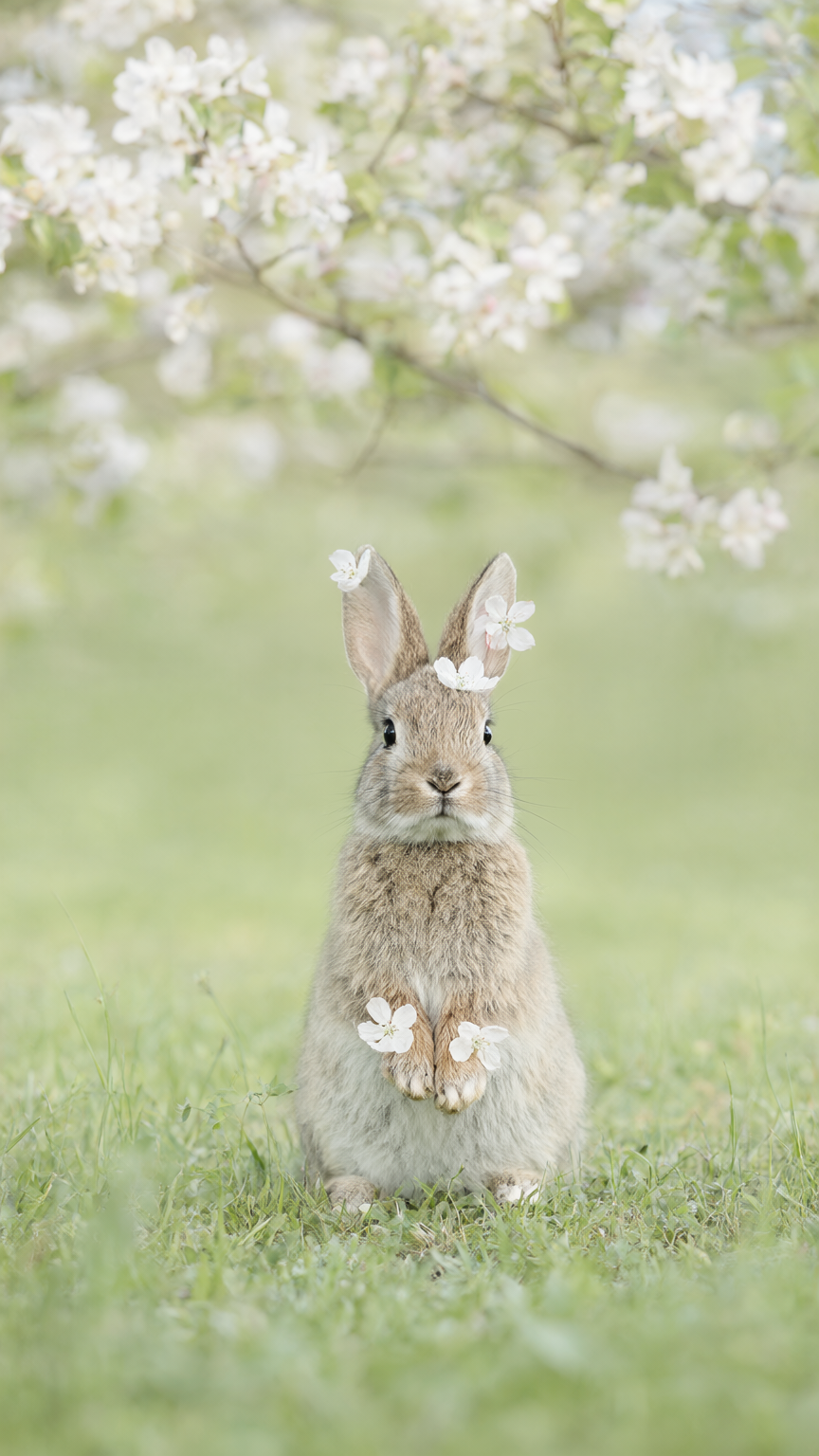
This little rabbit sits up straight as if it has just remembered something important. White petals have landed beside its ears and paws, and its whole body is stretched into the careful, listening pose rabbits use when the world feels brand new. The grass is wet, the blossom is still falling, and the tiny creature looks both brave and a little unsure.
Rabbits are built for watching. Their eyes sit high on the sides of the head, so they can keep an eye on the grass around them while they nibble, with only a small blind spot right in front of the nose. That is also why a rabbit often turns its head to look at you properly.
2. The Lamb Beside The Hawthorn
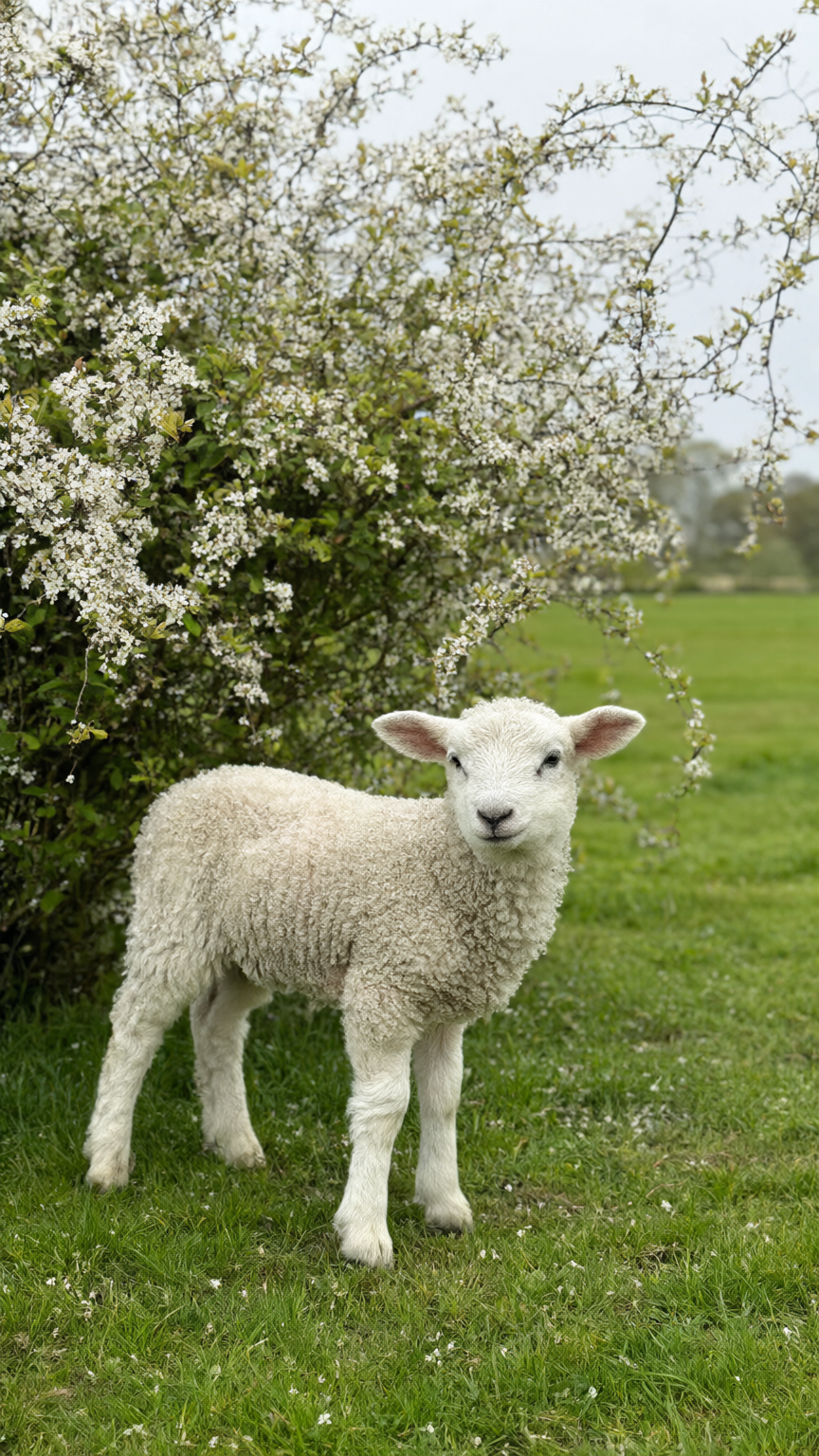
The lamb stands square on the pasture as though it has been asked to pose for a portrait, its fleece still soft and tufted, petals from the hawthorn hedge scattered across the grass behind it. Every so often it considers the hedge, then the camera, then a particularly interesting patch of grass. It is a small animal trying very hard to look serious and failing completely.
Sheep recognise each other by voice. A ewe can pick out her own lamb’s bleat from a whole field of noise, and the lamb answers in its own high, shaky call. It is one of those ordinary sounds of the countryside that turns out to be a very precise conversation, repeated all day, both of them keeping track of exactly who belongs to whom.
3. Three Ducklings At The Petal Pond
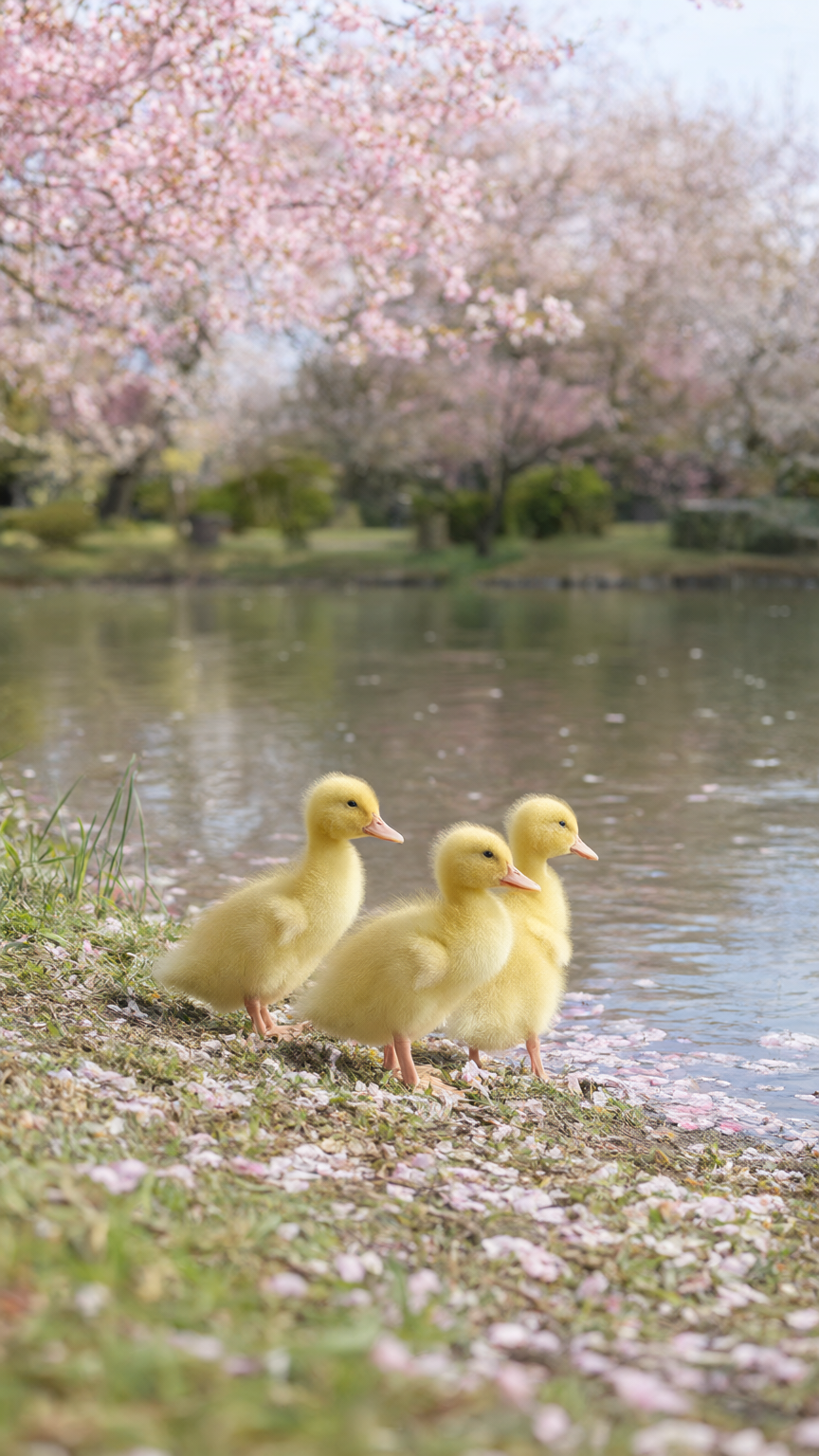
Three ducklings wait at the edge of the pond with their feet in the grass and a scatter of pink cherry petals around them. One is looking at the water, one at the flowers, and the smallest at absolutely nothing at all. They are so round and so newly hatched that they seem built for the sole purpose of making people stop and smile.
Ducklings are famous for imprinting. In the first hours after hatching they follow whatever large moving thing they see, usually their mother, and that lesson stays with them. It is why a line of ducklings will trail so faithfully behind one another, and why the serious business of being a duck begins almost immediately, while the little ones are still small enough to sit in a hand.
4. The Kitten On The Mossy Wall
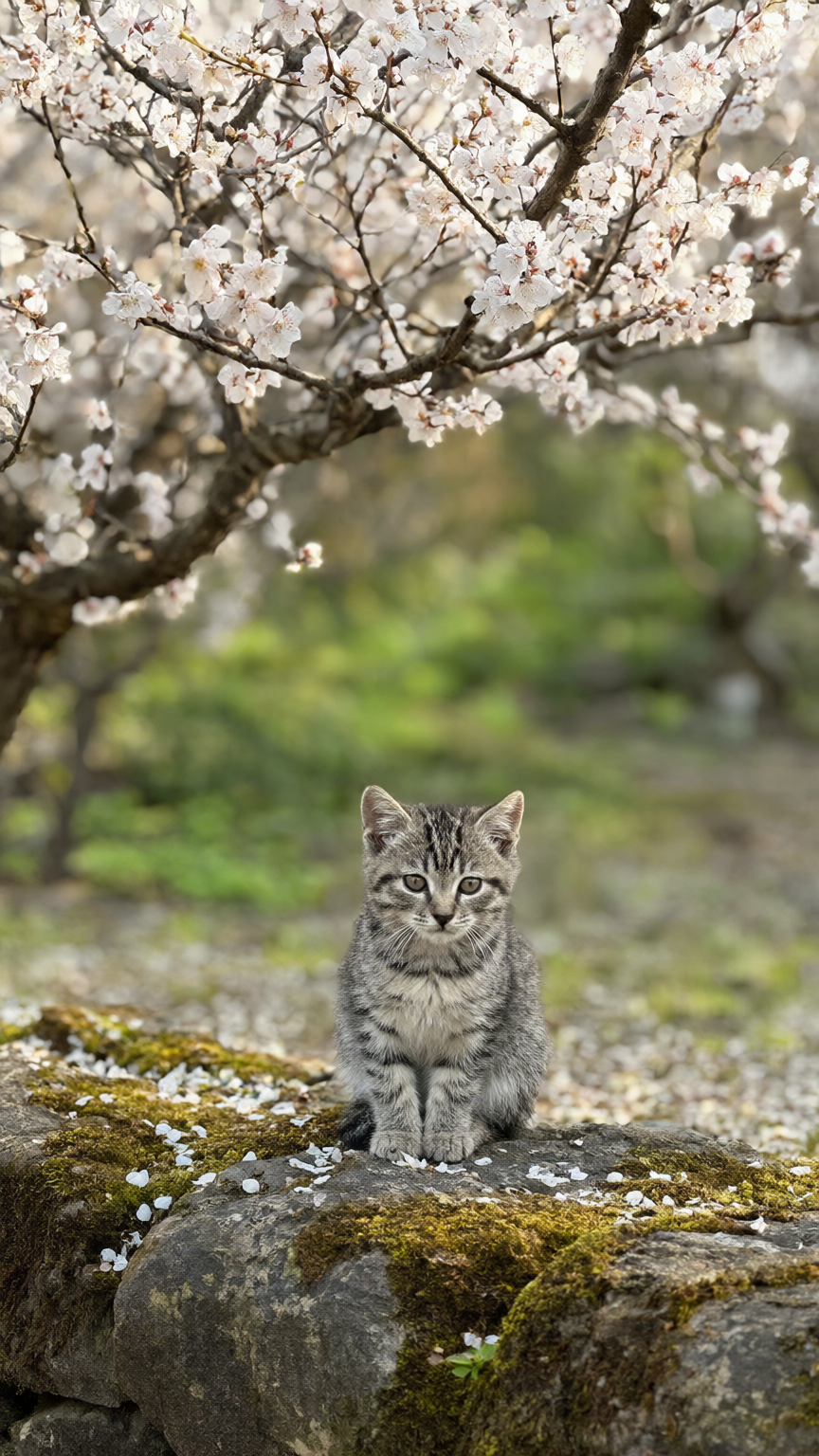
The kitten has chosen the highest stone on the wall, which is exactly what a kitten would do. It sits with its paws tucked neatly together, petals from the blossom above resting on the moss beside it, watching the garden as if it is in charge of the place. There is a bit of leaf caught in its fur, and it has clearly decided that everybody else should pretend not to notice.
A cat’s whiskers are working tools. They pick up the smallest movements in the air and brush against surfaces, letting the cat judge a gap before squeezing through it. A tabby, meanwhile, is not a breed but a coat pattern, marked with that familiar striped M on the forehead.
5. The Foal On The Petal Path
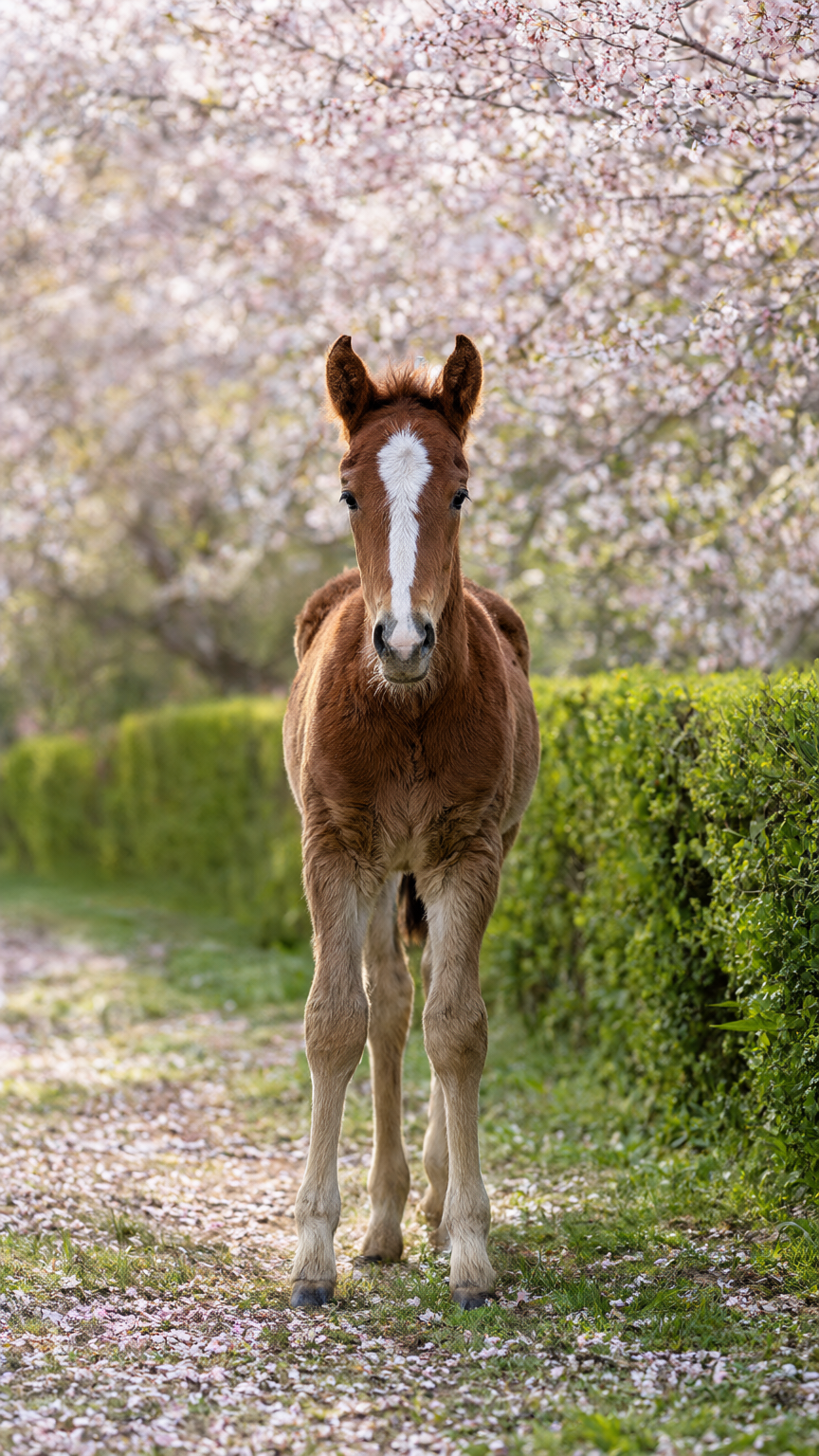
The foal stands on the path between two blossoming cherry trees, pink petals caught around hooves too big for it, and looks down the row as if weighing up which way the adventure should go. Its legs are long and slightly uncertain, its mane still fluffy, and the whole animal has the lanky, unfinished look of something growing faster than it can keep up with.
Foals are up and moving astonishingly soon after birth, standing within an hour or so and trotting beside their mothers not long after. Those long legs are the reason: a young horse that cannot keep up with the herd would be in trouble, so nature gives the foal a head start. It explains the proud, slightly wobbly walk you can see here, the gait of a runner practising.
6. A Squirrel Kit In The Branches
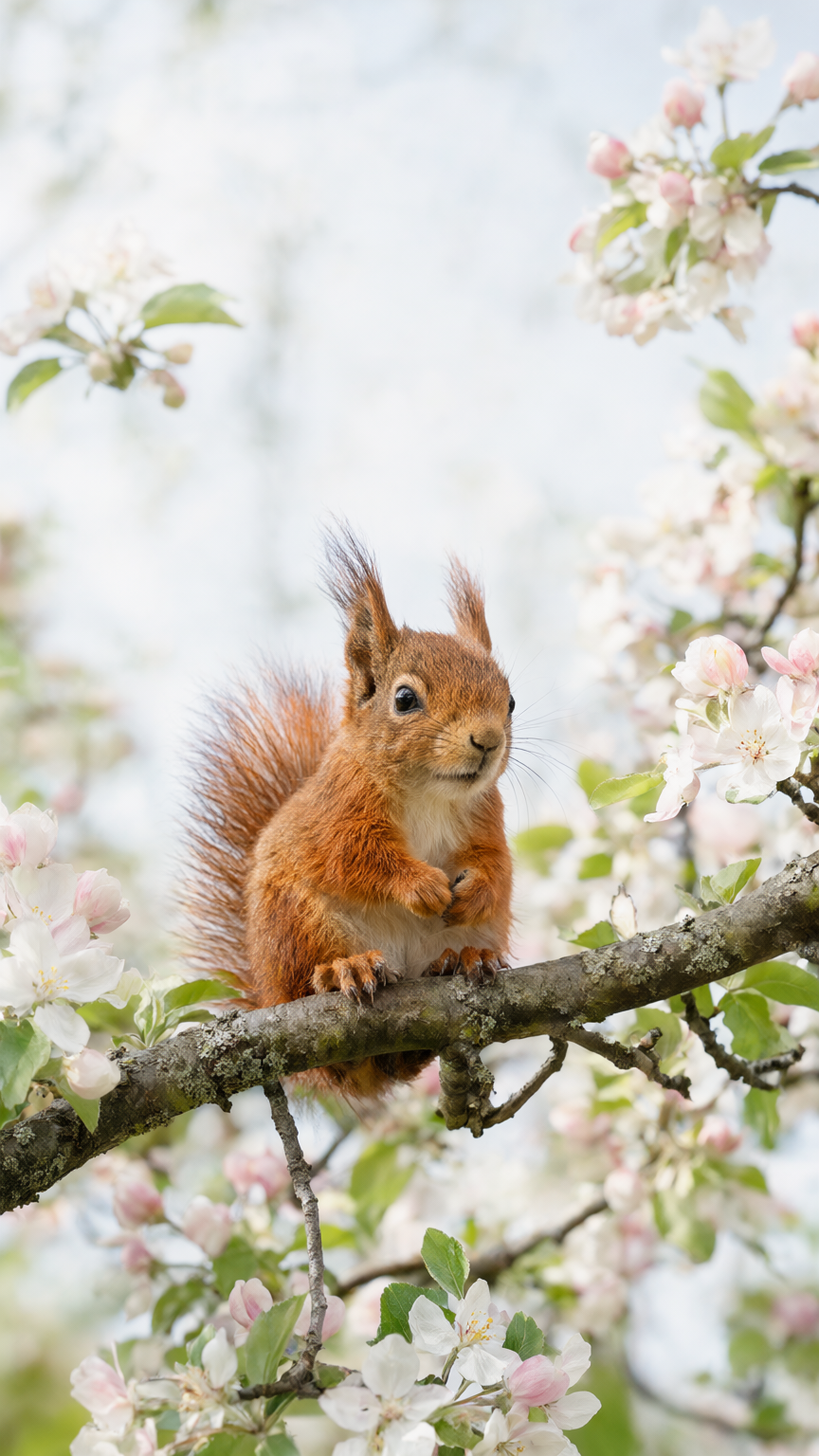
The squirrel kit sits on the apple branch with its paws on the bark and its tufted ears up, blossom crowded all around it. It looks as though it has climbed into the middle of a wedding and is trying to work out what it is supposed to do. Its tail is already promising and every few seconds the whole animal twitches with the urge to dash somewhere.
Red squirrels are at home in the branches. Their ankles can turn so far that they can climb down a tree trunk head first, which most animals cannot manage, and the long tufted ears are a giveaway in winter when the coat is at its finest. They also tuck food away in hiding places, then find it again with a nose far better than ours at remembering where the store was.
7. The Calf Beneath The Apple Tree
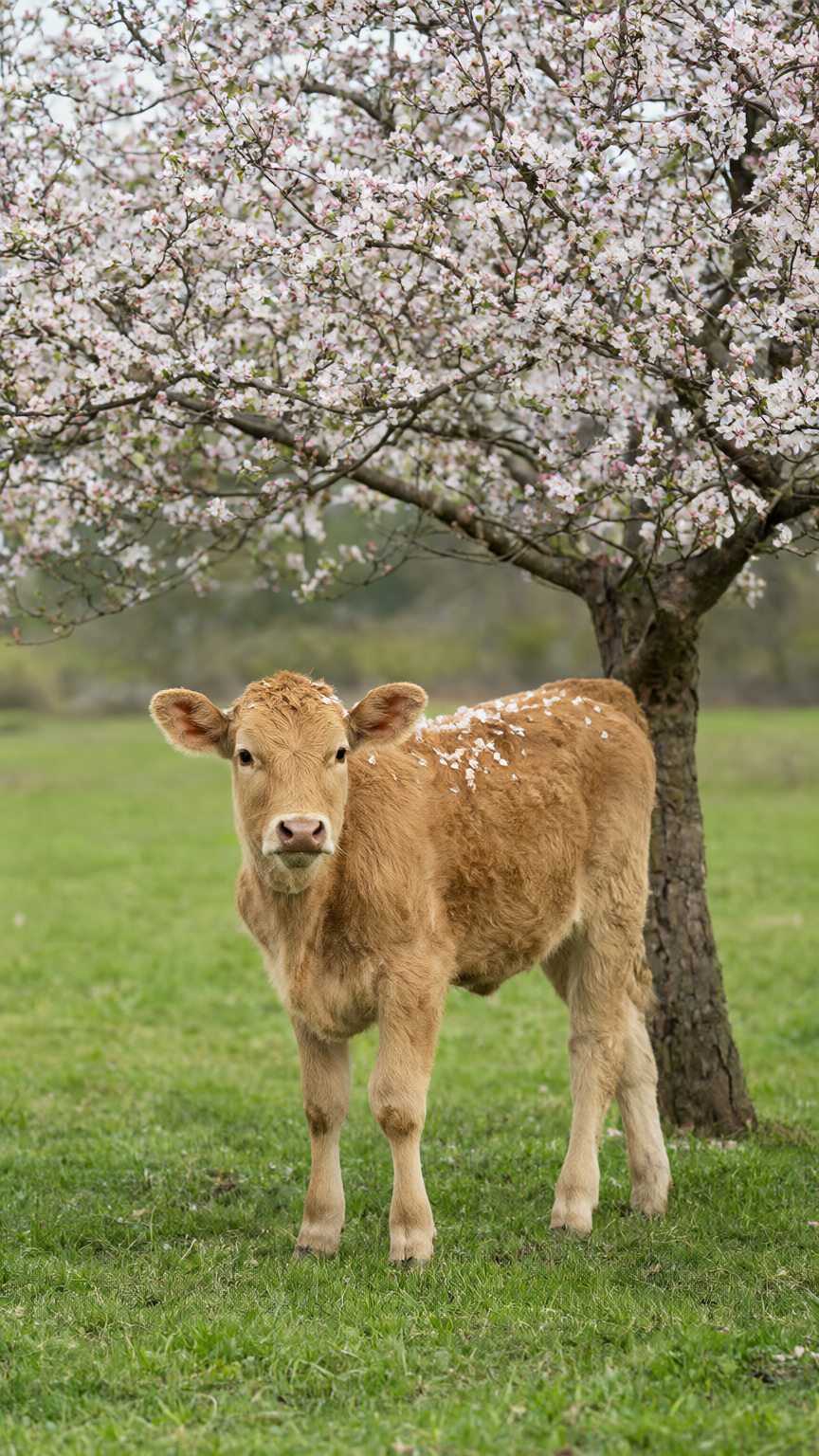
The calf stands in the orchard grass beneath an apple tree, white petals resting on its back, looking at the camera with the calm patience of an animal that has already decided nothing here is a threat. Its coat is still soft, its ears wide, and its legs are planted in a stance that suggests it has no intention of moving until it has finished thinking about something.
Calves are usually standing within an hour of birth, and they can walk soon after. That early start matters in a herd, where the safest place for a newborn is close to its mother and out of the way of the others. They are also famously curious, which is why a calf will often drift towards a fence, a bucket or a person simply to see what happens next.
8. A Leveret In The Primroses
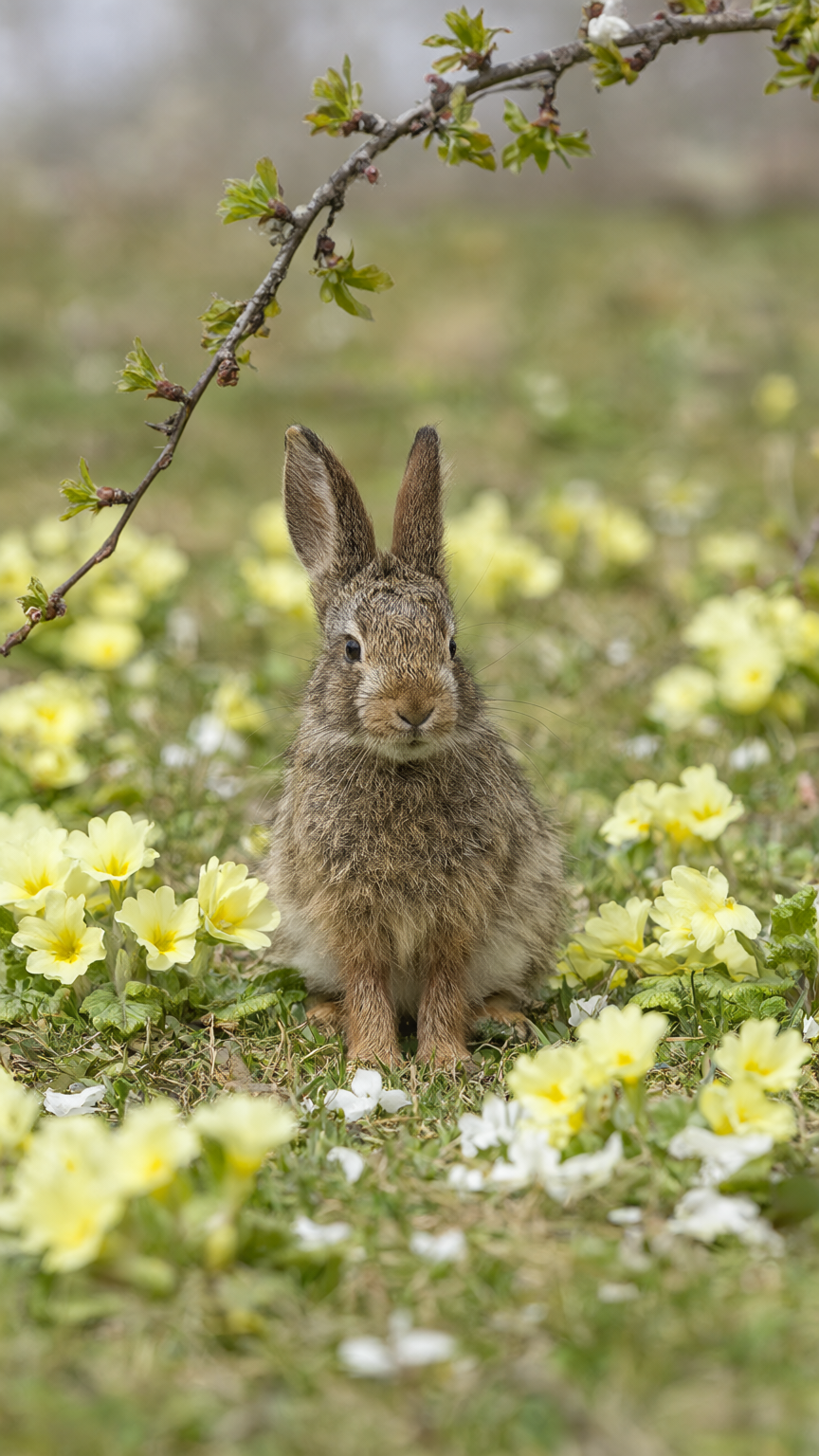
The leveret sits upright among pale yellow primroses, ears tall and eyes wide, with a blackthorn branch arching overhead and white petals on the grass. It has the look of a creature that has just heard its name called and is not sure whether to answer. Its fur blends surprisingly well with the dead grass and the shadows, which is more or less the point.
Hares are not rabbits. A hare is born with fur and open eyes, ready to sit still and hide from the very first day, while a rabbit is born blind and hairless in a nest underground. The leveret’s mother leaves it alone for long stretches, returning to feed it, because a still, silent young hare is safer than one with a worried parent standing over it.
9. The Smallest Sleeper In The Hedge
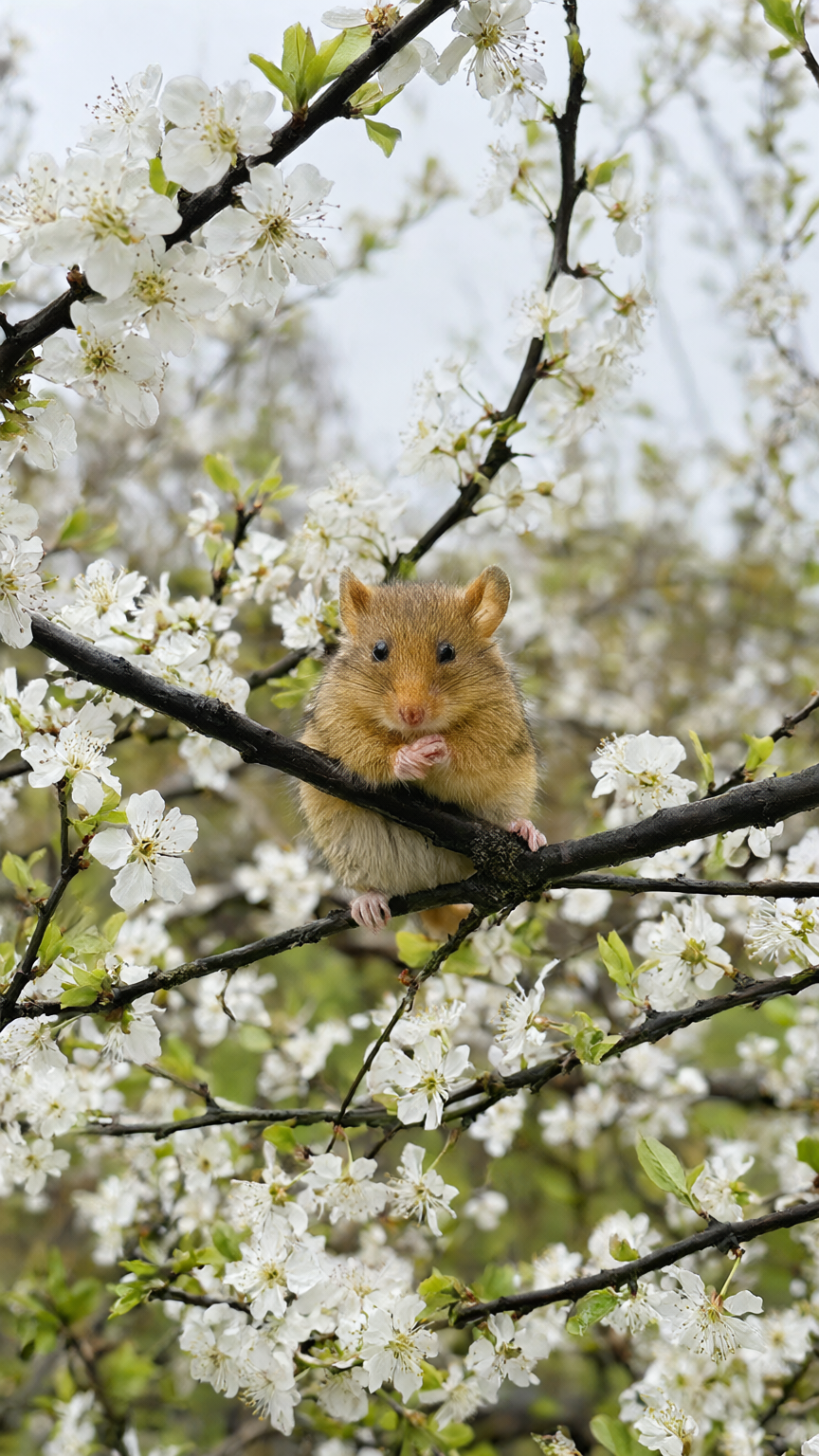
The dormouse has folded itself into the fork of the blackthorn branch as if it had found a hammock in a flower shop. Tiny paws tucked under its chin, fur glowing gold among the white blossom, it looks less like a wild animal and more like a small soft thought someone left in the hedge.
Hazel dormice are champions of sleep. They hibernate through the cold months and can drop into a deep, energy-saving doze at other times too, which is how such a small animal survives on so little food. They are rare and carefully protected in Britain, and seeing one is a real stroke of luck, so this golden sleeper is a little more precious than it looks.
10. Keeping Watch From The Oak
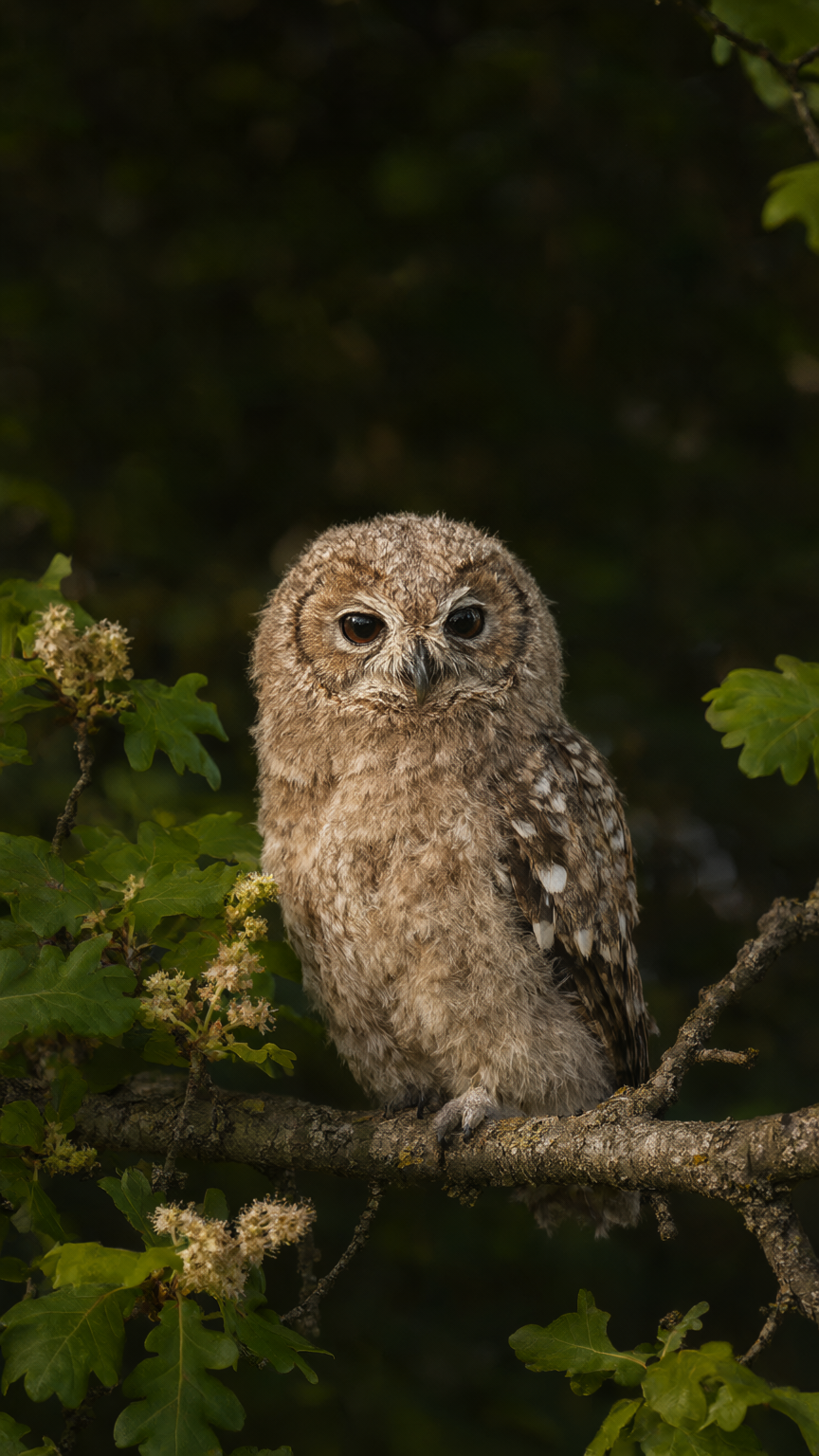
The owlet sits on the thick oak branch with its feathers fluffed into a soft ball, green leaves and pale blossoms all around, and studies the woodland with the stern expression owlets seem to be born with. It cannot quite manage fierce yet. The result is a fluffy, serious little face that looks as though it is trying very hard to be an owl.
Tawny owls are the ones behind the classic call of the countryside, but the famous ‘tu-whit, tu-whoo’ is actually two birds. The female gives the sharp ‘tu-whit’ and the male answers with the long hoot, a duet that carries through the dark. Owls also fly almost silently, because the edges of their flight feathers break up the sound of the air.
11. The Curious One Under The Plum
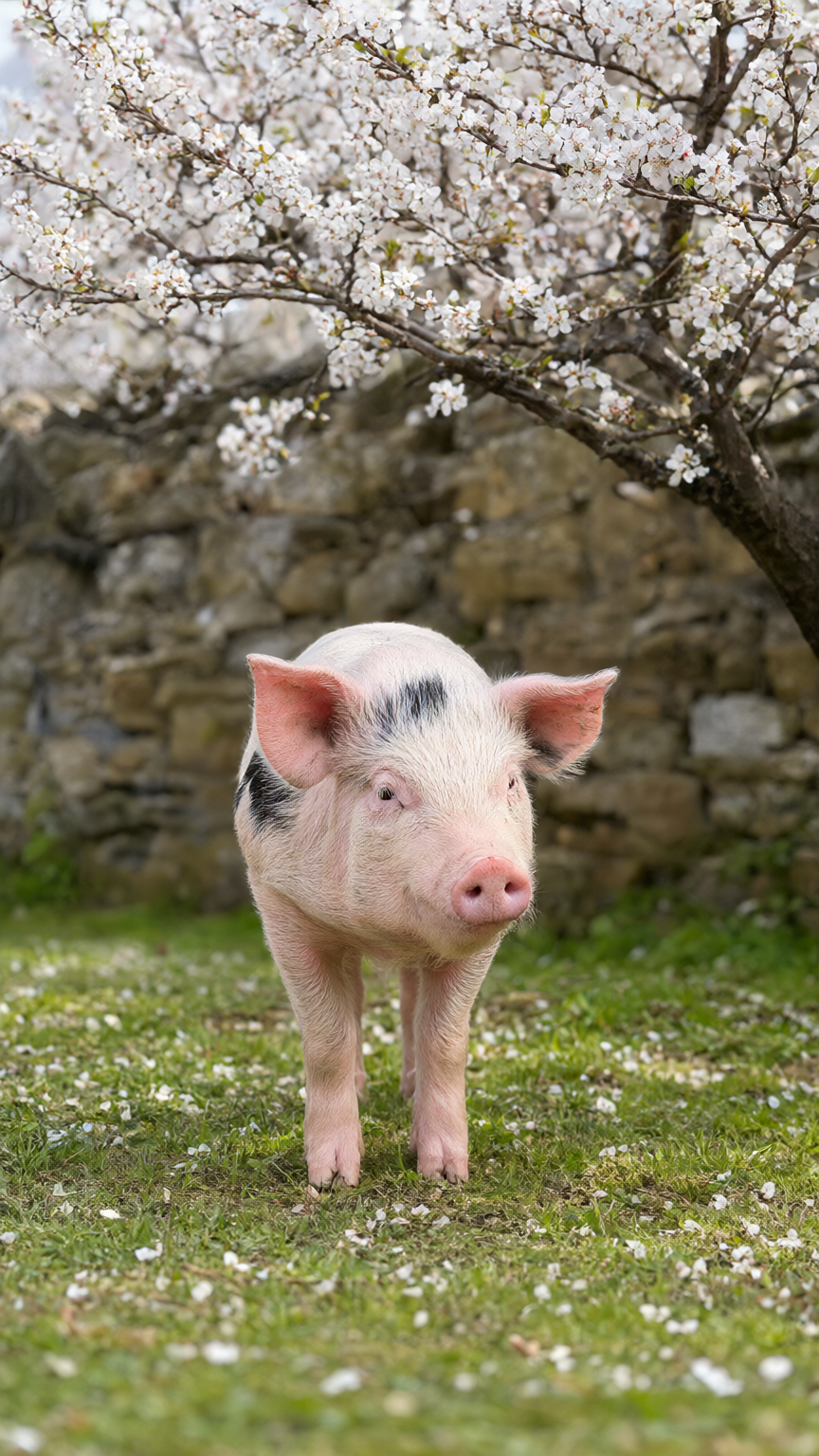
The piglet stands under the plum tree with petals on its back and its snout lifted, as though it has just caught a scent worth investigating. Its dark patches make it look as if it has been painted in a hurry. Between the fallen blossom and the stone wall behind, it gives the impression of a small creature entirely satisfied with its corner of the world.
Pigs cannot cool themselves the way we do, because they barely sweat, which is the real reason they love a good wallow in mud. The mud dries and keeps the sun off the skin. They are also among the cleverest of farm animals, quick to learn their own names and to work out how a gate opens if given enough time.
12. Tiny Paws Between The Tulips
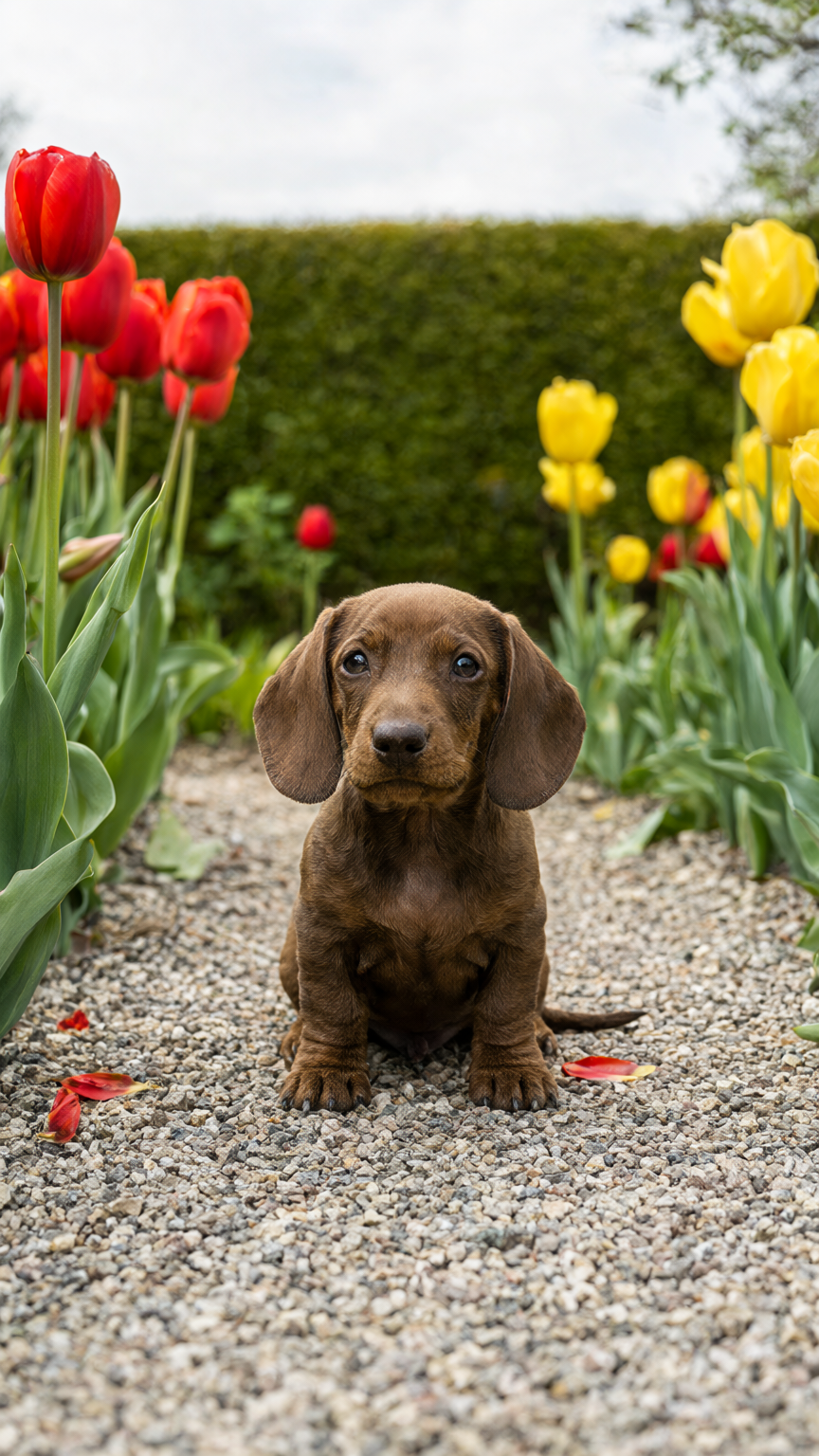
The dachshund puppy sits on the gravel path between rows of red and yellow tulips, ears flopping forward, chest out, entirely certain that it is the most important thing in the garden. It is small enough that a single tulip is taller than its head. A few petals have landed around it, and it does not intend to be distracted from the serious business of being admired.
The name dachshund means ‘badger dog’ in German. The long body and short legs were not chosen for looks: they let the dog follow a scent into a burrow and work underground, which is exactly what it was bred to do. The breed is officially recognised as a hound, which surprises people who know it only as a cheerful little character with a determined walk.
13. First Steps On Wet Grass
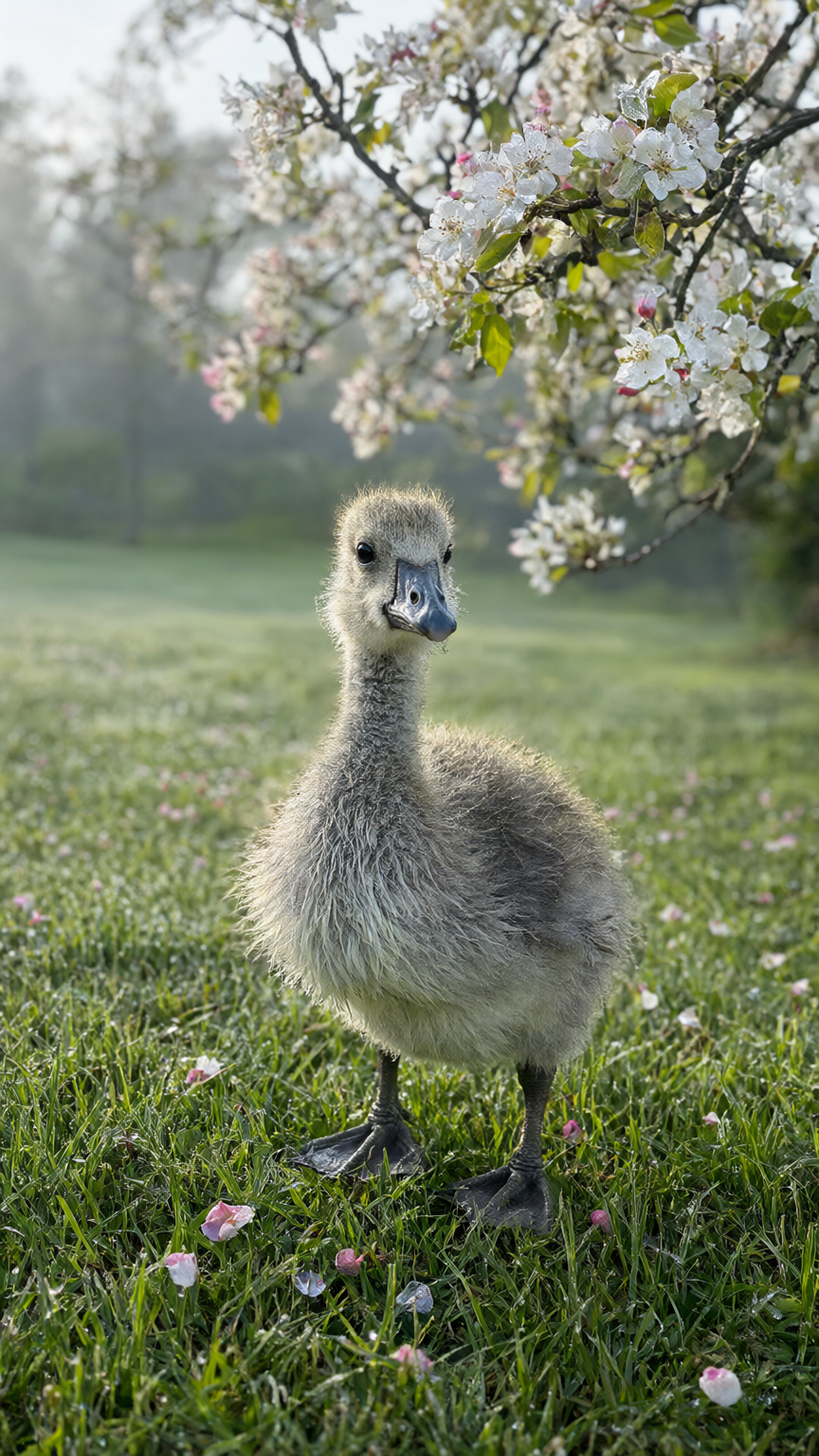
The gosling stands on the wet lawn with its webbed feet planted and pink pear petals stuck to the grass around them. Its down is still the grey of a cloudy morning, and every so often it considers the sky, the tree and the camera in turn. The dew makes the grass shine, and the little bird looks exactly where it belongs.
Goslings are ready for the world almost at once. They hatch covered in down, can walk and swim within a day, and follow their parents closely from the first hour. Geese are also famous for flying in a V, a formation that saves energy for the birds behind the leader, though this one has a while to go before it thinks about anything so ambitious.
14. A Fledgling And The Spring Wind
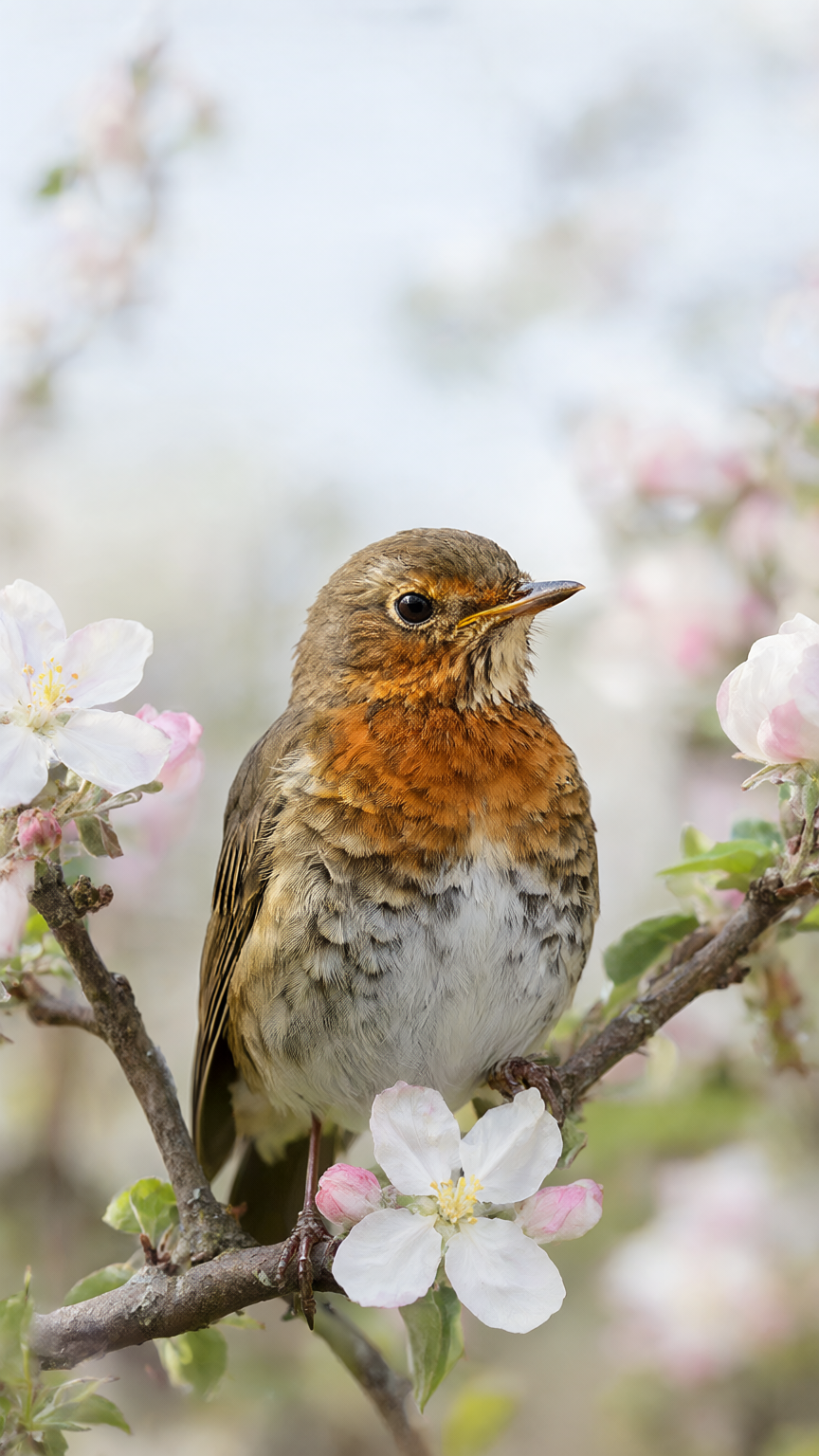
The young robin sits on the apple branch with its speckled chest catching the light, still only part way to the famous red. Loose petals rest under its feet, more blossom crowds behind it, and it holds itself with the slightly rumpled dignity of a bird that has recently left the nest and is still deciding what to do about it.
Robins are fiercely territorial, and that red breast is a warning sign rather than decoration. The young bird here has not grown its adult colour yet; the speckled brown chest is typical of a juvenile, and the red comes in after the first moult. Robins also sing for much of the year, which is why a garden can sound like spring even in the depth of winter.
15. Twins In The Orchard Grass
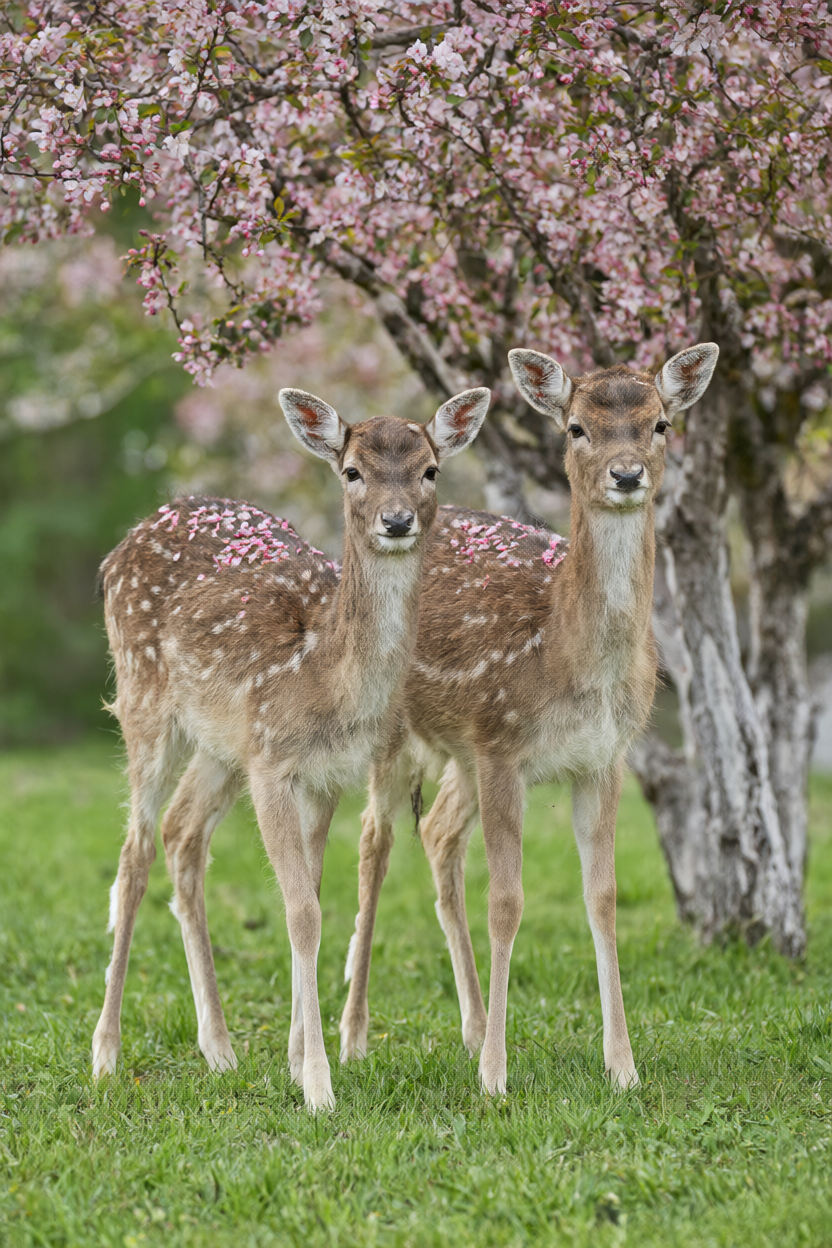
Two spotted fawns stand side by side in the orchard grass, pink petals from the crabapple resting on their backs, and they could not look more alike if they had planned it. Their ears swivel in different directions, each keeping watch on its own piece of the meadow. Together they make one lovely shape, and they seem to know it.
The spots are camouflage, not decoration. A young deer’s dappled coat breaks up its outline among leaves and shadows, which is why fawns spend their first days lying still while their mother feeds nearby. The spots fade as the deer grows and the coat turns to the plainer brown of adulthood, so this patterned pair is a picture of a very short and very special season.
16. The Log Is A Stage Now
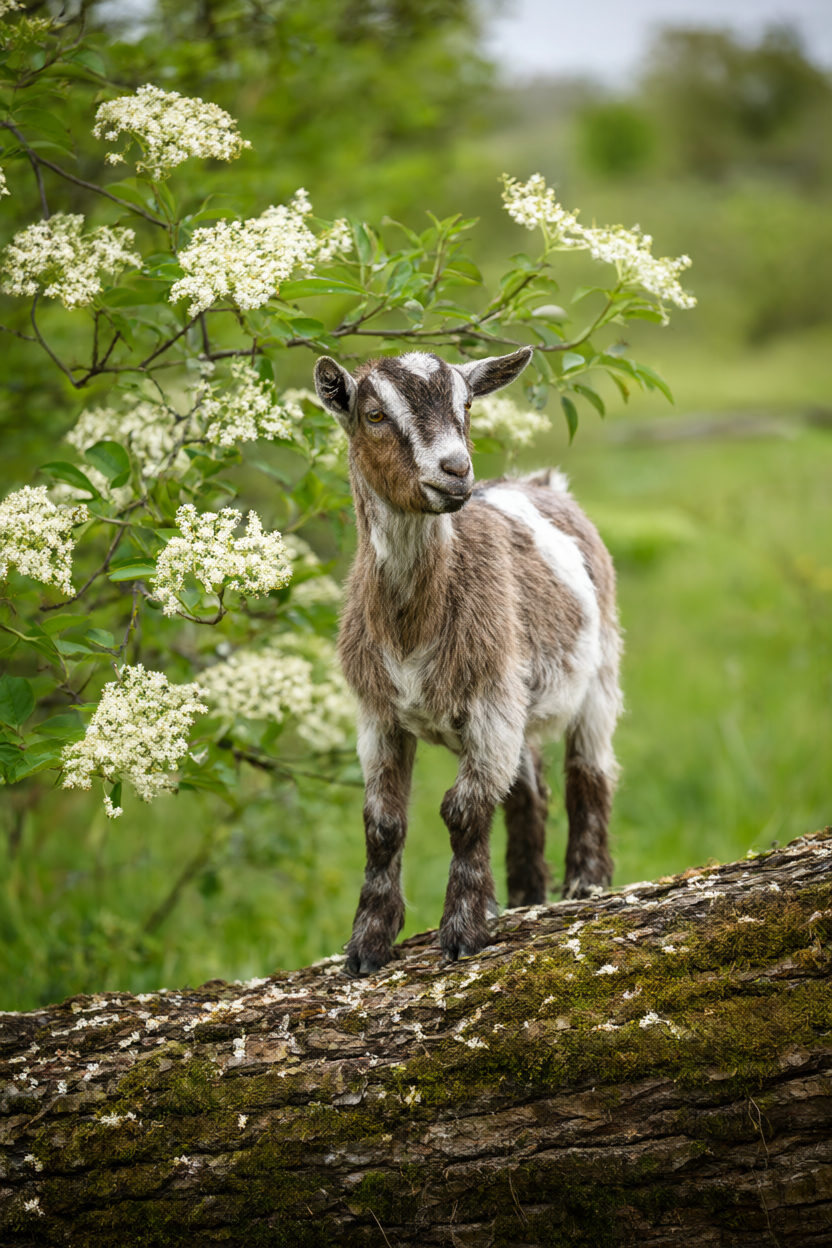
The goat kid has claimed the fallen log as a stage and stands on it with its head high and its little beard already beginning to show. Elderflower clusters hang beside it, white petals are scattered on the bark, and the green meadow stretches away behind. It looks like a small adventurer giving a speech to an audience it cannot quite see.
Goats have pupils shaped like horizontal rectangles, which give them a very wide view of the world and help them spot danger while they browse. They are browsers rather than grazers, preferring to pick at leaves, twigs and bushes instead of mowing a lawn. That is why a goat on a log beside a flowering shrub looks so thoroughly in its element.
17. A Little Prickle In The Leaves
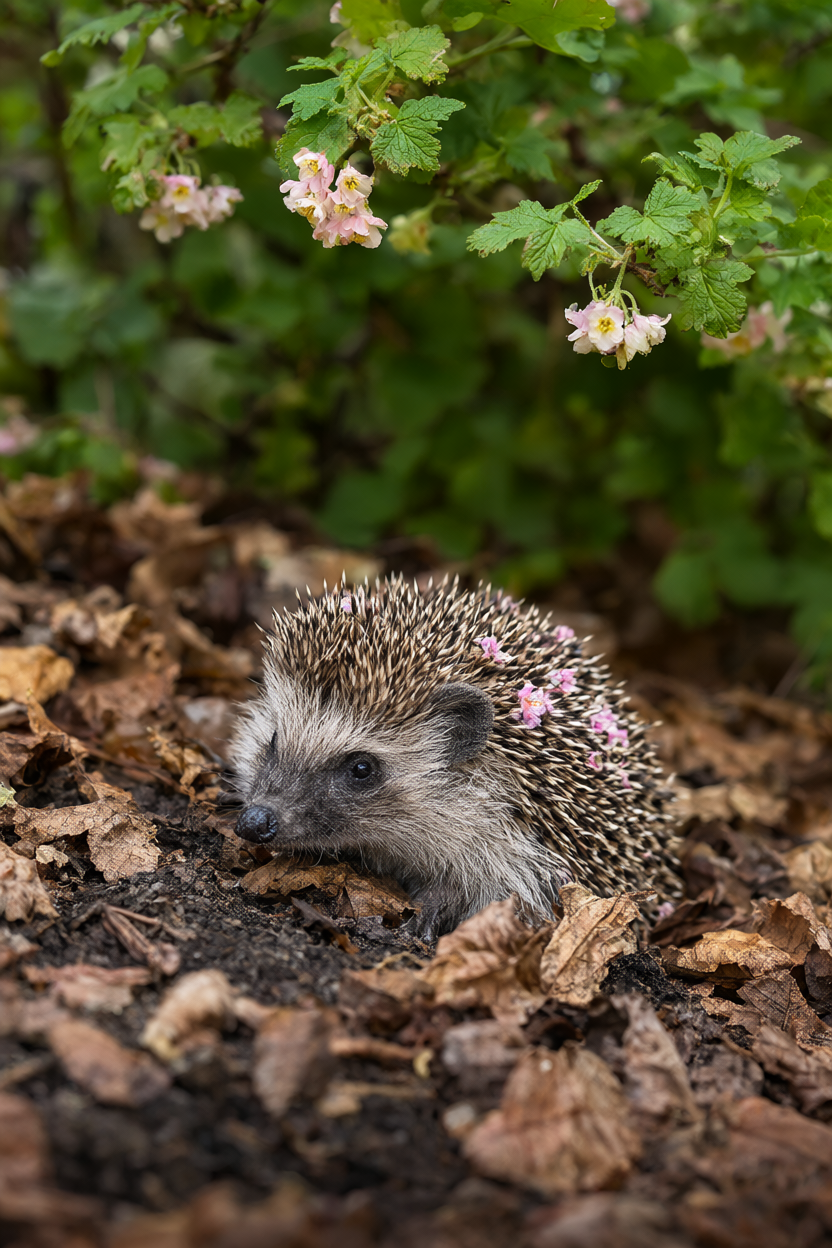
The hoglet is half hidden in a nest of dry brown leaves beneath a flowering currant bush, pink petals caught on its spines, its small dark nose pointing out into the world. It looks like a pincushion that has decided to take a nap. The fact that something so round and prickly can also look so soft is one of the wonders of spring.
Hedgehogs are born with soft spines that harden within a few days, which is just as well, because by then they have learned to roll into a ball. That trick, using powerful muscles along the back, is their whole defence, and it has served them well for a long time. Hoglets stay with their mother for a few weeks before finding their own gardens to patrol at night.
18. The Fluffiest One In The Paddock
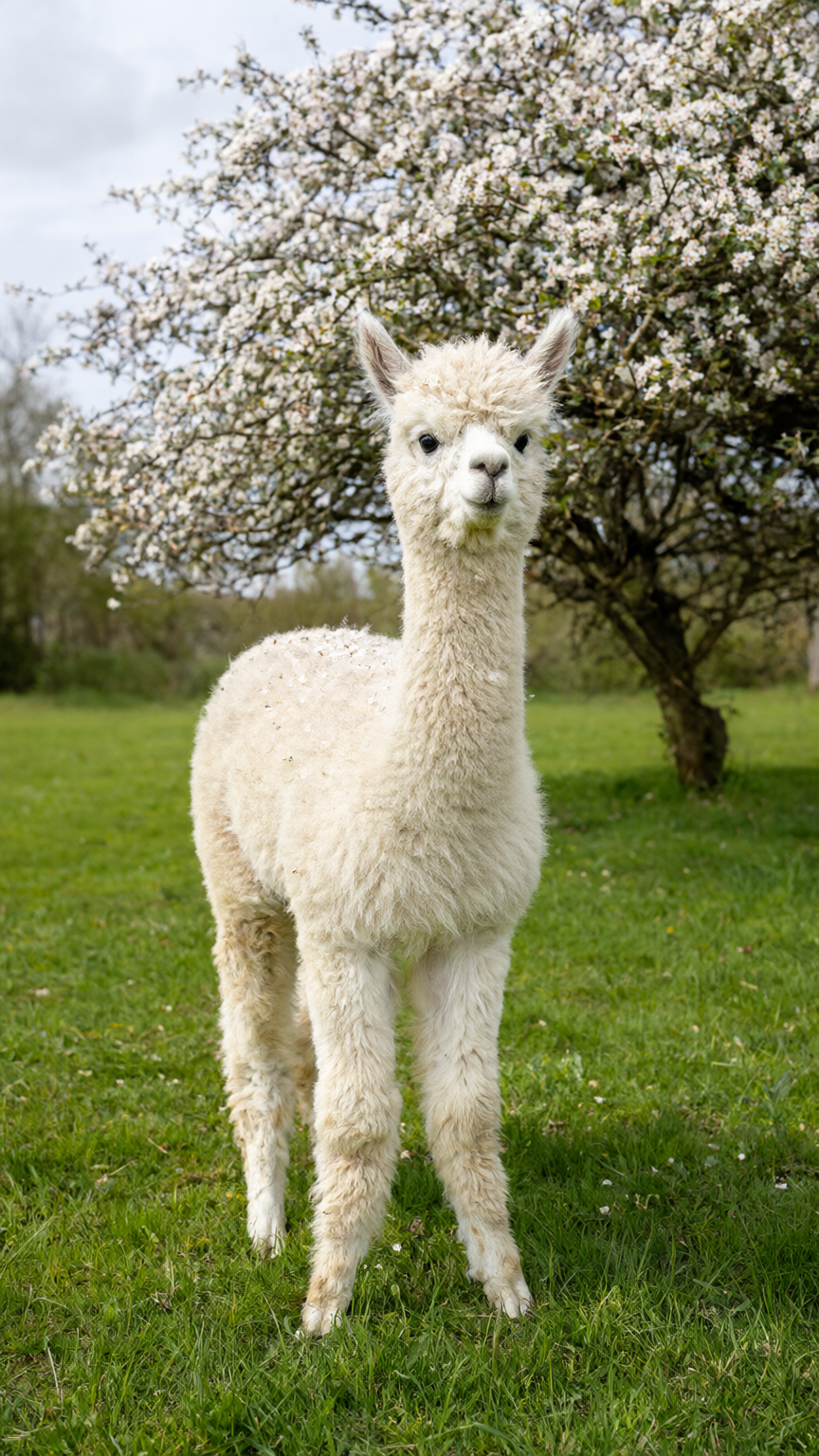
The cria stands in the paddock with the hawthorn blossom behind it, so thick and white that the tree looks like a cloud that has settled for the afternoon. Fleece still baby-soft, petals caught in it, the little alpaca watches the world with calm dark eyes as though it has all the time in the world. It is a picture of good manners and very good hair.
Alpacas are gentle herd animals, and they talk to each other with a soft humming sound, a quiet background note you hear when a group is content. Their fleece is one of the warmest natural fibres and comes in a whole range of natural colours, from cream to brown to black. This pale cria is already wearing the family coat.
19. Five Friends On One Warm Step
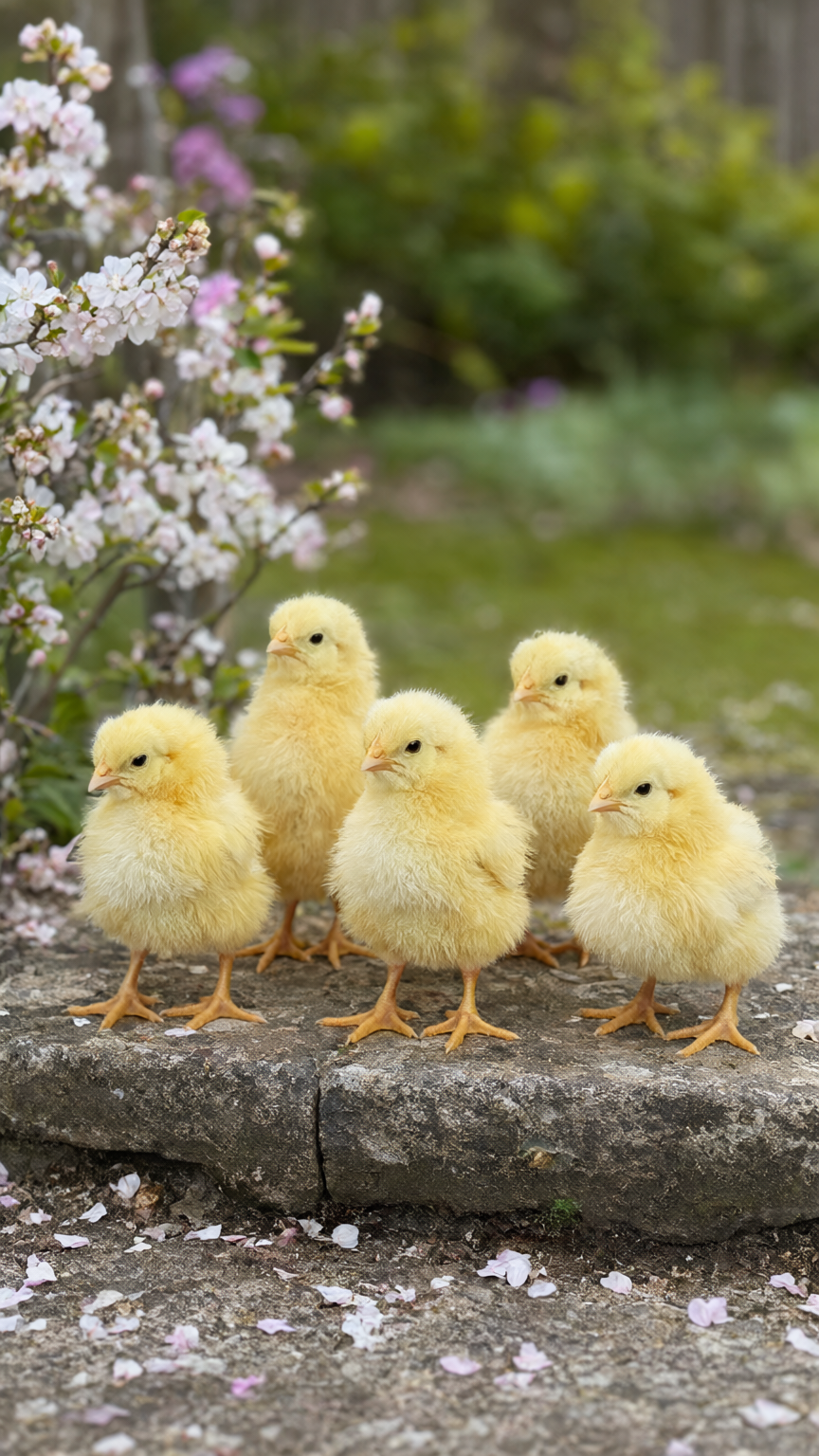
Five chicks stand together on the worn stone step as though posing for a school photograph. White and pink petals are scattered around their feet, a blossoming shrub leans over the garden behind them, and each chick has its own idea of which way to look. One at the edge considers the sky while the others are busy being extremely yellow and extremely small.
Chicks have a real tool for the first big job of their lives: a tiny hard point on the beak, called an egg tooth, which they use to break out of the shell. It falls off soon afterwards. From then on they can feed themselves almost straight away, following their mother and copying what she pecks at, which is why a line of chicks always looks so purposeful.
20. The Clover Patch Regular
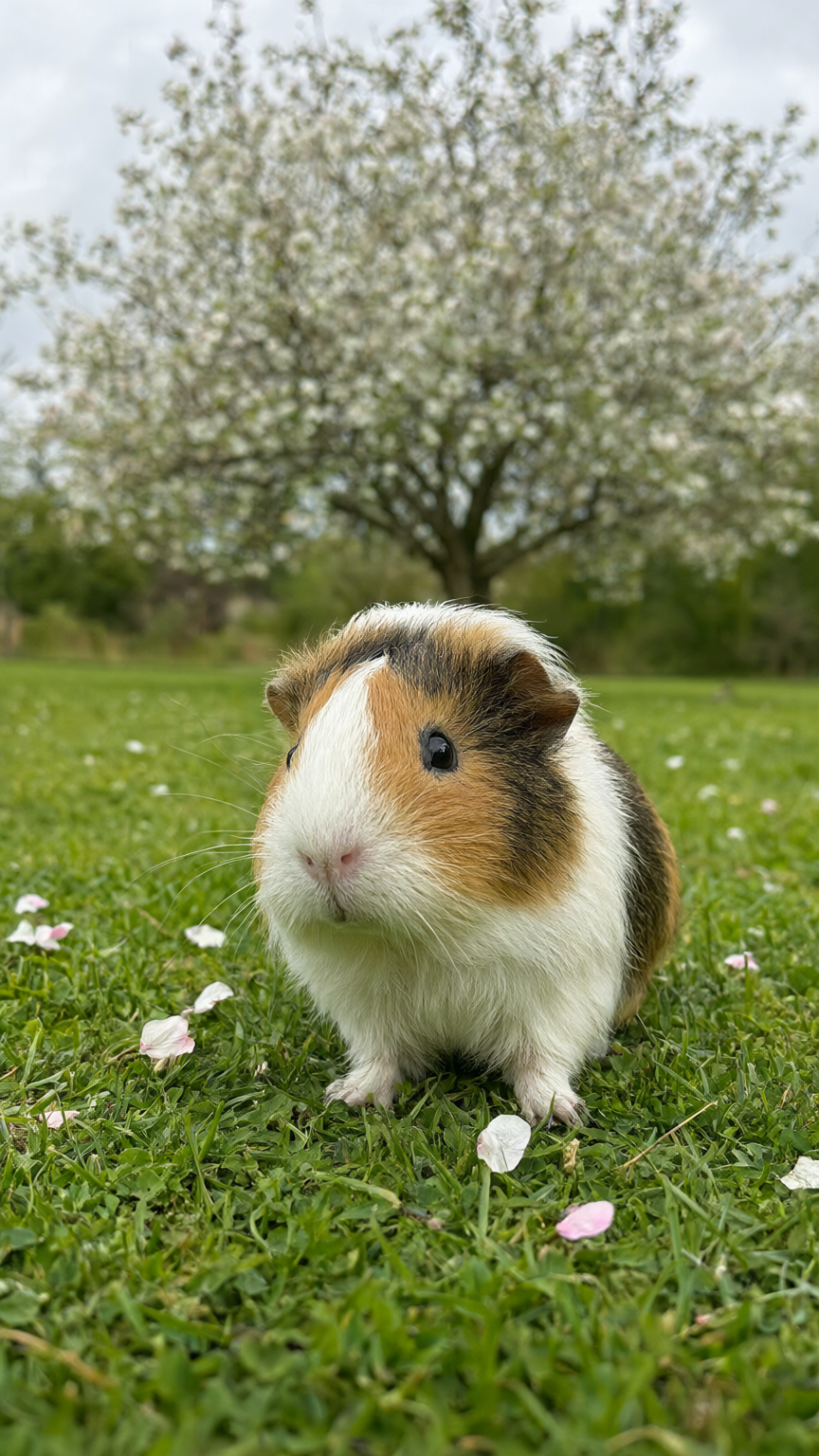
The guinea pig sits in the clover with petals around its paws and the blossoming apple tree soft behind it, its tricolour coat neatly arranged and its whiskers twitching. It looks like a small, well-dressed guest who has arrived early for a garden party and is politely waiting for the others.
Guinea pigs are sociable animals and prefer company. When they are happy they ‘popcorn’, a sudden little jump straight up that is impossible to watch without smiling. They come from South America, and like humans they cannot make their own vitamin C, so they need it in their food. That makes the clover patch here more than a picnic; it is dinner, and a good one.
Thank you for wandering through the blossom with us. These little ones will be here whenever you need a moment of calm: the dormouse in its hedge, the fawns in the orchard, the five chicks on their warm step.
Come back for the next gallery, when a new set of small faces will be waiting among the petals. Until then, keep an eye on the hedges — spring is generous, and there is always one more tiny thing to notice.