Something happens when you step back into a house like this one. The light is softer, the rooms smell faintly of pine and dust and sugar, and the tree in the corner might just be silver. These were the Christmases of the seventies and eighties, when decorations came out of boxes that had softened at the corners, and every object had a small story attached to it.
Here are twenty keepsakes from those rooms. Some sat in almost every house on the block; others were the one piece a family was quietly proud of. Scroll slowly and count how many of these were in your own house. If you lose track somewhere after fifteen, that is part of the fun.
All photos in this gallery are AI-generated illustrations.
1. The Tree That Was All Silver
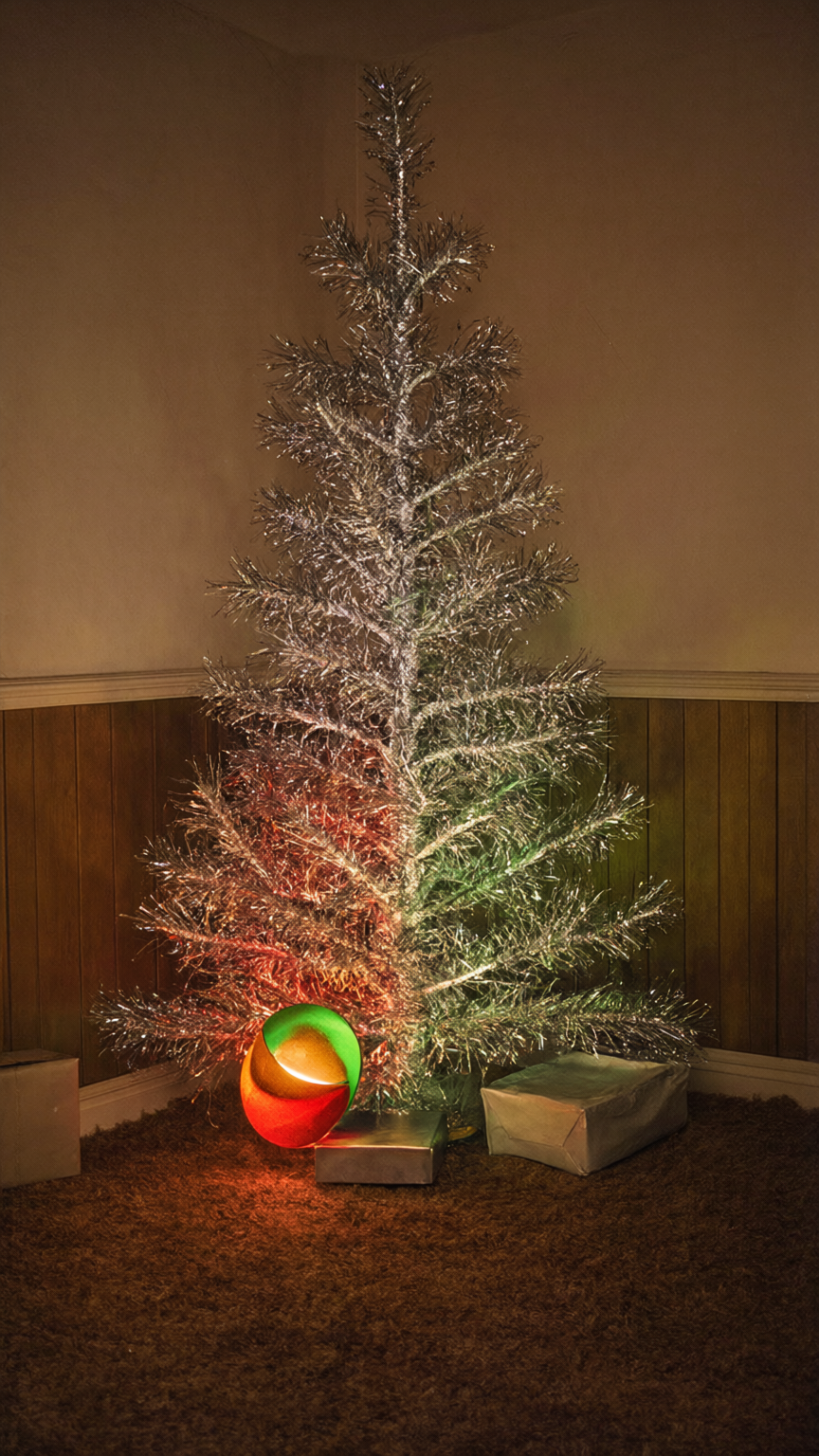
In the corner of the living room stood a tree that was not green at all. It was aluminum, thin and bright, and it dropped no needles onto the carpet. The rule at home was simple: no tinsel, no strings of bulbs on the branches. Instead a colour wheel turned slowly on the floor, washing the silver in red, then green, then gold, while the little motor hummed all evening. We watched it the way other families watched a fire.
Aluminum trees were sold in the sixties and were meant to be lit by a rotating colour wheel rather than electric bulbs, since the metal branches could carry a current. Ours came with the wheel and a box of spare gels. Did your family have the wheel too?
2. Lights With A Secret Inside
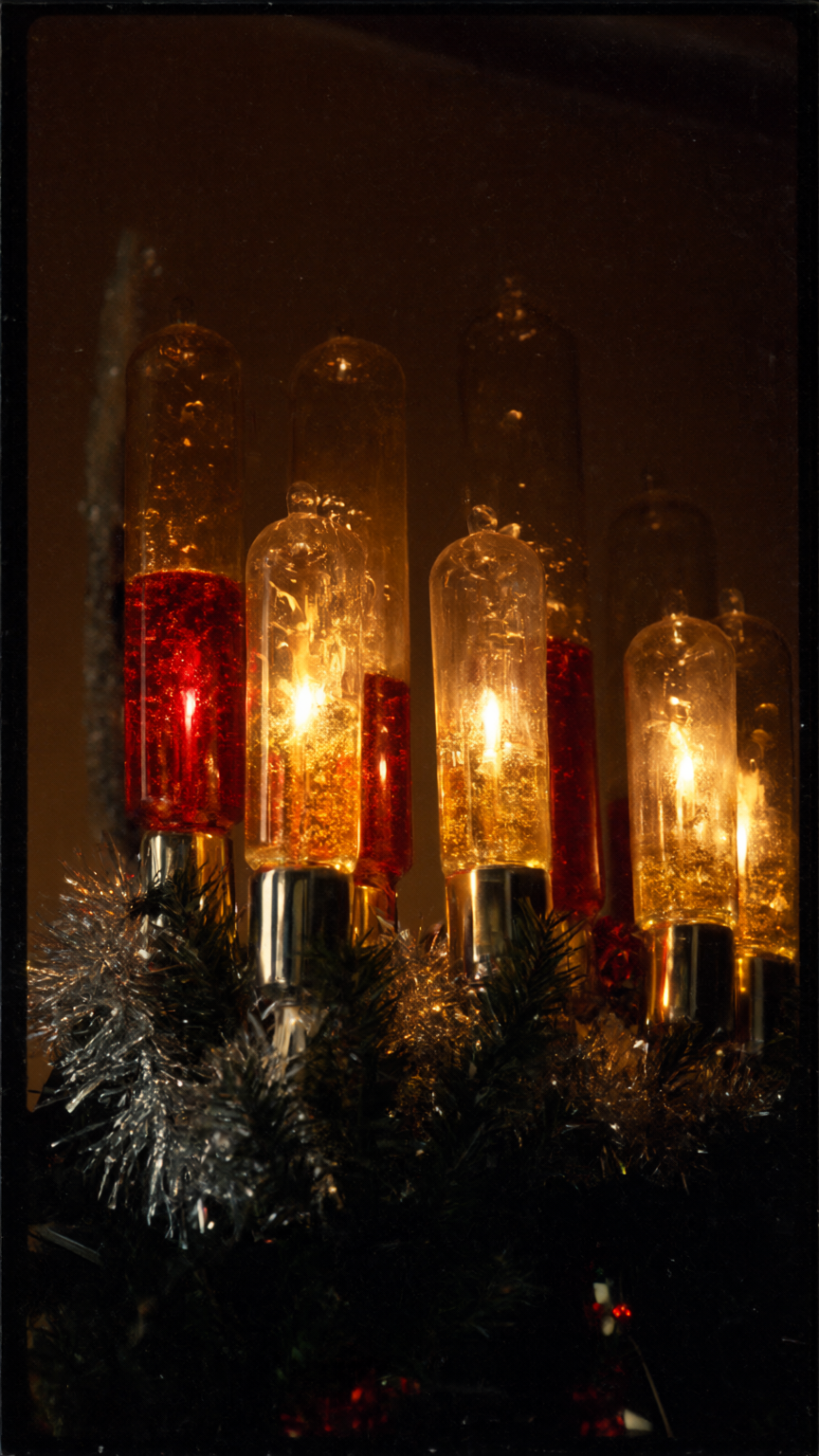
The tree was never quite finished until someone clipped the bubble lights on. Each one was a small glass tube of amber or red liquid on a metal base, and once the tree was plugged in, the heat from the bulb beneath made the liquid bubble, slow and steady, all evening. We would sit close enough to watch a single tube for a whole minute, waiting for the next bubble to climb.
Bubble lights have been sold since the 1940s, and the sealed liquid inside bubbles because the small bulb heats it from below, not because of any pump. There was always one that bubbled faster than the rest. Do you remember which one it was?
3. The Little Tree That Never Needed Water
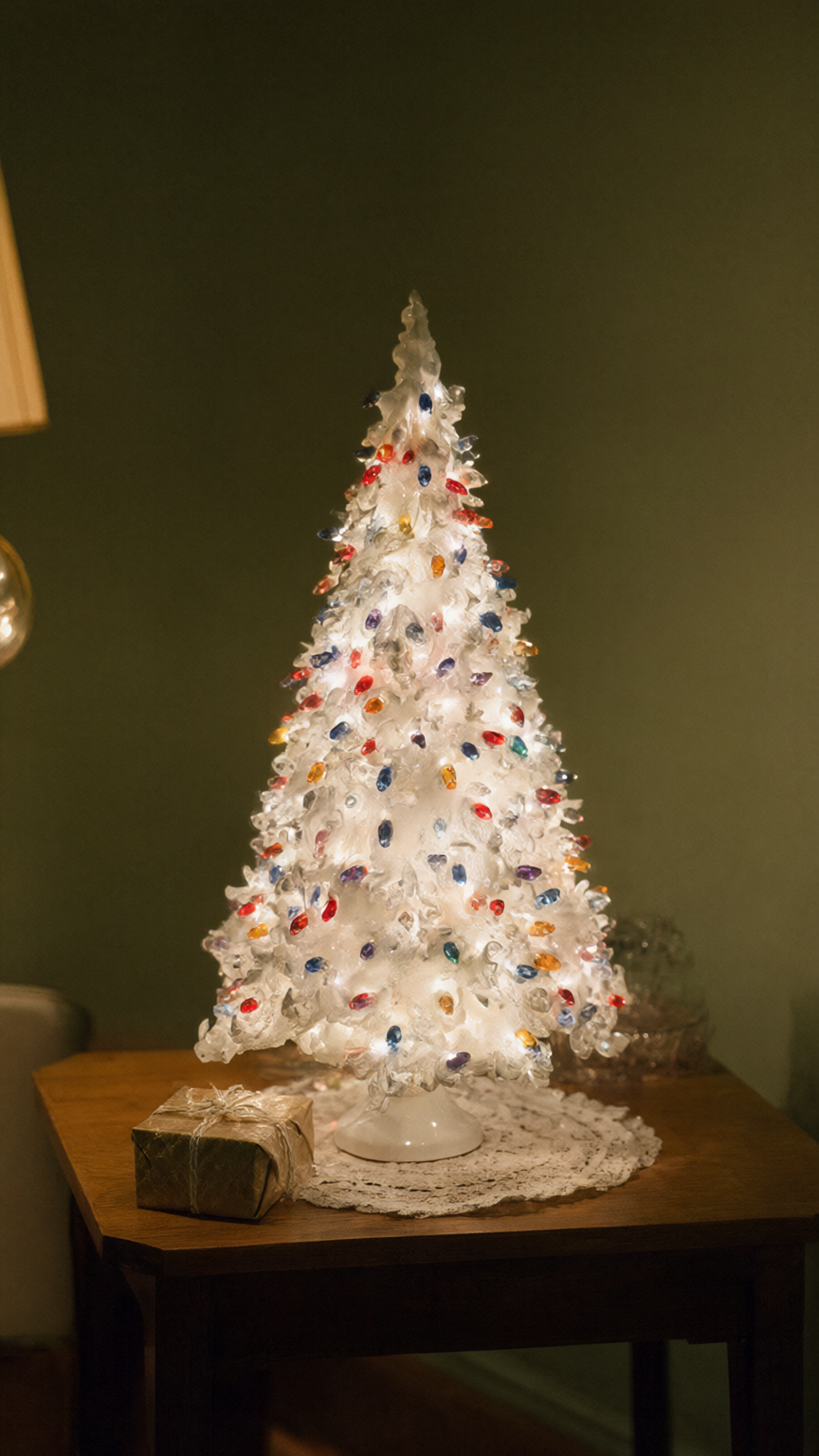
Ours lived on the sideboard on a lace doily, and it never lost a needle. It was white ceramic, shaped like a fir, with tiny coloured bulbs on the ends of the branches. It came out of its box the same week as the records, and the bulbs went in one at a time. The youngest child usually got the job, until a bulb rolled under the sofa and the whole search began.
Ceramic trees like this were a popular home craft in the seventies and eighties, often painted in pottery classes and given as gifts, with the lights pushed into the branches by hand. Ours had a star on top that flickered if you wiggled the cord. Did yours have a music box in the base?
4. Icicles That Stayed All Year
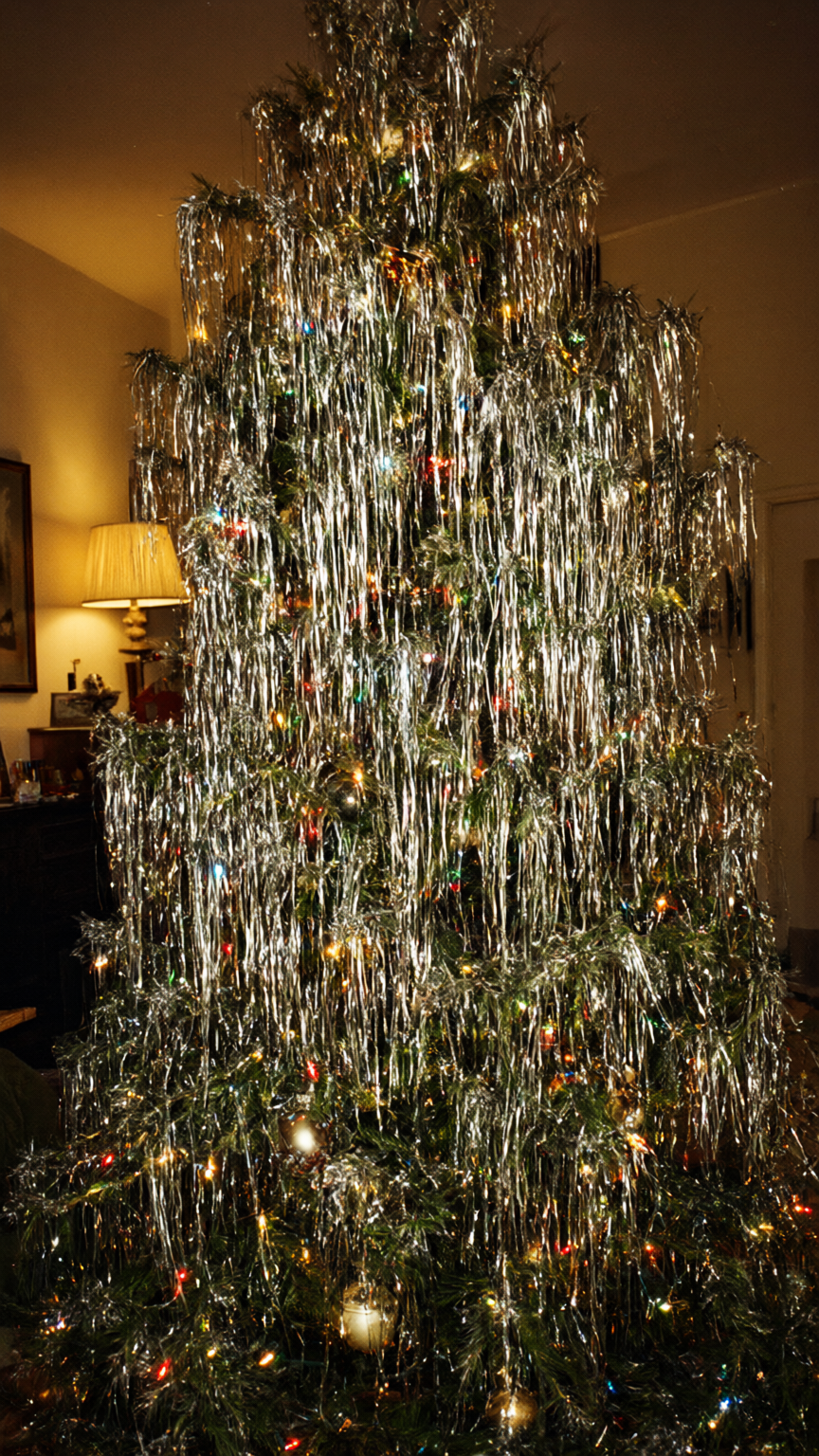
The tinsel went on last and took the longest. Long silver strands had to be hung one at a time, and the rule in our house was straight down, never in clumps. My grandmother stood back and smoothed each strand with two fingers. By the end of the evening the tree looked as if it had been caught in a freeze, and the carpet glittered for weeks after it came down.
Tinsel is older than most of us think: it began in Germany, where the first strands were made from real silver and hung to catch the candlelight. The foil version came much later and made it cheap enough for every branch. Were you the one who hung the icicles?
5. The Santa That Glowed All Night
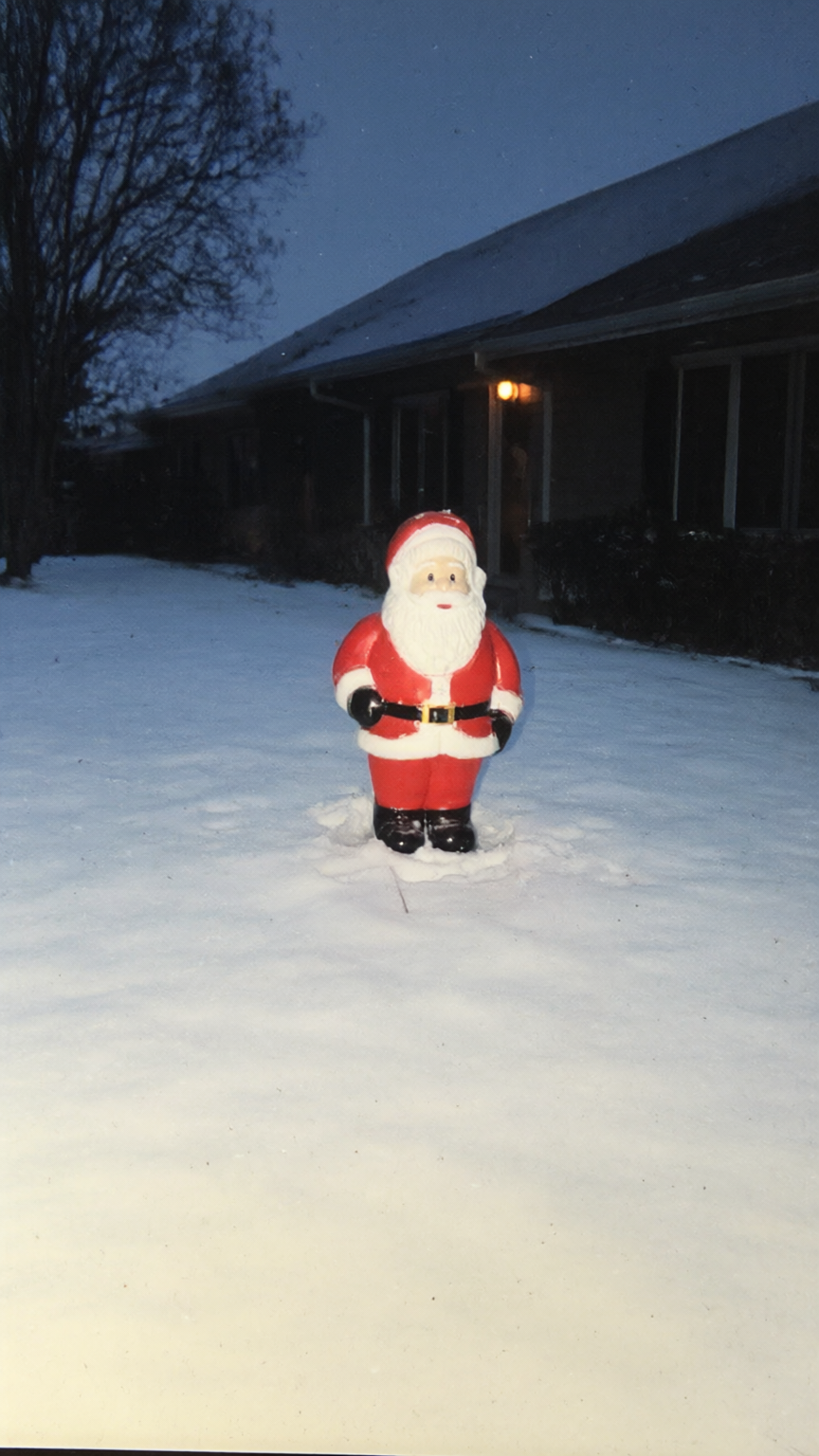
Ours stood on the front lawn from the first week of December, a plastic Santa in a red suit with a bulb inside, and at dusk someone went out to plug him in. He glowed a warm, slightly orange light that could be seen from the end of the street. The rule was that he stayed out until after New Year’s, no matter how cold it got.
Molded plastic yard figures like this became common in the sixties and seventies, when outdoor bulbs and plastic made them cheap enough for ordinary lawns. Ours had a small crack in one boot from a fall off the porch. Did yours have a sleigh beside him?
6. Ribbons You Could Eat
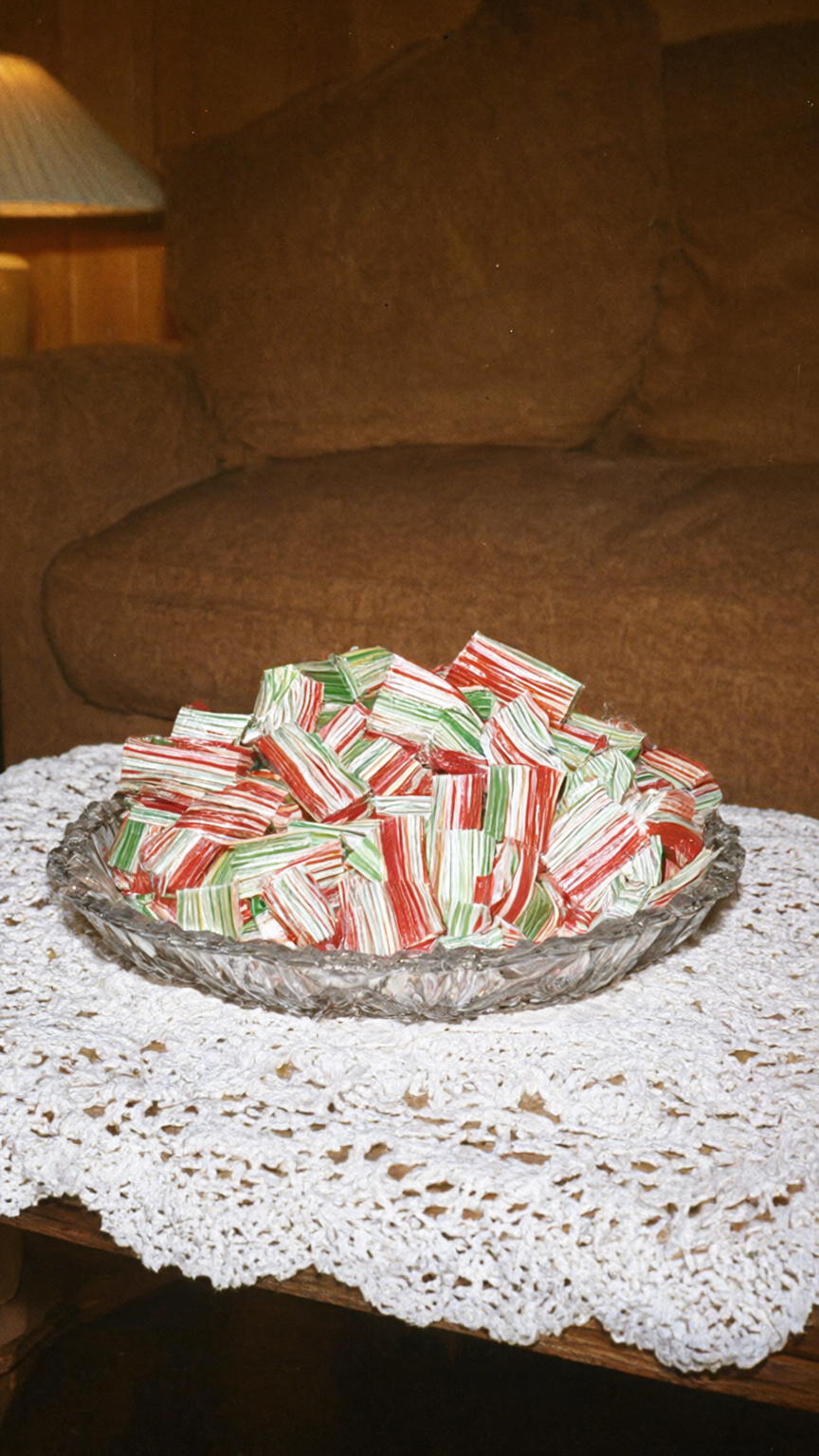
The cut-glass dish came out with the good tablecloth, and inside it was ribbon candy, flat coils of red, white and green that looked like shavings from a sewing box. They stuck together and had to be pried apart, and the rule was one piece at a time, never a whole handful. The dish sat where we could see it but not quite reach it.
Ribbon candy is a pulled sugar candy, made by folding hot sugar over and over into a long ribbon and cutting it into short lengths while it is still warm. The stripes come from the folding itself. Did you try to peel yours apart before eating it?
7. The Box We Opened Once A Year
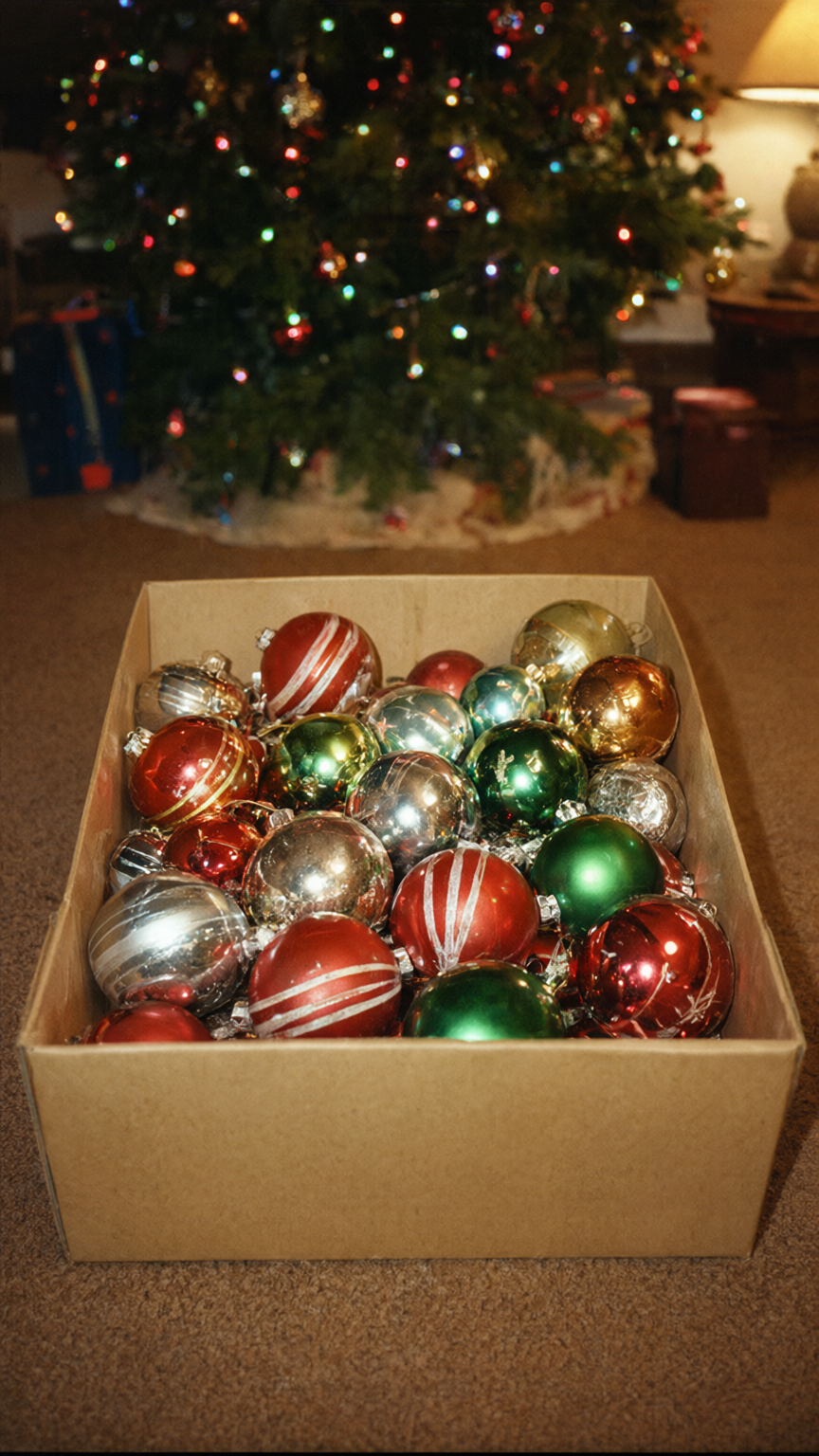
The box lived on the top shelf of the hall closet and smelled faintly of cardboard and dust. Inside, under a sheet of yellowed tissue, were glass ornaments in red, green, silver and gold. They came out one at a time, and the oldest went high on the tree, out of reach of small hands. A chipped one was still hung, just turned toward the wall.
Glass Christmas ornaments were first made in Germany in the 1800s, and many families kept the same set for decades, adding a piece only when one broke. Ours had a glass bird with a clipped tail. Was there one ornament that always had to go near the top?
8. A Garland You Could Snack On
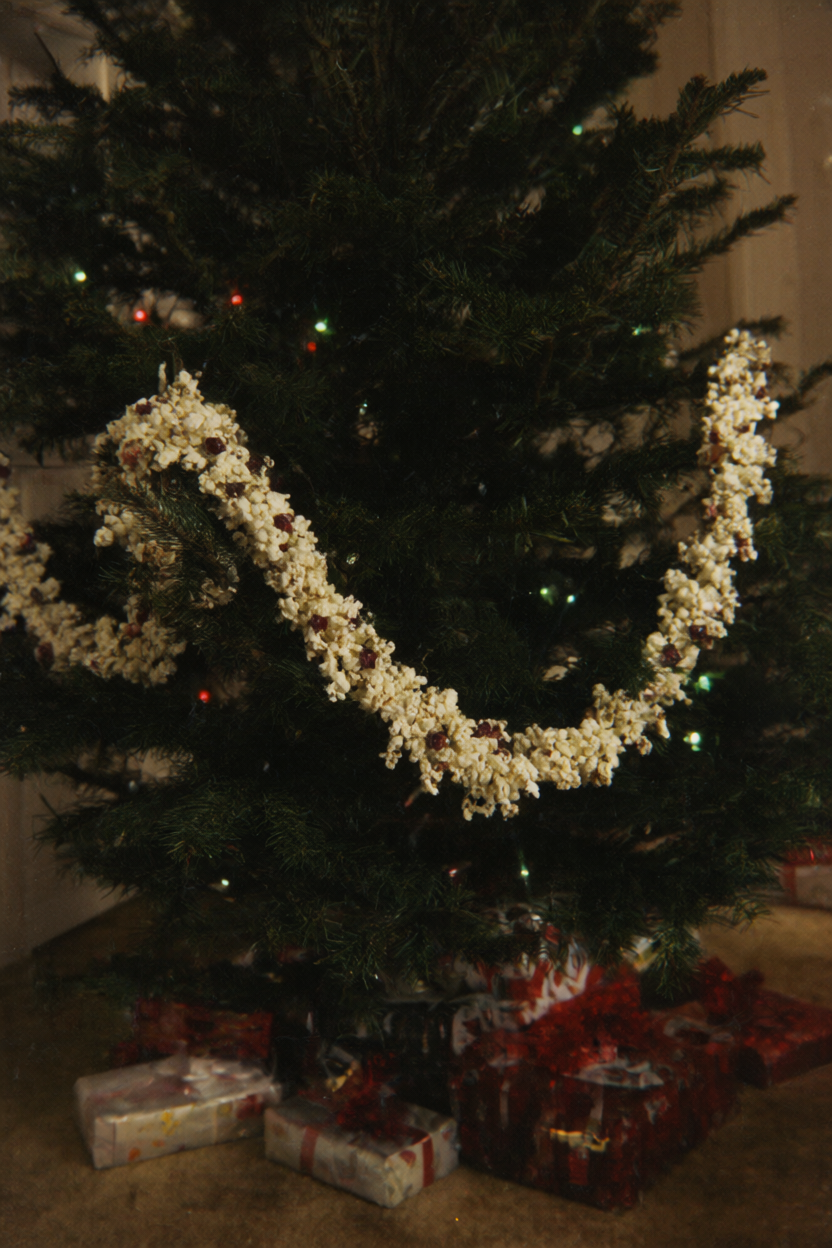
We made the garland at the kitchen table, a bowl of popcorn on one side and a bowl of cranberries on the other, with a needle and thread going through both. The rule was that the popcorn for the tree had to be plain and a day old, because fresh kernels crumbled. Half the bowl went into our mouths anyway, and the garland got shorter as the evening went on.
Stringing popcorn and cranberries is an old American tree tradition, and the dried fruit is what keeps the garland from spoiling too quickly in a warm room. Ours always sagged in the middle by Christmas Eve. Did your family use cranberries, or just popcorn?
9. Oranges Pricked With Cloves
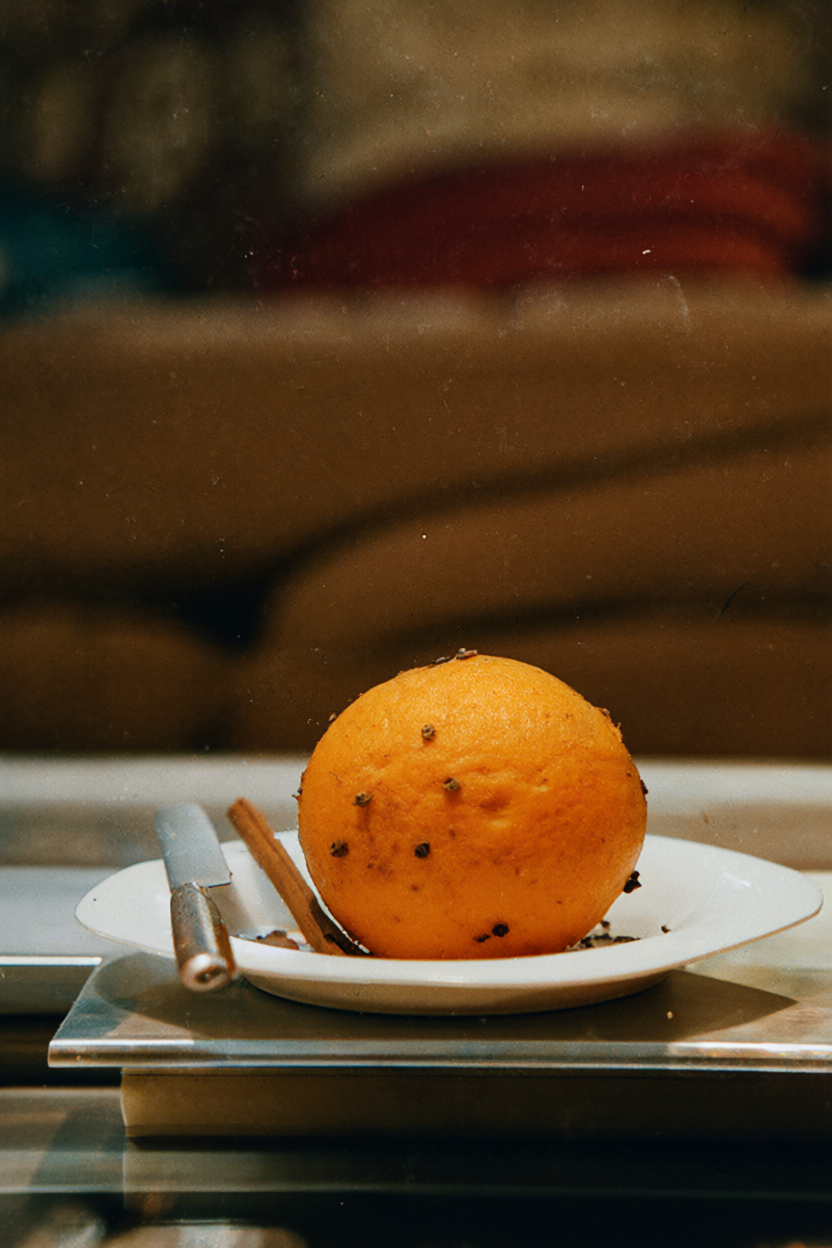
The whole house smelled of it before it was even finished. You took a thin-skinned orange and pushed cloves into it until the skin was crowded, and your fingertips ached and stayed sharp-smelling for hours. Ours sat on a saucer by the lamp with a cinnamon stick beside it. The rule was to leave a gap for a ribbon, though we always remembered too late.
A clove-studded orange is an old pomander, used for centuries to scent a room, and cloves were once so valuable in Europe that they were traded like money. Ours dried slowly and never lost the smell. Did yours last until January?
10. The Press That Made Little Wreaths
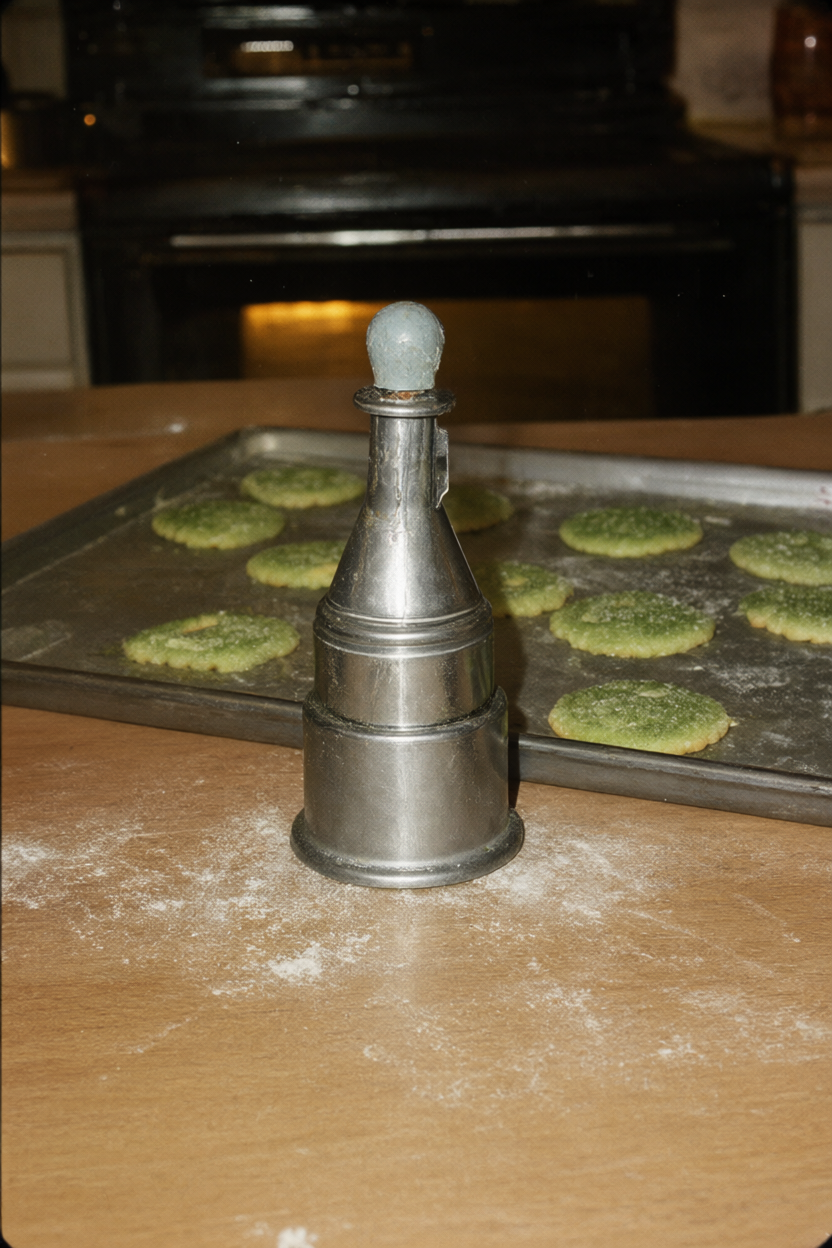
The cookie press was a plain metal tube with a trigger, and it only came out in December. The dough had to be exactly the right softness, and the rule was to press straight onto a cold, ungreased sheet, one click per cookie. Green spritz wreaths came out in a line, dusted with sprinkles, and the kitchen smelled of butter and vanilla until the last tray.
The cookie press has been sold since the early 1900s, and the word spritz comes from an old German word meaning to squirt or spray. Ours made wreaths and one shape that never quite worked. Did yours make little flowers too?
11. The Cake That Waited For Company
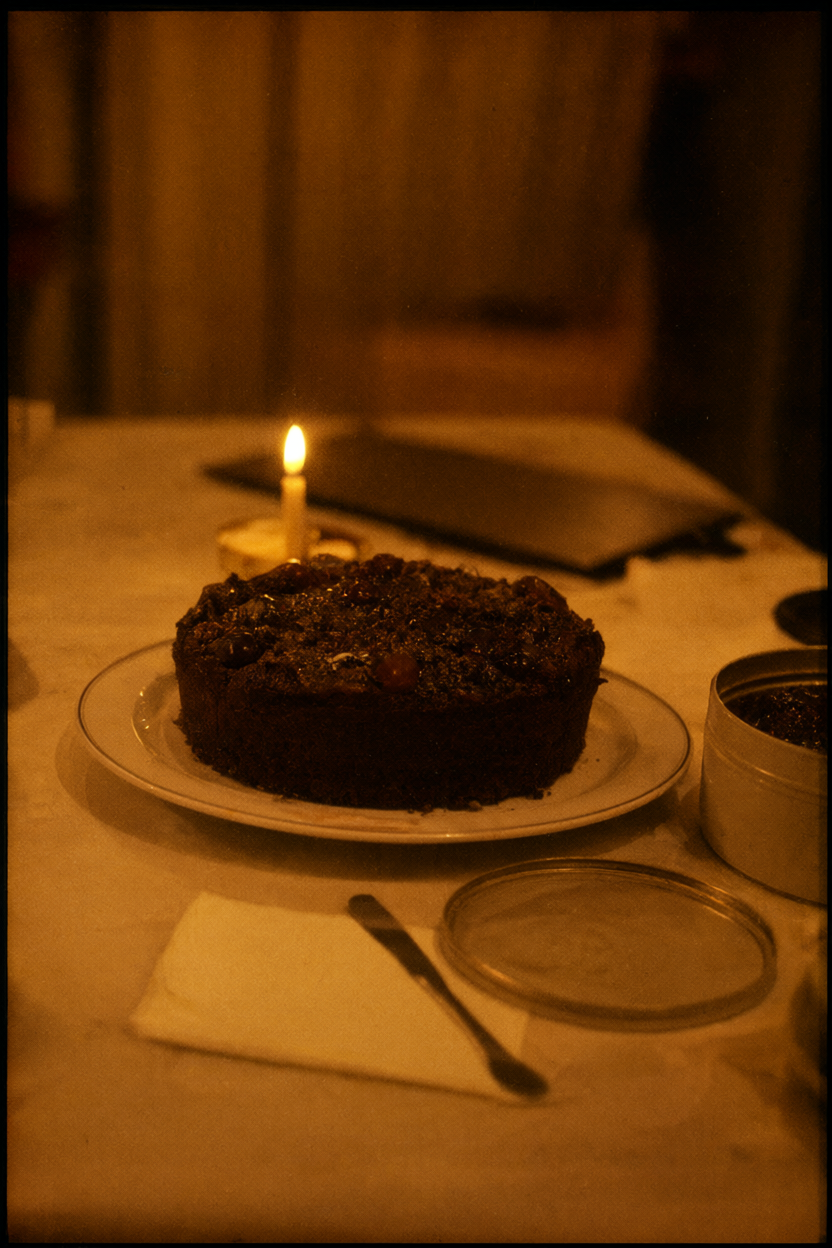
The fruitcake arrived in a round tin and stayed on the sideboard like a guest who had moved in. It was dark and heavy, full of raisins, peel and nuts, and it was sliced thin for company, not for us. The rule was that a slice had to be eaten with a cup of tea, and there was always a little left in the tin by February.
Fruitcake has been baked for centuries, and making it weeks ahead lets the flavours deepen as it ages, which is why it was often made early in December and left to rest. Ours was brushed with something sweet every few days. Did anyone in your family actually like it?
12. The Bowl That Held The Party
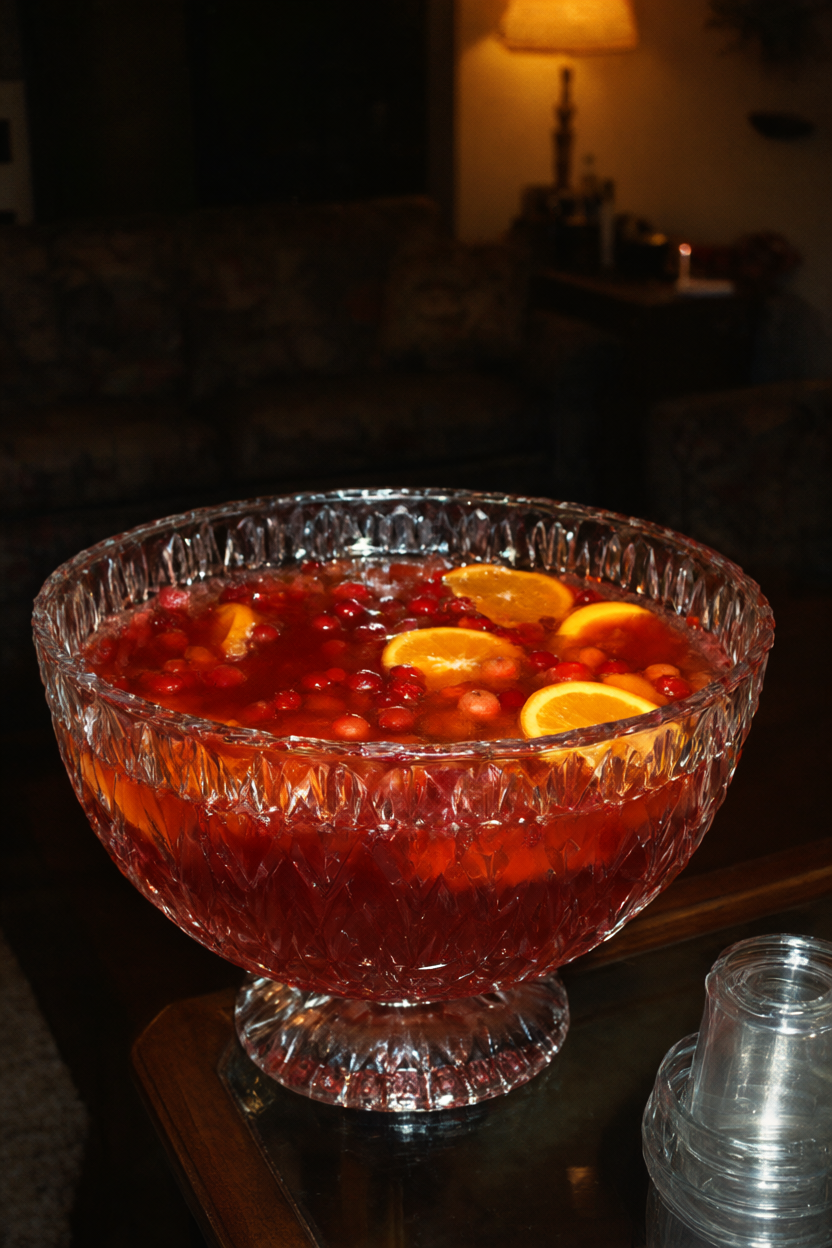
The punch bowl was cut glass and so heavy that it took two hands to carry to the table. It came out for the open house, filled with red punch, orange slices and cranberries floating on top. The rule was that the ice went in a ring, not cubes, and that the first cup went to the oldest guest. The ladle clinked against the glass every few minutes.
The word punch comes from the Hindi word for five, for the five ingredients once used in the drink. By the twentieth century the bowl had become a fixture of American parties and a favourite wedding gift. Ours had a small chip on the rim. Did your family keep a special ladle with it?
13. Watching From The Top Branch
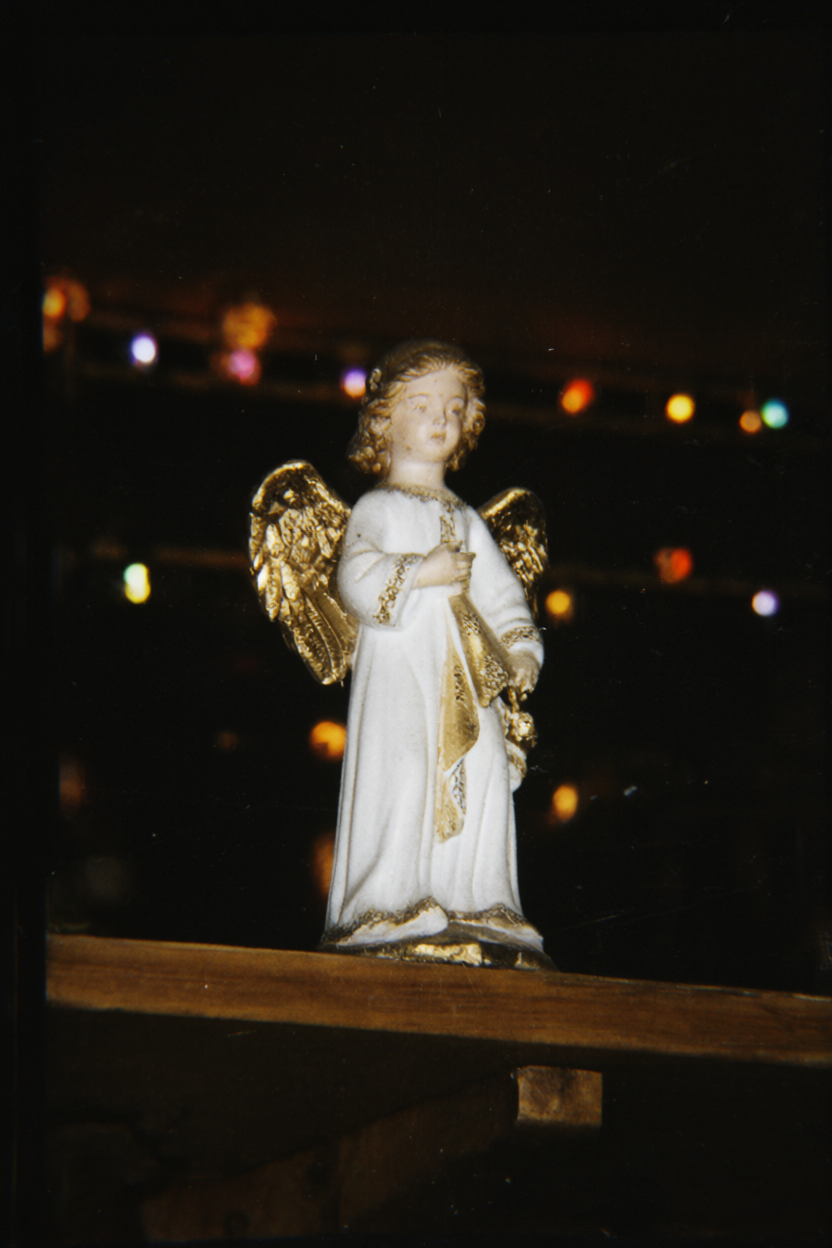
The angel went on last, and the tallest person in the house got the job. Ours had a porcelain face, a white robe and gold wings, and she was lifted to the top branch with both hands while everyone else said no, a little to the left. The rule was that no one touched the top of the tree once she was in place.
Angels and stars have topped Christmas trees for centuries, a tradition that came from Germany, where a star or an angel crowned the tree. Ours was packed in tissue in the same box as the glass bells. Was your angel porcelain, or paper?
14. The Train That Went In Circles
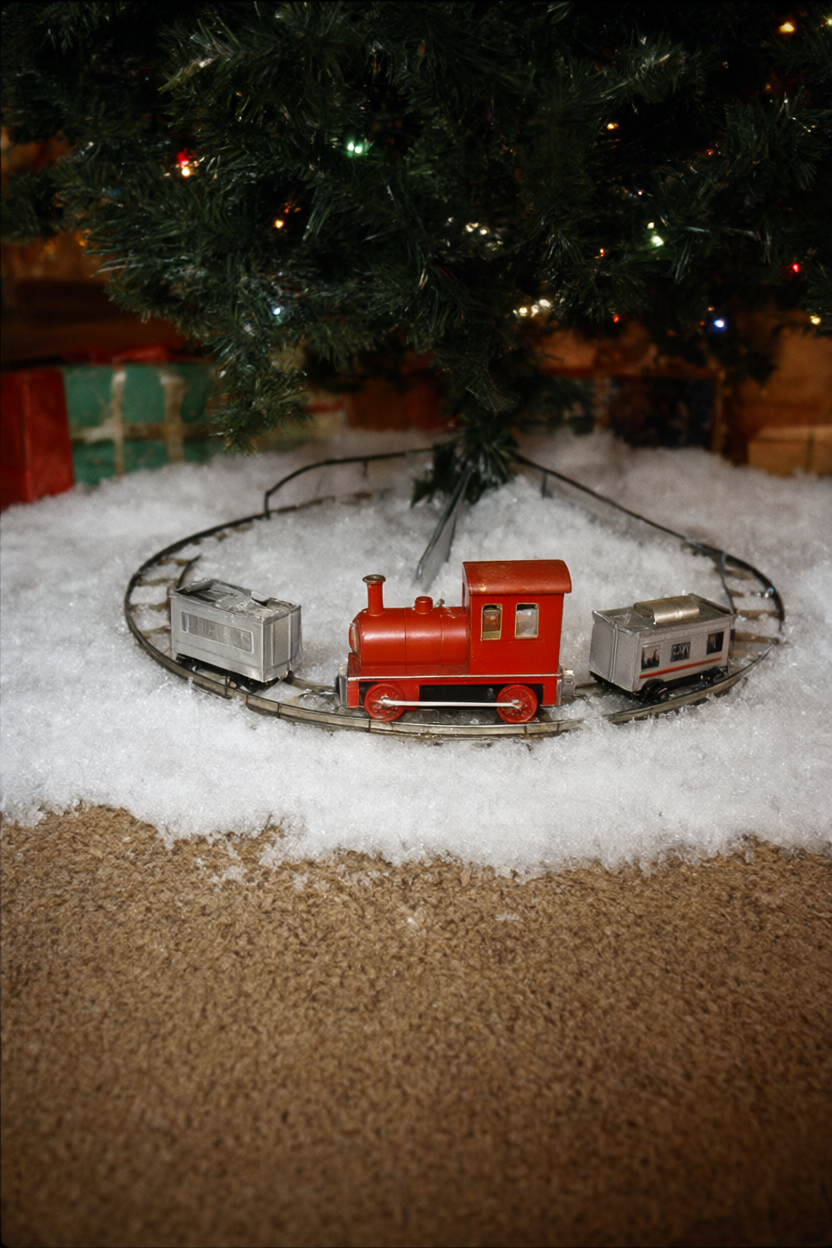
The train went around the base of the tree on a board of fake snow, and the track had to be laid exactly right or the engine would derail at the same curve every time. Ours had a red engine and two silver cars, and the rule was that the switch went off at bedtime. The smell of the warm motor stayed with me longer than the gifts.
Toy trains became a Christmas staple in the early twentieth century, when electric sets were sold to families and often set up under the tree. Ours ran on a plug and a single switch. Did yours run on a battery, or did it need the wall?
15. A Jar Full Of Stripes
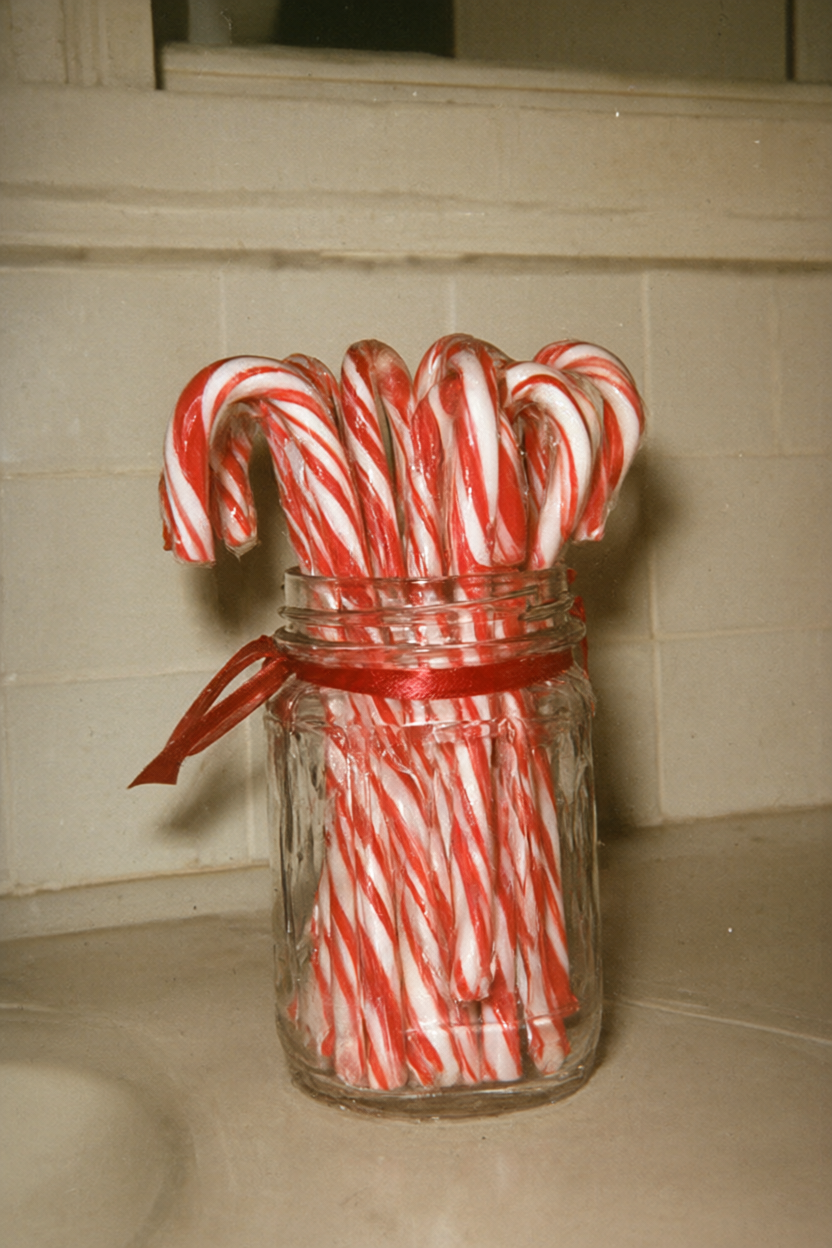
A clear glass jar of candy canes stood on the kitchen counter from the first week of December, tied with a red ribbon. The canes were red and white and stuck out at every angle, and the rule was that you took the one you touched, no pushing them back into the jar. The kitchen smelled of peppermint whenever the lid was lifted.
Candy canes are said to have started as straight white sticks in Europe, with the stripe and the hook added much later. By the twentieth century they were a familiar Christmas treat in America. Ours were always the small ones. Were you allowed one before breakfast?
16. A Chain Of Red And Green
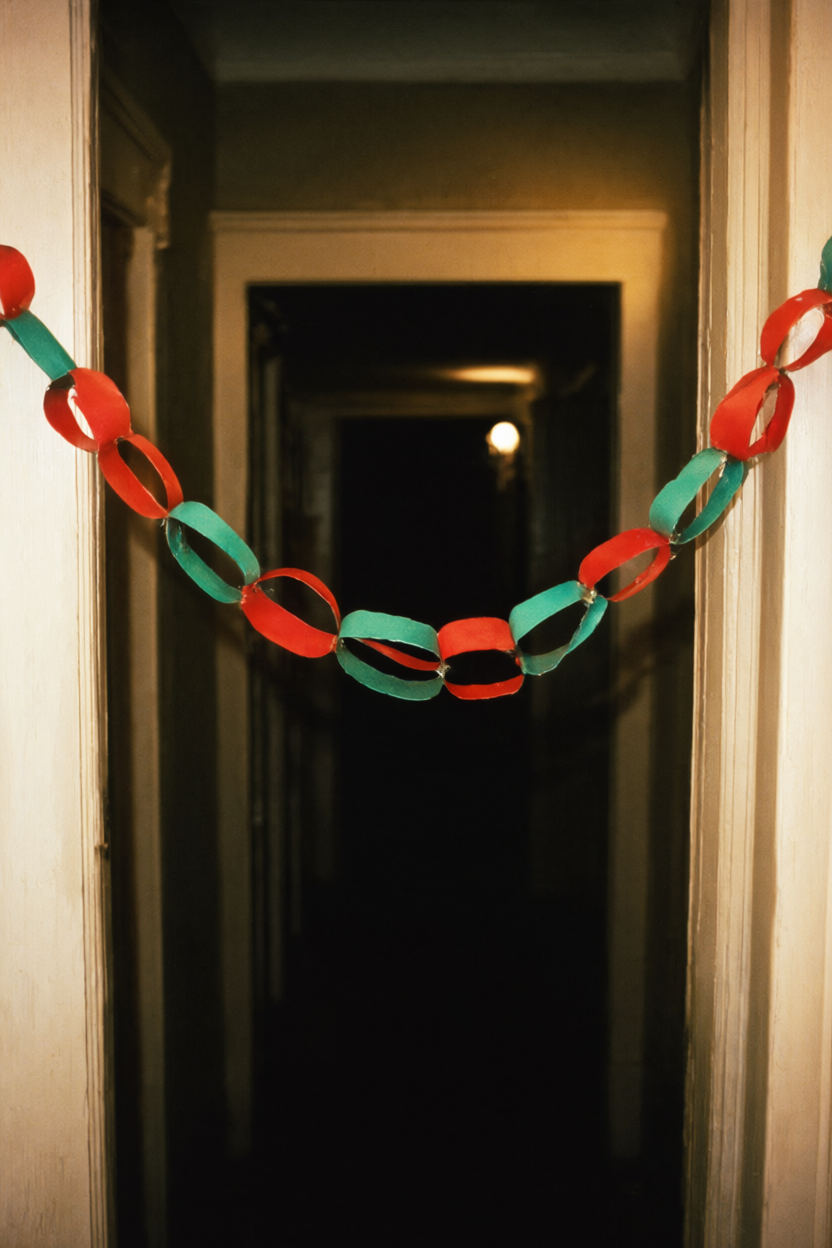
The paper chain went up first, before the tree, because it was the one thing we made ourselves. Strips of red and green paper were cut at the kitchen table, looped through one another and glued or stapled, and the chain got longer as we worked. The rule was that the loops had to be even, and ours never were.
Paper chains have been a homemade Christmas decoration for well over a century, and they are still one of the cheapest ways to fill a doorway. Ours reached from the frame to the middle and no further. Did yours make it all the way across?
17. Waiting By The Door For Snow
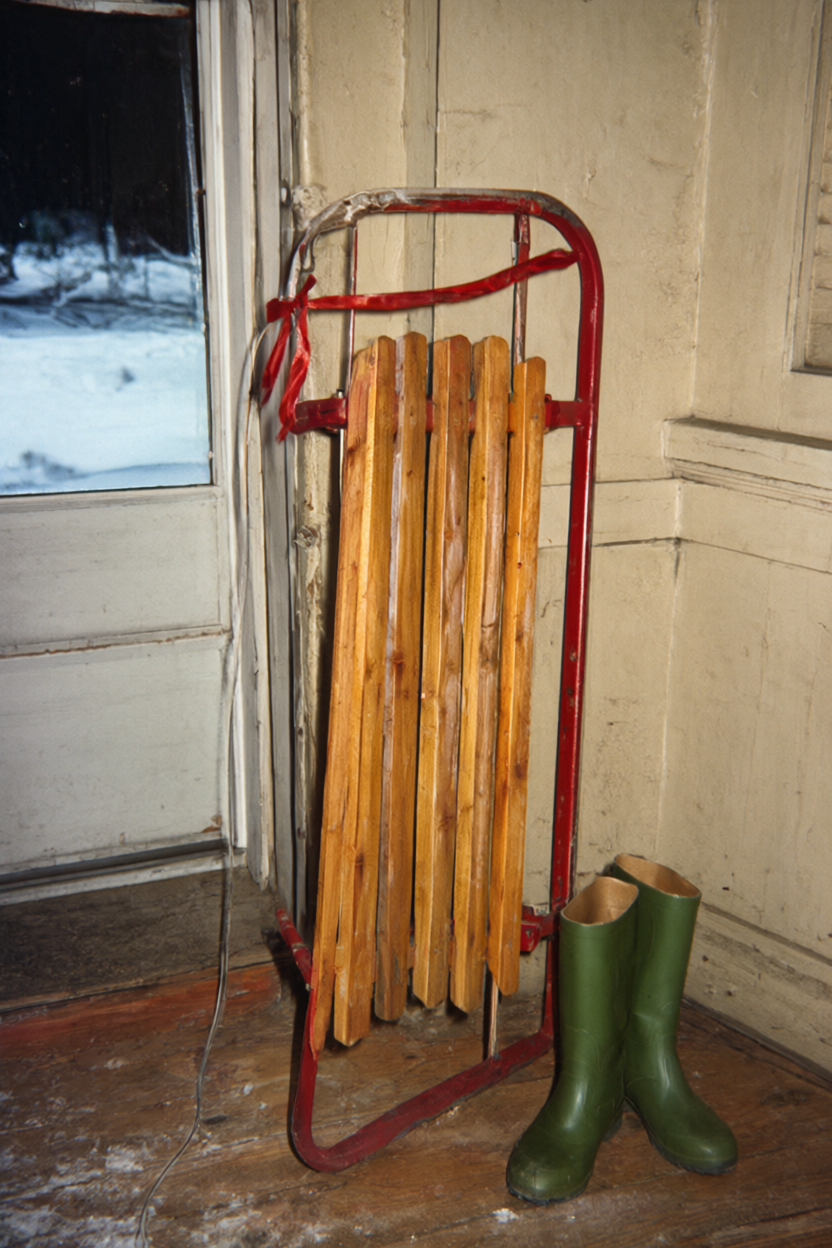
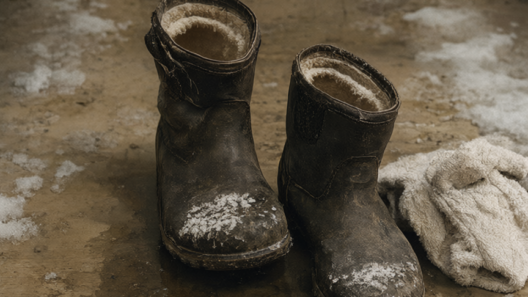
The sled leaned against the porch wall all winter, red runners catching the light, a ribbon still tied to the handle from the last time it was used. Beside it sat a pair of green rubber boots. The rule in the house was that the sled came in at night, but it almost never did, and the runners rusted a little more every year.
A wooden sled with metal runners has been a winter toy for generations, and the design has barely changed because it works so well on packed snow. Ours had a name painted on the crossbar. Did yours have a name on it too?
18. The Table Set For Everyone
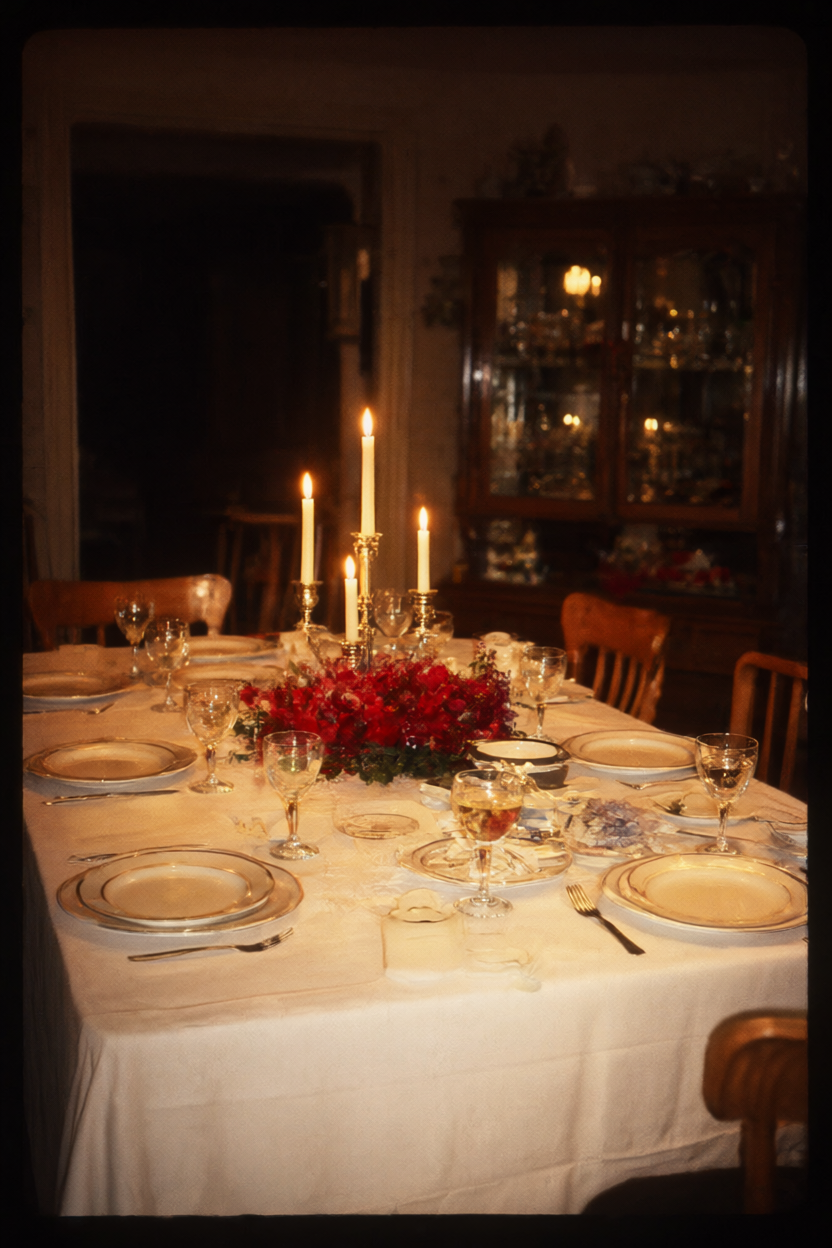
The table was set before anyone arrived, with the plain holiday china and tall candles that were only lit for company. A red centerpiece sat in the middle, and the chairs were pushed in at every place. The rule was that the candles were lit last, after everyone sat down, and that the children’s table was not really a table at all.
The formal holiday table setting has its roots in nineteenth-century dining customs, when each course had its own dishes and silver, and families kept the good china for occasions like this. Ours came out twice a year. Did you have a separate table for the children?
19. A Tiny House With One Light On
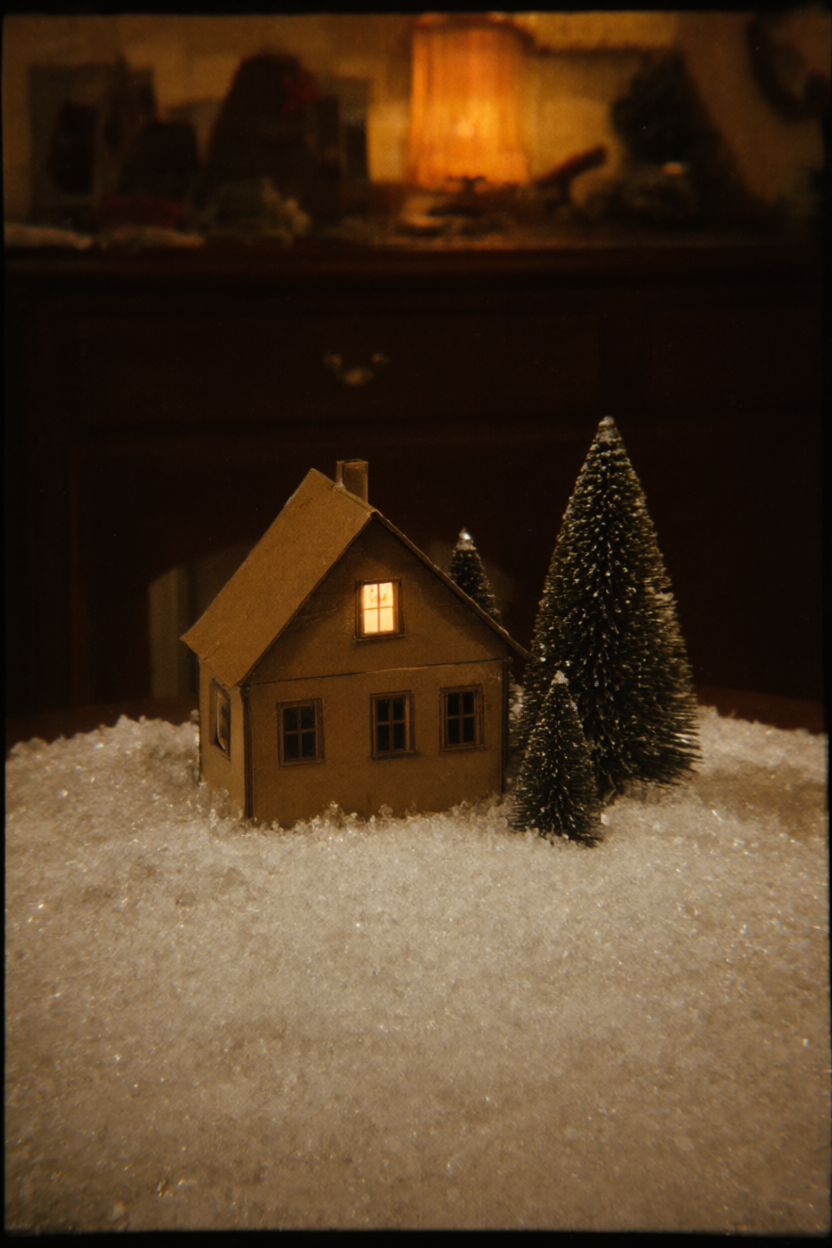
The village sat on the sideboard on a bed of mica snow, and the houses were cardboard with tissue windows. One of them had a single window that glowed when the plug was connected, and that was the house we all wanted to live in. The rule was not to touch the snow, because once the mica was scattered it never went back.
Putting out a miniature village at Christmas became a popular tradition in the twentieth century, with new houses sold one at a time each year so the scene could grow. Ours started with three houses and ended with six. Did your village grow every year?
20. Red Leaves In The Cold Window
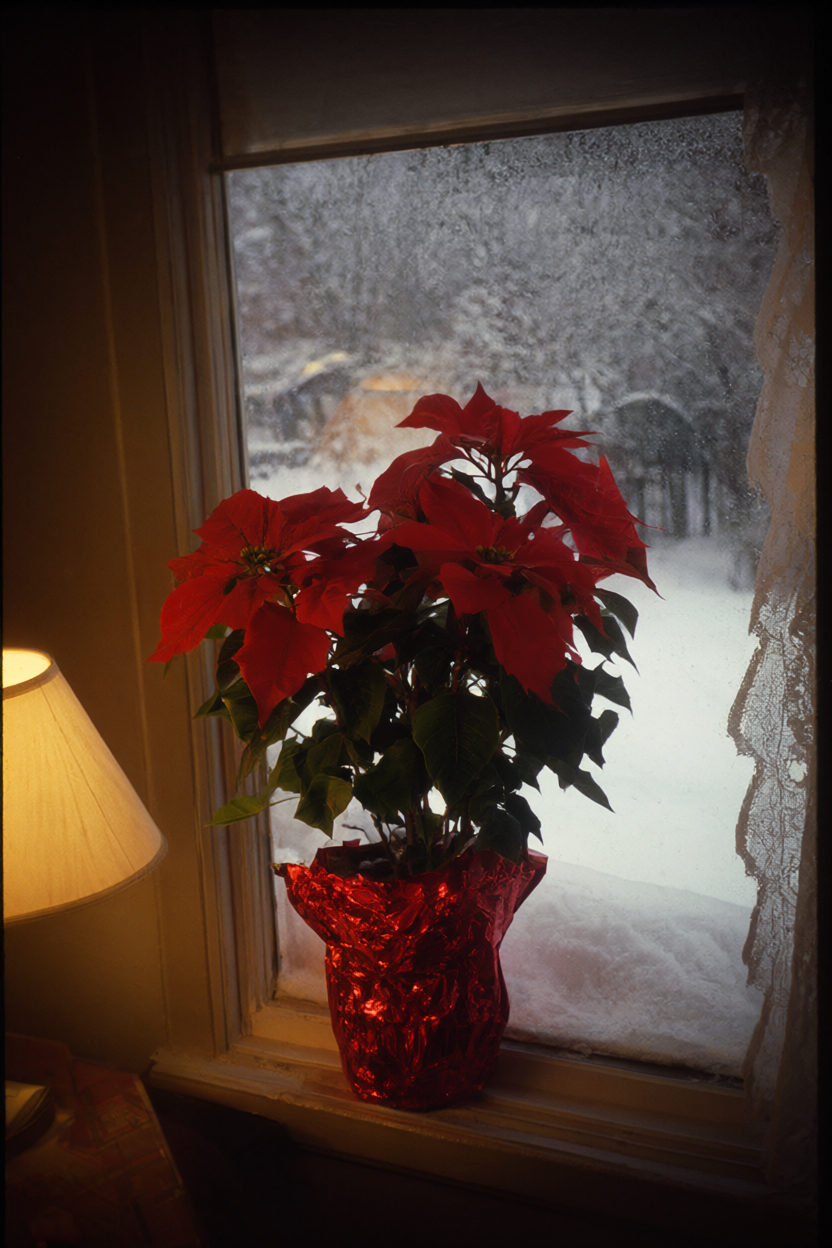
The poinsettia sat on the windowsill in its shiny red foil, and behind it the glass was always cold and streaked with frost. The rule was to water it with the ice from the tray and never to move it once the buds had opened. Its red leaves looked almost too bright against the snow outside.
The poinsettia is native to Mexico, and the red parts are actually leaves, called bracts, with the small yellow flowers in the middle. Ours was always bought the same weekend as the tree. Did yours survive past January?
So which one took you back the most? For me it is whatever smells strongest, the clove orange, or the fruitcake tin that never seemed to empty. Take a last look at your favourite and see if you can remember exactly where it used to stand. That is the whole point of this little gallery: to bring a room back for a minute, and to let you keep it.