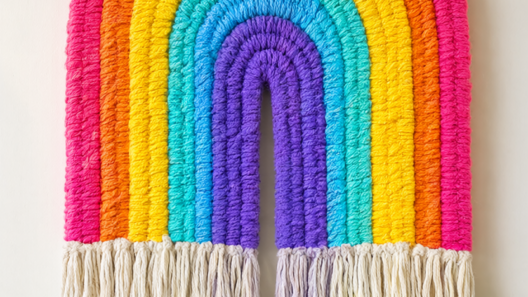
Turn teal, coral, and mustard yarn into a 12-inch-wide wall hanging with nine soft, drapey tassels, using a cereal-box template to keep the fringe even. Allow about 60–75 minutes of hands-on time for the wrapping, knotting, and trimming, with no drying time. A free printable supply list and step checklist are included so you can keep the measurements beside you.
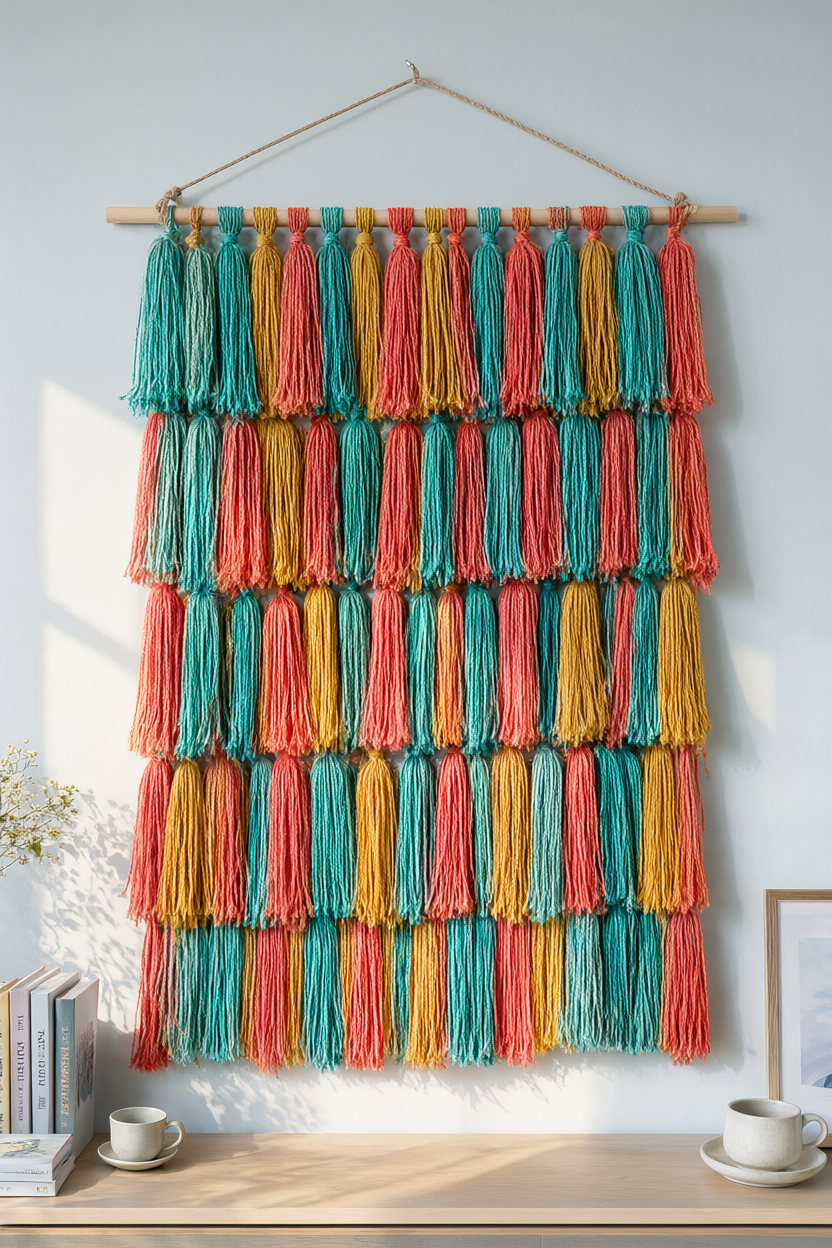
At a Glance
- Difficulty: Beginner.
- Hands-on time: Approximately 60–75 minutes; your pace may vary.
- Drying or curing time: None.
- Cost: Approximately $15–$25 if buying yarn, dowel, twine, basic tools, and a hook new at budget prices; local prices vary. With packaging cardboard, scissors, ruler, and pencil already available, expect roughly $8–$16 for the remaining supplies.
The images are AI-generated illustrations of the project and its stages, rather than photographs of a tested make. Follow the written measurements and knot checks as your working guide; the time and costs above are estimates.
What You’ll Need
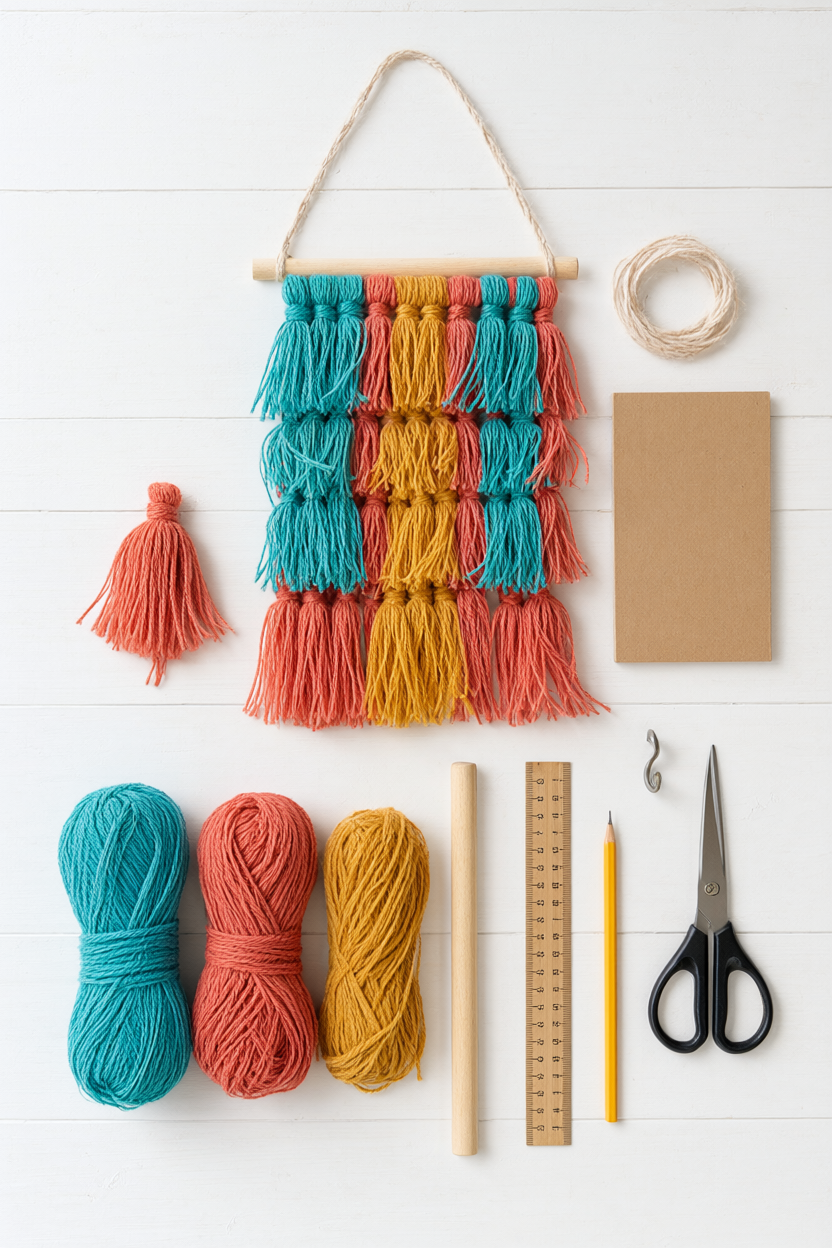
- 50 yards of medium-weight teal acrylic yarn.
- 50 yards of medium-weight coral acrylic yarn.
- 50 yards of medium-weight mustard acrylic yarn.
- A clean cereal-box panel at least 8 × 5 inches, kept flat.
- A smooth 12-inch wooden dowel, about 3/8 inch thick.
- 30 inches of cotton twine for the hanger.
- Sharp scissors; supervise children when cutting.
- A ruler and pencil.
- A wall hook suitable for your wall and the hanging.
Step-by-Step Instructions
- Measure and mark an 8 × 5-inch rectangle on the clean cereal-box panel, then cut it out. Keep the 8-inch dimension as the wrapping length: the yarn will travel around the two short edges. Choose a flat section of cardboard so the loops can sit evenly without catching on a crease.
- Before wrapping, cut three 12-inch suspension ties and three 24-inch neck ties from each yarn color. Set each color’s ties beside its skein so you can reach them without letting go of a bundle. Each tassel needs one short tie at the top and one longer tie around its neck.
- Begin with teal yarn and wrap it around the cardboard’s 8-inch length 30 times. Lay the turns alongside one another with light, even tension rather than pulling hard. The cardboard should stay flat; if it starts to bow, loosen your grip before continuing so the strand lengths stay consistent.
- Slide one teal 12-inch suspension tie beneath all the loops at one short edge of the cardboard. Bring its ends together and fasten a firm double knot around the whole bundle. Keep both tails free: these are the ends you will later use to attach the tassel to the dowel.
- Hold the tied end securely and cut through every loop at the opposite short edge, keeping your fingers clear of the scissors. Lift the bundle off the card, then fold the strands downward so the suspension knot sits at the top. Smooth the yarn with your fingers so both sides fall together.
- Place a teal 24-inch neck tie around the bundle about 3/4 inch below its top. Leave a short tail, wrap the long end around the neck several times, then double-knot the ends firmly. Let the tails fall into the fringe; the wrapped neck should hold the strands together without allowing them to slip.
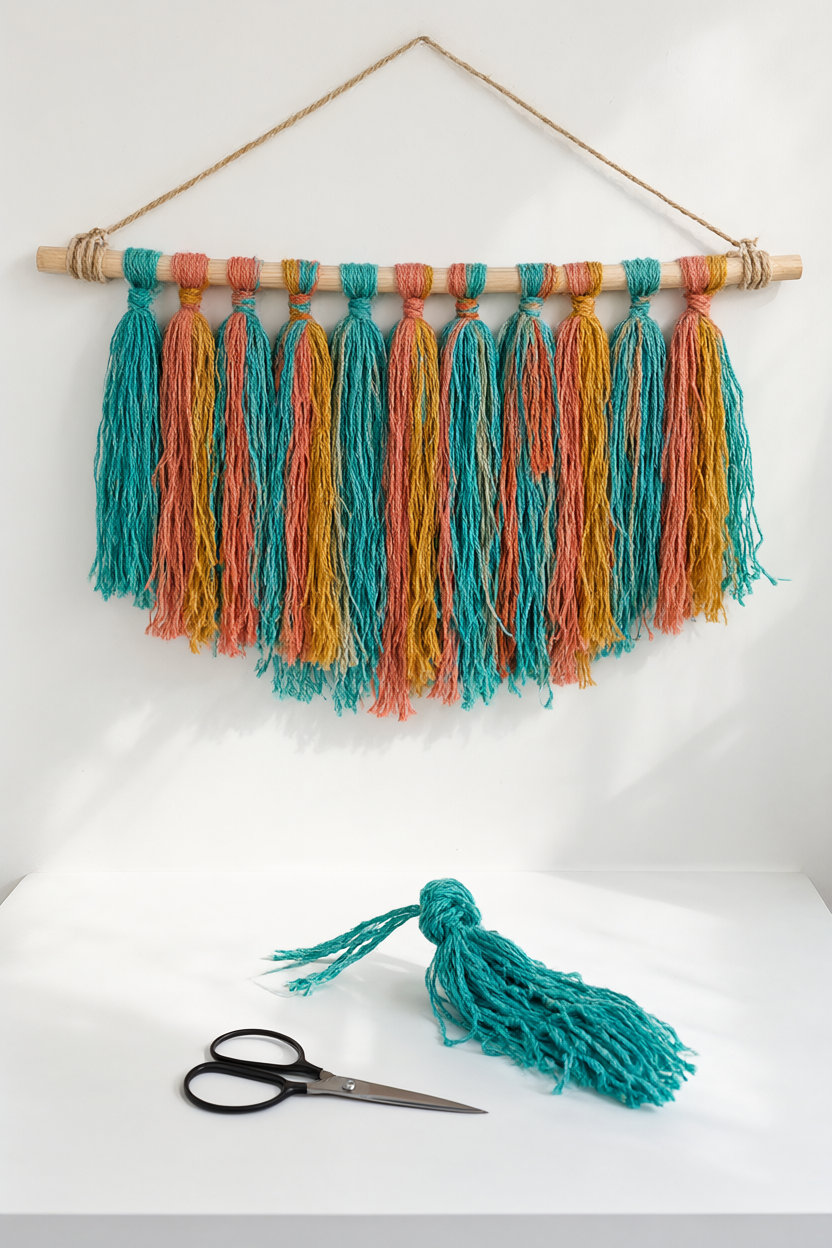
- Smooth the strands with your fingers and measure 7 inches from the tassel’s top knot before trimming the lower ends. Repeat the same wrapping, tying, and trimming process to make three teal, three coral, and three mustard tassels, nine altogether. Gently tug-test each tassel’s knots before moving on to the dowel.
- Lay out the nine tassels in a repeating teal, coral, mustard sequence. Use the two tails of each suspension tie to secure its tassel around the dowel with a tight double knot. Keep the tassel tops about 1 inch below the dowel, checking that distance as you attach each one.
- Space the tassels evenly along the 12-inch dowel, leaving about 1 inch clear at each end. Turn the suspension knots toward the back and check that they hold before trimming their excess tails. Lay the hanging flat to check the level fringe, measuring from the top knots rather than guessing by eye.
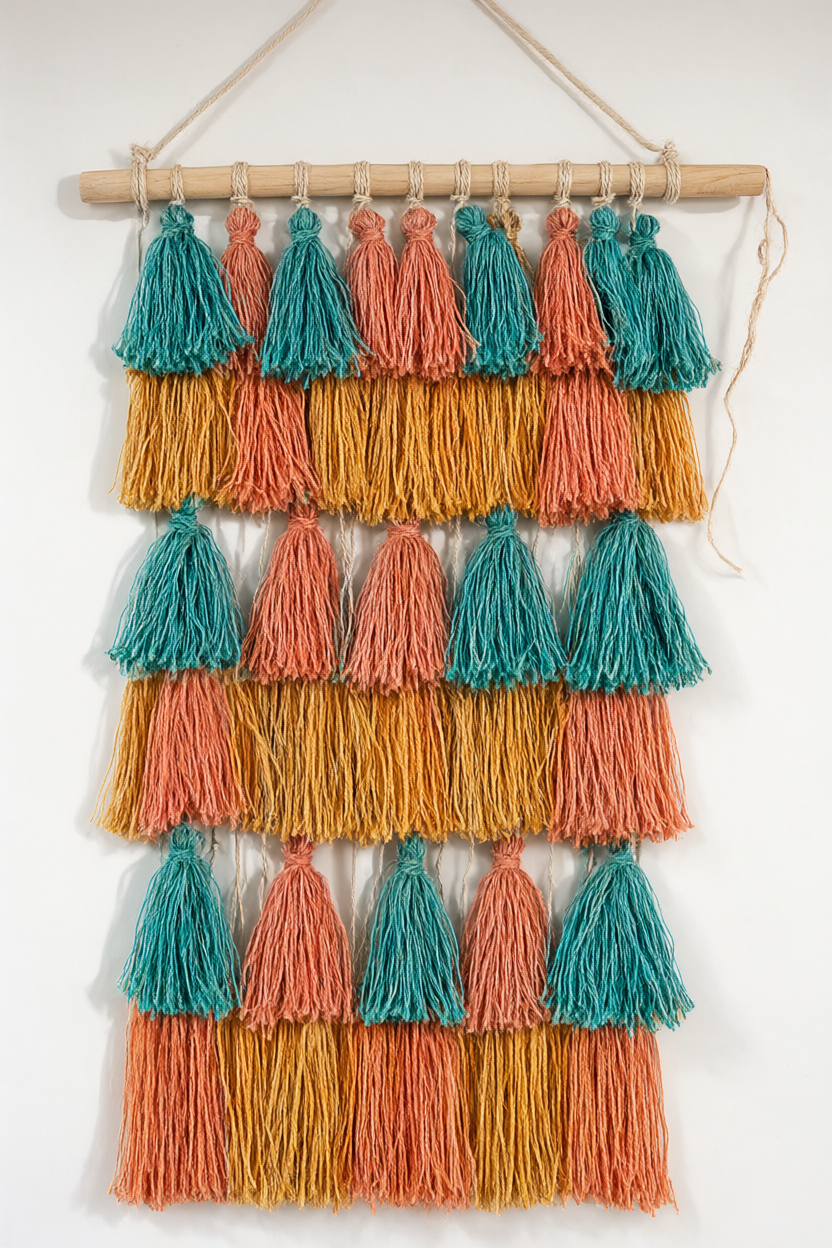
- Double-knot one end of the 30-inch cotton twine near one dowel end, then secure its other end near the opposite dowel end to form a hanger. Lift the piece to check its balance and adjust the tassel spacing as needed. Hang it on the appropriate wall hook, keeping loose cords out of young children’s reach.
Make It Your Own
Brighter color blocks. Use cobalt blue, fuchsia, and orange in place of teal, coral, and mustard. Keep the repeating sequence and three tassels per color so the bolder shades still have a clear rhythm across the dowel.
A shallow V-shaped fringe. Trim the center tassels longer and the outer tassels shorter to create a gentle point. Arrange the full row before the final trim so you can see how the lengths relate across the hanging.
A smaller housewarming gift. Make three matching tassels in a friend’s favorite colors and attach them to a shorter dowel. The same cardboard wrapping method keeps the small set consistent, while the chosen colors make it feel personal.
Beginner Mistakes (and Easy Fixes)
- Wrapping too tightly. Tight yarn bends the cardboard and produces uneven strands. Use light tension, check that the template stays flat, and replace a creased template before wrapping another bundle.
- Loose top or neck knots. Strands can slip when either knot is loose. Tighten the double knots firmly and gently tug-test each tassel before hanging it; checking now is easier than finding a slipping bundle on the wall.
- Trimming each tassel by eye. Small differences add up across a row of nine. Measure each tassel from its top knot and make the final trim while the hanging lies flat, with the tassel tops aligned.
Your Free Printable
The free two-page, letter-size PDF contains a complete materials and tools checklist on page 1, including yarn quantities and template dimensions. Page 2 has twelve short actions covering wrapping, tying, trimming, arranging, and hanging. Keep it nearby to check off supplies and follow the sequence without having to scroll between measurements.
Questions You Might Have
Can I use leftover yarn?
Yes; use similar yarn weights for consistent fullness, and allow roughly 45–50 yards per color for three tassels, including ties and trimming. Matching the weights helps the teal, coral, and mustard sections sit comfortably together rather than making one group look much fuller.
Do I need to brush the tassels?
No. Leave the yarn strands intact for the defined, drapey fringe shown in the guide. Brushing acrylic can make it fuzzy, so smooth the strands with your fingers before measuring and trimming instead.
Can I use different cardboard?
Yes. Firm, clean packaging cardboard works; keep the template flat and retain the 8-inch wrapping length. Replace cardboard that creases or bends, because a flat template is what helps you repeat the same strand length for all nine tassels.
Save This for Later
Save this guide for the next time you want a colorful yarn project with a simple cardboard template and an even, flowing fringe.
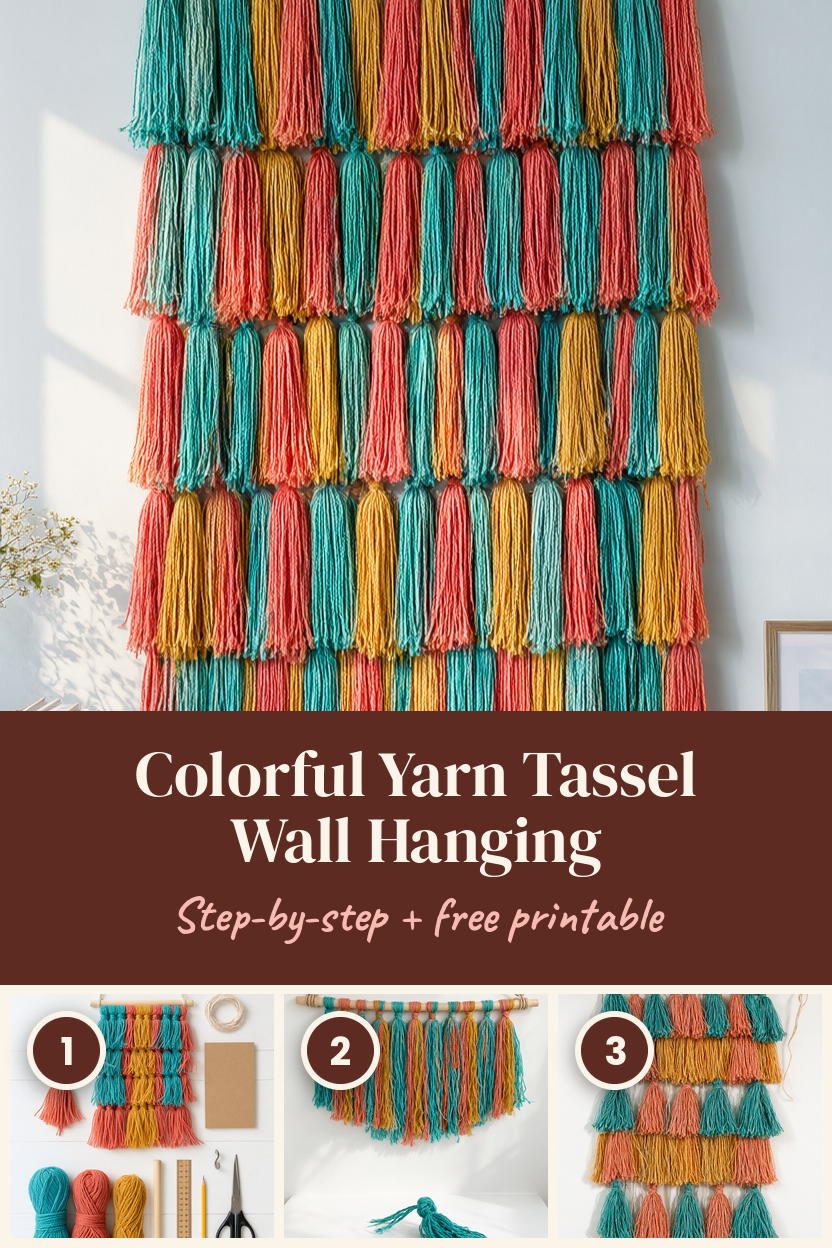
Take your time with the first tassel, then use the same measurements for the remaining eight. Those repeated teal, coral, and mustard bundles bring the whole little hanging together.