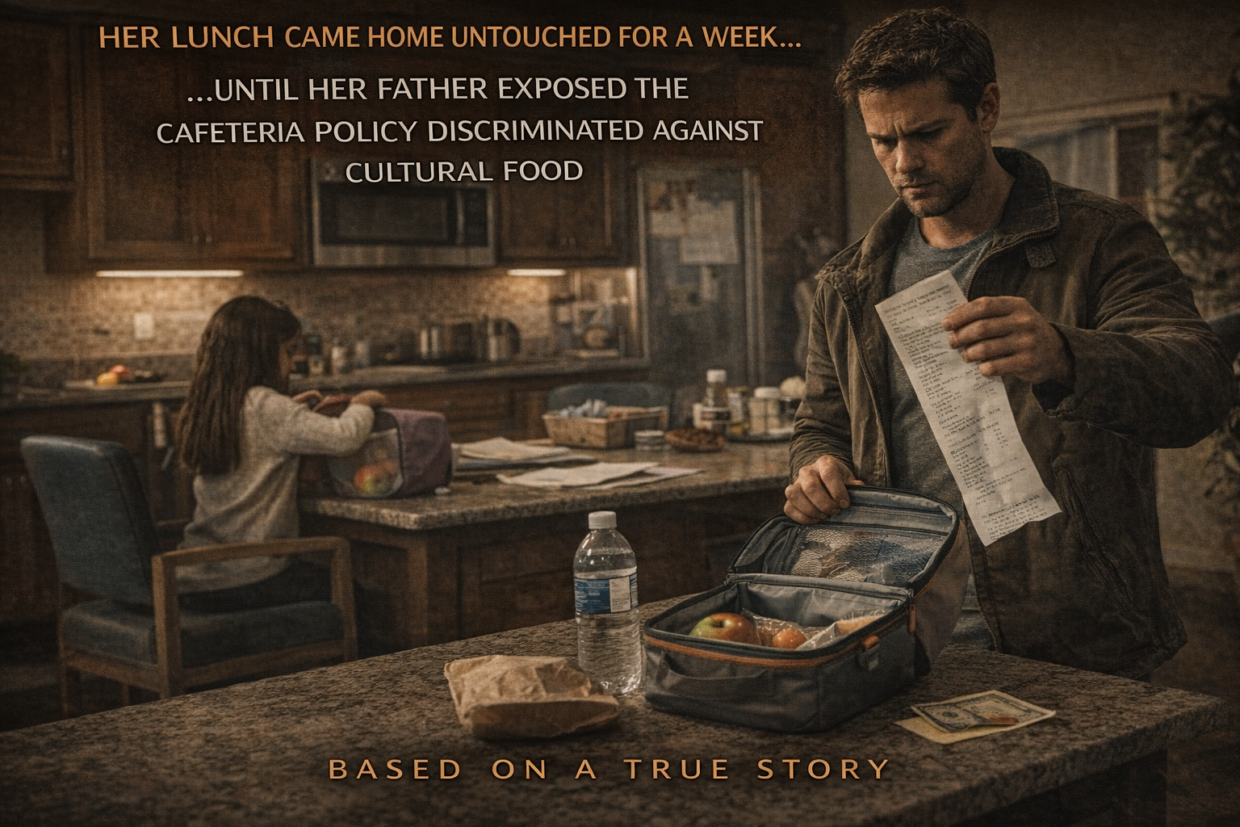
Sophia brings home her untouched lunch tray every day this week… But the cafeteria receipt shows she was charged full price.
Matthew sets Sophia’s backpack on the kitchen counter and unzips the front pocket. Her lunch money sits folded exactly as he placed it this morning.
Matthew: Sophia, why didn’t you buy lunch today?
Sophia: I did buy lunch, Papa. I ate everything.
The lunch account app on his phone shows no transactions for three days. Matthew scrolls through the recent charges, finding only Monday’s pizza purchase.
Matthew: The app says you haven’t used your lunch money since Monday.
Sophia: Maybe the machine is broken.
Matthew opens her backpack wider. Her homemade sandwich sits untouched in its container, the apple still shiny, the crackers unopened.
Matthew: You brought this home too. What did you eat for lunch?
Sophia looks at her homework spread across the table. Her pencil hovers over a math problem she solved correctly twice already.
Sophia: I shared with friends. We always share.
Matthew notices the sandwich bread isn’t even compressed. No fingerprints mark the plastic container’s surface.
Matthew: Which friends?
Sophia: Just friends. Can I finish my homework now?
The next morning, Matthew packs her lunch as usual but includes a note asking her teacher to confirm Sophia ate during lunch period. He walks her to the classroom door instead of dropping her at the front entrance.
Martin: Good morning, Sophia. How are you feeling today?
Sophia: Fine, Mr. Martin.
Martin: Your father mentioned you might be having some appetite issues. Are you eating lunch?
Sophia glances at Matthew, then back at her teacher.
Sophia: Yes, I eat lunch every day.
Martin nods and guides Sophia to her desk. Matthew watches through the classroom window as she arranges her supplies with unusual precision.
At 2:30 PM, Matthew’s phone buzzes with a text from Martin.
The message reads: “Sophia says she ate lunch, but I checked with the cafeteria. She hasn’t been through the line this week.”
Matthew drives to school pickup early. He parks where he can see the cafeteria windows. Students stream out carrying lunch trays, but he doesn’t spot Sophia among them.
Principal Harris approaches his car window.
Harris: Mr. Matthew? Could I speak with you for a moment?
Matthew: Is everything okay with Sophia?
Harris: She’s fine. But we need to discuss something that happened during lunch today.
They walk toward the main office. Through the cafeteria doorway, Matthew sees Nelson wiping down empty tables with industrial disinfectant.
Harris: There was an incident involving Sophia’s lunch. Nelson reported some concerns about the food she brought from home.
Matthew: What kind of concerns?
Harris: Cultural food safety protocols. Sometimes homemade items from different backgrounds require additional screening.
The words hang in the air between them. Matthew feels his chest tighten.
Matthew: Screening for what exactly?
Harris: Nelson can explain better. She handles all our food safety compliance.
Nelson emerges from the cafeteria carrying a spray bottle and cloth. She sets them on the counter and approaches with a practiced smile.
Nelson: Oh, you’re Sophia’s father. Yes, we had to set aside her lunch today for inspection.
Matthew: Inspection of what?
Nelson: The smell was quite strong. Other children were complaining. We have to think about everyone’s comfort in the cafeteria.
Matthew: Where is her lunch now?
Nelson: We disposed of it according to health department guidelines. For contamination risks.
The word “contamination” hits Matthew like a physical blow. He thinks of Sophia asking about that exact word during homework.
Matthew: You threw away my daughter’s lunch because of how it smelled?
Nelson: We have protocols for unusual food items. The district requires us to maintain certain standards.
Harris shifts uncomfortably beside them.
Harris: Nelson, perhaps we should review those protocols together later.
Matthew: I want to see these protocols. In writing.
Nelson: I’ll have to check with the district office about releasing that information.
Matthew pulls out his phone and opens the voice recorder app.
Matthew: Can you repeat what you just told me about throwing away my daughter’s lunch?
Nelson: I don’t think recording is appropriate here.
Harris: Mr. Matthew, let’s schedule a proper meeting to discuss this. Tomorrow morning?
Matthew: No. I want this resolved today. Where exactly are these protocols written down?
Harris leads them to her office and pulls out a thick binder labeled “Food Service Guidelines.” She flips through pages of laminated sheets.
Harris: Here’s the section on outside food brought to school.
Matthew reads the highlighted text aloud.
Matthew: “Students may bring homemade lunches provided they meet basic safety standards and do not disrupt the learning environment.”
Harris: The disruption clause would apply here.
Matthew: Disruption caused by what? The smell of my culture’s food?
Nelson: It’s not about culture. It’s about maintaining a clean eating environment for all students.
Matthew: You used the word contaminated. That’s not about cleanliness. That’s about treating my daughter’s food as dirty.
The office falls silent except for the hum of the copy machine in the corner.
Harris: Perhaps there was a miscommunication about the specific language used.
Matthew: I’d like to speak with whoever supervises Nelson.
Harris: That would be the district food services coordinator, Anderson. I can call him now.
Anderson arrives within twenty minutes, carrying his own copy of the food service guidelines. He’s a tall man with gray hair who speaks in measured tones.
Anderson: I understand there’s been a concern about lunch protocols.
Matthew: Your employee told my daughter her food was contaminated and threw it away.
Anderson: Let me get the facts straight. Nelson, can you walk me through what happened?
Nelson: The student brought food with a very strong odor. Other students were commenting and moving away from her table.
Anderson: What type of food was it?
Matthew: Traditional food from our culture. The same food I’ve been packing for weeks.
Anderson: And this was the first complaint?
Nelson: Well, no. There have been ongoing issues with the smell.
Matthew feels his hands clench.
Matthew: Ongoing issues you never mentioned to me or the school administration?
Harris: This is the first I’m hearing about previous incidents.
Anderson: Nelson, what’s our protocol for addressing food concerns with parents?
Nelson: We’re supposed to contact parents before taking action.
Anderson: Did you contact Mr. Matthew?
Nelson: I thought the smell issue was obvious. I didn’t think formal contact was necessary.
Anderson closes his guidelines binder and looks directly at Nelson.
Anderson: That’s not how we handle these situations. Ever.
Matthew: So what happens now?
Anderson: First, we apologize to you and Sophia. This was handled incorrectly from the start.
Nelson: I was just trying to maintain cafeteria standards.
Anderson: By calling a child’s cultural food contaminated? That’s not a standard, that’s discrimination.
The word hangs in the room like an accusation. Harris shifts in her chair.
Harris: What steps do we take to make this right?
Anderson: We start with a formal apology and retraining. Then we review our entire food policy to prevent this from happening again.
Matthew: And what about my daughter? She’s been going hungry because she was too ashamed to tell me what happened.
Anderson: We’ll provide her with free lunch for the remainder of the year. And counseling support if needed.
Nelson: This seems like an overreaction to a simple misunderstanding.
Anderson: Nelson, you’ll be meeting with HR tomorrow morning. This conversation is over for you.
Nelson gathers her things and leaves without another word. The office feels lighter without her presence.
Anderson: Mr. Matthew, I want you to know this doesn’t represent our district’s values.
Matthew: Then prove it. I want written confirmation of the policy changes and a guarantee this won’t happen to other families.
Harris: We can draft that documentation by tomorrow.
Anderson: And we’ll be conducting sensitivity training for all food service staff district-wide.
Matthew: I also want to address this with the school board. Other parents need to know their children’s cultural foods are welcome here.
Anderson: I’ll arrange for you to speak at the next board meeting. Full support from administration.
Matthew walks back through the hallway toward Sophia’s classroom. Students are gathering their backpacks and preparing for dismissal.
Sophia emerges from the classroom carrying her untouched lunch container. She sees Matthew and her eyes drop to the floor.
Matthew: Sophia, you don’t have to hide what happened anymore.
Sophia: Are you angry with me, Papa?
Matthew: No, sweetheart. I’m angry with the adults who made you feel ashamed of our food.
Sophia: Nelson said it smelled bad and made other kids sick.
Matthew: Nelson was wrong. Our food is beautiful and delicious, and you should never be ashamed of where we come from.
Martin approaches them in the hallway.
Martin: How did the meeting go?
Matthew: Changes are being made. Big changes.
Martin: Good. Sophia is a wonderful student, and she deserves better than what happened.
Sophia: Mr. Martin, can I bring lunch from home again?
Martin: Of course. And if anyone ever makes you feel bad about your food again, you come tell me immediately.
Sophia: Okay. I will.
They walk to the car together. Matthew opens Sophia’s lunch container and hands her the sandwich.
Matthew: Eat this now. You must be starving.
Sophia takes a big bite and smiles for the first time in days.
Sophia: It tastes good, Papa.
Matthew: It always did, sweetheart. Some people just needed to learn that.
Two weeks later, Matthew receives a call from Anderson with an update.
Anderson: The board approved the new cultural food policy unanimously. And Nelson has been transferred to a non-student-facing position.
Matthew: What about training for the other staff?
Anderson: Completed last week. We brought in cultural competency specialists from the university.
Matthew: And other families? Have you reached out to them?
Anderson: We sent letters to all families encouraging them to share their cultural foods. We’re even planning a multicultural lunch day.
Matthew: That’s a good start.
Anderson: There’s one more thing. The state education department wants to use our new policy as a model for other districts.
Matthew: So other children won’t go through what Sophia did?
Anderson: That’s the goal.
Matthew hangs up and finds Sophia at the kitchen table, packing her lunch for tomorrow. She includes extra cookies.
Matthew: Who are the extra cookies for?
Sophia: My friends want to try them. They smell good, they said.
Matthew: They always smelled good, Sophia.
Sophia: I know that now, Papa.
She zips her lunch container into her backpack, no longer hiding what’s inside.