She turned 18 at her favorite restaurant, surrounded by family, laughing… But the boy across the table raised his hand and the room went silent before the candles were even lit.
The reservation had been made six weeks in advance.
Table for eight, corner booth, the restaurant with the string lights and the pasta Marisol had been asking about since she was sixteen. Her mother had written it in the family calendar in red marker: *Marisol’s 18th — Bella Notte — 7 p.m. Don’t be late.*
Nobody was late. Not her parents, not her Aunt Carmen and Uncle Ricky, not her two younger cousins who were already bouncing in their seats by the time the breadsticks arrived. And not Derek.
Derek was never late. Derek was the kind of person who showed up early and made sure everyone noticed.
He’d been dating Marisol for eight months. Long enough to know her parents’ names, long enough to shake her father’s hand with both of his, long enough to call her mother “Mrs. Vega” in a way that made her mother smile every single time. He was twenty, a year older than Marisol, a junior at the community college across town, and he had a way of filling a room that Marisol had once found exciting.
She wasn’t sure when exciting had started feeling like something else.
But tonight was her birthday. Tonight was Bella Notte and string lights and the pasta she’d been dreaming about. Tonight she was eighteen, and her family was all around her, and the candles on the table were already lit, and she was going to have a perfect evening.
She told herself that three times on the drive over.
—
The appetizers came and went. Her Uncle Ricky told the story about the fishing trip again, the one everyone had heard forty times, and everyone laughed anyway because that was what you did. Her little cousin Sofia wore a paper birthday crown she’d made herself and kept trying to put it on Marisol’s head. Her mother kept reaching across the table to squeeze her hand.
“Eighteen,” her mother said, for the fourth time that evening. “I cannot believe you are eighteen.”
“Believe it, Mom,” Marisol said, smiling.
Derek sat beside her. He was on his phone more than she would have liked, but she didn’t say anything. He’d been distracted all week — something about a grade on an exam, something about his roommate, something she hadn’t quite been able to follow. She’d learned, over eight months, that when Derek was in a certain kind of mood, the best thing to do was give him space and wait for it to pass.
She was good at waiting.
Her father, Eduardo, was in the middle of a toast when the entrees arrived. He stood up with his water glass — he didn’t drink — and cleared his throat the way he always did before he said something important.
“My daughter,” he started, and his voice already had that thickness in it, the one that meant he was fighting back tears. “My Marisol. You came into this world making noise and you have not stopped since, and your mother and I —”
“Dad,” Marisol said softly, because his chin was already trembling.
“Let me finish,” he said. “You are the best thing we ever did. And I want you to know, wherever life takes you, whatever you choose, you have a family behind you that will never —”
“Can we just eat?” Derek said.
The table went quiet.
Not the comfortable quiet of a paused conversation. The other kind. The kind with edges.
Her father looked at Derek. Her mother looked at Derek. Her Aunt Carmen, who had been reaching for the bread basket, stopped reaching.
Derek was looking at his phone.
“Derek,” Marisol said quietly, her voice careful and low.
“I’m just saying, the food’s getting cold,” he said, still not looking up. “We’ve been here for two hours. How long does the toast take?”
“Eduardo,” her mother said softly, touching her husband’s arm. “Go ahead, mi amor.”
Her father looked at Derek for one more second. Then he looked back at Marisol. He finished the toast, shorter than he’d planned, and sat down. The clinking of glasses was quieter than it should have been.
Marisol stared at her pasta and tried to find the evening she had planned somewhere inside the one she was having.
—
Dinner moved forward. The food was good. Sofia got marinara sauce on her birthday crown and cried briefly and then forgot about it. Uncle Ricky started another story. The string lights above the table were warm and amber and exactly as pretty as Marisol had imagined.
She was almost back to okay when her phone buzzed.
She glanced at it under the table — a habit she’d developed, checking her phone quietly, not making a thing of it.
It was a text from her brother.
*Running late. Don’t let them cut the cake without me. Two hours out. Love you. Happy birthday, soldier.*
She felt something loosen in her chest. Marcus. Her brother Marcus, who was stationed three states away, who she hadn’t seen in seven months, who had told her two weeks ago that he couldn’t get leave for her birthday and she’d cried in the bathroom so her mother wouldn’t see.
He was coming.
He was two hours away and he was coming.
She almost said something. She almost looked up and told her mother, told her father, watched their faces do the thing they did when Marcus’s name came up, that specific combination of pride and missing him that had no word in English but probably had one in every other language.
But she decided to let it be a surprise.
She tucked her phone away and smiled at her pasta and thought: *two hours. He’ll be here for cake.*
—
She didn’t notice Derek watching her.
“Who was that?” he said.
“Hmm?” She looked up.
“Your phone. Who texted you?”
“Just a friend,” she said, because the surprise was for everyone, not just Derek, and she didn’t feel like explaining.
“Which friend?”
“Derek —”
“I’m asking a simple question, Marisol.”
She looked at him. The table had that quality again, that listening quality, even though everyone was pretending to talk about other things.
“It was Marcus,” she said, keeping her voice even. “He might stop by later.”
“Marcus.” Derek set his fork down. “You’re texting your brother under the table at dinner.”
“I wasn’t texting him, he texted me.”
“And you didn’t think to mention it?”
“I was going to. It was going to be a surprise —”
“So you were hiding it.”
“Derek.” Her voice dropped to almost nothing. “Please don’t do this tonight.”
“Don’t do what? Ask who my girlfriend is texting?”
“It’s my brother. It’s my birthday. Can we just —”
“You always do this,” he said, and his voice had shifted into the register she’d learned to dread, the one that was still quiet enough that it could pass for reasonable if you weren’t listening carefully. “You always make me feel like I’m crazy for asking normal questions. Like I’m the problem.”
“You’re not the problem,” she said, and she hated that she said it, hated the automatic way it came out, the eight months of muscle memory behind it.
“Then why are you hiding things from me?”
“I wasn’t hiding anything.”
“You were texting under the table.”
“He texted me —”
“Marisol.” Her mother’s voice, gentle but firm. “Maybe we can talk about this later, yes? Tonight is —”
“I’m talking to my girlfriend,” Derek said, and the way he said it made her mother go still.
Her father put his fork down.
Her Uncle Ricky stopped talking.
Sofia looked up from her pasta with the wide, uncertain eyes of a child who can feel that something is wrong but doesn’t have the vocabulary for it yet.
“Derek,” Marisol said. “Stop.”
“Or what?”
She looked at him. “What?”
“I said, or what? What are you going to do, Marisol? Run to your brother? Call your daddy?”
“That’s enough,” her father said, and his voice was very quiet and very clear.
“Sir, I’m just —”
“That is enough.”
Derek looked at Eduardo Vega. And something moved across his face — not shame, not embarrassment, but something calculating, something that was deciding whether this was worth it, whether the audience changed the math.
Apparently it didn’t.
“You know what your problem is?” Derek said to Marisol, as if her father hadn’t spoken at all. “You’ve been spoiled your whole life. Everybody tiptoeing around you, making everything about you. Birthday dinners, birthday cakes, big dramatic toasts —” he gestured at the table, “— like you’re something special.”
“She is special,” her mother said, and her voice shook.
“She’s eighteen,” Derek said. “She’s a kid who doesn’t know how the real world works yet.”
“Derek, stop,” Marisol said. Her voice was steady. She was proud of how steady it was. “I’m asking you to stop right now.”
“Why? Because it’s your birthday? Because we’re in a restaurant? You want me to wait until we’re alone to tell you the truth?”
“I want you to sit down and be quiet.”
Something shifted in his face.
“Excuse me?”
“I said sit down and be quiet.”
He stood up.
The chair scraped back and he stood up and she saw it happening and she didn’t move fast enough, didn’t have time to process the distance between what she knew was possible and what she had told herself would never actually happen, not here, not in front of everyone, not on her birthday —
The sound of it was very small.
Open palm, right cheek. Not a punch. Not a shove. A slap, precise and flat, the kind that said *I have done this before and I know exactly how hard to do it.*
Marisol’s head turned with it. Her hand came up to her face. The table was completely, absolutely silent.
And then, from somewhere near the front of the restaurant, there was the sound of a door.
—
Marcus Vega had driven two hours and fourteen minutes.
He’d stopped once for gas and once because he’d been driving since 0400 and his eyes needed thirty seconds of closed. He had his dress uniform on because he’d come straight from a formal event on base and hadn’t had time to change, and he had a birthday card in his hand that he’d bought at a gas station in Tennessee because the one he’d bought three weeks ago was still sitting on his bunk and he’d forgotten to mail it.
The card said *Happy Birthday, Superstar* on the front with a cartoon star wearing sunglasses. It was not a good card. He’d planned to apologize for it.
He pushed through the door of Bella Notte at 9:47 p.m.
He heard the hostess say something. He wasn’t listening. He was scanning the room the way you scan a room when you’ve been trained to scan rooms, quickly, efficiently, corner to corner, until he found the table with the string lights and the birthday balloons and his family.
He found it in approximately one second.
He saw his mother’s face.
He saw his father standing, half out of his chair.
He saw his little cousin Sofia frozen with a fork halfway to her mouth.
He saw Marisol.
Her hand was pressed to her face. Her head was turned slightly to the left. She was sitting very still.
He saw the man standing over her.
Marcus Vega set the birthday card down on the hostess stand. Very carefully. Very deliberately. The hostess said something else and he still wasn’t listening. He was already walking.
—
He crossed the restaurant in twelve steps.
He was not running. He didn’t need to run. Derek was still standing there, still looking at Marisol, still in the middle of whatever he’d been about to say next, and he didn’t hear Marcus coming because Marcus had learned, over four years, how to move without making noise when noise was a disadvantage.
The first thing Derek knew about Marcus Vega was a hand on his shoulder.
Not a grab. A placement. Firm, flat, and absolute.
Derek turned around.
He was twenty years old and he was not a small person and he turned around ready to say something, ready to perform confidence the way he’d been performing it all evening, and he found himself looking at a chest covered in ribbons and brass and the United States Army, and then he looked up and found a face that was doing something very specific.
It was not angry. That was the thing that would stay with everyone at that table for years afterward — Marcus’s face was not angry. It was something much quieter than angry. It was the face of a person who has made a decision and is now simply executing it.
“Marcus —” Marisol started.
“I’ve got it,” Marcus said. He didn’t look at her. He was looking at Derek.
Derek opened his mouth.
“Don’t,” Marcus said. Just that. One word.
Derek closed his mouth.
“You’re going to sit back down,” Marcus said, his voice low and conversational, the kind of voice you use when you want to make sure only the people who need to hear something can hear it. “You’re going to sit back down, and you’re going to look at my sister, and you’re going to apologize. And then you’re going to stand up again, and you’re going to walk out of this restaurant, and you are never going to be in the same room as my family again. Do you understand me?”
Derek stared at him.
“I asked you a question,” Marcus said.
“You can’t just —” Derek started.
“I can,” Marcus said. “And I am. Sit down.”
Something in Derek’s face flickered. The calculation was happening again, the same one that had happened with her father, the one that weighed audience and consequence and decided whether the math worked. But the math was different now. The math had changed significantly in the last thirty seconds.
Derek sat down.
The restaurant was silent. Not just their table — the tables around them had gone quiet too, the way restaurants go quiet when something real is happening, when the performance of normalcy breaks down and people stop pretending they’re not watching.
Marcus pulled out the empty chair across from Derek and sat down. He folded his hands on the table. He looked at Derek the way you look at something you are deciding what to do with.
“Apologize,” he said.
Derek looked at Marisol. His jaw was tight. His eyes were doing something complicated.
“Marisol,” he said. “I —”
“Her name,” Marcus said, “is Marisol. And you’re going to look at her when you say it, and you’re going to mean it, and if I don’t believe that you mean it, we’re going to have a different conversation. Try again.”
Derek’s throat moved.
“Marisol,” he said. “I’m sorry.”
It was not a good apology. It was the apology of a person who is apologizing because the alternative has become untenable, and everyone at the table knew it, and Marisol knew it most of all.
She looked at him for a long moment.
“Get out,” she said.
Derek blinked. “What?”
“You heard me.” Her voice was completely steady. “Get out of this restaurant. Don’t text me. Don’t call me. Don’t come to my apartment, don’t talk to my friends, don’t —” she paused, and something moved across her face, something that was done with being careful and done with being quiet. “We’re done, Derek. Get out.”
Derek looked at Marcus.
Marcus looked back at him.
Derek stood up. He pushed his chair in — a strange, automatic gesture of politeness that seemed to belong to a different person than the one who had been sitting in it. He picked up his jacket from the back of the chair.
He walked out of Bella Notte without saying another word.
The bell above the door rang when he left.
—
For a moment, nobody moved.
Then Sofia, who was seven years old and had been watching everything with enormous eyes, said: “Is Marcus staying for cake?”
And the table exhaled.
Her mother made a sound that was half laugh and half sob and stood up and crossed to Marcus before he’d even fully risen from the chair, and she grabbed his face in both hands the way she’d been grabbing his face since he was four years old, and she said his name twice, just his name, and he put his arms around her and held on.
Her father came around the table. He put his hand on Marcus’s shoulder and didn’t say anything, because Eduardo Vega was a man who sometimes ran out of words, and that was all right, because Marcus understood.
Marisol hadn’t moved.
She was still sitting in her chair with her hand still lightly touching her cheek, watching her brother be welcomed back into the space he’d been missing from for seven months, and she was doing the thing she’d been doing in bathrooms and cars and quiet moments for longer than she wanted to admit — she was holding herself very still so that she didn’t fall apart.
Marcus got through their mother. He got through their father’s hand on his shoulder and Uncle Ricky’s bear hug and Aunt Carmen’s tearful exclamation and Sofia trying to climb him like a jungle gym. He got through all of it, and then he came around the table and crouched down next to Marisol’s chair, and he looked at her face.
“Hey,” he said.
“Hey,” she said.
“You okay?”
She considered the question seriously, the way she always had, even as a little girl — she never answered questions she hadn’t thought about first. It had driven Derek crazy. It had always made Marcus proud.
“I will be,” she said.
“Yeah,” he said. “You will.”
He reached out and very gently moved her hand away from her cheek and looked at it. His face did something then, something brief and controlled, and she watched him put it away.
“I’m sorry I was late,” he said.
“You weren’t late,” she said. “You were exactly on time.”
He looked at her for a second. Then he stood up, reached into his jacket pocket, and produced the gas station card with the cartoon star in sunglasses.
“This is a terrible card,” he said. “I want you to know I’m aware of that.”
She took it. She looked at it. She laughed — a real one, sudden and unguarded, the kind that surprised her on the way out.
“It’s perfect,” she said.
—
They brought the cake out twenty minutes later.
The restaurant staff had clearly been watching the whole thing, because the server who brought it — a young woman named Priya, according to her name tag — set it down in front of Marisol with a warmth that went beyond professional, and said, “Happy birthday. I hope the rest of it is exactly what you deserve.”
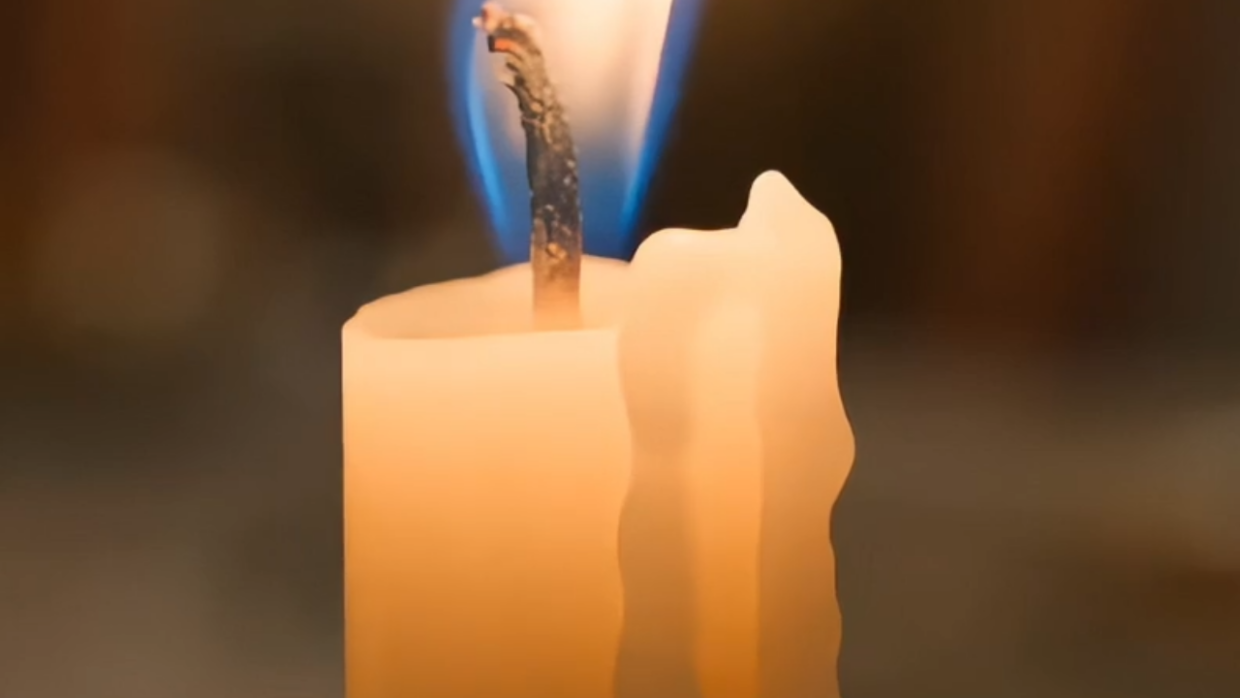
Eighteen candles. The wax dripped a little on the frosting. Sofia immediately tried to blow them out and had to be physically restrained by Uncle Ricky.
“Let Marisol do it,” her mother said firmly.
“But I’m good at blowing —”
“Sofia.”
Sofia subsided, vibrating with the effort of containment.
Marisol looked at the candles. Eighteen of them, small and warm and flickering in the draft from the restaurant’s ventilation system. Around her: her mother, still slightly red-eyed. Her father, who had his arm around her mother’s shoulders. Uncle Ricky and Aunt Carmen. Sofia, practically levitating. And Marcus, sitting beside her in his dress uniform with the terrible birthday card still on the table between them, watching her the way older brothers watch their little sisters when they’ve been away too long and are trying to memorize everything at once.
She thought about what she would wish for.
She’d been planning to wish for something practical — a good year, a good apartment, a good job after graduation. Something sensible. Something that reflected the kind of careful, measured thinking she’d trained herself into over eight months of dating someone who made her feel like wanting things was a form of aggression.
She looked at the candles.
She thought about the sound of a door opening.
She thought about twelve steps across a restaurant floor.
She thought about *you’re going to walk out of this restaurant and you are never going to be in the same room as my family again* delivered in a voice so quiet and so certain that it had rearranged the entire atmosphere of the room.
She thought about *you weren’t late, you were exactly on time.*
She made a different wish. A bigger one. The kind she’d stopped letting herself make.
She blew out all eighteen candles in one breath.
The table erupted. Sofia finally got to clap. Uncle Ricky cheered. Her mother pressed both hands to her heart. Her father smiled the smile he saved for moments he knew he would remember.
Marcus put two fingers in his mouth and whistled, sharp and loud, the way he’d whistled at every one of her soccer games from the time she was eight until the time he shipped out, and the sound of it hit her somewhere deep and specific and she felt something in her chest come loose and resettle into a better shape.
—
They stayed at Bella Notte until the staff began stacking chairs at the other tables.
Her father paid the bill and tipped extravagantly, the way he always did when he felt strongly about something, and Marisol saw him say something quietly to the server Priya on the way out, and Priya nodded and touched her arm briefly, and that was that.
In the parking lot, the night was cool and clear. Sofia had fallen asleep against Uncle Ricky’s shoulder. Aunt Carmen was on the phone with someone, laughing about something. Her parents stood near the car, her father’s arm still around her mother, both of them watching their children the way parents watch their children when they’ve been reminded of something important.
Marisol and Marcus stood by his truck.
“You drove two hours,” she said.
“Two fourteen,” he said. “There was construction outside Knoxville.”
“You could have told me you were coming.”
“Then it wouldn’t have been a surprise.”
She looked at him. “How long have you known you could get leave?”
He was quiet for a moment. “Three weeks.”
“Marcus.”
“I wanted to surprise you.”
“You —” She stopped. Shook her head. Looked at the parking lot asphalt. “You let me cry about it. I cried about you not coming and you let me.”
“I know. I’m sorry.”
“You’re the worst.”
“I know.”
She looked up at him. He was watching her with that expression she’d grown up with, the one that was equal parts amusement and something more serious underneath, the one that meant *I see you, I have always seen you, and I am not going anywhere.*
“How did you know?” she asked. “When you walked in. How did you know something was wrong?”
He thought about it. “Mom’s face,” he said. “And the way you were sitting.”
“The way I was sitting.”
“You were sitting the way you sit when you’re trying not to take up space,” he said. “You’ve been doing it since you were twelve and you thought you were too loud. I hate when you sit like that.”
She didn’t have anything to say to that for a moment.
“He used to tell me I was too much,” she said. “Too loud, too sensitive, too —” she stopped.
“Yeah,” Marcus said. “I figured.”
“You figured.”
“Eight months of you calling me less than you used to. Eight months of you saying everything was fine in that voice you use when everything is not fine.” He looked at her steadily. “I’ve known you for eighteen years, Marisol. You’re not subtle.”
She laughed despite herself. “I thought I was being subtle.”
“You were not.”
“I was trying to —” she stopped again. Started over. “I thought if I was careful enough, quiet enough, it would be okay. I thought I could manage it.”
“You shouldn’t have to manage it.”
“I know that now.”
“You knew it before,” he said. “You just needed someone to say it out loud.”
She thought about that. She thought about eight months of managing and being careful and sitting in a way that didn’t take up space, and she thought about the moment she’d said *get out* and meant it completely, without hesitation, without wondering if she was being too much.
“Yeah,” she said. “I did.”
Marcus reached out and put his arm around her shoulders, the way he’d done since she was small enough to fit under it entirely. She leaned into it.
“For the record,” he said, “you have always been too much. That’s not a flaw.”
“No?”
“It’s a feature,” he said. “The right people know that.”
—
She blocked Derek’s number that night, sitting on the edge of her childhood bed in her parents’ house, where she’d decided to stay over because Marcus was there and because she wasn’t ready to go back to her apartment yet and because she was eighteen years old and it was her birthday and she was allowed to want her family around her.
She blocked him without ceremony. No long deliberation, no rereading of old messages, no wondering if she was making the right call. She opened her contacts, found his name, and blocked it, and then she put her phone face-down on the nightstand and that was the end of eight months.
It felt smaller than she’d expected. Lighter.
She heard Marcus in the hallway, saying something to her father in a low voice, and her father laughing quietly at whatever it was, and she heard her mother in the kitchen making the tea she always made when she couldn’t sleep, the chamomile with honey, the smell of which had meant *safe* to Marisol since she was four years old.
She picked up the birthday card from the nightstand. The cartoon star in sunglasses looked up at her.
She opened it.
Marcus’s handwriting was terrible — it had always been terrible, cramped and tilted, the handwriting of someone who’d been told to slow down and never had. But she could read it.
*Happy 18th, Superstar. Sorry the card is bad. Sorry I couldn’t mail the good one. Sorry I was late (I wasn’t late). You are the best person I know and you always have been. Don’t let anybody make you small. Love, Marcus.*
She read it twice.
Then she set it on the nightstand, face up, next to the lamp.
She turned off the light.
Outside her window, the neighborhood was quiet. Somewhere down the street, a dog barked once and stopped. The air coming through the screen was cool and smelled like cut grass and the beginning of something.
She was eighteen years old.
She had a family that would drive two hours and fourteen minutes in a dress uniform with a gas station card in their hand.
She had a mother who made chamomile tea at midnight.
She had a father who tipped extravagantly when he felt strongly about something.
She had a little cousin who had tried to blow out her candles and had to be physically restrained.
She had a brother who had crossed a restaurant in twelve steps and said *I’ve got it* and meant it all the way down.
She was going to be okay.
Not eventually. Not someday. Not in the careful, qualified way she’d been telling herself she was fine for eight months.
Now. Tonight. She was okay right now.
She closed her eyes.
In the kitchen, her mother’s kettle began to whistle, soft and domestic and warm, and Marisol Vega smiled in the dark of her childhood bedroom on the night she turned eighteen, and slept better than she had in months.
—
Three days later, she moved the last of Derek’s things — a jacket, a phone charger, a book he’d lent her that she’d never gotten around to reading — into a paper bag and left it outside her apartment door with a note that said *your stuff* and nothing else.
She didn’t watch him pick it up. She was in the kitchen making coffee when she heard the door, and she stayed in the kitchen, and she listened to the sound of his footsteps going down the stairs, and then she listened to the sound of them not coming back.
Marcus called that afternoon.
“How are you?” he said.
“Good,” she said. And then, because she was done with the voice she used when things were not fine: “Actually good. Not the other kind.”
“Yeah?”
“Yeah.”
“Okay,” he said. “Good.”
“How’s base?”
“Loud. Boring. Somebody broke the coffee maker.”
“That’s a tragedy.”
“It’s a crisis,” he said. “We’re managing.”
She laughed.
“Marcus,” she said.
“Yeah?”
“Thank you. For coming.”
“You don’t have to thank me for that.”
“I know. I’m doing it anyway.”
There was a pause. She could hear the ambient noise of wherever he was — wind, distant voices, the specific quality of outdoor air that she associated with his calls.
“Marisol,” he said.
“Yeah?”
“Next time something’s wrong —”
“I’ll call,” she said. “I promise. I’ll call.”
“Okay,” he said. “Good.”
She stood in her kitchen with her coffee going warm in her hand and the morning coming through the window at the angle it came through in October, golden and specific, the kind of light that made ordinary things look like they mattered.
She thought about the wish she’d made over eighteen candles.
She thought it might be coming true already.
—
Six months later, she was sitting in the front row at Marcus’s promotion ceremony, wearing the dress she’d bought specifically for the occasion, next to her parents and Aunt Carmen and Uncle Ricky and Sofia, who had made another paper crown, this one for Marcus, which he was going to have to be very kind about.
When they called his name, she stood up before anyone else did.
She put two fingers in her mouth and whistled — sharp and loud, the way he’d taught her when she was nine years old, the way he’d whistled at every one of her soccer games.
He found her face in the crowd immediately. Of course he did. He’d always been able to find her.
He grinned.
She grinned back.
And that was that.