She opened a beat-up violin case in the middle of a packed restaurant… But she didn’t come to perform—she came to expose the “janitor” who erased his own name.
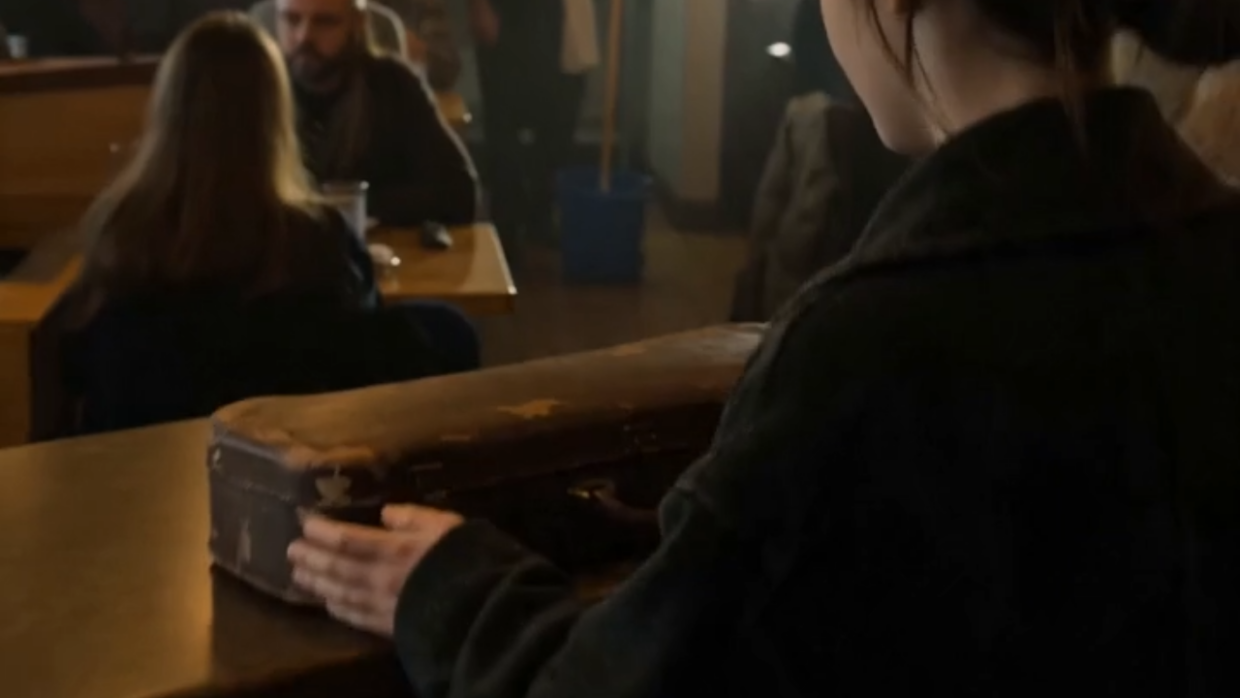
Mara set the worn violin case on the host stand like it weighed a hundred pounds.
The hostess blinked. “Uh… sweetie, musicians come through the back.”
“I’m not here to play,” Mara said. Her voice cracked on the last word. “I’m here to find someone.”
A couple at the bar turned. Someone snorted. “Then why bring the violin?”
Mara swallowed and kept her hands on the latches like they were the only thing keeping her upright. “Because it’s his.”
The hostess hesitated. “Do you have a reservation?”
“I have a question.” Mara looked past her, into the restaurant’s warm, noisy blur. “Is there a man who cleans here? Older. Quiet. Keeps his head down.”
A waiter slid by, balancing plates. “We all clean.”
“Not like him,” Mara said. “He’s… he’s hiding.”
From the dining room, a laugh rose and fell. Forks clinked. Glasses chimed.
Mara stepped around the stand before the hostess could stop her.
“Ma’am—miss—” the hostess called, suddenly sharp. “You can’t just walk in—”
Mara raised her voice over the music. “I’m not staying. I just need to see him.”
Heads turned. The pianist in the corner missed a chord.
A manager in a crisp button-down appeared like he’d been summoned by trouble. “Can I help you?”
Mara’s hands trembled on the case handle. “I’m looking for Victor Hale.”
The manager’s face didn’t change, but his eyes did. “We don’t have anyone by that name.”
“I didn’t ask if you had him on payroll,” Mara said. “I asked if he’s here.”
A woman at table twelve leaned to her date. “Is this a proposal?”
Her date whispered back, “Looks like a lawsuit.”
The manager took one step closer, voice lower. “If you’re not dining, I’m going to have to ask you to leave.”
Mara nodded once like she’d expected that. “Okay. Then I’ll ask everyone.”
The manager’s jaw tightened. “Excuse me?”
Mara turned, facing the room. Her heartbeat thudded in her ears.
“I’m sorry,” she said, loud enough to carry. “I just need one person’s attention.”
The pianist stopped completely now, hands hovering.
A hush rolled outward, table by table, like someone turned down the whole restaurant.
Mara’s throat tightened. “I used to take lessons from a man who saved my life. He disappeared. I think he’s here. If he is… I need him to look at me.”
A few people shifted, uncomfortable. A man by the bar muttered, “This is weird.”
Mara’s eyes scanned the faces. Suits. Couples. A family with a kid holding a breadstick like a sword.
Nothing.
Then, at the far end, near the swinging kitchen doors, a janitor paused with a mop bucket.
Gray hair, close-cropped. Work shirt. Eyes down.
He started moving again—too fast, too casual—like he hadn’t just frozen.
Mara’s breath caught. “You.”
The janitor kept walking.
Mara picked up the violin case and threaded between tables.
A chair scraped. Someone whispered, “Oh my God.”
The manager followed, urgent and angry. “Miss, stop.”
Mara’s shoes slipped slightly on the polished floor, but she didn’t slow down.
She reached the janitor just as he pushed the kitchen door with his shoulder.
“Sir,” she said, not loud now—raw. “Please.”
He stopped without turning.
Mara stepped into his line of sight. “Victor.”
The janitor’s eyes flicked up—fast—then away. “You’ve got the wrong person.”
Mara held the case out between them like an offering. “No, I don’t.”
His face was careful, blank in a way that took practice. “I don’t know you.”
Mara swallowed hard. “You taught me when my mom couldn’t afford it.”
The manager arrived beside them, breath tight. “This employee is working. You need to leave.”
Mara didn’t look at the manager. Her eyes stayed on the janitor. “You told me, ‘If your hands shake, it means you care. Make it music.’”
The janitor’s nostrils flared—just once.
Mara pushed, voice breaking. “You told me I wasn’t too late. You told me I could start over.”
The janitor’s fingers tightened around the mop handle.
The manager leaned in, harsh whisper. “Eddie, go inside. I’ll handle this.”
“Mara,” she said softly, tasting the name like it hurt. “My name is Mara.”
The janitor’s head snapped up for real this time.
Mara saw it then: recognition—sharp and immediate—followed by panic like a door slamming.
His mouth opened, then closed.
Mara almost laughed from the relief. Almost.
Instead she breathed, “You remember.”
“I don’t,” he said quickly. Too quickly. “I’m not who you think. Please don’t do this here.”
Mara’s grip on the case went white-knuckled. “Where is ‘here’ safe for you? Because you weren’t safe for me when you disappeared.”
The manager’s eyes narrowed. “What is this about?”
Mara finally looked at him. “It’s about why your janitor is living under a fake name.”
The manager bristled. “He’s been with us for two years. He’s a good employee.”
Mara nodded like that proved her point. “Of course he is. He always was.”
The janitor’s voice dropped. “Stop.”
Mara flinched at the quiet command. It sounded like the studio. Like the metronome. Like discipline.
She steadied herself. “I’ve been looking for you for three years.”
The janitor’s gaze darted to the dining room—people watching like it was a show they didn’t pay for but couldn’t look away from.
Mara followed his eyes and spoke louder, on purpose. “You vanished the week before my conservatory audition.”
A woman near the bar gasped softly, like she knew what that meant.
Mara’s words came faster. “Your number was dead. Your studio was empty. There was no note.”
The janitor’s lips pressed tight. “I had to.”
“You had to?” Mara repeated, incredulous. “You ‘had to’ leave me holding a violin like a stupid promise?”
The manager stepped in. “Okay, that’s enough—”
Mara cut him off. “I bombed the audition.”
The room made a small, collective sound—sympathy mixed with discomfort.
Mara blinked fast. “Not because I wasn’t ready. Because I kept waiting for you to walk in and tell me to breathe.”
The janitor’s shoulders shifted like he’d been hit.
Mara lifted the case a little. “I kept this.”
“I told you,” he said, low, pleading now. “Don’t.”
Mara’s jaw trembled. “Why did you teach me like I mattered… and then treat me like I didn’t exist?”
The manager looked between them. “Eddie, is any of this true?”
The janitor’s eyes dropped.
That tiny movement was an answer.
Mara let out a shaky breath. “It’s you.”
The manager’s voice sharpened. “Eddie.”
The janitor swallowed. “It doesn’t matter.”
“It matters to me,” Mara snapped. Then softer, “It matters because I’m done being the kid who waits.”
She clicked the latches open.
The sound was small, but in the quiet restaurant it was a gun cocking.
The lid lifted.
Inside: an old violin, the varnish worn at the shoulder rest, a crack repaired near the f-hole. A cheap instrument, loved into something better.
Mara’s fingers brushed the strings. “You fixed this for me. For free.”
The janitor stared like he couldn’t stop himself.
Mara reached into the case pocket and pulled out a folded paper, edges soft with age.
She held it up. “And you wrote this.”
The manager squinted. “What is that?”
Mara unfolded it carefully and read, voice steadying as she went.
“‘Mara Quinn has a musician’s mind and a survivor’s hands. She deserves a room where she can be loud.’ Signed—Victor Hale.”
A wave of murmurs. Someone whispered, “He signed it.”
The manager’s eyes widened a fraction.
Mara’s heart hammered. “I applied everywhere with that letter. They called the number you listed. It was disconnected.”
The janitor’s voice turned brittle. “Because I didn’t want them to reach me.”
Mara took one step closer. “Why?”
For the first time, he looked right at her. His eyes were brown and tired and familiar in a way that made her furious.
He said, almost inaudible, “Because people who reach me… get pulled into it.”
Mara’s laugh was sharp, humorless. “Into what?”
He didn’t answer.
The manager stepped forward, suspicious now. “Eddie, who are you?”
The janitor’s throat bobbed. “Nobody.”
Mara raised the paper higher. “You were somebody. And then you decided you could erase it.”
He flinched at “erase.”
Mara’s voice softened, but it cut deeper. “You erased you. But you also erased me.”
The janitor’s grip on the mop loosened. “Mara, I’m sorry.”
“Sorry doesn’t give back time,” she said.
A server near the kitchen whispered, “Manager, should I call someone?”
The manager didn’t take his eyes off the janitor. “Eddie?”
The janitor shut his eyes for a beat, like he was bracing.
When he opened them, he looked at Mara like she was a judge.
Mara lifted the violin case slightly. “I didn’t come to beg.”
He stared at the instrument. “Then why are you here?”
Mara’s voice steadied into something colder. “To stop wondering if I made you up.”
The janitor’s face cracked—just a hairline fracture of pain. “You didn’t.”
Mara nodded. “Good.”
The manager said, “Sir, if your name isn’t Eddie—”
The janitor cut him off, quiet and final. “My name isn’t Eddie.”
A ripple went through the room.
The manager’s posture stiffened. “Then I need to see your identification.”
The janitor stared at the floor. “You won’t.”
The manager’s voice rose, defensive. “We do background checks—”
Mara interrupted, lifting her phone from her pocket. “You didn’t do a good one.”
The manager snapped, “What did you do?”
Mara’s thumb hovered over her screen. “I did what you didn’t. I searched ‘Victor Hale violin coach’ and I found the local news article you tried to bury.”
The janitor’s head jerked up. “Don’t.”
Mara’s eyes burned. “I’m not the one who wrote it.”
The manager’s expression shifted—unease replacing authority. “What article?”
Mara swallowed. “It says Victor Hale was accused of—”
“Stop,” the janitor said, voice shaking now. “Please.”
Mara froze. The word “please” sounded like surrender, and it messed with her.
The room held its breath.
Mara lowered her phone. “I don’t even know if it was true. That’s what’s been killing me.”
The janitor’s shoulders sagged, like he’d been carrying the accusation physically.
Mara’s voice sharpened. “So tell me.”
He looked at her, eyes wet but furious. “Not here.”
Mara gestured around them. “You made ‘here’ when you hid in it.”
The manager said, “If there’s an accusation, I have to—”
The janitor snapped, a sudden flash of steel. “I was cleared.”
Silence dropped like a curtain.
Mara blinked. “You were… what?”
He swallowed hard. “They cleared me. The person who lied recanted. The case was closed. But the headline stayed.”
Mara’s throat tightened. “Then why did you run?”
His laugh was bitter. “Because being cleared doesn’t scrub people’s eyes.”
Mara felt anger and pity collide, hot and confusing.
He continued, voice low. “I stopped teaching. I stopped performing. I stopped being someone people could Google.”
Mara whispered, “And you left me.”
His eyes flicked away. “I left everyone.”
Mara shook her head. “You didn’t get to decide that for me.”
He looked back. “I was trying to protect you.”
Mara barked out a laugh. “From what? From a rumor you didn’t even do?”
His jaw tightened. “From the way it follows. From the way it lands on anyone near me.”
Mara stared at him, breathing hard.
Then she lifted the violin case toward him again.
The janitor’s eyes widened slightly. “No.”
Mara’s voice went soft, deadly calm. “Take it.”
He shook his head once. “I can’t.”
“You can,” Mara said. “You just won’t.”
He whispered, “Mara—”
Mara interrupted, loud enough for the room. “I came here because I need one thing from you.”
The manager shifted, caught between throwing her out and being unable to look away.
Mara said, “I need you to play.”
A man at the bar scoffed. “Oh, come on.”
Mara snapped her gaze to him. “I’m not asking you.”
She turned back to the janitor. “Play. Or tell the truth that you’re not him. Right now. In front of everyone.”
The janitor’s face went pale.
Mara pushed. “Because I’m done carrying the doubt by myself.”
The janitor stared at the violin like it was a weapon.
His hands—callused, steady—lifted slowly from the mop handle.
He didn’t touch the violin yet.
He looked at Mara, voice trembling. “If I play, you walk out after.”
Mara’s eyes stung. “If you play, I’ll finally know I wasn’t crazy.”
He nodded once, like a contract had been signed.
The manager exhaled, tense. “Eddie—sir—this is inappropriate.”
The janitor didn’t look at him. “Then fire me.”
That hit the manager like a slap. “What?”
The janitor’s gaze stayed on Mara. “Fire me. Call your lawyer. I don’t care.”
Mara whispered, “Why now?”
He answered quietly, “Because you found me anyway.”
He reached out.
His fingers hovered over the violin for a beat—reverent, terrified.
Then he took it.
The bow came out next. He tightened it with a practiced twist.
Someone whispered, “Is he… is he actually going to—”
Mara stepped back to give him space, the way he taught her. “Plant your feet,” she whispered without thinking.
His mouth twitched—almost a smile, then it vanished.
He raised the violin to his shoulder.
His chin settled.
His posture changed.
The janitor disappeared.
Victor Hale stood there—older, wounded, but unmistakable.
The manager’s face went slack. “Oh my—”
The first note sliced through the restaurant.
Clean. Full. Not loud—certain.
The room didn’t just quiet.
It froze.
Forks paused in midair. A glass hovered near someone’s lips. The kitchen door stopped swinging.
Mara’s breath shook.
He played like the air owed him an apology.
He didn’t look at anyone, not even Mara, and somehow it felt like mercy.
A second phrase rose—warm and aching—then turned sharp, defiant.
Mara felt the music hit every place she’d been trying not to remember: the cheap practice room, her mother asleep on the couch, her own hands cramping, the day she waited on the studio steps until dark.
Tears slid down her face. She didn’t wipe them.
The manager whispered, “That’s… that’s him.”
Mara almost laughed through her tears. “Yeah.”
The janitor—Victor—finished the final line with a soft, controlled lift.
The bow stopped.
Silence held for a long beat, like the restaurant forgot how to breathe.
Then one person started clapping.
Another.
Suddenly the room erupted—applause, stunned and real, people standing without knowing why.
Mara didn’t clap. She just stared at him, heart pounding.
Victor lowered the violin and looked at her like he’d been waiting for the verdict.
Mara stepped forward, voice shaking. “That’s all I needed.”
Victor’s lips parted. “Mara—”
She lifted a hand. “No.”
The applause kept going behind them.
Mara’s eyes locked on his. “You don’t get to vanish again without consequences.”
His face tightened. “What consequences?”
Mara pulled her phone out again—not as a threat now, but as a decision. “I brought proof.”
Victor went still.
Mara opened her email and turned the screen toward him.
On it: a message thread with a county clerk’s office and a scanned document.
Victor’s eyes flicked across it, fast.
His shoulders sagged.
The manager leaned in, trying to read. “What is that?”
Mara said, loud enough for the manager and the closest tables, “A public records request. The court order that cleared Victor Hale’s name.”
The manager’s brow furrowed. “Cleared?”
Mara nodded. “It’s official. Signed. Dated. Not a rumor. Not a blog. Not a headline.”
Victor’s throat worked. “Why would you—”
Mara cut him off, voice breaking with anger. “Because you didn’t.”
Victor flinched.
Mara turned to the manager. “You’ve got an employee using a fake name because the internet decided he was guilty forever.”
The manager stared, stunned. “Sir… why didn’t you tell us?”
Victor looked down. “Because I didn’t want pity. I wanted invisibility.”
Mara said, “You don’t get invisibility. Not after what you gave me.”
Victor whispered, “I didn’t give you enough.”
Mara stepped closer until only the violin separated them. “You gave me a voice.”
She took a breath, the kind she used to take before playing.
Then she said the thing she came to say.
“I’m not here for your apology. I’m here to hand you back your name.”
Victor’s eyes filled. His jaw clenched hard to keep control.
The manager cleared his throat, voice unsteady. “If that order is real… we can update your employment file. We can—”
Victor laughed once, bitter. “So you can keep me as your inspiring mystery?”
The manager flushed. “No, I mean—”
Mara turned to the manager, sharp. “He’s not your secret.”
She looked back at Victor. “And you’re not your shame.”
Victor’s breath shuddered.
Mara held out her hand, not for the violin—for the letter in the case pocket.
“Give me your pen,” she said.
Victor blinked. “What?”
Mara repeated, firm. “Your pen.”
He patted his shirt pocket, pulled out a cheap pen, and handed it over like he didn’t trust his fingers.
Mara grabbed a linen napkin off a nearby tray.
The manager started, “Miss, that’s—”
Mara ignored him and wrote quickly, pressing hard.
Then she shoved the napkin toward Victor.
He stared at the words.
Mara said, “Read it.”
Victor’s voice was hoarse. “I… I can’t—”
Mara’s eyes flashed. “Read it.”
Victor swallowed and read, quietly at first, then louder as the room leaned in.
“‘To whom it may concern: I, Victor Hale, confirm that Mara Quinn trained under me. She earned every note. I left without explanation. That was my failure, not hers.’”
Mara’s throat tightened.
Victor continued, voice cracking. “Signed—Victor Hale.”
He stared at the signature line like it might bite him.
Mara shoved the pen closer. “Sign it.”
His hand shook as he took the pen.
A long beat.
Then he signed: Victor Hale.
The room went quiet again, watching the ink appear like a resurrection.
Mara’s chest heaved. She took the napkin back, folded it carefully, and slid it into the violin case like it belonged there.
Victor whispered, “Mara… I don’t deserve—”
“You don’t get to decide what you deserve,” Mara said. “That’s kind of been the problem.”
The manager said, “Sir… Victor… do you want to talk in my office?”
Victor looked at Mara, searching. “What do you want from me?”
Mara’s eyes were wet but steady. “I want you to stop hiding.”
Victor’s face tightened. “And if I can’t?”
Mara lifted her chin. “Then I’ll stop hiding too.”
Victor blinked. “What does that mean?”
Mara pulled out her phone and opened another tab: a drafted email, addressed to three conservatories and one local arts nonprofit.
Victor’s eyes widened. “Mara—”
Mara said, loud enough that the closest tables could hear the stakes, “It means I’m sending your clearance order to the people who mattered. And I’m sending your signed letter with it.”
Victor’s voice turned urgent. “Don’t—people will—”
Mara cut him off, fierce. “People already did. Without facts. Without you.”
Victor’s hands curled into fists. “You’re putting yourself in the blast.”
Mara nodded once. “Good.”
Victor stared at her like he was seeing her grown up for the first time.
The manager murmured, “This is… this is serious.”
Mara’s thumb hovered over SEND.
Victor’s voice dropped to a whisper. “If you send that… I can’t go back to being nobody.”
Mara’s eyes locked on his. “That’s the point.”
A long silence.
Victor exhaled, shaking. “Do it.”
Mara hit SEND.
The tiny whoosh sound was nothing.
But Victor flinched like it was thunder.
Mara’s shoulders dropped, a release she’d been holding for years.
Victor’s eyes closed for a beat. When he opened them, something in him had settled—resignation turning into resolve.
The manager spoke carefully, as if the whole room might shatter. “Victor… we need to discuss your employment situation.”
Victor nodded once. “I resign.”
The manager startled. “You’re quitting?”
Victor looked at Mara. “I’m done mopping in the dark.”
Mara’s lips trembled. “Good.”
The manager stammered, “But—we could—”
Victor shook his head. “No more hiding behind your back door.”
A woman at a table called out, “Play again!”
Someone else said, “He’s incredible!”
Victor turned to the dining room for the first time. His voice carried, calm and firm.
“My name is Victor Hale,” he said. “I was cleared. And I let a headline steal my life.”
The room stayed silent—listening.
He continued, “I won’t let it steal hers.”
Mara’s throat tightened so hard she could barely breathe.
The manager’s face flushed with embarrassment—realizing he’d been part of the system that benefitted from ignorance.
Victor looked back at Mara. “You came for justice.”
Mara’s voice was quiet. “I came for truth.”
Victor nodded. “You got it.”
Mara lifted the violin case handle. “Keep it. It was always yours.”
Victor shook his head. “No.”
Mara froze. “What?”
Victor’s eyes shone. “It’s yours now.”
He gently pushed the violin back toward her.
Mara whispered, “I haven’t played in—”
“I know,” Victor said. “That’s why.”
Mara swallowed. “In front of everyone?”
Victor’s gaze was steady, teacher-quiet. “In front of yourself.”
Mara’s hands shook as she took the violin.
A man near the bar muttered, softer now, “She’s actually gonna do it.”
Mara lifted the violin to her shoulder. It felt like picking up a part of her body she’d left somewhere.
Victor stepped back, giving her the space he once gave her in that tiny studio.
Mara raised the bow.
Her first note wobbled.
A ripple of discomfort moved through the room.
Mara’s cheeks burned.
Victor didn’t speak, but his hand lifted slightly—two fingers, a silent cue: breathe.
Mara inhaled, deep.
Her second note steadied.
Her third found the center.
Then the sound opened—raw, imperfect, alive.
Tears blurred her vision, but her arm kept moving.
By the end, the restaurant wasn’t frozen.
It was listening.
Mara finished on a clean, trembling note and lowered the bow.
A beat.
Then applause—bigger this time, not for shock, but for survival.
Mara let out a shaky laugh that turned into a sob she didn’t fight.
Victor’s eyes filled. His jaw tightened.
He whispered, “There she is.”
Mara wiped her face with the back of her wrist, still holding the violin. “Don’t disappear again.”
Victor shook his head, voice rough. “I won’t.”
The manager approached, humbled. “Victor… I’m sorry. We should’ve—”
Victor cut him off, not cruel, just done. “Do better next time.”
The manager nodded, swallowing. “We will.”
Mara snapped the case closed with a final, satisfying click.
That click felt like a door locking behind her.
Outside, through the front windows, a patrol car rolled by slow—normal life continuing, indifferent.
Inside, Mara finally exhaled.
Victor held her gaze, then looked at the crowd and said, steady and loud, “I’m not a janitor. I’m a musician.”
The room erupted again.
And for the first time in three years, Mara smiled—fully, openly—because the man who ran was finally standing in the light, and the lie that chased him had just died in public.