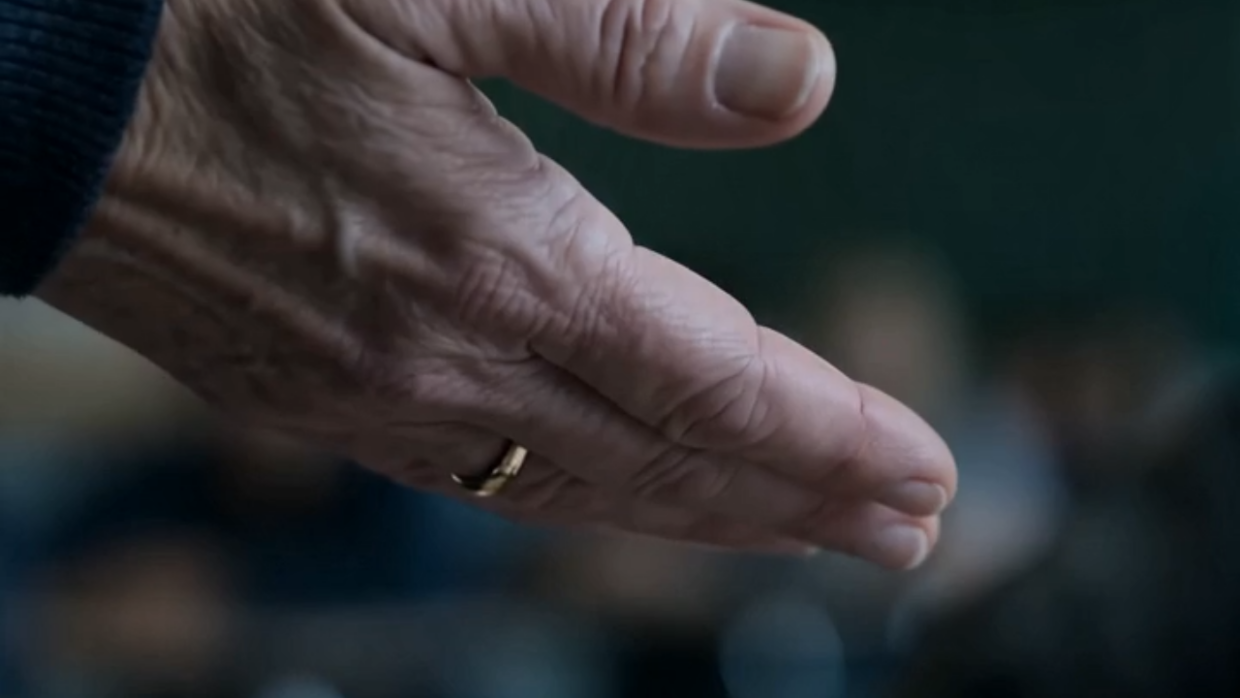
She confiscated the faded jacket in front of everyone… But his hands were shaking when he whispered what it really was.
Marcus had worn the same jacket for seventy-three days straight.
Ms. Patricia Brennan had counted.
The jacket was oversized, faded black, with a ripped left pocket and fraying cuffs. It smelled faintly of motor oil and laundry detergent. Marcus wore it in September heat. He wore it in October rain. He wore it every single day, zipped to his chin, even indoors.
Patricia taught eighth-grade English at Riverside Middle School. She’d been teaching for nineteen years. She believed in structure, consistency, and rules that applied to everyone.
The student handbook was clear: outerwear must be removed during class.
“Marcus, jacket off,” Patricia said on the seventy-fourth day, standing at the front of the room while students filed in.
Marcus slid into his seat in the back row, head down, hands stuffed in the jacket pockets.
“Marcus.”
He didn’t look up.
Patricia walked down the aisle. Twenty-six students watched.
“You know the rule. Jacket off, or I’m confiscating it.”
Marcus’s jaw tightened. He stared at his desk.
“This is your final warning.”
Silence.
Patricia held out her hand. “Give me the jacket.”
Marcus’s shoulders curled inward. His fingers gripped the zipper pull.
“Now, Marcus.”
Slowly, he unzipped it. Pulled his arms free. Handed it over without meeting her eyes.
Patricia took it, walked back to her desk, and draped it over her chair. “You’ll get it back at the end of the day.”
Marcus didn’t argue. Didn’t protest. He just sat there, staring at the desk, his T-shirt wrinkled and too thin for November.
Patricia started the lesson on *To Kill a Mockingbird*. Marcus didn’t open his book.
At lunch, Patricia ate in her classroom. She glanced at the jacket on her chair.
It was heavier than it looked.
She picked it up. Turned it over. The lining was worn soft from years of use. There was a name stitched in faded red thread on the inside collar: *D. Holloway*.
Marcus’s last name was Holloway.
Patricia frowned. She checked the pockets. Empty except for a small, folded photograph.
She unfolded it.
A man in his thirties, grease-stained work shirt, standing beside a tow truck. He had Marcus’s eyes. Marcus’s nose. In the photo, the man wore the same black jacket.
Patricia’s stomach dropped.
She refolded the photo. Slid it back into the pocket.
When the bell rang for fifth period, Marcus came in, sat down, and stared at the jacket still draped over her chair.
Patricia tried to focus on the lesson. She couldn’t.
After class, she stopped Marcus at the door.
“Marcus, wait.”
He froze.
Patricia held out the jacket. “Here.”
Marcus took it, clutching it against his chest like it might disappear.
“Who’s D. Holloway?” Patricia asked quietly.
Marcus’s face went blank. “My dad.”
“Is he—”
“He died. Last year.”
Patricia’s throat tightened. “I’m sorry.”
Marcus zipped the jacket back on. “Can I go?”
“Yes.”
He left.
Patricia stood in the empty classroom, staring at the door.
That night, she couldn’t sleep. She kept seeing Marcus’s face when she’d taken the jacket. The way his hands had shaken. The way he hadn’t fought back.
The next morning, Patricia arrived early. She pulled Marcus’s file from the counselor’s office.
Father: *Deceased, April 2023. Motor vehicle accident.*
Mother: *Incarcerated, June 2023. Custody transferred to maternal grandmother.*
Current address: *827 Fairview, Apt 2B.*
Patricia closed the file.
She found Marcus before first period, sitting alone in the hallway, jacket zipped up, hood pulled low.
“Marcus, can we talk?”
He looked up, wary.
“I owe you an apology,” Patricia said. “I didn’t know about your dad. I shouldn’t have taken the jacket.”
Marcus shrugged. “You were just doing your job.”
“That doesn’t make it right.”
Marcus pulled the hood lower. “It’s fine.”
“It’s not fine,” Patricia said. “I should have asked why you wore it. I should have listened.”
Marcus didn’t respond.
Patricia sat down beside him on the floor. “Can I ask you something?”
Marcus nodded.
“Why do you wear it every day?”
Marcus’s fingers traced the zipper. “It still smells like him. Like the garage. Like… home.”
Patricia’s chest ached.
“I know it’s stupid,” Marcus said quickly. “But when I wear it, it’s like he’s still here. Like he’s still—” His voice cracked. He stopped.
Patricia didn’t say anything. She just sat there.
“My grandma says I need to move on,” Marcus whispered. “She says I can’t wear it forever. But I don’t know how to let go.”
Patricia swallowed hard. “You don’t have to let go. Not yet. Not until you’re ready.”
Marcus looked at her, eyes red-rimmed.
“And even when you are ready,” Patricia said, “it doesn’t mean you’ll forget him.”
Marcus wiped his face with his sleeve. “Everyone keeps saying it gets easier. But it doesn’t.”
“No,” Patricia said. “It doesn’t get easier. You just get stronger.”
Marcus nodded slowly.
The bell rang. Students flooded the hallway.
“You can wear the jacket in my class,” Patricia said. “I’ll clear it with the principal.”
Marcus’s eyes widened. “Really?”
“Really.”
For the first time in months, Marcus almost smiled.
Patricia stood. “Come on. Let’s get to class.”
Marcus followed her, hands in his pockets, jacket zipped up.
But that afternoon, Patricia got a call from Principal Denise Hartman.
“Patricia, I need to see you. Now.”
Patricia walked to the main office. Denise sat behind her desk, arms crossed.
“I got a complaint,” Denise said. “From a parent. About you allowing Marcus Holloway to violate dress code.”
Patricia’s stomach sank. “I gave him permission—”
“You don’t have the authority to override school policy,” Denise interrupted. “The handbook is clear. Outerwear comes off indoors.”
“Denise, his father died. That jacket—”
“I understand that,” Denise said. “But we can’t make exceptions. If we let Marcus wear a jacket, we have to let everyone wear jackets. Rules apply to everyone equally.”
“This isn’t about equality,” Patricia said. “This is about compassion.”
Denise sighed. “Patricia, I sympathize. I do. But my hands are tied. The policy stands.”
Patricia’s jaw tightened. “So what do you want me to do?”
“Enforce the rule. Like every other teacher.”
Patricia left the office, furious.
She went back to her classroom. Marcus was already there, sitting in the back, jacket on.
Patricia closed the door. Sat down at her desk.
She couldn’t do it. She couldn’t take the jacket again.
But she also couldn’t ignore a direct order from the principal.
Patricia stared at Marcus. He was reading, hood up, oblivious.
She made a decision.
“Marcus,” Patricia said.
He looked up.
“Keep the jacket on.”
Marcus blinked. “But—”
“Keep it on,” Patricia repeated. “If anyone asks, tell them I said it’s fine.”
Marcus hesitated. “Are you gonna get in trouble?”
“Probably,” Patricia said. “But that’s my problem, not yours.”
Marcus’s eyes filled with tears. “Thank you.”
Patricia nodded. “You’re welcome.”
For three days, nothing happened.
On the fourth day, Denise showed up during Patricia’s class.
She walked straight to Marcus’s desk. “Marcus, jacket off.”
Marcus looked at Patricia.
Patricia stood. “Denise, can we talk outside?”
“No,” Denise said. “Marcus, jacket off. Now.”
Marcus slowly unzipped it. His hands were shaking.
“Give it to me,” Denise said.
“No,” Patricia said.
Denise turned. “Excuse me?”
“You heard me,” Patricia said. “No.”
The classroom went silent.
“Patricia, step outside. Now.”
Patricia didn’t move. “That jacket is the only thing Marcus has left of his father. Taking it is cruel.”
“It’s policy,” Denise said.
“Then the policy is wrong.”
Denise’s face flushed. “We’ll discuss this in my office.”
“Fine,” Patricia said. “But Marcus keeps the jacket.”
Denise glared at her. Then turned and walked out.
Patricia followed.
In the office, Denise slammed the door. “What the hell was that?”
“That was me standing up for a student who’s been through hell,” Patricia said.
“You undermined me in front of an entire class!”
“You were about to humiliate a grieving child!”
Denise’s voice dropped. “Patricia, I’m giving you a formal warning. One more stunt like that, and you’re suspended.”
Patricia’s heart pounded. “Fine.”
“I mean it,” Denise said. “This is your career.”
“I know,” Patricia said. “And I’d do it again.”
Denise stared at her. Then sighed. “Get out of my office.”
Patricia left.
When she got back to her classroom, Marcus was gone.
Panic surged through her. She checked the hallways. The bathroom. The cafeteria.
Finally, she found him outside, sitting on the curb, jacket wrapped around him like a blanket.
“Marcus,” Patricia said, sitting beside him.
He didn’t look at her. “You’re gonna get fired because of me.”
“No,” Patricia said. “I’m standing up for what’s right. There’s a difference.”
“But—”
“Marcus, listen to me,” Patricia said. “You are not a problem. You are not a burden. You are a kid who lost his dad, and you deserve to grieve however you need to.”
Marcus’s face crumpled. “I just miss him so much.”
“I know,” Patricia said softly. “I know.”
Marcus buried his face in the jacket. Patricia put her arm around him.
They sat there until the bell rang.
That night, Patricia wrote a letter to the school board.
She detailed Marcus’s situation. She cited research on trauma-informed teaching. She argued that rigid policies harm vulnerable students.
She submitted it the next morning.
Two weeks later, the school board held a meeting.
Patricia attended. So did Marcus’s grandmother, a small woman in her sixties with tired eyes and a firm handshake.
“I’m Linda Holloway,” she said. “Marcus’s grandma. I wanted to thank you for what you did.”
Patricia shook her hand. “I just did what any teacher should do.”
Linda’s eyes filled with tears. “Most teachers don’t.”
The board reviewed Patricia’s letter. They reviewed Marcus’s file. They debated for forty minutes.
Finally, the board president spoke.
“We’re revising the dress code policy. Effective immediately, students may request exemptions for medical, religious, or personal reasons. Teachers will have discretion to approve on a case-by-case basis.”
Patricia exhaled.
Marcus could keep the jacket.
The next day, Patricia told him the news.
Marcus stared at her, stunned. “Really?”
“Really.”
Marcus hugged her. Patricia hugged him back.
“Thank you,” Marcus whispered. “Thank you so much.”
“You’re welcome,” Patricia said.
Marcus wore the jacket every day for the rest of the year.
But in May, something changed.
Patricia noticed Marcus had started leaving the jacket unzipped. Then, one warm afternoon, he took it off during class and draped it over his chair.
Patricia didn’t say anything.
At the end of the period, Marcus folded the jacket carefully and put it in his backpack.
He caught Patricia watching.
“I think I’m ready,” Marcus said quietly.
“Ready for what?” Patricia asked.
“To not wear it every day,” Marcus said. “I’ll still keep it. But I think… I think my dad would want me to be okay without it.”
Patricia’s throat tightened. “I think you’re right.”
Marcus smiled. A real smile this time.
“He’d be proud of you,” Patricia said.
Marcus nodded. “I hope so.”
On the last day of school, Marcus stopped by Patricia’s classroom.
“I wanted to give you this,” he said, holding out a folded piece of paper.
Patricia opened it. It was a drawing of a man standing beside a tow truck, wearing a black jacket. At the bottom, Marcus had written: *Thank you for helping me remember him.*
Patricia’s eyes filled with tears. “Marcus, this is beautiful.”
“You helped me when no one else did,” Marcus said. “I won’t forget that.”
Patricia hugged him. “I won’t forget you either.”
Marcus left, jacket slung over his shoulder, walking taller than he had in months.
Patricia pinned the drawing to her bulletin board.
It stayed there for the rest of her career.
And every time a student walked into her classroom wearing something that didn’t quite fit the rules, Patricia paused.
She asked why.
She listened.
And she remembered a boy who taught her that sometimes, the most important thing a teacher can do is let a student hold on to what they need to survive.