He counted pennies for hot water every Thursday at 7:12… But the attorney said his estate was worth twelve million dollars.
He came in every Thursday at 7:12 a.m., always after the early bus hissed away and left a ribbon of exhaust hanging in the cold.
The first time I noticed him, I was polishing the pie case and trying not to think about my overdraft. He stood just inside the door of Maple & Main Café, hat in his hands like he didn’t know where to put them, eyes flicking over the menu board as if it were written in another language.
“Morning,” I said, because that’s what you say when you’re a barista and you need the day to be normal. “What can I get you?”
He pulled a handful of coins from his pocket and laid them carefully on the counter—pennies and nickels, a few dimes. He counted them twice, lips moving.
“Just… hot water,” he said. “If that’s all right.”
Hot water was free. But the way he asked, like it was a favor that might be denied, made something tighten in my chest.
“You want tea?” I asked.
His eyes widened. “No, no. I wouldn’t—”
“I’ve got extra,” I lied. I grabbed a tea bag from the basket and a large cup. “Black, okay?”
He nodded, grateful and embarrassed at the same time.
When I handed it over, his fingers brushed mine. They were cold. The kind of cold that doesn’t come from weather alone.
“Thank you,” he said. “You didn’t have to.”
“I know.”
He chose the little two-top by the front window, the one nobody liked because the sun hit it wrong in the mornings and made everything too bright. He sat with his back straight and both hands around the cup like it was something precious.
His name, I learned, was Calvin.
Not from him at first. From the mail.
Two weeks later I was taking out the trash when I saw an envelope sticking out of the bin beside the bus stop, white paper already damp around the edges. It had CALVIN ROE scrawled in shaky block letters, stamped RETURN TO SENDER.
It felt wrong to leave it there. So I picked it up and brought it inside, intending to toss it into our office trash instead.
But I didn’t.
The next morning, when the bell over the door jingled at 7:12 and he shuffled in with the same too-thin windbreaker, I held it up.
“Hey,” I said. “This had your name on it. It was in the bin out back.”
His face drained of color. For a second I thought he might bolt.
Then he took it from me, gently, like it could break.
“You shouldn’t have,” he whispered.
“It’s just mail.”
His thumb hovered over the corner, but he didn’t open it. He just slipped it into his pocket and nodded once, as if that was all he could manage.
That was the beginning, I think. Not of the feeding him part—that came later. The beginning of him becoming real to me. Not a shadow at a window table, not a man the other regulars didn’t look at. A person with a name that belonged somewhere.
By December, he was coming twice a week. Always mornings. Always the window table. Always tea, unless I could convince him to take coffee.
“You’ll be up all day,” I’d tease.
He’d glance up with a small smile. “I’m up whether I want to be or not.”
He never complained, but I learned the rhythm of him. The way he rubbed his hands before he touched a warm cup. The way he stared out at the street like he was waiting for someone who didn’t come. The way he always folded his napkin into a neat square when he was done, even if all he’d had was tea.
One snowy Thursday when the wind cut right through the front door every time it opened, he came in shaking, his shoulders hunched so far forward he looked smaller than usual. He set his coins down, counted, frowned, counted again.
“I’m short,” he said quietly. “It’s okay. The water—”
“No,” I said, too quickly. I snatched up the coins and pushed them back into his palm. “Sit.”
He blinked. “Miss—”
“Lena,” I said. “My name’s Lena.”
“Lena,” he repeated, like he was tasting it. “You don’t have to—”
“I know I don’t.” I leaned in a little, lowering my voice. “But I’m going to. Go sit. I’ll bring it out.”
I made him a coffee—two creams, no sugar, because I’d watched him reach for cream and hesitate, like it was too much to want. Then I warmed up one of the day-old croissants that were going to get tossed at closing anyway and put it on a plate.
When I brought it over, he stared at it like it was a trick.
“I can’t pay for that,” he said.
“I’m not asking you to.”
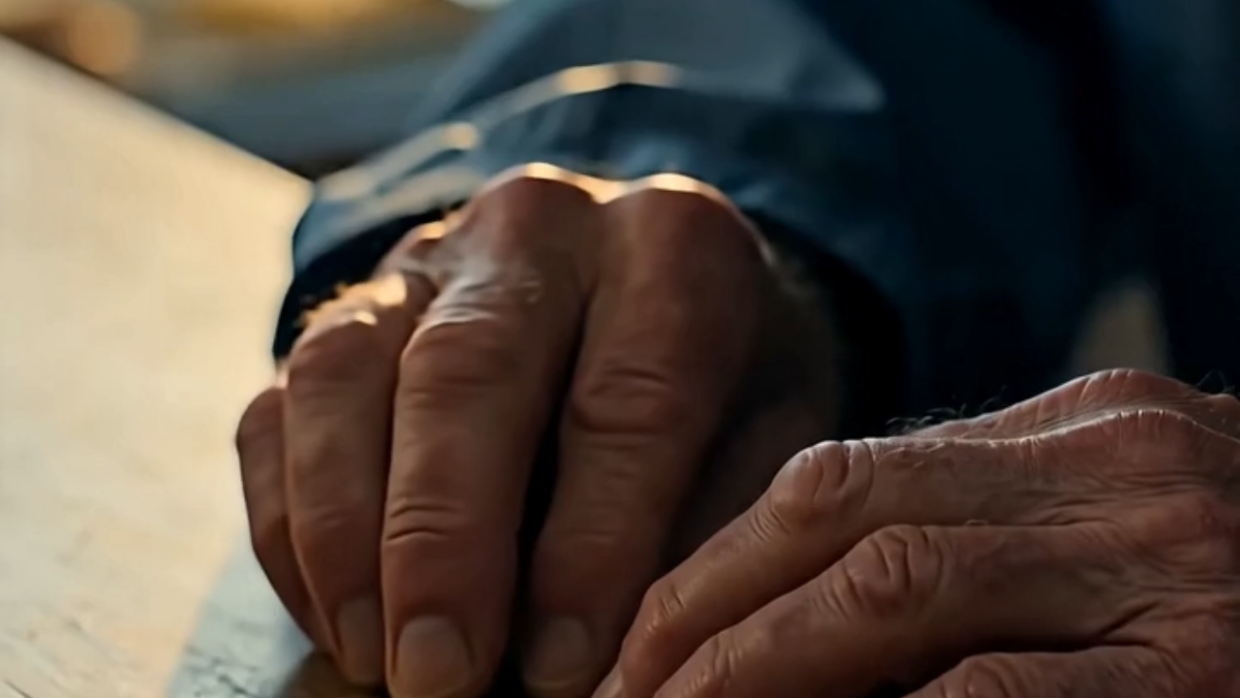
He looked down at his hands, the knuckles swollen and red from the cold.
“You shouldn’t,” he murmured. “People who give like that… it comes back around. Not always in the way they expect.”
“Is that your way of saying thank you?” I asked.
He almost smiled. “It’s my way of warning you. The world keeps score, even when we pretend it doesn’t.”
After that, it became our thing. Calvin would come in, set down his coins, and I’d tell him to put them away. Sometimes it was a croissant. Sometimes a bowl of oatmeal with brown sugar. When we had leftover soup from the lunch rush, I’d pour it into a to-go cup and set it on his table like it had always been meant for him.
My manager, Pete, noticed.
“You can’t keep comping food,” he said one afternoon, looking at the register tape like it had personally offended him.
“It’s not comped,” I said. “It’s coming out of my tips.”
Pete snorted. “You make maybe sixty bucks on a good day. You’ve got bills, Lena.”
“I know.”
He softened a fraction. “Then why?”
Because my little brother’s asthma inhaler cost eighty-six dollars even with insurance. Because my mom’s car needed a new alternator. Because my rent was due in four days and I had two hundred in my account. Because the world felt like it was always taking, and for some reason, this one small act of giving made me feel like I wasn’t just drowning.
I didn’t say any of that.
“I don’t know,” I lied. “It just feels… wrong to watch him count pennies for tea.”
Pete watched me for a long moment. Then he sighed, the way people do when they’ve already decided not to fight you.
“Fine,” he said. “But don’t let it get out of hand.”
It got out of hand.
Not in a big, dramatic way. In the slow way kindness accumulates when nobody’s looking. One extra bagel here, one extra soup there, one sandwich wrapped in deli paper and slid into a worn backpack when I knew he was heading back out into the cold.
Two years went by like that.
In those two years, I learned pieces of him the way you learn pieces of a song you hear from another room.
He’d been married once. “A long time ago,” he said, and his eyes went distant. No name. No details.
He liked to read, but his glasses had broken. So I dug through the lost-and-found bin and found an old pair someone had left behind, and he wore them like they were gold even though they pinched his nose.
He had a way of listening that made you feel like you were the only person in the room. When I complained about the electric bill, he didn’t interrupt to tell me his problems were worse. He just nodded and said, “That’s heavy to carry alone.”
Once, on a rainy morning when the café was empty and the espresso machine was hissing like a bad mood, I snapped at a customer who wanted their drink remade for the third time.
After they left, my hands were shaking. I’d been up all night with my brother’s coughing, then worked the opening shift, and my head felt like it was packed with cotton.
Calvin watched me from his window table.
“You’re tired,” he said softly.
I forced a laugh. “Nah. I’m thriving.”
He tilted his head. “You’re brave, Lena. But bravery isn’t pretending you’re not tired.”
The words hit too close. My eyes stung.
“I don’t have a choice,” I whispered.
He didn’t argue. He just said, “You always have choices. Some are just lonelier than others.”
It was the closest he ever came to preaching. Mostly he just sat and existed, and somehow that made the café feel less sharp around the edges.
Then, in late March, he stopped coming.
The first Thursday he didn’t show, I told myself he was sick. The flu went around every year, and he was older than he looked and looked older than his years. I pictured him bundled up somewhere warm, sweating it out.
The second week, my stomach started doing that hollow drop every time the door jingled and it wasn’t him.
By the third Thursday, I was scanning every person who walked in like I could will his face to appear.
“Maybe he moved on,” Pete said carefully when he caught me staring out the window between orders.
“He always tells me when he’s going somewhere,” I said.
Pete raised an eyebrow. “You know that for sure?”
I did. Calvin had a habit of saying things like, “I might not make it in next week,” if the weather was supposed to be bad, or “I’ll be away a couple days,” if he had an appointment. He never left without marking it somehow, as if he thought disappearing would be rude.
I tried the bus station, walking past the benches where people slept with their shoes tucked under their heads. I tried the library, asking the front desk if anyone knew him. The woman looked at me like I was asking for the Wi-Fi password to heaven.
I went to the little outreach center on Pine Avenue where a lot of folks came for showers and mail. The volunteer flipped through a binder, frowned, and shook her head.
“No Calvin Roe in our system,” she said. “Are you sure that’s his name?”
“His mail said it,” I insisted. “I saw it.”
She softened. “Honey, a lot of people use names that aren’t theirs.”
That night, sitting on the edge of my bed in the apartment I shared with my mom and brother, I cried into my sleeve like I was sixteen again, like I hadn’t learned yet how to swallow things down and keep moving.
I felt stupid. Who cries like that for someone they barely know? Someone who might not even have told you his real name?
But to me he wasn’t barely known. He was Thursday mornings and folded napkins and quiet warnings about the world keeping score. He was the only person who ever asked if I was tired like it mattered.
On day fifteen without him, the café got a delivery: three sacks of beans and a crate of lemons, and tucked between the invoice and the packing slip was an envelope with my name typed neatly on the front.
LENA MERCER.
My hands went cold.
I stared at it until Pete noticed.
“What’s that?” he asked.
“I don’t know,” I said, but my voice sounded like I did.
The next hour passed in a blur of steamed milk and shouted orders. I shoved the envelope into my apron pocket and didn’t touch it again until my break, when I slipped into the supply closet where it smelled like cinnamon and mop water.
Inside was a business card and a short note.
Ms. Mercer,
My name is Anita Vale. I am an attorney representing the estate of Mr. Calvin Roe. He asked that I contact you personally.
Please call me at your earliest convenience.
My knees went weak. I sat down on a stack of paper towel cases, the note trembling in my hand.
Estate.
That word doesn’t belong to men who count pennies for hot water.
I called right then, thumb slipping on my phone screen.
She answered on the second ring. “Vale & Kline.”
“Hi,” I croaked. “This is Lena Mercer. I… I got a note from you.”
There was a pause, and when she spoke again her voice was gentler, like she’d been waiting for this call.
“Ms. Mercer. Thank you for calling. Are you somewhere private?”
“I’m in a closet at work,” I said, and then I laughed once, sharp and wrong.
“That will do.” Another pause. “I’m very sorry to tell you that Mr. Roe passed away two weeks ago.”
My throat closed. “No,” I whispered, like saying it could reverse time.
“He died peacefully,” she said. “In hospice care.”
Hospice.
He’d been sick. He’d been dying, and I’d been handing him croissants like they were enough to hold him here.
“I didn’t know,” I said, and my eyes burned.
“I don’t believe he wanted you to,” she replied. “He left you a letter. I can bring it to you, or I can mail it—”
“No,” I interrupted. “Please… please bring it.”
We met that evening after my shift. Anita Vale walked into Maple & Main like she’d stepped out of a different world—tailored coat, sleek bag, hair pinned back perfectly. People like her didn’t order drip coffee and sit under our crooked chalkboard menu.
Pete watched her with suspicion. I didn’t blame him.
She didn’t buy anything. She just scanned the room until her eyes landed on me, and then she held up a slim envelope.
“Ms. Mercer?”
I nodded, unable to speak.
“Is there somewhere we can sit?”
I led her to the same window table Calvin always used. The late afternoon sun slanted in, making dust motes glow in the air. The chair across from me was empty, and it felt like a physical ache.
Anita set the envelope on the table between us.
“He asked me to give this to you before we discuss anything else,” she said.
“Anything else?” My voice came out thin.
She opened her bag and pulled out a folder, but she didn’t slide it forward yet. “Read the letter first,” she said quietly. “Please.”
The envelope was heavy, thick paper, my name printed neatly. Not shaky like Calvin’s. But the handwriting inside—when I pulled the letter out—was unmistakable.
Lena,
If you’re holding this, I’ve gone where all debts are settled, and I’m sorry I didn’t say goodbye the right way. I didn’t want you to watch me get smaller. You’ve already watched enough people in your life slip away without being able to stop it.
You deserve the truth.
I was never what I seemed.
My name is Calvin Roe, and I spent forty years building a logistics company that most people have never heard of and still rely on every day. I had a home. I had staff. I had a life that looked full from the outside.
What I did not have, by the end, was anyone who knew me without needing something from me.
When my doctor told me I had time measured in months instead of years, I panicked in a way I hadn’t panicked since I was a young man. Not because I was afraid to die. Because I was afraid nothing good I’d done mattered, and that nothing good anyone did for me was real.
So I did something strange.
I put on old clothes. I left my car and my name behind. I rode buses and sat in cafés and diners and waited to see what kind of world I’d built my money in.
Most people didn’t see me.
Some saw me and chose not to.
A few saw me and were kind anyway.
You were kind when you were tired. You were kind when you had every reason to harden. You gave to a man you thought could never repay you, even when your own life was tight and heavy.
You don’t know this, but I watched you slip your tip jar money into your pocket and then hand your brother a twenty for his field trip without flinching. I watched you take home day-old pastries you could have eaten and instead wrap them for me.
You never made a show of it. You never asked me what I could do for you.
You treated me like a person.
And that is rarer than anything I’ve ever owned.
I am leaving you my estate.
Not because I think money will fix your life, but because I believe you will use it to fix pieces of the world that other people ignore.
My attorney, Ms. Vale, will tell you the numbers. They are large. Don’t let them scare you into shrinking.
There is also something else. In my home office, there is a notebook. In it are names and places of people who offered me small kindnesses over the past three years. A bus driver who waited an extra moment so I could board. A teenager who gave me his gloves. A nurse who spoke to me like I wasn’t already gone.
I wrote them down because I didn’t want to forget that goodness exists without applause.
I want you to find them.
Help them if they need it. Thank them if they don’t. Keep the chain unbroken.
The world keeps score, Lena. But not the way we think.
With gratitude,
Calvin
By the time I finished, the words were swimming. I pressed the paper to my chest like it could steady my heart.
Anita waited, hands folded, eyes lowered in respectful silence. She didn’t rush me. She didn’t say the empty things people say when they don’t know what to do with grief.
When I finally looked up, my cheeks were wet.
“He wasn’t—” I started.
“No,” she said softly. “He wasn’t homeless. Not in the way you believed.”
I shook my head, anger and heartbreak tangling together. “Why would he do that?”
Anita’s gaze held mine. “He told me he needed to know who he was when no one was impressed.”
I swallowed. “How much?” The question felt obscene and unavoidable.
She opened the folder at last. “After taxes and expenses, the estate is valued at approximately twelve million dollars. There are properties, trusts, and the company shares, but the liquid assets alone—”
“Stop,” I whispered, the room tipping.
She stopped immediately.
I stared at the table, at the grooves in the wood, at the faint ring where Calvin’s cup had sat a hundred times. “I serve coffee,” I said, voice cracking. “I can barely keep my family afloat. I can’t— I can’t be that person.”
“You don’t have to become anyone else,” Anita said. “He didn’t choose you because he thought you’d run a corporation. He chose you because he thought you’d do something decent with what he left. There are professionals to manage the business. You only have to decide what kind of steward you want to be.”
Steward. Like my hands weren’t shaking. Like my life wasn’t suddenly split into before and after.
Pete walked by, slowed, and glanced at my face. His mouth opened like he might ask if I was okay, then he thought better of it and kept walking.
After Anita left, I sat in Calvin’s chair until the café lights flickered on and the evening rush started. I moved like a ghost through closing, wiping counters and sweeping floors while my mind kept replaying his words: You were kind when you were tired.
At home, my mom was at the kitchen table sorting bills into piles. My brother was doing homework with his inhaler beside him like it was part of the assignment.
“Long day?” my mom asked.
“Yeah,” I said, because I couldn’t say, I think I just inherited a life I don’t understand.
That night, I didn’t sleep. I lay staring at the ceiling, hearing Calvin’s voice in my head—not the exact words, but the tone. Quiet. Certain. Like he’d already made peace with what he was asking of me.
The next day, I went to work and did my shift.
Pete cornered me behind the espresso machine. “That woman yesterday,” he said. “Everything okay?”
I took a breath. “I need to give you my two weeks’ notice.”
His eyes widened. “What? Lena, what happened?”
I glanced at the window table. Empty again. “Something happened,” I said quietly. “But I’ll work my notice. I’m not leaving you short-staffed.”
He studied my face, then nodded once, slow. “Okay,” he said. “Okay. You’ve earned whatever you’re doing.”
I worked the full two weeks.
On my last day, I did small things that felt like breathing.
I slipped an envelope into Pete’s desk drawer with enough to cover the café’s back rent that he’d been pretending wasn’t overdue. I left another for Marisol, the single mom who worked afternoons and always pretended she wasn’t exhausted. I paid our landlord in full for six months and watched him blink like he’d forgotten how to be human.
I didn’t tell my mom right away. I waited until I had the paperwork in my hands and Anita had explained things twice and I’d signed enough documents to make my wrist ache.
When I finally did tell her, she sat down hard in the chair and stared at me like I’d grown another head.
“From who?” she whispered.
“A man from the café,” I said. “His name was Calvin.”
Her eyes filled. “You fed him,” she said, like it was an accusation and a prayer.
“I did,” I whispered back.
A week later, Anita drove me out to Calvin’s house.
It sat behind a line of old oaks in a neighborhood where the lawns looked like somebody brushed them. The home wasn’t flashy—no marble columns or iron gates—but it had the kind of quiet solidity that made you believe it had always been there and always would be.
Inside, everything smelled faintly of lemon polish and books. The rooms were warm. Lived-in. There were framed photographs on the mantle—Calvin younger, smiling beside a woman with dark hair. A dog I’d never known he had. A Christmas tree glowing in a corner of one photo like a memory he’d kept for himself.
A woman in her fifties stepped out of a hallway, wiping her hands on a dish towel.
“You must be Lena,” she said gently. “I’m Beth. I… I helped care for him.”
Her eyes were kind, and tired, like mine.
“He talked about you,” Beth said. “Said you made him feel… ordinary. In the best way.”
My throat tightened. “I didn’t know,” I managed.
“No,” she agreed. “He liked it that way.”
Beth led me to a small office at the back of the house. A desk sat beneath a window that looked out over a garden just starting to wake up for spring. On the desk was a simple black notebook, closed neatly, a pen laid beside it like someone would be back any minute.
My name was written on the first page in Calvin’s handwriting.
Lena.
I sat in his chair. It fit me too well.
The notebook was thick with names, dates, short descriptions.
A mechanic in Dayton who fixed a flat tire for free when Calvin was “short on cash.”
A school janitor in Cincinnati who let him sit inside when it was freezing.
A grocery clerk in Lima who quietly slid a loaf of bread into his bag.
Dozens. Maybe hundreds. Proof of people being good in small, invisible ways.
I ran my fingers over the ink until it blurred, and something in me steadied.
Anita had said steward. Calvin had said keep the chain unbroken.
So I opened my laptop right there at his desk and started with the first name in the notebook.
It took me a month to find her—the grocery clerk. Her name was Tasha. She worked two jobs and lived with her grandmother, who needed home care they couldn’t afford. When I finally walked into the grocery store, she was scanning items with that same tired efficiency I’d lived in for years.
I bought a carton of milk I didn’t need and waited until my turn.
When she handed me the receipt, I slid an envelope across the counter with it.
“What’s this?” she asked, wary.
“Just… something that belongs to you,” I said.
She opened it, and her hand flew to her mouth. Her eyes darted up to me, wide and panicked.
“I can’t—” she started.
“I know,” I said softly. “But it’s yours.”
Inside was a check for thirty thousand dollars and a note in Calvin’s handwriting, copied onto my own stationery because I didn’t want it traced to him like a spectacle:
You were kind when you didn’t have to be. The world keeps score.
— A friend
I didn’t wait for her to find words. I walked out before the tears could spill in front of strangers, before the moment could become a performance.
Over the next year, I found forty-two people from Calvin’s notebook.
I paid for dentures. I cleared medical debt. I covered rent so a family wouldn’t be put out on the street with their furniture on the curb. I bought a used van for a mechanic who’d been walking to work for months. I set up a scholarship at my brother’s school for kids who needed “field trip money” without having to ask for it.
I didn’t do it loudly. Calvin hadn’t done anything loudly.
I started something small at first—just a bank account labeled The Window Table Fund. Then a lawyer helped me make it official. No applications. No essays about why you deserve help. Just names, stories, quiet verification, and money sent where it could loosen the tightness of someone’s life for a while.
The company Calvin built? I didn’t touch the day-to-day. I sat in meetings I didn’t understand at first, asked questions until I did, and insisted that a portion of profits go into the fund every quarter. The executives looked at me like I was naïve until they realized I wasn’t going away.
The house? I kept it, but I opened the guest wing to women trying to get back on their feet after leaving bad situations—short stays, no questions, just a safe door and a bed and someone like Beth to make soup and remind them they weren’t invisible.
And me?
I still go to Maple & Main sometimes, usually on Thursdays. I sit at the window table while the morning sun makes everything too bright. I order a coffee with two creams and no sugar.
And when I see someone hovering by the counter, digging for change with hands that shake from cold or hunger or pride?
I don’t wait for them to ask for hot water.
I just say, the way I did the first time, “Sit. I’ll bring it out.”
Because Calvin was right.
The world keeps score, even when nobody’s watching.
And sometimes, if you’re very lucky, the kindness you throw out into it finds its way back home.
Three years after Calvin’s death, I sat in his office—my office now—and opened the black notebook one more time. I’d tracked down every single name. Some I’d helped financially. Others I’d simply found and thanked, watching their faces light up with the memory of a small kindness they’d forgotten they’d given.
The last page had one entry I’d been avoiding.
Lena Mercer. Maple & Main Café. Gave tea and croissants to a stranger who counted pennies. Never asked for anything in return.
Below it, in Calvin’s careful handwriting:
She doesn’t know it yet, but she saved me before I was gone. Not my body—that was already lost. But the part of me that needed to believe the world was worth the life I’d lived in it.
I closed the notebook and pressed my palm flat against the cover.
“I hope I’m doing this right,” I whispered to the empty room.
The garden outside was in full bloom now. Beth had planted roses along the fence, and they opened like small fists unclenching in the morning light.
My phone buzzed. A text from Anita: The scholarship fund just cleared another hundred applicants. You’re changing lives, Lena.
I typed back: We’re changing lives.
Because it wasn’t me. It was Calvin’s notebook. It was Tasha and the mechanic and the janitor and every person who’d chosen to be kind when the world didn’t require it.
It was the window table at Maple & Main, where the sun still hit wrong in the mornings and made everything too bright.
It was the proof that the world keeps score.
And sometimes, when you least expect it, the score comes back in your favor—not because you earned it, but because someone saw you when you thought you were invisible.
I stood, straightened Calvin’s pen beside the notebook, and walked out into the garden where Beth was pruning the roses.
“Lena,” she called. “You staying for lunch?”
“Yeah,” I said. “I’m staying.”
And for the first time since Calvin died, I felt like I was exactly where I was supposed to be.