On a talent show built on big voices and bigger dreams, it takes something stranger than talent to stop the room cold. It takes disbelief. Over a parade of seven magic acts, America’s Got Talent delivered exactly that—sustained, gleeful disbelief—aimed straight at Howie Mandel. The results were hilarious, unnerving, and, at times, oddly touching. These performers didn’t just win votes. They bent the air around the room, then let everyone check the seams.
The “Pseudoscientists” Who Stole Reading
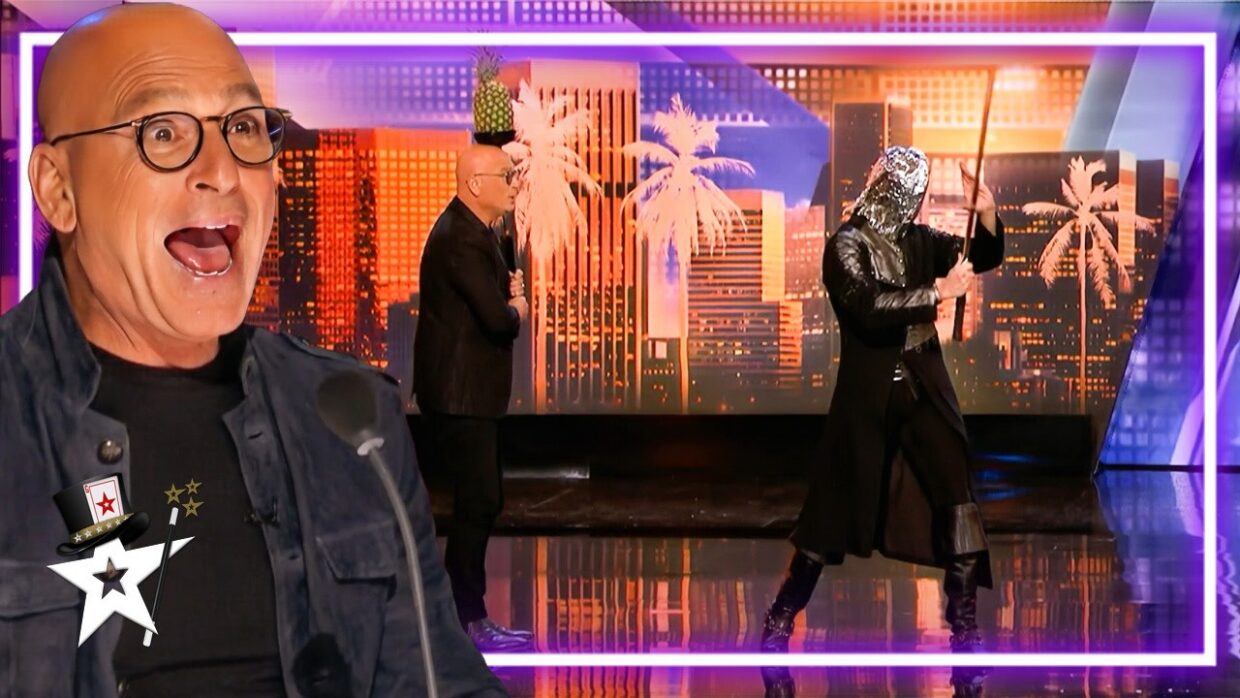
Two magicians walked on with a shrug and a smirk and swapped their names as if identity were a loose jacket. “We’re not going to show you a trick,” one of them said. “We’re gonna show you a demonstration of pseudoscience.” They called it pressure phrenology—old-time quackery remixed to modern mischief—and invited Howie onstage. With gloved hands and mock-serious patter, they claimed they could squeeze away abilities. It was theater, sure, but the payoff landed with a thud in Howie’s mind.
They teased him—no more piano, no more backflips—and then aimed for the jugular: reading. Cards with simple words came out. The judges nodded. The camera confirmed. Howie stared and stumbled. Then, as the “pressure” lifted, ordinary words snapped back into focus. It was high-wire gaslighting with a laugh track. Even the panel couldn’t hide its glee. One judge cracked, “You made Howie look like jackass. And who doesn’t love that?” Another admitted, “I don’t know how you did it, but I loved it,” and begged to be the next volunteer. The trick was as much about social tension as sleight of hand: what happens when everyone sees what you can’t?
Bar Magic at Breathing Distance
Next came a hustler of hospitality—the self-described bar magician who needs no grand set, just a table edge and your doubt. He framed it plainly:
“Now the thing about bar magic as opposed to regular magic is the fact that I don’t use big props. I don’t… I can’t afford them.”
What followed was a volley of visual punctuation. A card flashed in, then out. A napkin shivered into something it wasn’t a second before. He handed Mel B a sponge ball, then another. The room counted one in each hand. She opened her palm, saw both there, and couldn’t help it: “Shut up.” Then again, louder: “Shut up.”
The closer you looked, the less you understood. Howie, a yard away, tried to back-solve the physics:
“I looked over here to the right… Maybe they could see how it happens… All these people are going, where did that come from?”
He even fixated on a weird detail no one could unsee afterward:
“The only thing that I… I thought was incredibly disco—why would you put my pen in your nose?”
But admiration drowned out confusion. “Boy, that was good. That was slick. It was seamless,” Howie said. Another judge added, “I did not want it to stop. You went bang, bang, bang… I absolutely loved it.” Four yeses, zero oxygen.
Cards Where Drinks Should Be
Later, a different kind of close-up chaos spilled into the aisles. A card was freely chosen and marked. A beat passed. The performer smiled and steered attention away—until a strange instruction popped the balloon of logic.
“Howard, can you try opening your cup? Just open it up.”
The lid peeled back. The crowd pitched forward. “Are you… no.” Inside, soaked and unmistakable: a signed card that should not have been anywhere near a beverage. “That’s my card,” someone gasped, followed by a shuddering punch line from Howie:
“I had so much to say, but now I realize I’m holding cards that were in your mouth.”
Magic can be elegant. It can also be rudely intimate. This was both, and it rattled the neat-freak in chief.
The Mind Hacker Who Drafted AI Into the Act
Then came the magician who talked like a system update: precise, grand, a little ominous. He stared at Howie and declared,
“Allow me to demonstrate my full power.”
He had Howie pass his phone to Sofia. He pressed deeper:
“I will attempt to break through and unlock it.”
The stage seemed to inhale. He wasn’t just asking the audience to watch; he was asking them to participate in an experiment with their own belief in technology.
And then he did something stranger.
“Now I will try to expand the power of AI into the real world,”
he said, instructing Howie to give the phone’s assistant a simple task: “Write any sentence.” Meanwhile, a random row of audience members stood and offered single words that mattered to them—one by one, clean and uncoached. The phone’s sentence was read aloud at the end, and jaws fell at the echo:
“Many achievements start through endurance and resilience, manifest inspiration, and nurture dreams.”
The show’s skeptic bench melted.
“Nobody watching this will believe that we weren’t in on it, but the truth was we weren’t,”
one judge insisted. Another cut the verdict clean:
“Honestly, this is the best magic we’ve seen all year. Genuinely.”
Four yeses thundered in unison.
A Memory You Can Hold—Until You Can’t
Not every shock landed like a jump scare. One artist dealt in quieter aftershocks, building a story about the one thing we make every second:
“Memories.”
He spoke softly, lifting a card and a ring as if they were heirlooms.
“This one right here, underneath my watch, is one of my precious memories,”
he said. He asked for a drawing on a card—something personal, present—and slid it into the deck. The ring rested on the back of another card to mark a moment. This wasn’t about speed. It was about trust.
Then the air folded. He snapped. The card beneath the ring was no longer the placeholder—it was hers, the very one she had drawn on moments before. Applause came fast. Awe lingered. He reminded everyone what he had said from the start.
“In a minute, it will become a memory.”
And then he erased the evidence of even that. The performer smiled, and with one last breath, made the room question its own timeline:
“There was never a ring on the table.”
The table was clear. The memory remained, warmer than proof.
“Name Any Card” Meets a Magician’s Imagination
Few prompts invite arrogance like “Name any card.” A nimble showman gave it to Howie straight:
“There are 52 cards. In a count of three, I wanted to name out loud any card you like.”
Howie didn’t hesitate. The magician grinned:
“I knew it. Exactly. Seven of diamonds. Thank you so much. Amazing. Seven of diamonds. How do you do that?”
He framed the next beat as a lesson in imagination. He placed hands like a sculptor guiding clay, then said what everyone felt in their bones: maybe the easiest way to find a card is to believe you already have. In Howie’s clasped hands, impossibility took up residence, waiting to be discovered like something you forgot you were carrying.
Why This Shook Howie
Mandel plays two roles on the panel: comedian and canary in the coal mine. He loves clean logic, and he hates a world that won’t stay still. These acts specialized in disorder. They stole reading, smuggled signed cards into sealed drinks, turned a smartphone into a séance, and warped time around a ring and a drawing. Howie tried strategy—peeking from angles, calling out odd details, leaning on humor—but the surprises outpaced his defense. Even his jokes slipped into admiration.
“Boy, that was good. That was slick. It was seamless.”
What binds these seven together isn’t the method; it’s the feeling. Each trick started as a simple, testable claim and then undermined the test. You can look, the performers said. You can choose. You can hold this. And then, when you did, the thing you trusted turned against your expectations. That’s when laughter turns to a small, private scream—which is also when the best TV happens. As one judge put it afterward,
“I wanna see more.”
The Judges, the Room, the Verdict
The panel’s responses told their own story arc. Early on, the pseudoscience duo drew laughter and a torrent of yeses. The bar magician left veterans blinking.
“Best thing all day,”
came one quick review. The card-in-cup episode brought out a different energy—grossed out, giddy, stunned. The AI mind-hack shattered any lingering pretense of control, earning the night’s strongest praise and a rare admission of total bafflement. And the memory piece closed like a lullaby after a thunderstorm, the kind of wonder that hums in your chest on the drive home.
Across the board, the decisions were swift. “We’re gonna vote,” a judge announced at one point, and when they did, the answers cascaded: yes, yes, yes, yes. If you measure magic by gasps per minute, the scoreboard was lopsided. If you measure it by the number of times a proud skeptic admits defeat, it was a rout.
Why We Watch
It’s easy to forget, in a world of endless feeds, that live astonishment still has muscles TV can’t quite capture until a moment breaks and the room gasps together. These seven acts made a familiar stage feel newly dangerous. They built trust, broke it, and gave it back like a gift. They toyed with language, with touch, with tech, with memory. Most of all, they made Howie Mandel—comic, critic, champion of common sense—say the quiet part out loud: he didn’t see it coming.
If you crave that rare clash of comedy, fear, and awe, watch the full performances. Let the pseudoscientists squeeze away your certainty, lean in for the barroom miracles, flinch at the card in the cup, and hold your breath when AI finishes your sentence. Then sit with the final whisper: maybe the best proof of magic isn’t on the table at all. It’s the memory you carry out of the room.