Britain’s Got Talent has always been a testing ground for the impossible. It is a place where modern magic collides with television’s most skeptical front row, and where a single moment can turn a career. Across these standout performances, the show reveals how astonishing variety—sleight-of-hand, mind reading, horror, comedy, even a lesson in method—can all produce the same result: a theater full of people forgetting how the world works.
A star walks out with a shrug—and a flock
“What’s your name?” the panel asks. “Darcy.” A 26-year-old from Canada, he says he once dreamed of becoming a doctor, “but my parents insisted that I become a magician… so here I am.” What follows is a blast of classic stagecraft—beauty and audacity wrapped in velvet—ending with judges and audience on their feet. The praise lands fast and emphatic.
“Darcy, I think you’re the best magician I’ve ever seen on this show.”
Another voice adds, almost annoyed at how baffled they feel: “Absolutely no idea how you did that… it was fantastic.” Amanda Holden frames the feat with a credo: “The most important thing about magic is making us believe the impossible is possible, and you just did that.” Even Simon Cowell, never shy with superlatives, leans forward: “You are without question the best competition we’ve ever had on this show.” Four yeses follow so quickly they feel like one.
When connection becomes the method—and the miracle
Later, two masked performers glide onstage with the most awkward, minimalist greeting imaginable—“Hello.” “Welcome.” “I presume we aren’t going to talk.” Then the premise: “We are one.” They ask for two people “who have an undeniable bond… a connection established in 1989.” The volunteers close their eyes. A touch on one silently registers on the other. Arms rise in eerie unison.
“If you felt a touch, raise your right hand… now point to where you felt that touch.”
They do. Perfectly. The room tightens, then exhales, and someone blurts the only reasonable response: “That was freaky.” The duo pushes deeper—count the touches; match the number with your fingers; draw what your subconscious suggests—and once again the invisible becomes visible. It’s a theatrical lesson in empathy disguised as a cardless, prop-light miracle.
Small moves, giant astonishment
Not every showstopper requires thunder. One card artist keeps it whisper-quiet: no boxes, no birds, just two hands and timing honed to a razor’s edge. The panel clocks changes others miss in the moment—waistcoat colors shifting while the eye chases the cards—and delivers a kind of masterclass critique in real time.
“Well, I enjoyed watching Penn during the act as much as I enjoyed watching you. He’s so excited, and I can see why… everything about your act was very subtle. It was fabulous.”
“Technically, this is like a master class… no jive, just raw, brutal, unbelievable skill. Those hands, they are the best I’ve seen.”
Magic at this scale feels less like a puzzle and more like choreography—precision so tight it becomes poetry.
Darkness descends, and the theater becomes a tale
Then, just as the audience settles into being charmed, the lights falter. A “fantasy illusionist” named Marcel stalks through shadows, cages rattle, and the stage whispers that something could go wrong. It is suspense as method: the trick is the mood, the crawling dread that makes you forget to blink. The judges lean back, then forward. “Don’t go to cage,” someone warns, half-joking, half-not. It’s a different kind of astonishment—fear dressed as wonder.
The witch offers a choice—and a price
Out sweeps a figure from a storybook you wouldn’t read a child at bedtime. “Between the dark and the light, the good and the evil, which will you choose?” Apples appear. One judge takes a bite and says, almost startled, “It’s nice.” Another is pushed to choose left or right, to trust or tempt fate. Then the turn you can feel in your teeth.
“Amanda, you know why they say that beauty’s only skin deep? Because we’re all rotten to the core.”
It’s theater that toys with revulsion, ending with a transformation so creepy it sends a visible shiver through the panel. “Well, that was horrific,” someone admits, before adding the line that matters: yes. Four yeses, in fact. Fear, it turns out, can be a kind of delight.
“I got you a watch, Simon.” And inside, a heartstopper
Comedy returns with a clean, bright piece of impossibility. A ring—borrowed moments ago—vanishes from a handkerchief. The magician turns to Cowell: “My mom told me that it’s your birthday this year… so I brought you a gift.” Inside a small box: a watch. He unscrews the back, and time gives up a secret.
“Now in this watch is something very special.”
“That your ring?”
“That is my ring.”
It is intimate, almost domestic magic: no flames, no trapdoors, only the shock of seeing something that shouldn’t be where it is. Then, with a grin, the performer breaks a cardinal rule—does the vanish again—and promises something new: not sleight of hand, but “sleight of thought.” You can feel the room lean in.
Teaching the trick—then breaking the rules of reality
In an audacious turn, another magician leans on a kind of confession. He jokes the judges must be “sick to death of card tricks,” then pushes a red handkerchief into his fist. A beat, a snap, and it becomes an egg. He “exposes” the method: a hole in the back where the silk hides. He even cautions the crowd not to show that side of the egg—it would “completely ruin the trick,” he says, making himself the butt of the joke.
“Unless, of course, you’re a real magician.”
He peels away the hole. The egg is whole. He cracks it. It’s real. The theater tilts; the wink turns into a wallop. It’s meta-magic, the old con turned inside-out to prove that the wonder was real all along.
The joy of nonsense—and a master of it
“Hello. My name is Keiji Wasaki,” comes a warm, wobbly voice from a man who beams like he’s already won. He is from Japan, 49, and adorably nervous. He tells Simon, “It was a 100 times I saw you in YouTube.” He brandishes chopsticks. He fumbles—on purpose, you suspect—and then lands a clean miracle. He waves a £20 note. “Do you want it?” Someone says no. He shrugs, and laughter rolls.
His finale is “for ladies,” a ring routine delivered with the charm of a children’s show and the precision of a pickpocket. “Give me a finger like this,” he asks, and somehow an ordinary band becomes a puppet of his timing. When the judges speak, they sound smitten.
“You are funny. You are quirky. You are very, very charming, and your magic was absolutely… faultless.”
“You’re the funniest person we’ve seen and the most magical person we’ve seen, all combined in one, and I love you.”
“People are gonna like you so much… You are one of the best we’ve seen so far.”
He looks overwhelmed. “Like a dream,” he says softly. “I can’t explain that in my emotion. I never expected.” It’s proof that the best magic isn’t only about astonishment; it’s about how you make a room feel.
Books, boxes—and a word that was waiting
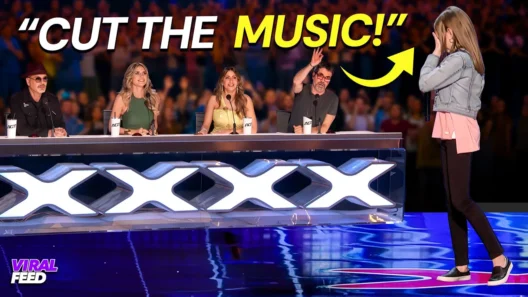
A school-age magician in sneakers steps down from the stage to stand with the panel. “Today, I’m going to show you something with my two favorite things, magic and reading, using my three favorite books,” she says, handing out titles that include The Magical Faraway Tree and The Midnight Gang. The judges confirm the pages are different. She asks Simon to move a small box to the floor, a polite request that turns, moments later, into a brick wall: even he can’t lift it.
Then she steers the panel into a neat trifecta—book tests, choices, and a prediction made before anyone sat down. When her sealed note matches the freely spoken word, down to the everyday specificity—kettle—the adults on the panel look like kids who’ve been told the answer to a riddle and still don’t understand why it works. It’s clean, clever, and joyous.
Why these moments matter
Across all of these acts runs a common thread: the question of trust. The audience must trust the performer to play fair, the performer must trust the audience to play along, and the judges must trust their guts when wonder collides with taste. One minute, subtlety reigns—“so simple and yet so complex,” as a judge put it of a card routine whose genius many missed in real time. The next, the theater becomes a haunted wood where apples bite back and a witch hisses about rot at the center of beauty.
And still, each time the votes come, they trend toward yes. Even when someone admits, “Well, that was horrific,” the panel understands that fear, laughter, elegance, and empathy are all valid forces in the same art. That’s why a masked duo can turn two people’s shared history into an engine of miracle; why a teacherly prank can crack into a real egg; why a nervous visitor with chopsticks and a grin can be told, without irony, “You’re a superstar.”
The stage that keeps remaking the impossible
Britain’s Got Talent remains a rare arena where technique, character, and narrative collide in front of millions. On this stage, birds burst from silk and reputations from a single sentence. “We were missing some of the tricks,” one judge admitted after a subtle performance, marveling that a waistcoat had changed color while their eyes chased another effect. That’s the secret delight: magic here doesn’t only fool you once—days later, you remember a detail, or hear a line again, and the astonishment doubles back.
If you crave that feeling—the little gasp you give when your world tilts, whether from dread, joy, or pure bewilderment—this collection is a map to it. Watch the doves. Watch the hands. Watch two people with a bond react to the same invisible touch at the same time. And when the witch offers a choice, ask yourself what you’d bite. Then press play and let the show do what it does best: make the impossible feel, for a few minutes, like common sense.