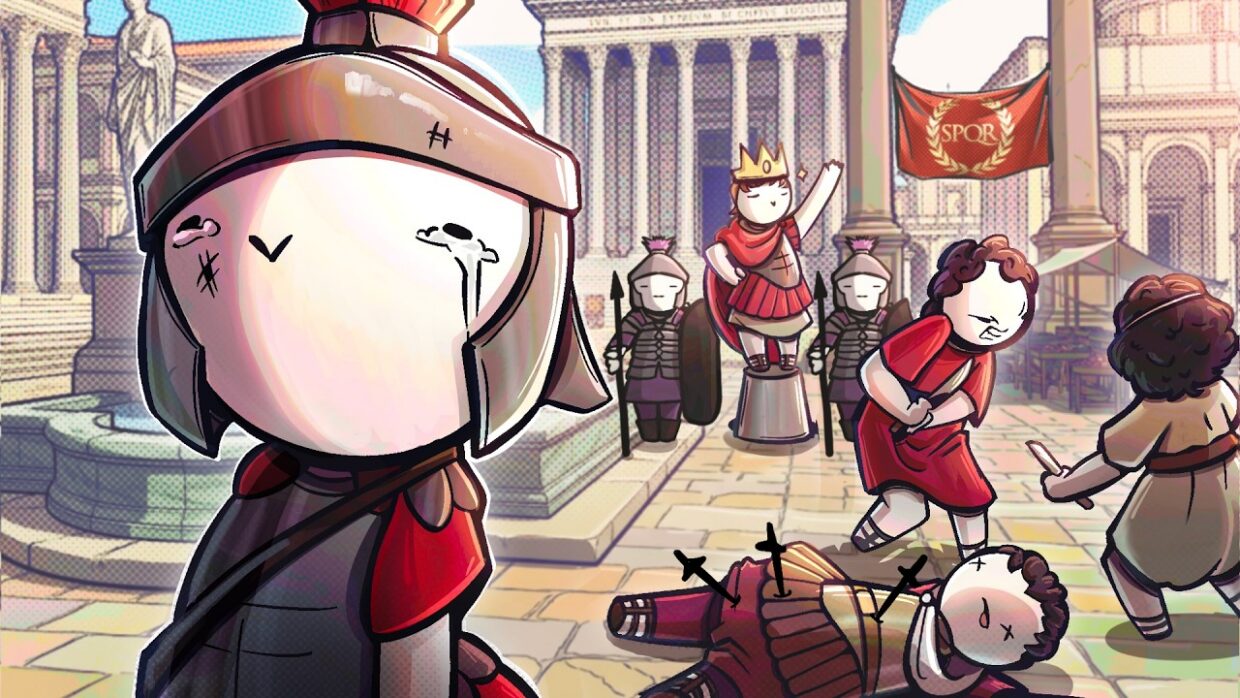
Before Rome commanded the map, it told a story about where it came from. It wasn’t a tidy origin. It was a myth, a warning, and a flex. Long before emperors, the tale begins in Alba Longa with a toppled king, a princess sworn to chastity, and a surprise pregnancy “by the god of war, Mars.” When the twins arrived, the usurper tried to erase them. Fate—disguised as a river, a basket, and a hungry she-wolf—had other plans.
“The god of war, Mars?”
“Yes.”
The twins grew up feral, then human, then dangerous. They learned who they were, marched back to Alba Longa, and restored their grandfather. But victory tasted like promise, not closure. They left to build a city on the Tiber. Pride got there first. A small wall, a mocking hop, a brother cut down—Remus dead, Romulus alone. The video puts it bluntly: “He did. And this is the start of Rome.”
Rome Makes a City Out of Misfits
Romulus ruled a camp before he ruled a capital. To fill it, he opened the gates and called his new home an “asylum city.” Runaway slaves, debt dodgers, petty crooks, and the merely unlucky poured in. Rome had zeal, hills, and a wall. It lacked women. The fix was infamous: invite the Sabines to a festival and seize their daughters in the chaos. The film avoids romance about it and calls it what it was.
“Rome literally solved its gender imbalance with an eighth century BC Tinder kidnapping event.”
The aftermath could have been endless war. Instead, the Sabine women stepped between lines and made peace by demanding that family come before revenge. Rome learned something enduring: absorb first; call it unity later. Kings followed—pious, reckless, builder, brute—until a final tyrant pushed the city to a new idea. If kings hoard power, split it. Two consuls, one year at a time, each able to cancel the other. A republic, fragile by design.
Humiliation as Fuel
Republics love balance; neighbors rarely cooperate. Gauls stormed into Italy, wrecked Rome, and charged gold for the privilege of leaving. It was an existential embarrassment the video renders with a wince.
“My god. It’s all burning down.”
From that ash rose a policy: never be weak again. Rome took its fear and made it a plan. Drill the legions, pave the roads, plant the standards, insist on terms. The narrator captures the switch in a single line:
“Anything that isn’t nailed to the ground is about to get conquered.”
Neighbors fell in, or fell apart. The real test was Carthage—rich, naval, relentless, and far from impressed. Rome stole a ship design and built a fleet almost overnight. It won a first war, then faced a second with a name that still lands like thunder: Hannibal. He “marches his army over the Alps, which is insane even today,” elephants and all, and tore Italian armies to shreds for years. Rome bled, learned, adapted, and finally outmaneuvered him. A third war ended with an impulse the script turns into a deadpan shrug:
“Carthage still exists and that bothers us.”
So they removed it from the map—salt, stories, and all. With no equal rival left, Rome stretched in all directions. Conquest minted money, status, and new problems. Armies started loving their generals more than the Senate. The Republic’s elegant checks began to look like speed bumps.
Caesar Breaks the Mold; Augustus Sets the Cast
Julius Caesar arrived like a storm system. In Gaul, he attacked, negotiated, fooled, and crushed until France became a Roman fact. The Senate tried to recall him without his legions. He crossed anyway, and civil war followed. The film resists a cardboard villain. Caesar, it argues, governed with popular urgency—resetting the calendar, cutting taxes, canceling debts, widening citizenship, feeding the poor, and trying to leash rogue commanders. Then he gathered titles “like they were Pokemon cards,” and the Senate saw a crown in everything he touched. They killed him to “save” the Republic and misread the city entirely.
“You killed the guy who lowered our taxes and gave us free grain?”
Mark Antony stepped forward. Octavius—an underestimated teenager with a famous name—stepped faster. Their alliance was a pause, not a pact. Cleopatra turned Antony’s heart and Octavius turned it into a weapon. He smeared his rival as foreign, faithless, and ready to move Rome’s soul to Alexandria. Then he sailed east and finished the job.
“Not on my watch, says Octavius.”
Back home, he crafted a new language for old power, calling himself “first citizen or Imperator,” shrinking the Senate to a stage prop, and making peace with the past without surrendering one ounce of the future. The narrator delivers the quiet thunder of the moment: “the Roman Empire is officially born.” Augustus didn’t crow. He rearranged—pay, pensions, promotions—so soldiers served the state, not a savior. He built, counted, and calmed. Stability had a face, and it looked like modest authority masking total control.
Triumphs, Edges, and the Cost of Overreach
Empires are secured at the borders or not at all. Rome pushed into forests where roads turned to mud and orders dissolved into noise. Amid triumphal monuments came a nightmare lesson: a general who bragged from German woods returned only in sorrow, and three legions never came back. The lesson was hard but necessary—draw lines you can defend.
Inside those lines, emperors rose and cracked. One fiddled with fame and lost Rome itself to flame. Another leaned on bodyguards who learned how much a throne could fetch. Year of the Four Emperors; auctioning the purple; coups at noon, funerals by dusk. When protection money becomes policy, stability dies by installments. The third century turned crisis into routine—plague, invasions, inflation, and breakaway states. Rome did not fall then, but it broke, reassembled, and learned to survive as something different.
Reinventions: Tetrarchs, Crosses, and a New Capital
One ruler tried a radical fix: make it four. Split the burden across co-emperors and heirs, fortify the frontiers, and grind inflation with discipline. Another took a different bet—convert advantage into creed. Constantine marched under a new sign and built a new center at a strategic strait. A Christian capital on the Bosporus gave Rome something the old city could not: a fresh start far from the dead weight of habit.
Even so, geography, migration, and money pressed like a vise. When the western government lost North Africa, it didn’t only lose land. It lost tax grain, paying power, and the soldiers that grain sustained. Refugees and federate armies weren’t a threat in themselves; the threat came when a state could no longer integrate newcomers with confidence or pay loyalties on time. The video’s verdict is blunt: ignore the math of people and wheat, and the frontier will make the decision for you.
Two Romes, Two Endings—One Long Shadow
The West ended softly, not with a staged collapse but with a whimpering transfer. A boy named for Rome’s first king ceded the stage, and the senate that once stabbed to save a republic sent thanks to a new master far away. The East, richer and ringed by walls, kept going—arguing theology, minting coins, and trading silk—until a new empire with new artillery ended the long second act in 1453.
What holds the story together isn’t just conquest. It’s the pattern. Rome is humiliated; Rome reorganizes. Rome overreaches; Rome draws back. Rome centralizes to survive; centralization breeds the next crisis. Again and again, leadership makes the difference between reform and rot. Augustus fixes pay and command; emperors after him forget why that mattered. Soldiers win and learn to choose rulers; later rulers learn too late to fear their own guards. A city opens its gates to misfits and kidnaps to solve a problem; centuries later, it cannot afford to absorb the people pressing at its edges and mistakes desperation for invasion.
The narrator never lets the sweep get dull because the tone stays sharp. Jokes land next to judgments; memes wrap hard facts. The wolf’s milk and the borrowed navy, the Alps crossed by elephants, the calendar with sensible months—these pieces aren’t trivia. They are the texture of endurance. A state that can steal a ship design over one winter can outlast a genius with elephants. A state that can’t pay its border troops will lose Africa, then revenue, then everything revenue sustains.
In the end, the film suggests, Rome didn’t so much fall as change address, then change languages, then change names. What stayed was a habit of problem-solving at imperial scale—sometimes ruthless, sometimes wise, often both. That habit can inspire or warn, depending on what you need from the past.
If you want the full ride—from “wolf milk” to world power, from Caesar’s reforms to emperors for sale, from the first sack to the last city—watch the video. It moves fast, lands its jokes, and still makes the stakes feel urgent. The empire is gone; the arguments it started aren’t.