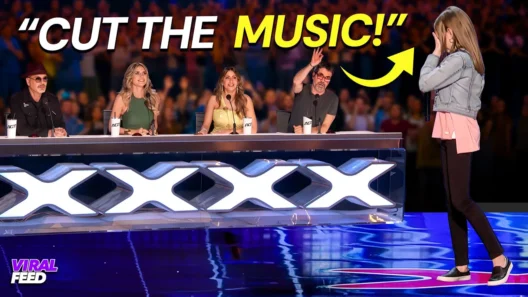
Magic rarely works in a straight line on Britain’s Got Talent. The best moments wander. They stall, they flirt with disaster, and then, with a sideways grin, they land the impossible. That is the joy inside this collection of the show’s funniest magicians: you laugh first, and then you feel the floor give way beneath you.
It opens with a soft hello and a magician who seems like the neighbor you bump into at the shops. Christian Lee, from London, is chatty and shambling and very nearly ordinary. He tells the judges he is engaged — to someone who is going to be his wife — and then aims straight for a miracle. He talks about a dream he had, that he and Amanda Holden would be on stage together, swaying out of time, finding a rhythm. It is a featherweight setup, so gentle you almost miss the demand floating at the center: name a card. Amanda says it: six of hearts. He asks her to pull the only reversed card from the deck. Of course it is the six of hearts. You hear the little gasp ripple. Then he deadpans, the method isn’t important; what matters is getting a balloon off his head. He invites Amanda to grab him around the waist. Misdirection meets mortification, and the room howls.
That tension — warmth, awkwardness, and then a beat-perfect reveal — runs through the night. Alan Hudson follows, part of a married double bill, except they are not a double. They are competing. He offers a biography in a single gag: his mum told silly jokes; his dad disappeared. His hands are fast and his patter self-skewering. Amanda initials a card and marks it with a small symbol; he hunts it with the skills that pay the bills. Then he overshares about the skills that get him the honeys and steals a look at his wife, standing just offstage, and Amanda teases him: yes, your wife is hotter. The trick hits: a wrong card becomes right. But Hudson wants a spectacle. He asks Amanda, off the telly, to tie him up. She wraps him in cling film, from ankles to chest, trying not to tape over his face. ‘Have you done this before?’ he asks. ‘Yes,’ she shoots back. It is deliciously disheveled magic, exactly as Simon Cowell later calls it. Some judges laugh so hard they forget to breathe. Others decide the messy charm is not enough. Simon says no. But three yeses carry him through. It feels earned — a victory born of human scale and gently fraying edges.
Then comes Kat Hudson. Before she starts, she cools herself with a quick waft of a fan. Not that kind of act, she assures them; it is just a little warm. She plants a pint glass in front of Simon — he does like a beer — and encourages him to take a swig if he fancies it. There is nothing sleek about her props: a stack of wrapped books, a bag of market CDs, a tote of bargain DVDs. David Walliams picks a number and lands on a paperback. Kat, leaning into her own fallibility, declares the choice will be Lord of the Rings. It is not. It is The Girl on the Train. Without missing a beat, she buzzes herself. ‘I totally deserve this,’ she grins, and the room cracks up.
On she goes. Alicia Dixon reaches into the CD bag; Amanda dips into the DVDs. Kat turns her brow into a private cinema and takes a guess: Mister Brightside, Peaky Blinders. Absolutely not, comes back the chorus. The misses are complete, comic, and bold. Then Kat pivots the room. She tells everyone to look at the theater wall. There it is, in plain sight: a poster the audience walked past earlier. It gleams with predictions. The title with David’s book: The Girl on the Train. The tagline, cheekily shaped around a show Amanda chose: a killing evening, Killing Eve. And the song she is listening to on her phone is the Arctic Monkeys tune Alicia happened to pick: I Bet You Look Good on the Dancefloor. The fun of her earlier failure flips into an audible shock. And she is not done. She points to Simon’s pint. Those words were etched into the glass before she set it down. He reads them out, all three predictions in one line. The judges applaud not only the method but the tone — original, relaxed, real. One of them says what the room already knows: by far the best of the pair. Four yeses hit like confetti.
The parade of comic magicians keeps bending laughter into surprise. A man with a looping greeting steps forward and nearly turns the stage into a language lesson. ‘Good evening,’ he says. ‘Good evening,’ he repeats. He pulls Amanda on stage and choreographs a back-to-back box routine. Plastic bags, different colors, a whispered instruction to think on a color, then the world’s funniest countdown. ‘No, wait,’ he interrupts. ‘Start from the beginning.’ They go again, painfully slow, until they reach ten. The reveal snaps clean, the color match landing with a flourish that earns a winking thank you. Then the kicker: he announces he has taken something from Amanda. No one noticed. He produces a wallet. He turns to a judge and does it again. Another wallet. Theft, in this hands, becomes theater — a pickpocket framed as a punchline.
Another act tunnels into pure physical comedy, a magician who stutters and swivels and seems to converse with the props. He mutters ‘Illusions,’ and ‘Magic,’ warns a moving thing to be still because the batteries will run out, and finally vows to show a classic: champagne into a newspaper. He pours, fuller and fuller, then opens the paper to show it is all gone. Applause blooms, mischief glints, and then he flashes back: oh no, champagne. It becomes a tiny storm — splashed faces, schtick repeated like a drumbeat. In your face, he crows, like a clown who swallowed a conjurer. It is silly, theatrical, gorgeously timed. Magic is the order; chaos is the assistant.
Not every laugh hides a punchline. Some soften a truth. John Archer arrives with an unhurried poise. He jokes about his age: just a little younger than Simon, he says, before admitting he has been doing this for twenty-three years. Then he lets something unguarded slip: he has chickened out of BGT before; this time, he decided to face his fears and do it. He mentions his wife, his family, and you can feel the room turn. The trick, when it comes, will matter. But the admission already has. In a night where humor oils the gears of deception, vulnerability becomes its own sleight of hand, resetting the stakes without a single flourish.
What connects these wildly different performers is a shared instinct: make them laugh, then move the ground. Christian’s dream patter plants a card in your head and covers the method with blush-worthy theater. Alan’s cling film bit embraces the possibility of failure so tightly that success feels defiant when it pops free. Kat stacks the deck with marketplace mundanity — cheap CDs, mismatched DVDs, a paperback — while her real secret sits on a wall and in a beer glass the whole time, daring you to notice. The polyglot pickpocket turns politeness into misdirection, and the champagne clown uses momentum itself as a prop. They all play with the same lever: attention. Where it points, and more crucially, where it does not.
It helps that the judges serve as foils as much as arbiters. Amanda’s running commentary, equal parts warmth and wickedness, keeps the room honest. Alicia’s measured praise — naturally very funny, very entertaining — locates the craft inside the chaos. David is an audience unto himself, wry and encouraging. And Simon, whose bar can be implacably high, names what works and what does not. When he calls a routine disheveled, he is not wrong; he simply prefers another temperature. The beauty of a long night of magic is that the thermostat keeps shifting.
There is another reason the funny magicians leave a mark. They invite you to see the method as human rather than technical. Not the secret move, but the way a performer inhabits a stage, bends silence, throws away a line, or risks a dead end knowing there is a door just out of sight. Comedy is not a costume here; it is cover and engine, the reason you lean forward and the reason you forget to look left while the miracle arrives from the right.
By the end, the pattern is clear. A wrong guess is a seed. A fluffed title is a guidepost. A joke about cling film is a key. A thank you becomes a tell. The laughter does not soften the magic; it sharpens it. You are lighter, less guarded, almost willing to be fooled. And so you are.
These are the ten funniest magicians for a reason. Each carries a different way of being on stage, but they share an understanding of what this show rewards: courage, personality, and a reveal you did not see coming. Watch with the sound up for the laughs and your eyes open for the details hiding in plain sight. The best kind of BGT magic is the kind you think you have figured out — right up until the moment you don’t.