A Night Built on Screams
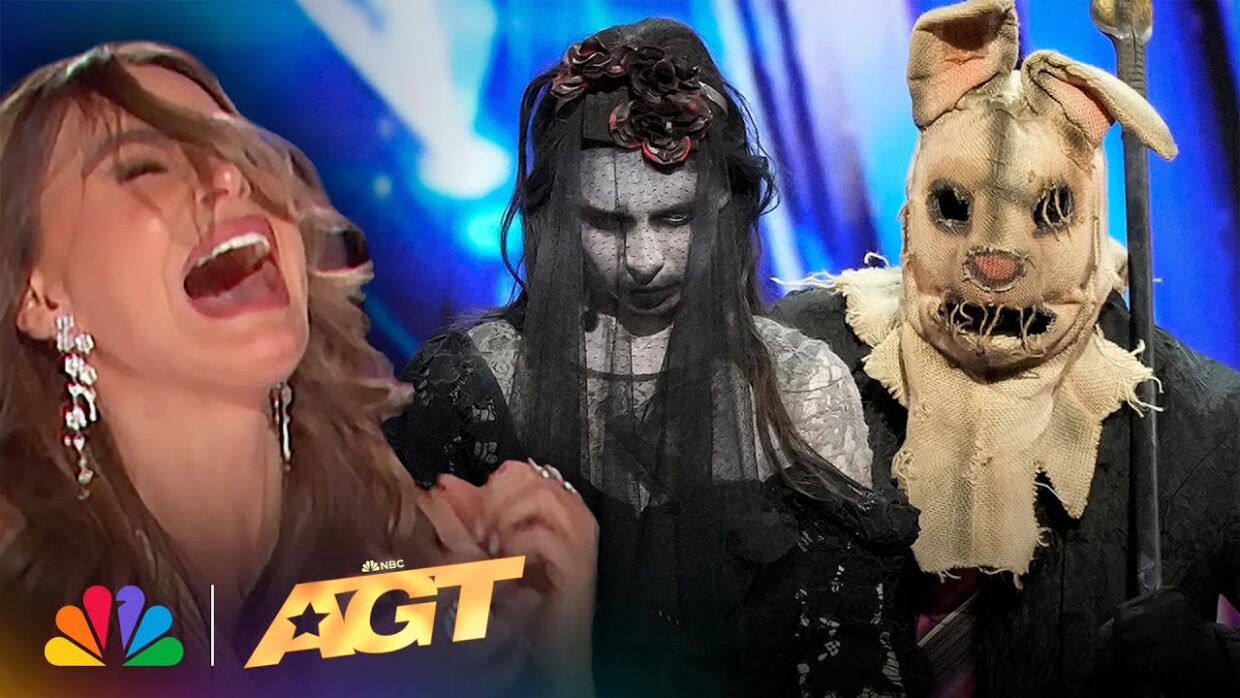
America's Got Talent has always made room for singers, dancers and comedians, but this stretch of auditions leaned hard into fear. The judges were warned, the audience was rattled, and more than one act turned the theater into a place where a folded piece of paper or a single balloon could feel dangerous. The best moments were not just loud. They were carefully built, with a performer holding the room's attention before delivering the part nobody saw coming.
Olive Had Something to Say
The first chill arrived quietly. Simon was asked to open the paper he chose. "What does it say?" The answer tied a frightened family to ghosts in their house moving the doors, and then came the name: "And it was Olive." A voice in the room asked the obvious question: "How is that even possible?" The performer's exit line was just as unsettling: "I have to go now. Please remember me." The moment worked because it was small: a performer, a message, and the sense that the paper had been written by someone who was not supposed to be there.
Thirteen, Alone, and Determined to Be Different
Next came a 13-year-old dancer who described standing "all alone on the biggest stage in the world." She was upfront about her plan: she did not want to be like other dancers. "I want to be different," she said, explaining that she had added gymnastics and flexibility moves into her routine. "America has got a big talent so I can't keep it in my stomach so I'm so excited," she said. Then she returned in a new look, and the judges noticed immediately: "Oh, she's changed." What followed was a contortion routine set to "Precious, we all fall down," and the panel's reaction shifted from curiosity to alarm. One judge called it "the scariest, most horrific dance recital I have ever been to," and added that she was "one of the best contortionists we've ever seen." The backflip that ended with her landing on her chest drew a run of "No, no, no, no, no!" and "That was scary!" Another judge framed the transformation perfectly: "The Chihuahua turned into a werewolf." "Everyone's gonna be talking about you. Tomorrow, trust me." The act walked away with four yeses.
Balloons, Blood, and the Last Laugh
The balloon act turned a simple choice into a gamble. A judge asked the question everyone was thinking: "What is it, blood?" Simon picked, and the act answered with a calm "Lucky choice, Simon" before adding, "It seems you're safe again." The relief did not last. The unchosen balloon was revealed, and the act noted that Simon had "pulled off saving Sophia's head." The reveal drew "That could have been in your hair," followed by a blunt review: "That was repulsive but brilliant."
The Scares That Needed No Words
Not every highlight came with a monologue. One act reduced the room to a single "Oh" before the crowd's reaction took over. Later, a final contortion beat earned another "Oh," and the panel's composure cracked. A judge made the threat concrete: "I have some major major nightmare tonight thinking that you're gonna be hiding under my bed. I'm gonna be looking ten times before I go to sleep." The praise was full of disbelief—"Your bones cracking and everything," "You are incredible"—then came the perfect comparison: "How I would imagine when Simone Biles has a nightmare. This is what she sees." The line about the act's "second name is Rihanna" landed as a much-needed release after the tension.
Howie, the Candle, and Lucy
Then the show turned to the kind of act that makes the theater feel smaller. A command of "Come with me" was followed by a shout of "He's stealing it!" and a complaint that landed like a punchline: "I feel like I got stabbed in the back." The unease kept building until a judge asked, "Did you guys hear that? There's a voice saying Howie." The note that followed made it worse: "I'm coming for you, Howie." When the call came to "Take the lights out!" the question "Where'd she go?" hung in the dark.
The candle act slowed everything down. Terry was told to put his hand over the candle and asked, "How long can you keep it above the flame before burning yourself?" The answer was a simple "We begin." That same slow-burn dread carried into a dark routine with Sophia, who was asked to place her finger on a number as pictures of "tragic souls" were flipped. The number, she was told, was "precisely the number of the room where the devastating fire initially began." The photo revealed Lucy, "the only one who did not die in the blaze." The twist was colder than any jump scare: "She was never a victim, she was the arsonist." Sophia's reaction—"Oh no, I didn't ring it!" and "She's here"—turned the trick into a scene, and the act closed with a question aimed at everyone in the room: "What haunts you?"
Halloween, Shishkabab, and a Final Warning
The lighter side of the horror arrived with a Halloween-themed act. Asked what they thought of Halloween, the performer answered, "It's amazing, it's crazy, it's dangerous, it's wrong." A judge suggested a name change: "You should change your name to Shishkabab." Another admitted mixed feelings: "This is very disturbing and fun at the same time. It's like I like you and I don't like you at the same time." The panel still found room to praise it, with one judge saying the comparable acts they had seen were "tame in comparison" and that the performance was "too short." The votes came in as four yeses.
The final warning came from an act that had the judges repeating "No, no, no." "He's gonna swallow that," one said, and then, "He's swallowing it." The request that followed was blunt: "Guys, please do not try this at home." Even the judges could not settle on what they had witnessed. "What's the point of that?" one asked. "Why did I yell?" another wondered. The scariest auditions were not just about what happened on stage. They were about how quickly a room full of people could be made to shout, flinch, and laugh at their own nerves.
Why the Scares Landed
The strongest moments shared a structure. A performer set a simple rule—open this paper, pick this balloon, put your hand here—and then broke the room's sense of safety. Olive's message was personal and brief. The contortionist paired a cheerful introduction with a routine that looked painful. The balloon act let the judges choose and then showed them the alternative. The Lucy routine turned a trick into a story with a villain.
None of it required a big budget. It required timing, commitment and the willingness to let silence do some of the work. The audience's "Oh, oh, oh!" and the judge's "Man, you scared me" were not incidental. They were the point. On a show built around big reactions, the scariest auditions earned their screams one careful beat at a time—and left the judges asking for more even as Simon covered his eyes.
Source: America's Got Talent on YouTube