Napkins are the first thing guests touch at a wedding table, and the smallest detail can set the tone for the whole meal. A considered fold does more than look tidy: it gives the place setting height, texture, and a place to tuck a menu or a name card. The six ideas below stay close to a modern minimalist palette — crisp linen, quiet metals, and one soft flourish per setting. Choose one fold and repeat it across every table for a calm, cohesive look, or let the head table carry a slightly different version as a quiet point of difference.
1. Pocket Fold with a Menu Card
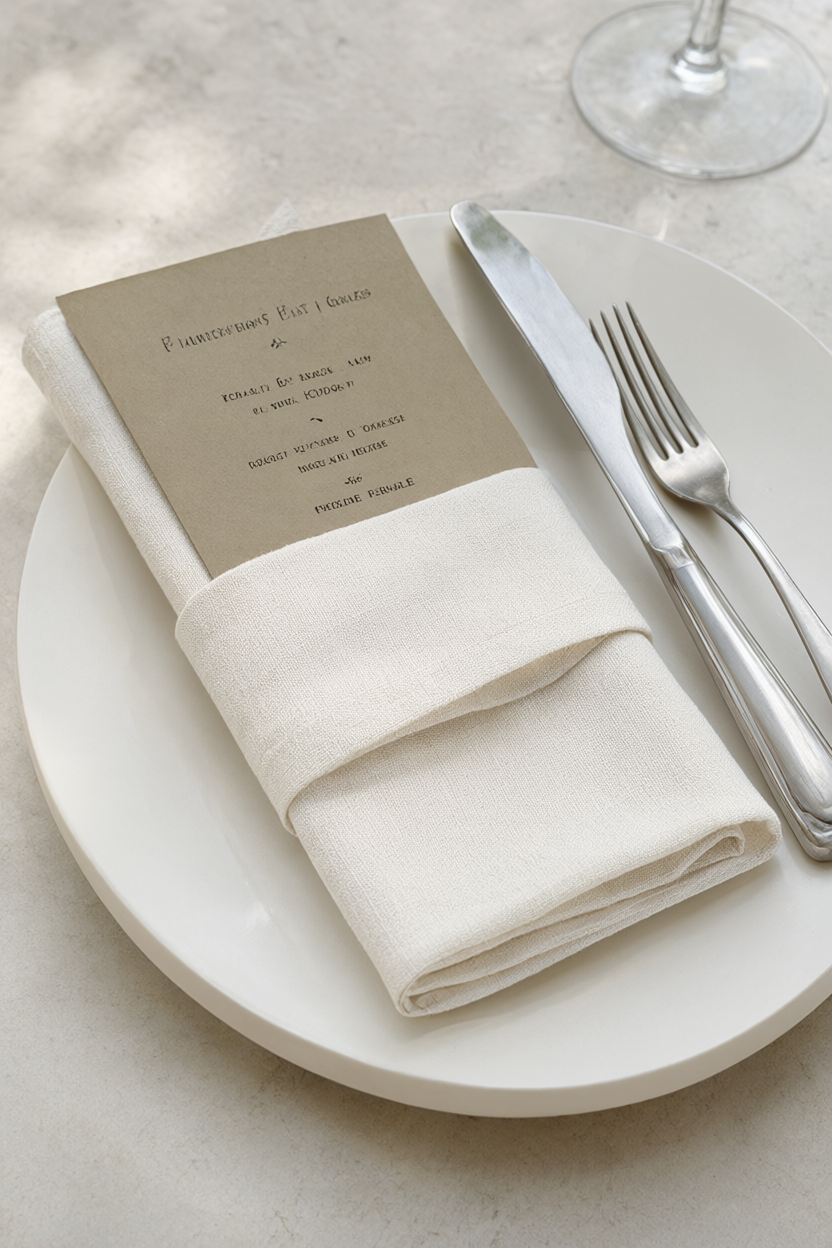
Press a crisp linen napkin into a pocket with a hot iron and a light spray of water, then crease both side edges firmly with your thumbnail so the shape holds through a long reception without sagging or opening at the corners. Slip a small menu or place card into the opening and leave the top edge slightly relaxed so the paper stands upright on its own without a metal holder. Choose this fold when you want assigned seats to look architectural rather than fussy, and tuck a thin ribbon or a sprig of greenery behind the card if the pocket needs extra grip or a little color to tie it to the rest of the table.
2. Twin Ring Fold
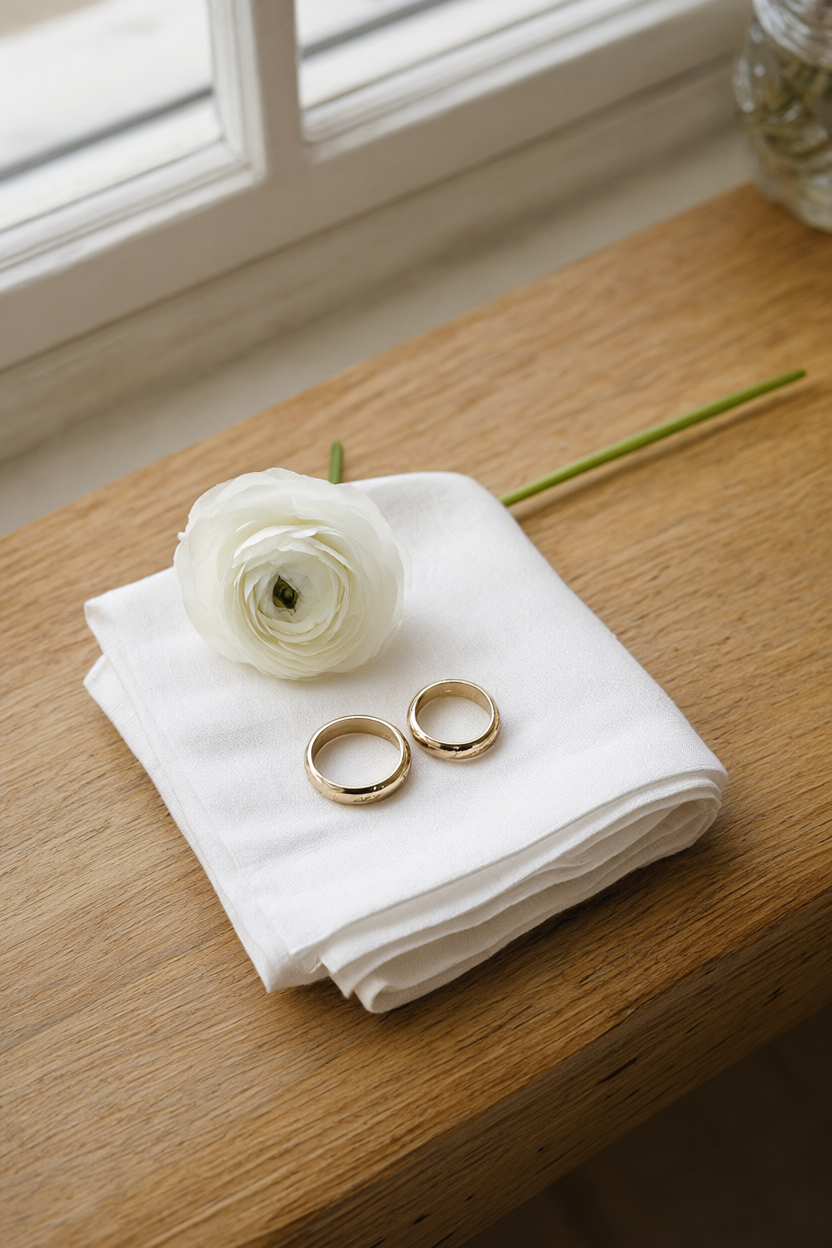
Give a soft cotton napkin a loose accordion fold about two fingers wide, then thread it through two slim metal rings so the pleats stay put without looking stiff or overworked. Choose brushed-brass or matte-silver rings wide enough that they do not pinch the fabric, and leave the folds slightly uneven so the bundle reads as texture rather than a machine-made pleat, keeping the top ring a finger’s width below the fold. Set the bundle directly on the plate, let the ring ends sit at a slight angle instead of perfectly parallel, and fan the top pleat with your fingers so the napkin opens toward the guest.
3. Loose Linen Knot
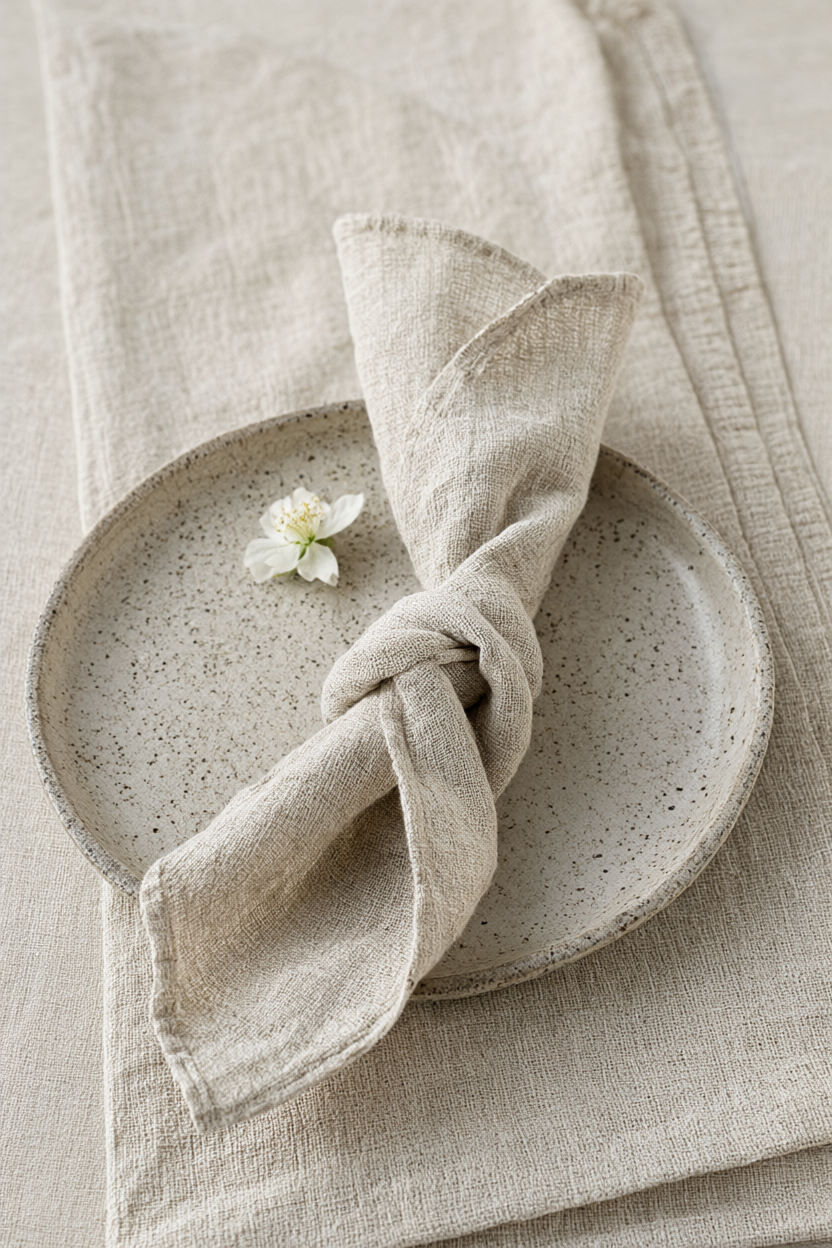
A single soft knot tied in the middle of a washed-linen napkin looks relaxed and holds up well on breezy outdoor tables where lighter folds would blow apart by dessert. Keep the knot off-center and skip the starch so the fabric drapes naturally over the plate instead of standing up like paper, and press only the flat edges if the linen looks creased while letting the center stay soft. Tie it loosely enough that a guest can pull one end to open it, then pair the napkin with speckled stoneware, a linen runner and low candlelight so the whole setting feels gathered rather than styled.
4. Standing Fan Fold
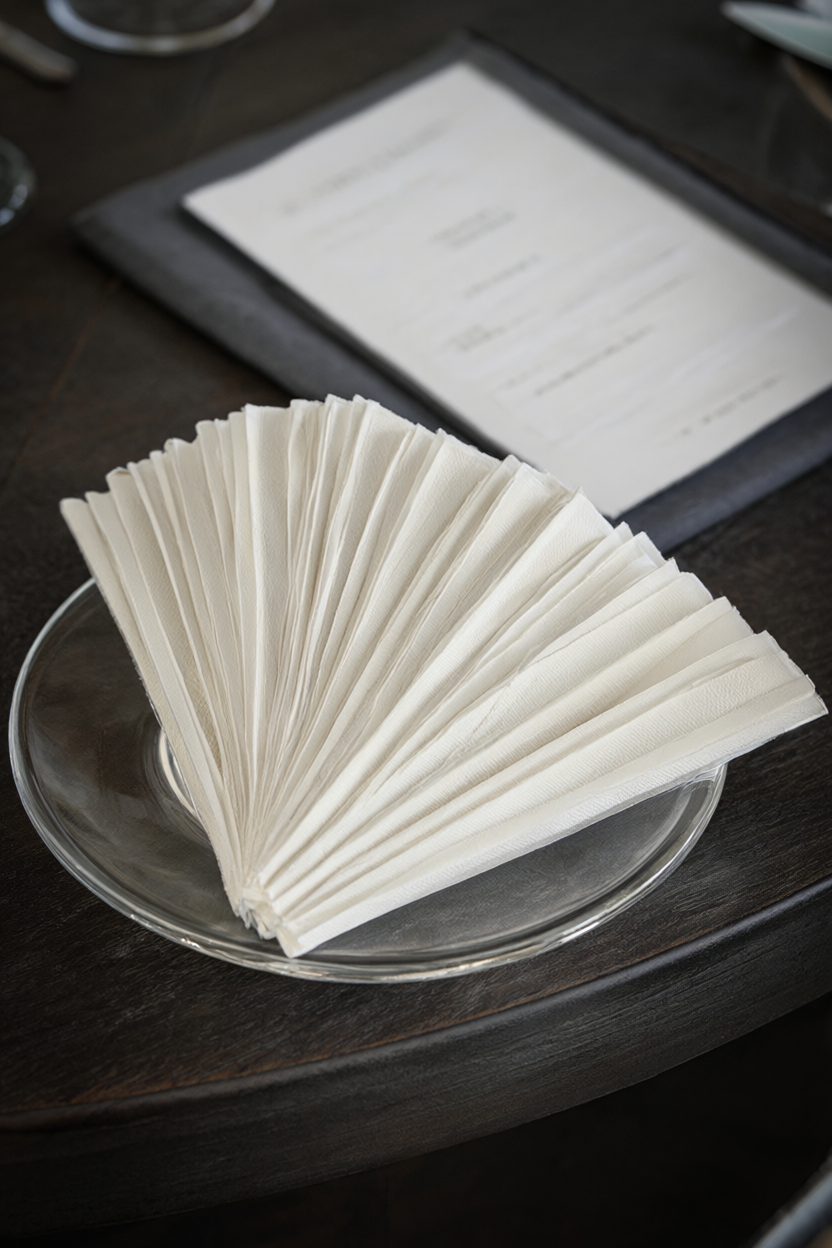
Accordion-pleat a stiffer napkin and stand it on or leaned against the plate like an open fan, pressing each crease with a hot iron and a little steam as you go so the pleats stay sharp. A narrow paper band keeps the pleats closed until guests sit down, and it can carry a printed initial or a tiny date for a quiet personalized touch. Keep the band charcoal or stone so the paper reads as part of the palette rather than a label, and set the fan slightly off-center and a little toward the left so it does not hide the menu card behind it.
5. Cuff and Flatware Fold
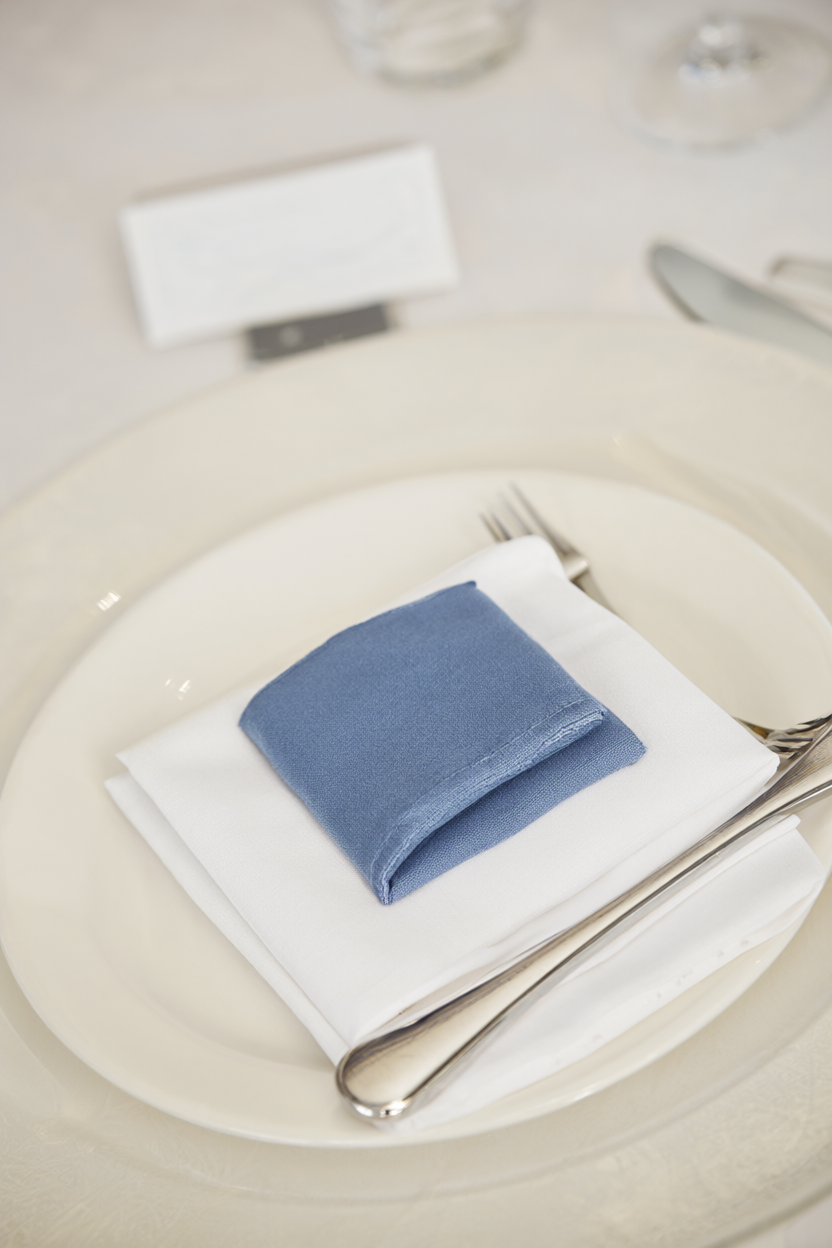
Roll the flatware inside a linen napkin and close the bundle with a wide paper or fabric cuff printed with the guest’s full name. It works as a place card and keeps cutlery tidy through cocktail hour when guests set things down and pick them up again between courses, and it keeps the table looking composed even when the meal runs long and plates are cleared. Measure the cuff so it covers the join of the roll but still leaves the handles visible, and choose a stone-blue or sand tone that echoes the rest of the table rather than a bright accent that competes with the flowers.
6. Cheesecloth Drape
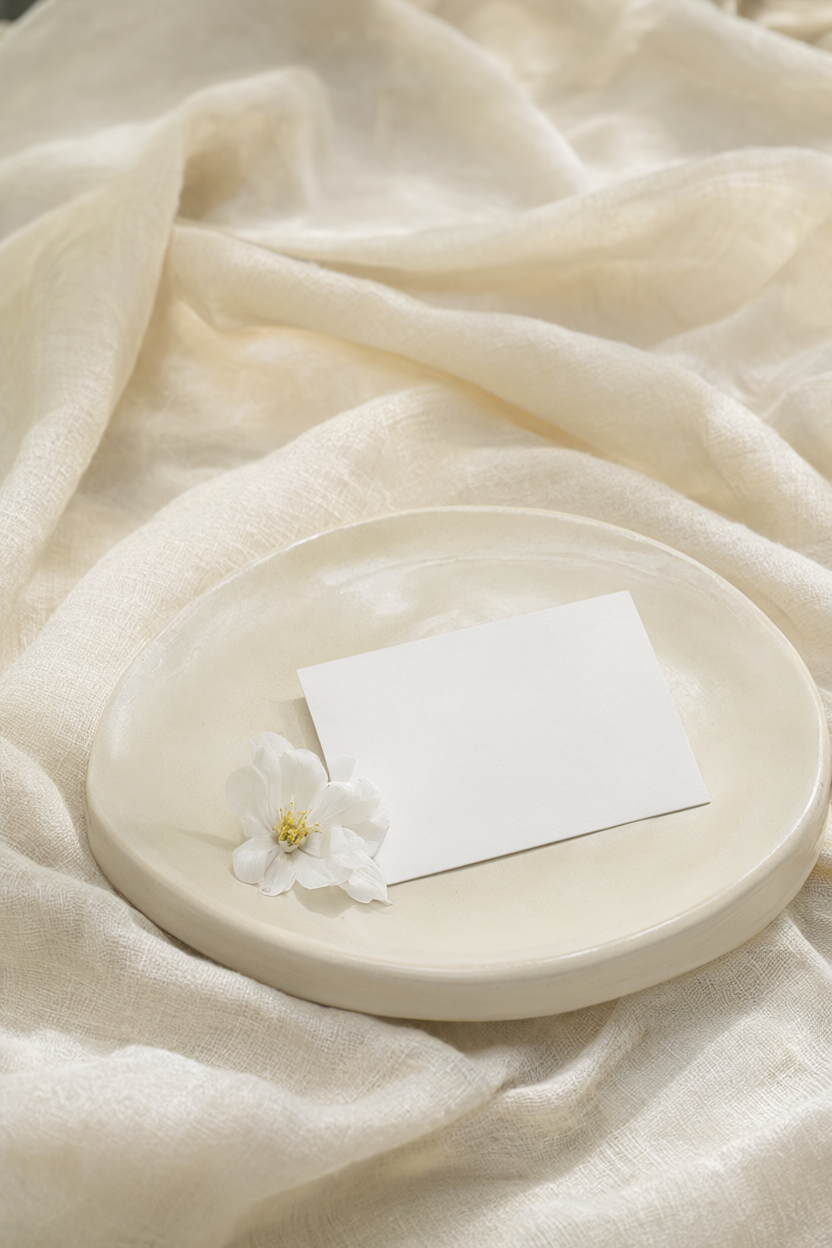
Instead of folding, drape a square of cheesecloth over the plate so the open weave adds texture and gives a place card somewhere soft to sit, pressing it lightly first so it holds its shape. Trim the edges with sharp scissors so they do not fray, and layer the cloth over plain cotton if the table needs more weight and a cleaner line under the candles. Choose a warm off-white rather than bright white so it sits gently against stoneware, and gather one corner loosely under the plate so the drape stays put through the first course and still looks undone.
Whichever fold you choose, keep the rest of the place setting quiet: one plate, one glass, and a single stem go a long way. Press or steam the napkins the night before and store them flat in a clean box, then finish the folds on site once the tables are dressed and the candles are in place. A consistent fold across every setting reads as intention, and a small difference at the head table becomes a detail guests notice rather than a break in the design. That small repeat is what makes a table feel designed.